Art Brut and Outsider Art — Creation Without Borders
↓ Share this articleArt Brut and Outsider Art: Understanding an Unconventional Artistic Realm
Art brut andoutsider art occupy a unique place in the history of modern and contemporary art. These terms refer to works created on the fringes of art academies, art salons, fine arts schools, and dominant aesthetic codes. Long regarded as peripheral, or even invisible, these works are now studied, collected, and exhibited in major institutions. They are of interest to art historians and collectors alike, as they challenge the very notion of creation: what constitutes a work of art when its creator does not necessarily seek recognition, a career, or affiliation with an official movement?
In everyday language, art brut is often associated with spontaneous, intense, and sometimes obsessive works created by self-taught or isolated artists. But this definition warrants further clarification. Art brut is not simply a recognizable style, nor is it an aesthetic of clumsiness. It refers first and foremost to a stance: creating outside the usual channels of artistic validation. This is what makes it an essential field for thinking about contemporary art collecting, as it forces us to look at value, sincerity, formal invention, and expressive power in a different light.
Jean Dubuffet's definition in 1945
The term “art brut” was coined by Jean Dubuffet in 1945. For him, it referred to art produced outside official channels: outside museums, academies, schools, art shows, the established art market, and legitimized cultural references. Dubuffet was interested in works created by people who were often self-taught, sometimes marginalized, and who did not conform to the models of art history. He saw in these creations an unspoiled power of invention, untamed by convention.
This definition should not be reduced to a medical or social category. Art brut does not refer to “the art of the sick” or “the art of the marginalized” in a simplistic sense. Dubuffet is primarily interested in the radical freedom of forms that do not seek to please an institution. The work can be a drawing, a painting, a sculpture, an assemblage, writing, imaginary architecture, embroidery, or a richly detailed sketchbook. What matters is the inner necessity, the personal logic, and the creation of an autonomous world. The “artist brut” does not copy a particular school; he invents his own language.
Outsider art: an international concept
The term “outsider art” emerged in the English-speaking world as a translation and expansion of “art brut.” It is notably associated with Roger Cardinal, who helped popularize the term in 1972. Outsider art refers to self-taught artists—those on the margins or outside the traditional art world—whose works express unique visions. The word “outsider” emphasizes an external position: outside of institutions, outside of standards of taste, and sometimes outside of ordinary social frameworks.
In outsider art, we encounter worlds of great narrative density, compositions saturated with symbols, mental architectures, recurring characters, and private mythologies. Some artists create for decades without ever exhibiting their work. Others create in isolation, within a domestic, institutional, or spiritual setting. Their works may be fragile, made on humble or repurposed materials, but they often possess a visual intensity that captivates contemporary museums and collectors.
Adolf Wölfli, Henry Darger, Aloïse Corbaz: Three Major Figures
Among the leading figures of Art Brut, Adolf Wölfli holds a foundational place. Born in Switzerland in 1864, he created a monumental body of work consisting of drawings, texts, musical scores, and imaginary stories. His universe is all-encompassing: it blends autobiography, fiction, invented geography, music, and symbols. Wölfli does not merely produce images; he constructs a world system. His dense, rhythmic, and often symmetrical compositions demonstrate how Art Brut can transcend simple drawing to become a personal cosmology.
Henry Darger, an American artist born in 1892, is another iconic figure in outsider art. A quiet employee in Chicago, he left behind an immense body of work after his death, notably an illustrated narrative centered on the “Vivian Girls.” His large-scale drawings and watercolors—often created using tracing paper, collages, and reimagined popular images—weave an epic and unsettling narrative. Darger has become a central example of the outsider artist: invisible during his lifetime, he is now recognized as one of the most fascinating creators of the 20th century.
Aloïse Corbaz, born in Switzerland in 1886, developed a colorful, lyrical, and deeply personal body of work. Her drawings, often featuring romantic, royal, or theatrical figures, employ intense colors and expressive composition. Aloïse Corbaz creates a sentimental and imaginary world where history, desire, and reverie converge. She perfectly illustrates how art brut can transform isolation into poetic power, without adhering to the conventions of academic painting.
Institutions: La Maison Rouge and the Collection de l’Art Brut in Lausanne
The recognition of Art Brut owes much to the institutions and collectors who have chosen to preserve these works. The Collection de l’Art Brut in Lausanne is a pivotal institution. It originated from the collection assembled by Jean Dubuffet, which was donated to the city of Lausanne and opened to the public in 1976. This institution preserves, studies, and exhibits major works in the field of Art Brut. It has played a decisive role in fostering an understanding that these creations are not mere curiosities, but works in their own right, indispensable to the history of art in the 20th and 21st centuries.
In Paris, La Maison Rouge—a foundation created by Antoine de Galbert that remained active until 2018—also helped bring attention to unique collections and artistic forms that fell outside traditional categories. Through its exhibitions, it helped broaden the public’s perspective on unconventional practices, personal environments, accumulations, inner worlds, and unconventional works. Even after its closure, it continues to play an important role in the recent history of the dissemination of art brut and outsider art in France.
How can we distinguish between art brut and naïve art?
The difference between art brut and naïve art is fundamental, even though the boundaries between them may sometimes seem blurred.Naïve art often refers to works created by self-taught artists who depict the world in a simple, direct, and colorful way, with a non-academic perspective. It may feature landscapes, village scenes, portraits, animals, celebrations, or memories. Naïve artists may not be affiliated with any art schools, but they often seek to create images that are easy to understand—whether decorative or narrative—intended to be seen and appreciated.
Art brut, on the other hand, is defined less by formal simplicity than by radical autonomy. It can be complex, dense, indecipherable at first glance, and sometimes obsessive. It does not necessarily seek to appeal to the viewer or to represent the outside world. It may follow a private logic: invented maps, personal alphabets, repeated figures, imaginary architectures, and secret narratives. Whereas naïve art may retain a connection to folk or figurative painting, art brut often seems to spring from a more compelling inner necessity. In short, naïve art can be self-taught and charming; art brut is often more disconcerting, more autonomous, and more radical.
The L’Adresse des Maîtres® Art Gallery in Dreux and Contemporary Echoes
In Dreux, the L’Adresse des Maîtres® Art Gallery is committed to promoting contemporary works that engage with the themes explored by art brut, outsider art, and naïve art. Within a contemporary art collection, these connections allow us to view the works not only in terms of their technique, but also in terms of their ability to spark personal imagination, assert a visual presence, and challenge conventional categories.
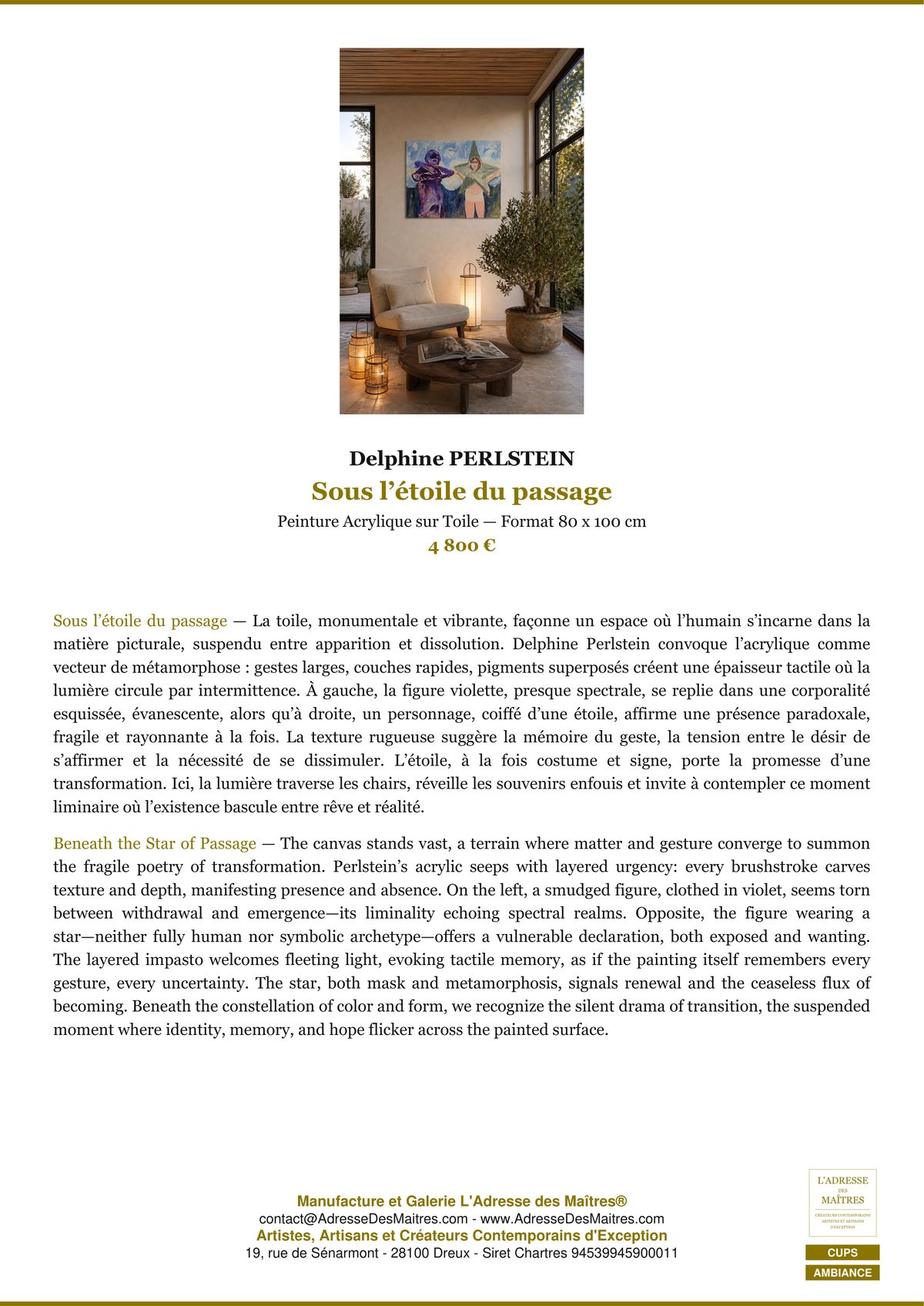
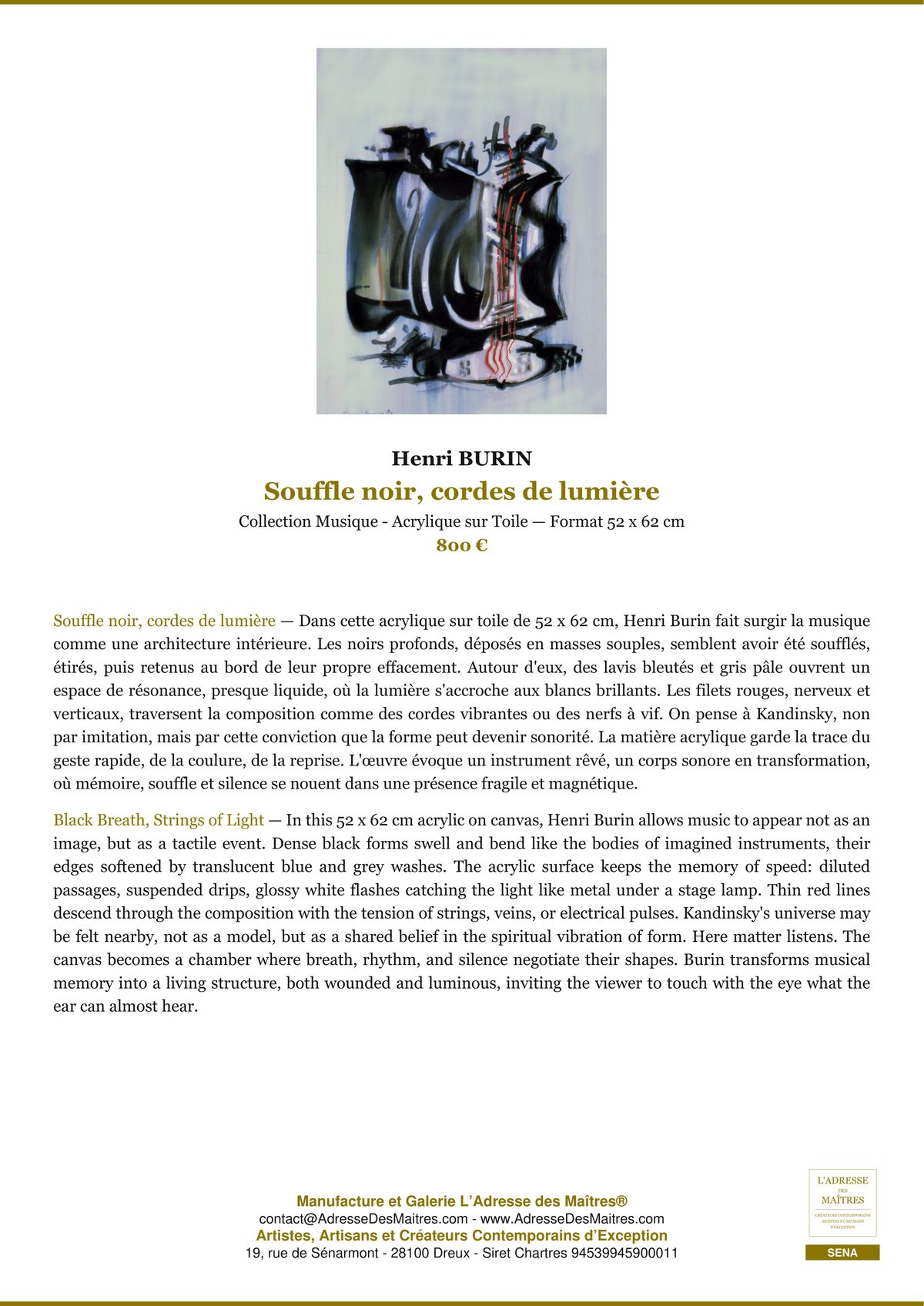
Henri BURIN is represented by 40 acrylic paintings, including “La contrebasse rêve sous rideau.” Given the size of this body of work in acrylic, his collection offers a substantial opportunity to observe how a direct medium like acrylic can support contemporary expression in dialogue with unique imaginations.
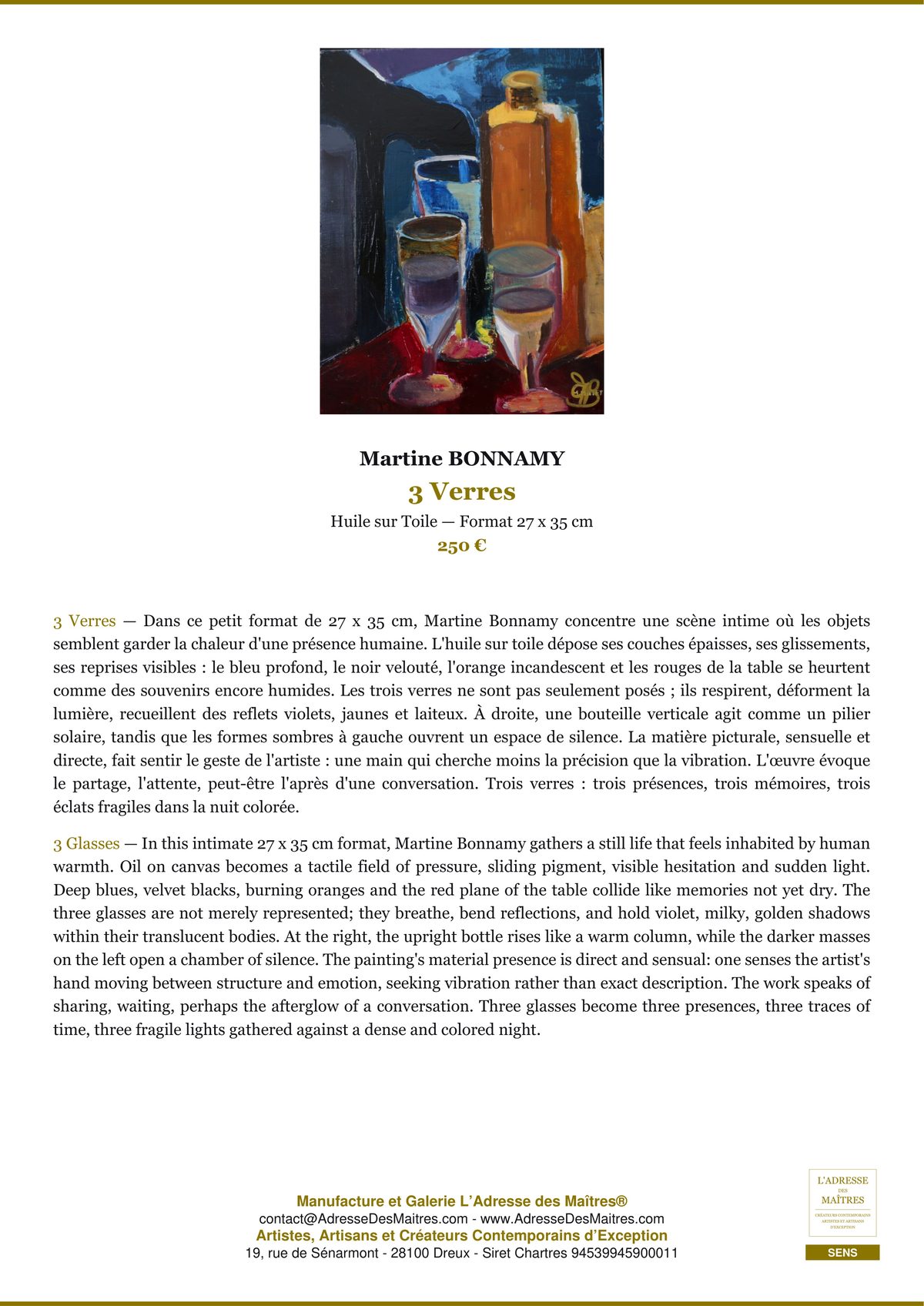
Martine BONNAMY has created 35 mixed-media works on canvas, including “Herbes de lumière, mémoire noire.” The use of mixed media on canvas enriches the material approach: it serves as a reminder that worlds akin to art brut or outsider art are not limited to drawing, but can also involve combinations of materials, surfaces, and techniques.
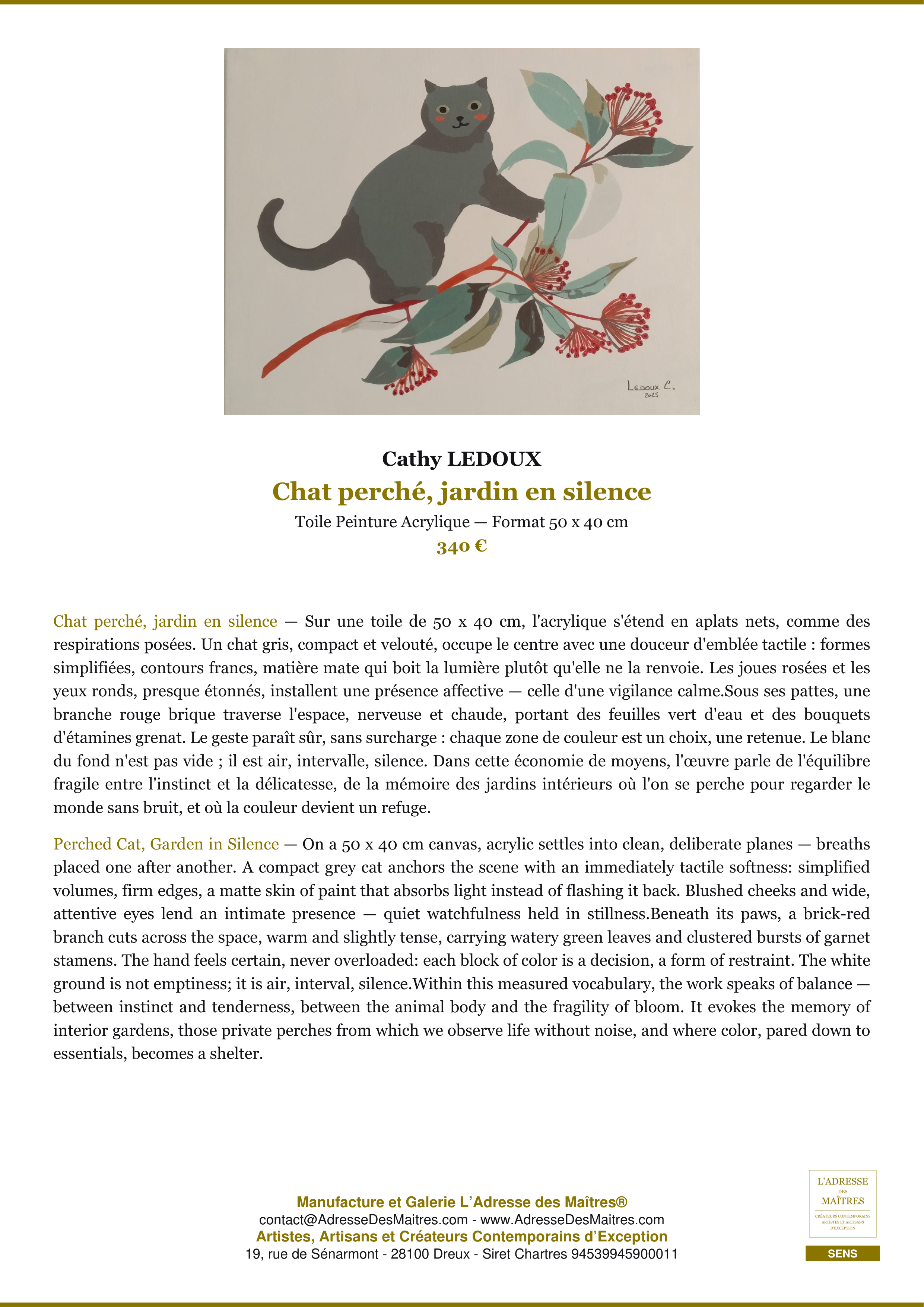
Cathy LEDOUX presents 10 acrylic paintings, including “Chat perché, jardin en silence.” Through acrylic painting, her body of work offers a focused entry into a world where the title itself invites the viewer to consider the image as a space of stage, presence, and silence.
Sabrina BENAZZOUZ is represented by nine acrylic paintings, including “Bouquet en veille de lumière.” Her works highlight the presence of acrylic in this collection, emphasizing the medium’s ability to convey contemporary compositions that explore light, form, and the intensity of the motif.
Patricia DOMINO LAHURE has created six acrylic paintings, including “Rêverie en points d’amour.” This body of work adds a complementary dimension to the collection through her use of acrylics; the title highlights the idea of reverie and emotional punctuation—two concepts that resonate with the inner worlds often associated with art brut.
Art Brut on the Market: Prices Are Rising Sharply
For several decades now, art brut and outsider art have seen remarkable growth in the market. Major specialized art fairs, museum exhibitions, auctions, and growing interest from collectors have increased the visibility of this field. Artists who were long overlooked are now fetching significant prices, particularly when their works are rare, well-documented, and come from solid provenance. The value of art brut is therefore rising sharply, driven by international demand and institutional recognition.
This development, however, raises questions. Art brut emerged as a reaction against the official art world; today, it is finding its way into museums, galleries, and private collections. This paradox is part of its contemporary history. For collectors, it is essential to consider authenticity, conservation, provenance, and respect for the artist’s creative journey. A work of art brut cannot be reduced to its strangeness alone: it must be viewed in terms of its coherence, its context, and its inherent significance.
Ultimately, art brut, outsider art, and naïve art invite us to broaden our definition of art. They remind us that creativity does not arise solely in academies or recognized studios, but also on the margins, in bedrooms, in sketchbooks, in solitary visions, and in persistent efforts. It is precisely this freedom that continues to fascinate the public, institutions, and the contemporary art market.
Check out our gallery
Would you like to experience these artistic movements in person? Visit the online gallery of L’Adresse des Maîtres®—more than 606 original works by contemporary artists.

Leave a comment