

Art in Interior Design — Trends and Tips
↓ Share this articleIncorporating Contemporary Art into Interior Design: Trends, Placement, Lighting, and Formats
Contemporary art now plays a central role in interior design. Far from being confined to galleries, discerning collectors, or large architectural spaces, it has found its way into apartments, homes, offices, and everyday living spaces. A well-chosen piece of art can transform a room, set the tone, evoke emotion, and give an interior a truly distinctive character.
Incorporating contemporary art into your interior design is not simply a matter of hanging a painting on the wall. It involves treating the artwork as a compositional element in its own right, interacting with the room’s dimensions, materials, lighting, and function. Colors, sizes, placement, framing, and lighting all contribute to achieving this balance.
Whether you’re looking for a sleek, expressive, minimalist, or warm atmosphere, contemporary art offers a wealth of styles that can adapt to any interior design scheme. Here’s how to incorporate it effectively into an interior design project, taking into account current trends, best practices for placement, lighting guidelines, and the choice of formats.
Why contemporary art has become a key element of interior design
In an interior, contemporary art serves several purposes. First, it draws the eye and creates a focal point. In a living room, entryway, or bedroom, a striking piece helps to visually organize the space. It adds depth to a decor that can sometimes feel too uniform and introduces an emotional dimension that furniture alone cannot always provide.
Contemporary art also appeals because of its freedom. It is not confined to a single aesthetic code. Abstraction, figuration, texture, black and white, large swaths of color, graphic or gestural compositions: each work can enhance a mood or, conversely, create a deliberate contrast. It is precisely this flexibility that makes it a valuable asset for interior architects, decorators, and homeowners.
Finally, incorporating a contemporary artwork allows you to personalize your home. Successful interior design is about more than just following trends; it reflects a sensibility, a story, and a way of living in a space. A work of art brings that unique touch. It conveys something more personal than a mere decorative object, while also expressing a sense of style and intention.
Major Trends in Contemporary Art in Interior Design
Current trends show a growing interest in artworks that can interact with interiors that are both understated and warm. Neutral color palettes—beige, sand, off-white, mineral gray, soft terracotta—often leave plenty of room for artworks to express themselves. In this context, contemporary art either extends this softness with nuanced compositions or enlivens the overall look with bolder accents.
Abstract artworks remain highly sought after, particularly for their ability to blend into a variety of spaces without imposing a overly narrative interpretation. They are particularly well-suited for living rooms, dining rooms, and reception areas. Minimalist compositions and textured works are also very popular, as they pair exceptionally well with contemporary interiors dominated by natural materials such as wood, linen, stone, or weathered metal.
Another major trend: large-scale pieces. A generously sized artwork creates an immersive effect and instantly adds character to a room. In contemporary interiors, it’s common to opt for a single striking piece rather than several small, scattered frames. This approach enhances the clarity of the space and promotes a more elegant, less cluttered decor.
At the same time, group hangings remain a popular choice, particularly in hallways, stairwells, offices, and transitional spaces. They allow for the creation of a sense of rhythm, the exploration of repetition and contrast, and the establishment of an artistic presence that is more subtle yet highly refined.
How to Choose the Perfect Location for a Contemporary Artwork
The placement of a piece of art is crucial. A beautiful piece that is poorly positioned loses its impact, while the right placement can enhance both the artwork and the entire room around it. The first principle is to identify the main focal point. In a living room, this might be the wall visible upon entering or the one above a sofa. In a dining room, the artwork can interact with the table. In an entryway, it immediately establishes the space’s identity.
The hanging height is crucial. As a general rule, the center of the artwork should be at eye level. This guideline can be adjusted depending on the room’s dimensions and furniture, but it helps maintain a natural viewing experience. If the artwork is placed above a piece of furniture, it’s important to leave enough visual space so that the overall composition feels open and airy. If hung too high, it appears disconnected from the decor; if hung too low, it overwhelms the composition.
The artwork’s relationship to the room’s proportions is just as important. A small piece hanging alone on a large wall can look lost. Conversely, a piece that’s too large for a small space can weigh down the atmosphere. It’s therefore helpful to think in terms of overall balance: the wall’s dimensions, ceiling height, the width of the furniture, how people move around the room, and the available space behind the artwork.
In contemporary interiors, certain locations work particularly well: above a sofa, in an open entryway, opposite a picture window with controlled lighting, at the end of a hallway, on a dining room wall, or in an office. Bedrooms can also accommodate artwork, provided that the arrangement complements the desired atmosphere, which is often more soothing.
The Importance of Lighting in Showcasing a Work of Art
Lighting is often underestimated, yet it plays a fundamental role in showcasing contemporary art. A work of art is never perceived in the same way depending on the quality, direction, and intensity of the light. Good lighting brings out colors, textures, contrasts, and depth. It also gives the artwork a tangible presence in the room, both day and night.
Natural light is precious, but it must be used judiciously. Some artworks do not tolerate prolonged exposure to direct sunlight. It is therefore advisable to avoid locations where light strikes intensely and repeatedly. Sheer curtains, blinds, or tinted glass can help protect the artwork while maintaining a pleasant ambient light.
When it comes to artificial lighting, there are several options available. Adjustable spotlights, track lighting, and dedicated wall sconces allow you to direct the light with precision. For a harmonious effect, it’s generally best to choose lighting that is neither too cool nor too warm, so that it complements the artwork’s colors. The goal is not to dazzle, but to create a subtle ambiance. Well-designed lighting naturally draws attention without overwhelming the rest of the decor.
Textured works, thick materials, and reliefs are particularly well-suited to side lighting or slightly angled lighting. This lighting angle highlights the texture and adds a sculptural dimension to the surface. For smoother paintings or graphic works, soft front lighting may be sufficient. In any case, it is best to avoid unwanted glare, especially when dealing with glass or glossy surfaces.
Which sizes to choose based on room type and intended use
The choice of size depends on both the available space and the desired effect. Large-scale pieces are ideal for living areas where you want to make a bold artistic statement. In a spacious living room or a room with high ceilings, a large canvas becomes a true focal point of the interior design. It defines the wall and sets the tone for the entire space.
Medium-sized pieces are particularly versatile. They fit easily into apartments, bedrooms, offices, or dining rooms. They make a strong statement without overwhelming the space. They are often an excellent choice for starting a collection or for creating an elegant arrangement above a console table, a sideboard, or a bed.
Smaller pieces also have their place. They work well in more intimate spaces or when arranged in a controlled grouping. In a bookcase, hallway, landing, or reading nook, they add a touch of understated charm and a sense of intimacy. When displayed alone, they require a carefully considered setting so they don’t appear isolated; when grouped as a diptych, triptych, or series, they can create a very contemporary effect.
The right size, therefore, is one that harmonizes with the room’s proportions and the decorative intent. A piece can be conceived as a subtle accent or as a bold statement. In either case, it must maintain the right balance with the furniture, the empty spaces, the lines of the wall, and the visual flow.
Create a sense of cohesion between the artwork and the decorative setting
Incorporating contemporary art into an interior doesn’t necessarily mean seeking a perfect match between the colors of the painting and those of the cushions or rug. A piece of art can, of course, complement an existing color palette, but it can also introduce a stimulating contrast. The key is to create a dialogue. A very minimalist decor can accommodate an expressive piece of art. A warm space with earthy tones can be enriched by a more graphic or luminous composition.
Coherence often arises from a combination of details: the rhythm of the lines, the density of the materials, the emotional tone, the presence or absence of frames, and the balance between solid and negative space. A black-and-white artwork in a light-colored interior can enhance a sense of understated sophistication. A painting with intense colors can become the focal point around which the entire room is organized.
It is also important to consider lifestyle. In a high-traffic area, one should opt for a piece that can quickly capture attention. In a relaxation area, more contemplative compositions are often chosen. In an office, art can stimulate concentration, inspiration, or a sense of grounding. The artwork is not merely decorative; it contributes to the sensory experience of the space.
Seeing the artworks in their setting: a real advantage when making a choice
One of the common challenges when buying a piece of art is visualizing how it will actually look in a room. Dimensions, scale, colors, and visual impact can sometimes be difficult to assess from a single photo on its own. That’s why seeing the artwork in context is particularly helpful for getting an accurate sense of how it will look.
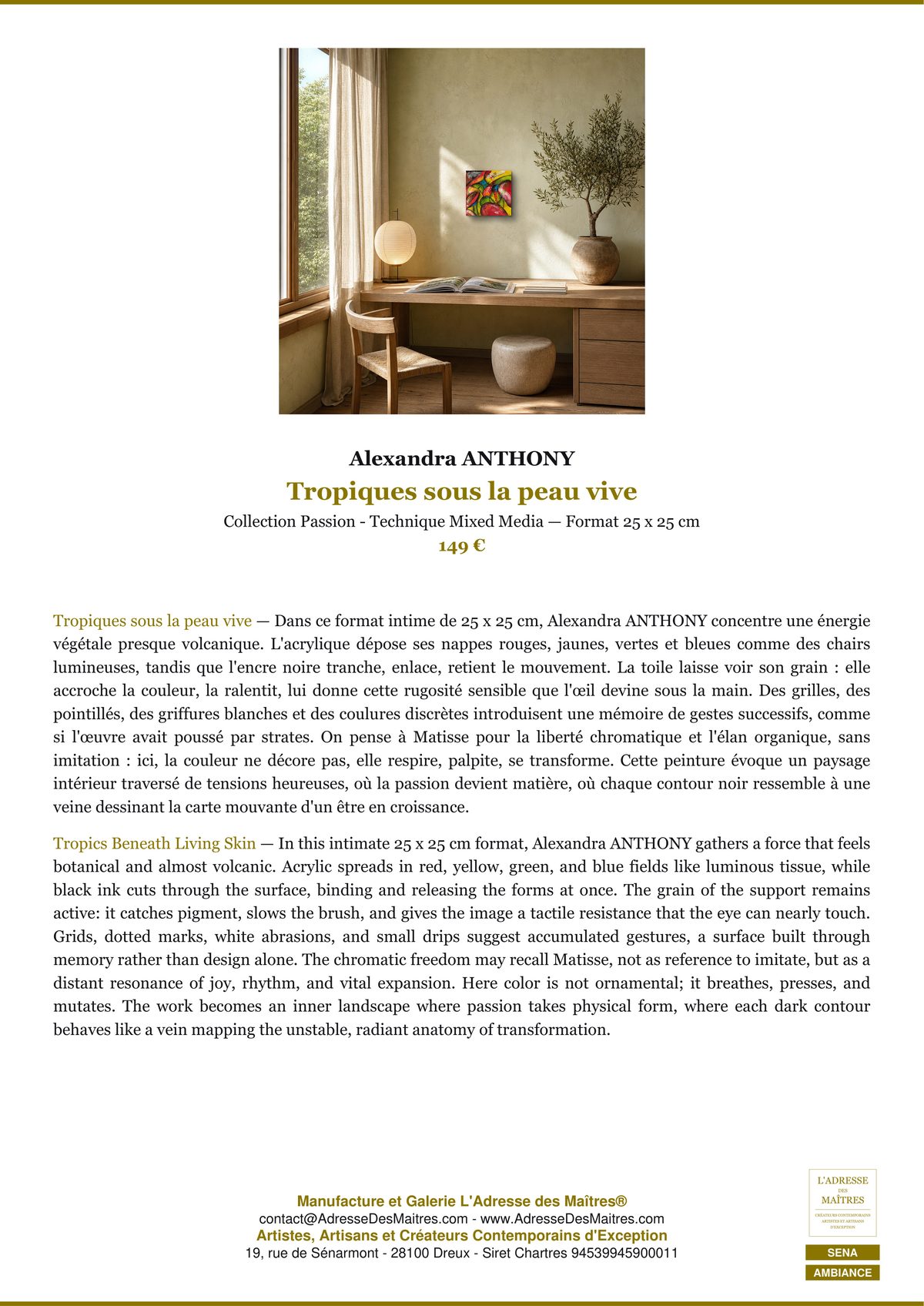
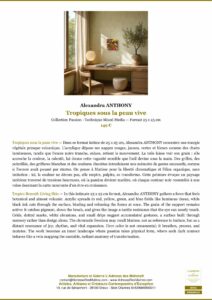
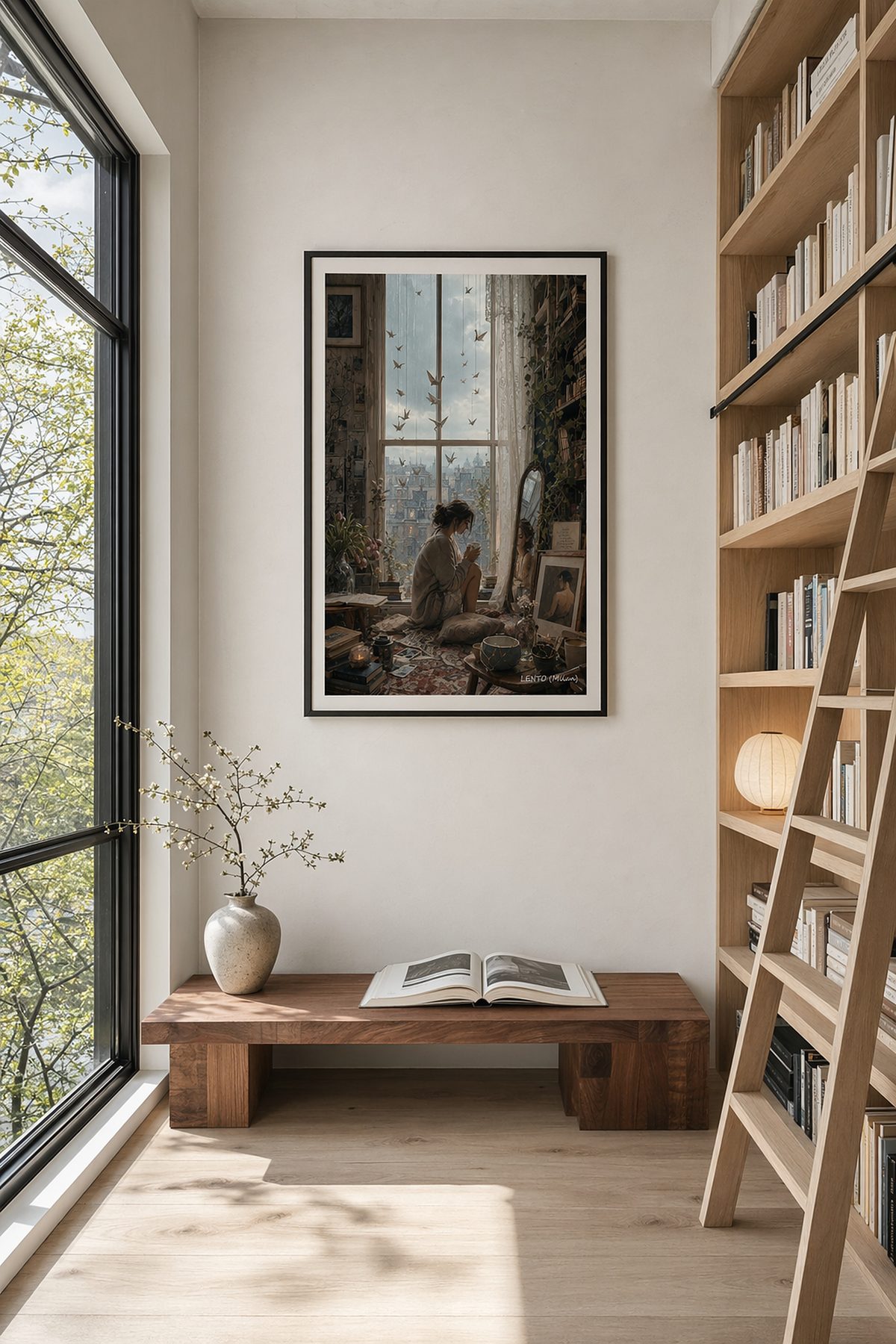
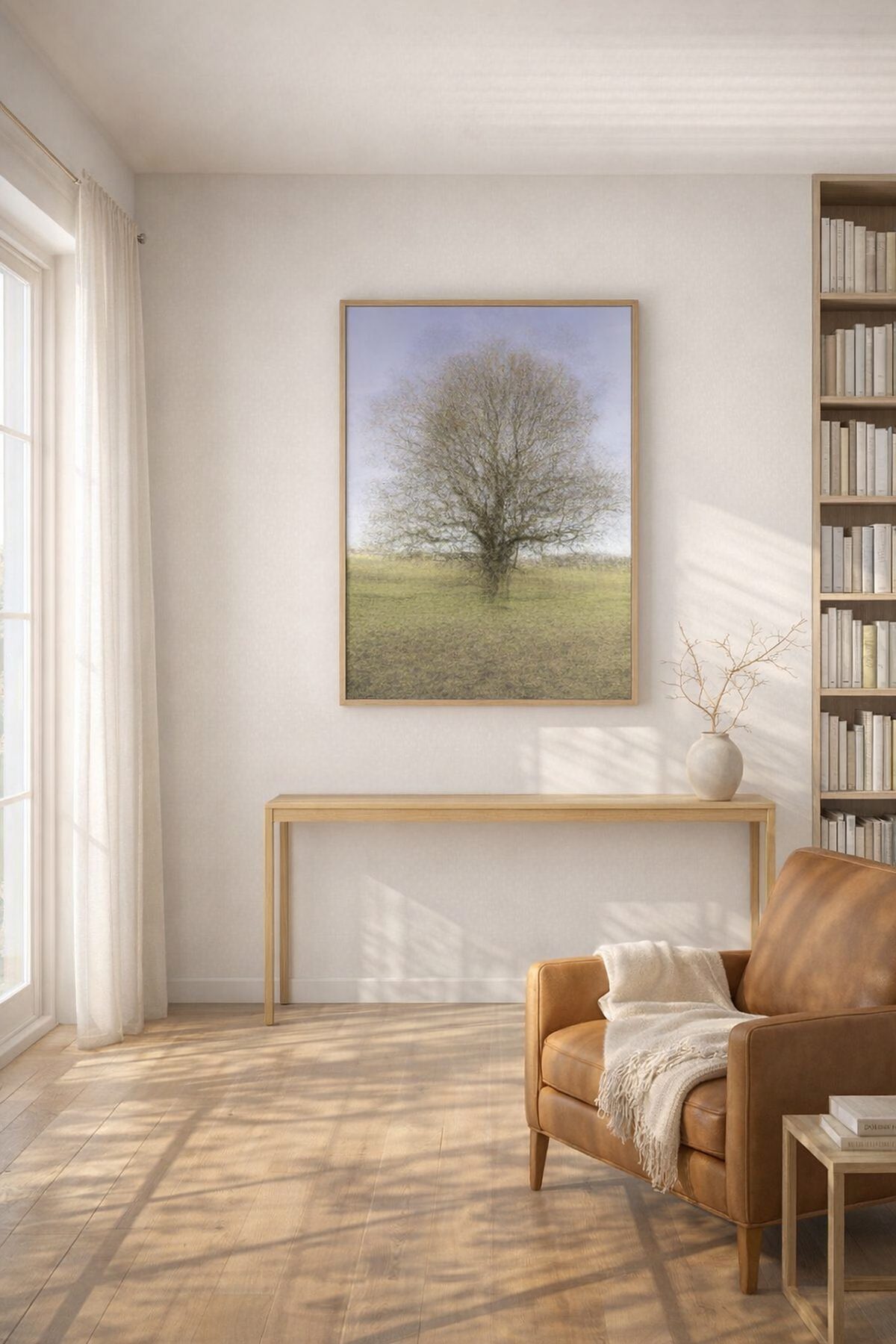
With this in mind, the Premium Ambiance Sheets from the L’Adresse des Maîtres® Art Gallery in Dreux are a real asset. They showcase the artworks in carefully curated decorative settings, allowing viewers to better appreciate their presence, their scale, and how they interact with an interior. For both private individuals and interior design professionals, this approach simplifies the selection process by making the artwork more accessible within a real-life interior design context.
Seeing a piece displayed in a living room, dining room, entryway, or office helps you better understand its decorative potential. You can better appreciate the impact of a large-scale piece, the elegance of a more understated work, or the effect of a colorful palette in relation to the surrounding materials. This visualization is invaluable for avoiding mistakes in proportion and refining your display plan.
Practical tips for successfully incorporating contemporary art into your home
To successfully incorporate a contemporary artwork into an interior, it’s helpful to start by looking at the room as a whole. Which walls are available? Where does the eye naturally fall? How does the light change throughout the day? What level of presence do you want to achieve? An artwork can complement an existing decor, but it can also serve as the starting point for a new atmosphere.
It is often best not to crowd a single wall with too many prominent pieces. If the artwork is expressive, it’s better to give it some breathing room. The space around it helps to highlight its impact. Conversely, if you choose to hang multiple pieces, the composition must be carefully planned: alignment, spacing, formats, and visual coherence are essential.
The choice of a frame—or the decision not to use one—also matters. Some works gain impact when presented in a very minimalist setting, while others require a frame that gives structure to the piece and creates a transition with the wall. In any case, the framing should always serve the artwork.
Finally, it’s important to let emotion play a role. Harmonious interior design isn’t based solely on rules. Contemporary art truly comes into its own when it strikes a personal chord. A well-integrated piece isn’t just well-placed; it seems to belong naturally to the space and enriches the way we live there every day.
Conclusion: Contemporary art—a bold statement for interior design
The incorporation of contemporary art into interior design reflects a desire for personality, meaning, and elegance. Whether it involves keeping up with current trends, choosing the right location, working with lighting, or selecting the appropriate format, every decision contributes to creating a cohesive and lasting artistic presence.
A well-chosen contemporary artwork transforms a wall into a visual experience, reveals a space’s identity, and complements everyday life. It does more than simply decorate: it adds rhythm, depth, and a unique signature to the interior.
To help you visualize and imagine how a piece of art will actually look in its future setting, the Premium Ambiance Sheets from the L’Adresse des Maîtres® Art Gallery in Dreux provide particularly useful guidance by showing the artworks in context. This is a valuable resource for making contemporary art a true partner in interior design.
Check out our gallery
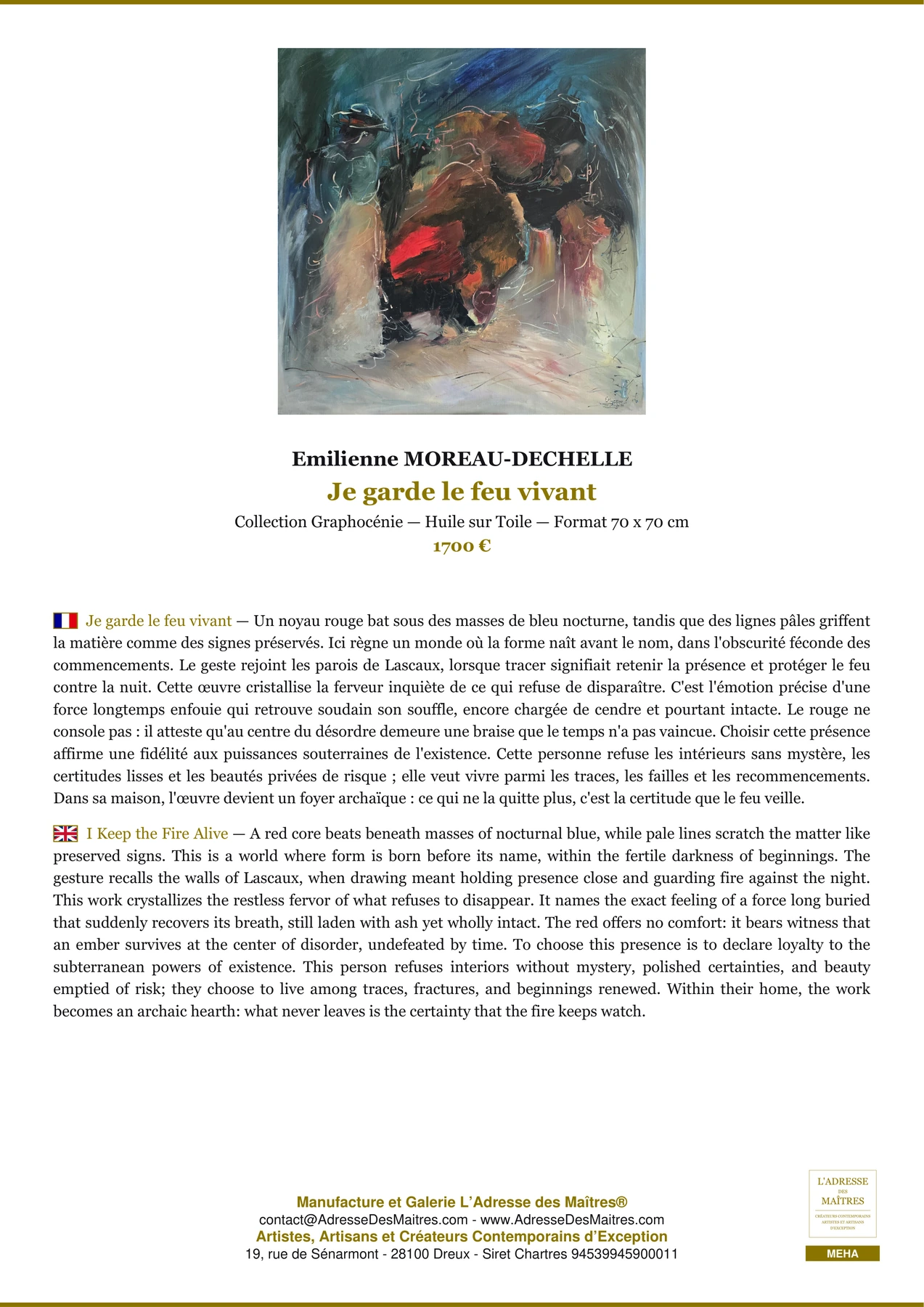
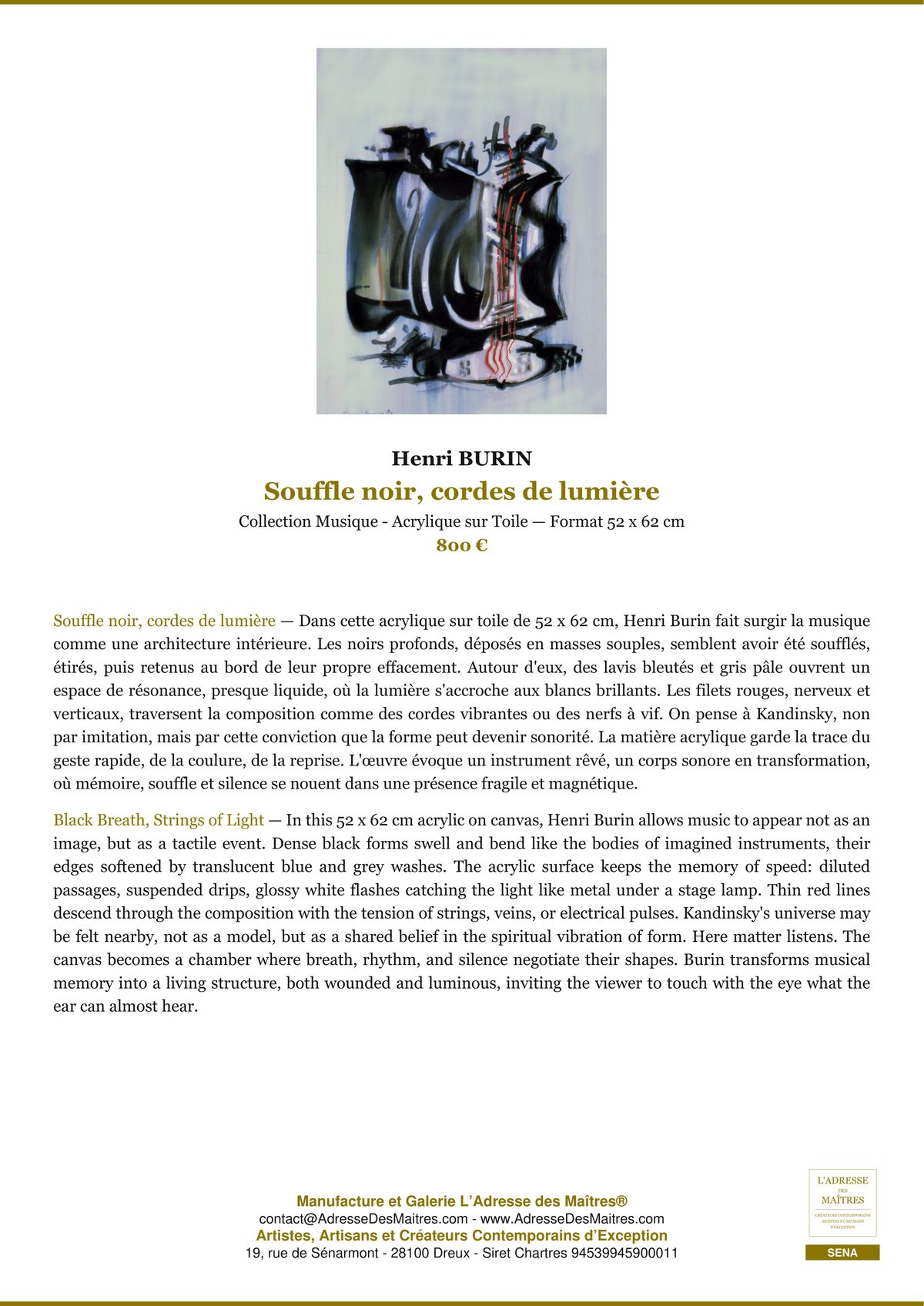
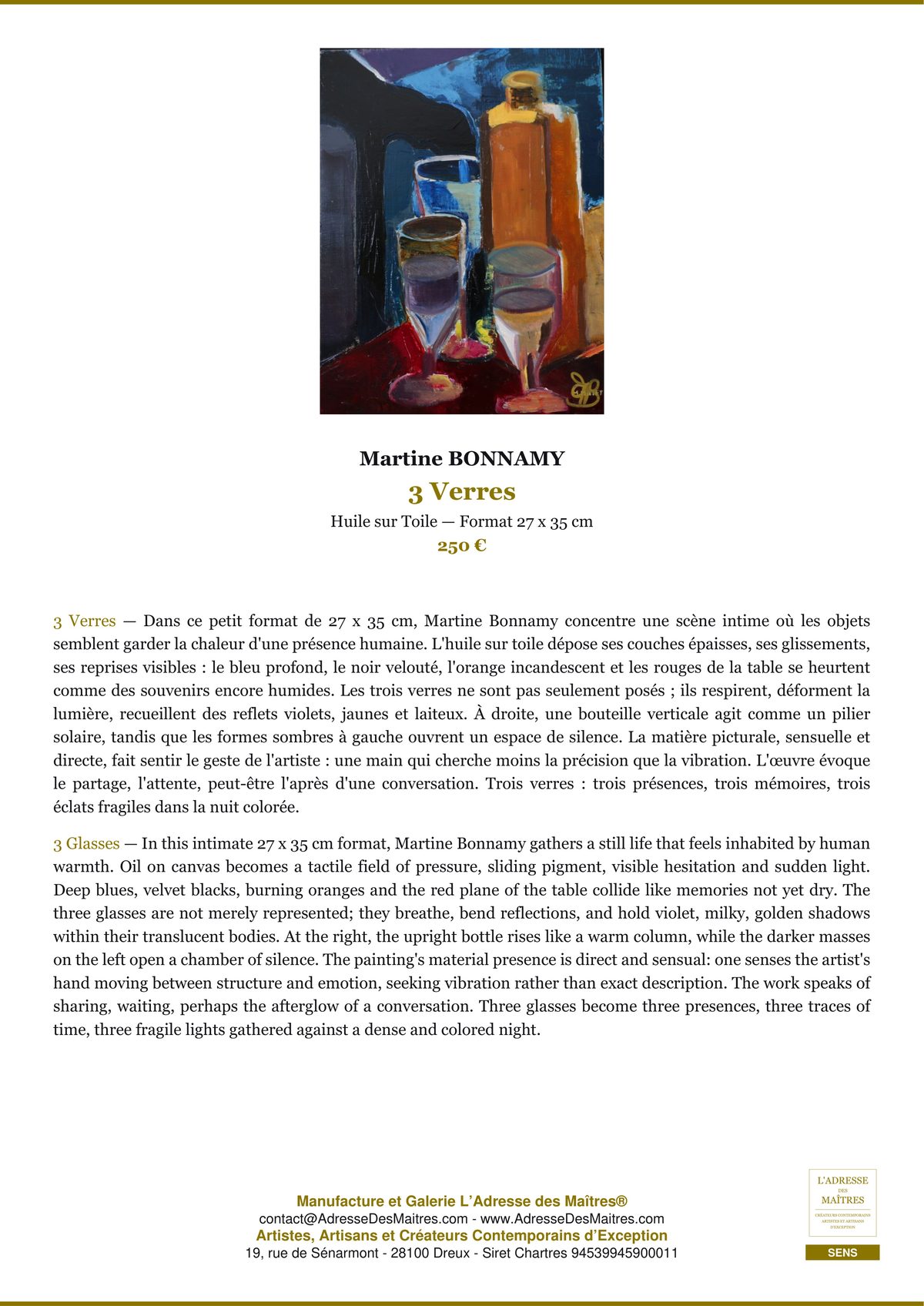
Explorez plus de 1633 œuvres dans notre galerie en ligne — Fiches Premium, Certificats d’Authenticité et Ambiances disponibles pour chaque œuvre.

Leave a comment