Contemporary Art Jewelry — Between Ornament and Sculpture
↓ Share this articleContemporary Art Jewelry: When Ornament Becomes Art
Art jewelry occupies a unique place in the landscape of contemporary creation. At once an intimate object, a wearable sculpture, and an aesthetic statement, it transcends its decorative function to become a true work of art. Wearing contemporary jewelry is not merely a matter of choosing an accessory: it is a way of affirming a personal connection to the material, the artist’s craft, and a worldview. Straddling the realms of artistic jewelry, design, master craftsmanship, and visual experimentation, artist-made jewelry has established itself today as a major creative field, recognized by collectors, galleries, and museums.
A History of Art Jewelry: Arts and Crafts, Art Nouveau, Bauhaus
The history of modern art jewelry has one of its roots in the Arts and Crafts movement, which emerged in Great Britain in the late 19th century. In reaction to industrialization and mass production, designers such as William Morris advocated a return to artisanal craftsmanship, functional beauty, and the authenticity of materials. Jewelry was no longer merely a symbol of wealth; it became an expression of craftsmanship, aesthetic vision, and ethical production practices.
With the Art Nouveau movement, around 1900, art jewelry experienced a spectacular boom. Botanical motifs, organic forms, insects, female figures, and flowing curves inspired jewelry artists. René Lalique, for example, transformed jewelry into an artistic laboratory by combining enamel, glass, semi-precious stones, and gold in poetic compositions. The value of a piece of jewelry no longer lay solely in the diamond or the precious metal, but in the formal innovation and expressive power of the object.
The Bauhaus, founded in 1919 in Germany, ushered in another revolution: one centered on geometry, functionality, and the dialogue between art, craftsmanship, and industry. Jewelry inspired by this philosophy often emphasizes clean lines, simple structures, modern materials, and a rational approach to design. This influence remains fundamental in contemporary jewelry, which embraces the freedom to move from sculpture to wearable art, from prototype to mass production, and from one-of-a-kind pieces to conceptual exploration.
Fine jewelry and artist jewelry: two different approaches
Traditional jewelry generally emphasizes the preciousness of materials, the rarity of gemstones, technical virtuosity, and heritage value. A platinum ring set with diamonds, a high-jewelry necklace, or a set of precious gemstones embody well-established codes of luxury. The quality of craftsmanship is essential, as is the intrinsic value of the gemstones and metals.
Artist-made jewelry, on the other hand, follows a different logic. It may use gold, silver, or gemstones, but its primary value stems from the artistic intent. A jewelry artist may work with base metals, ceramics, glass, wood, textiles, natural materials, or recycled materials. What matters is the visual language: form, volume, relationship to the body, the message, and sometimes even provocation. Art jewelry challenges notions of beauty, luxury, identity, and wearability.
As such, artistic jewelry straddles the boundary between several worlds. It retains the technical rigor of traditional jewelry-making while embracing the freedom of the visual arts. A piece of contemporary jewelry can be minimalist, monumental, delicate, raw, colorful, abstract, or narrative. It can be worn daily, displayed in a showcase, or preserved as a collector’s item.
Contemporary Materials: Precious, Hybrid, Natural
Contemporary art jewelry is characterized by a great deal of creative freedom in the use of materials. Precious metals, such as gold, silver, and platinum, remain prominent, but they are often worked in less conventional ways: hammered surfaces, oxidation, architectural cuts, visible joints, or deliberately irregular finishes. Metal is no longer merely a setting for gemstones; it has become a medium of expression in its own right.
Glass also plays an important role. Whether transparent, colored, blown, fused, or cast, it creates plays of light that transform the piece of jewelry into a microsculpture. Ceramics, meanwhile, add a tactile and pictorial dimension. They can be unglazed, glazed, matte, glossy, or fragmented. They give the jewelry a presence that is both ancient and contemporary, bridging the gap between imaginary archaeology and modern design.
Natural materials offer other possibilities: wood, bone, horn, seashells, leather, plant fibers, seeds, and uncut stones. Their use serves as a reminder that jewelry is one of humanity’s oldest symbolic languages. In contemporary practice, these materials can be combined with industrial or technological elements, creating contrasts between nature and modernity, fragility and permanence, ancestral craftsmanship and experimentation.
Notable Figures: Alexander Calder, Pierre Cardin, Georg Jensen
Alexander Calder is one of the most iconic figures in artistic jewelry. Known for his mobiles and sculptures, he also created numerous pieces of jewelry, often using hammered and bent metal wire. His pieces do not strive for classical jewelry-making perfection; on the contrary, they highlight the artist’s hand, the energy of the design in space, and the spontaneity of form. His necklaces, brooches, and bracelets are true wearable sculptures.
Pierre Cardin, a leading figure in fashion and design, helped bring a futuristic and architectural aesthetic to jewelry. His creations often reflect a penchant for geometric shapes, bold volumes, and a modernity focused on space, movement, and the body. For Cardin, jewelry is part of a holistic vision of style, in which clothing, accessories, and silhouette come together to form a cohesive whole.
Georg Jensen, a Danish house founded by the silversmith of the same name, embodies an essential link between craftsmanship, Scandinavian design, and artistic jewelry. The artistry of its silverwork, the elegance of its lines, and the balance between functionality and beauty have made Jensen a leading authority in the field. Its legacy demonstrates that contemporary jewelry can combine simplicity, refinement, and formal power without compromising on the highest standards of craftsmanship.
The L’Adresse des Maîtres® Art Gallery in Dreux and Contemporary Dialogues
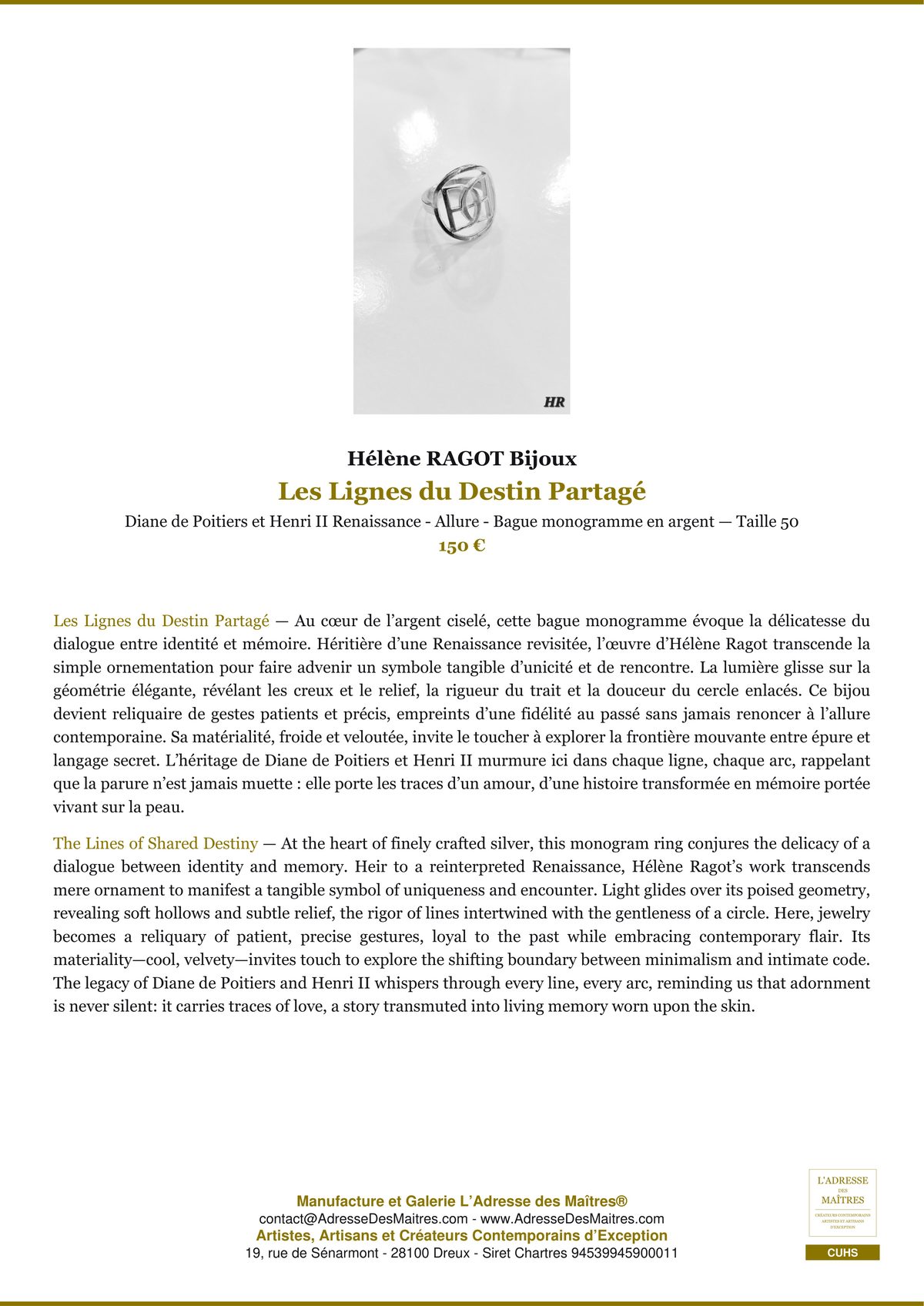
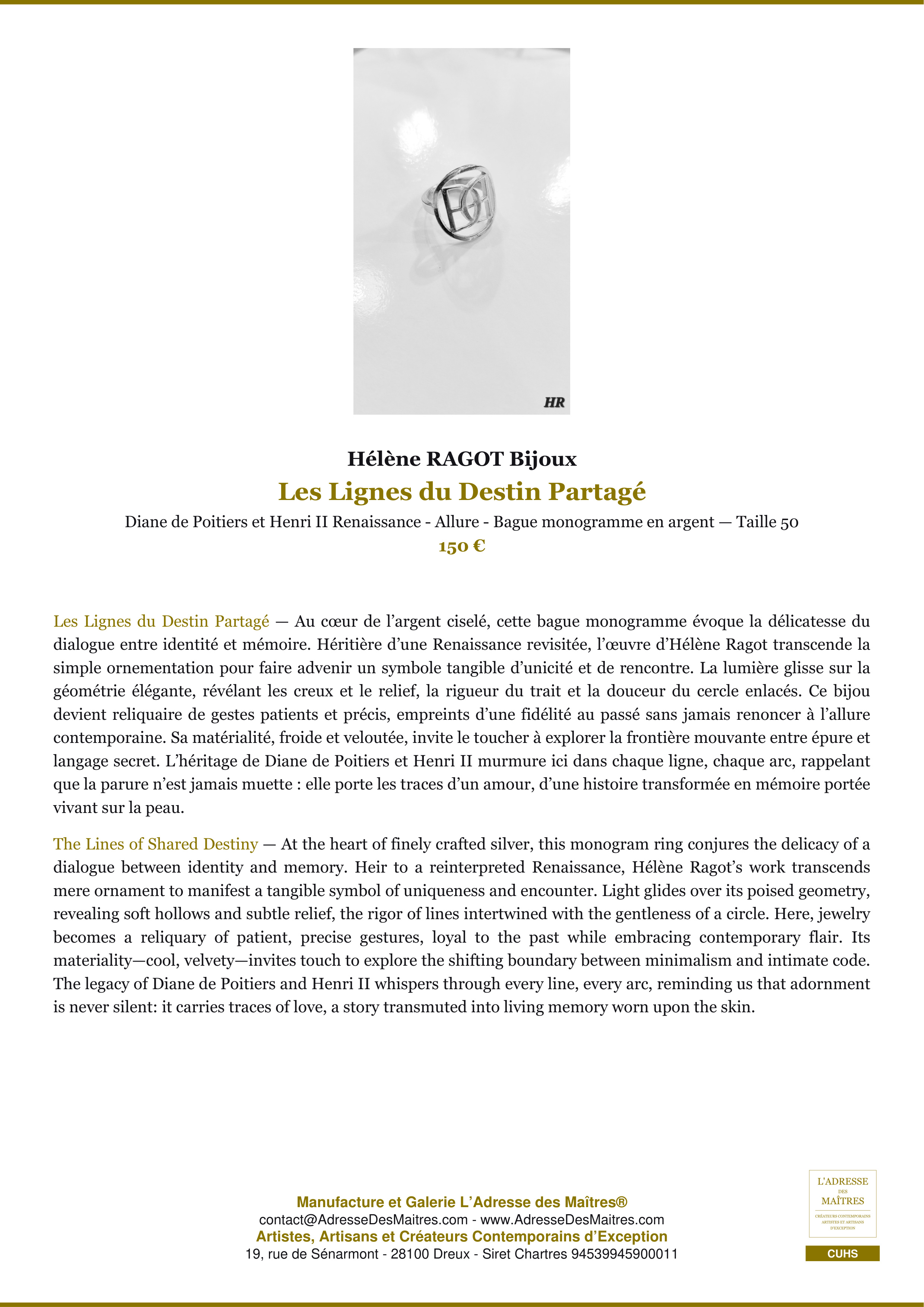
The L’Adresse des Maîtres® Art Gallery in Dreux is part of this broader perspective on contemporary art, where art jewelry engages in a dialogue with other mediums. In this context, Hélène RAGOT Bijoux plays a key role in the exhibition with 11 jewelry pieces, including “Les Lignes du Destin Partagé.” Her contribution is central: she represents the medium of jewelry itself through an artistic lens, allowing contemporary jewelry to be approached as an autonomous form of creation.
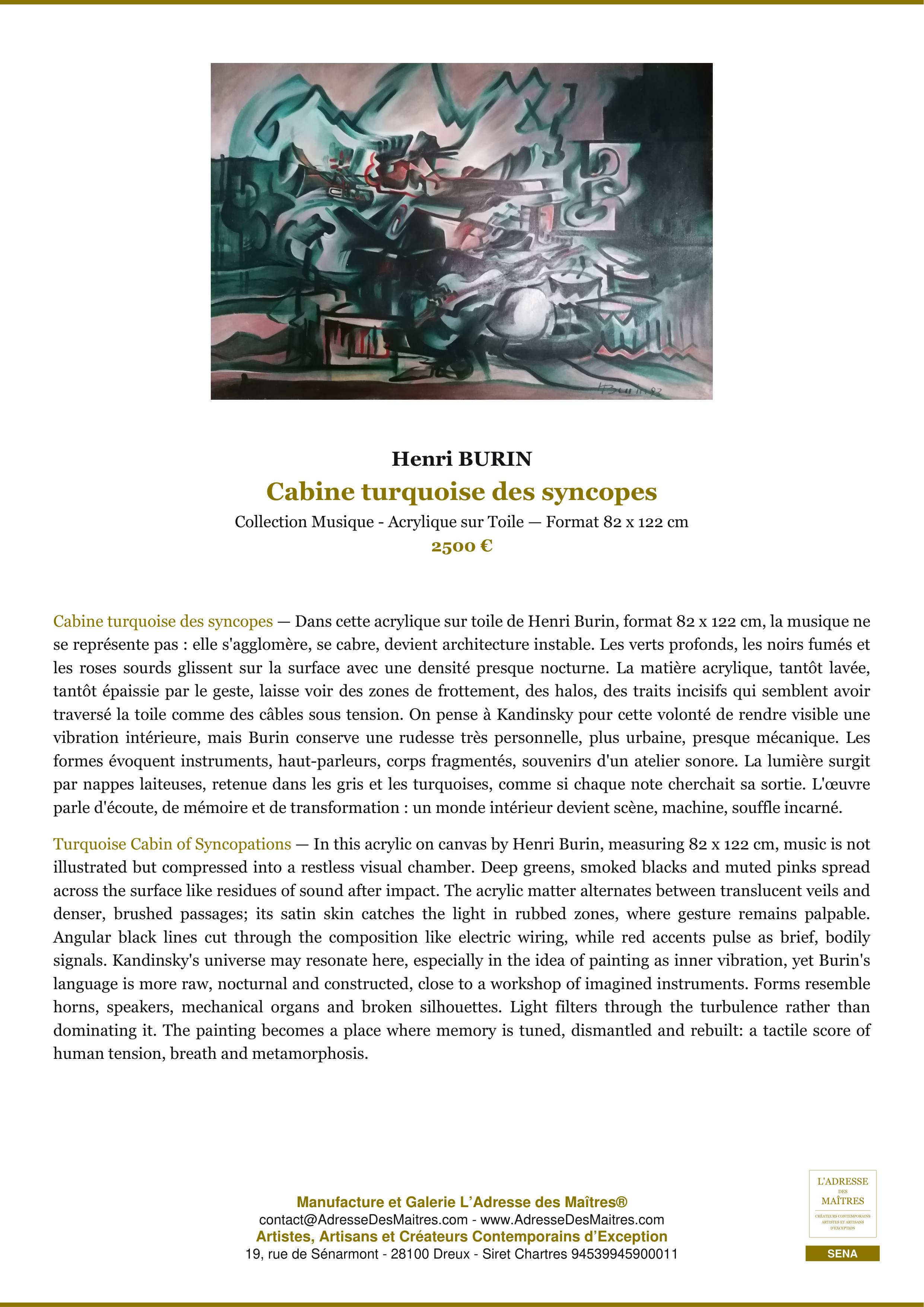
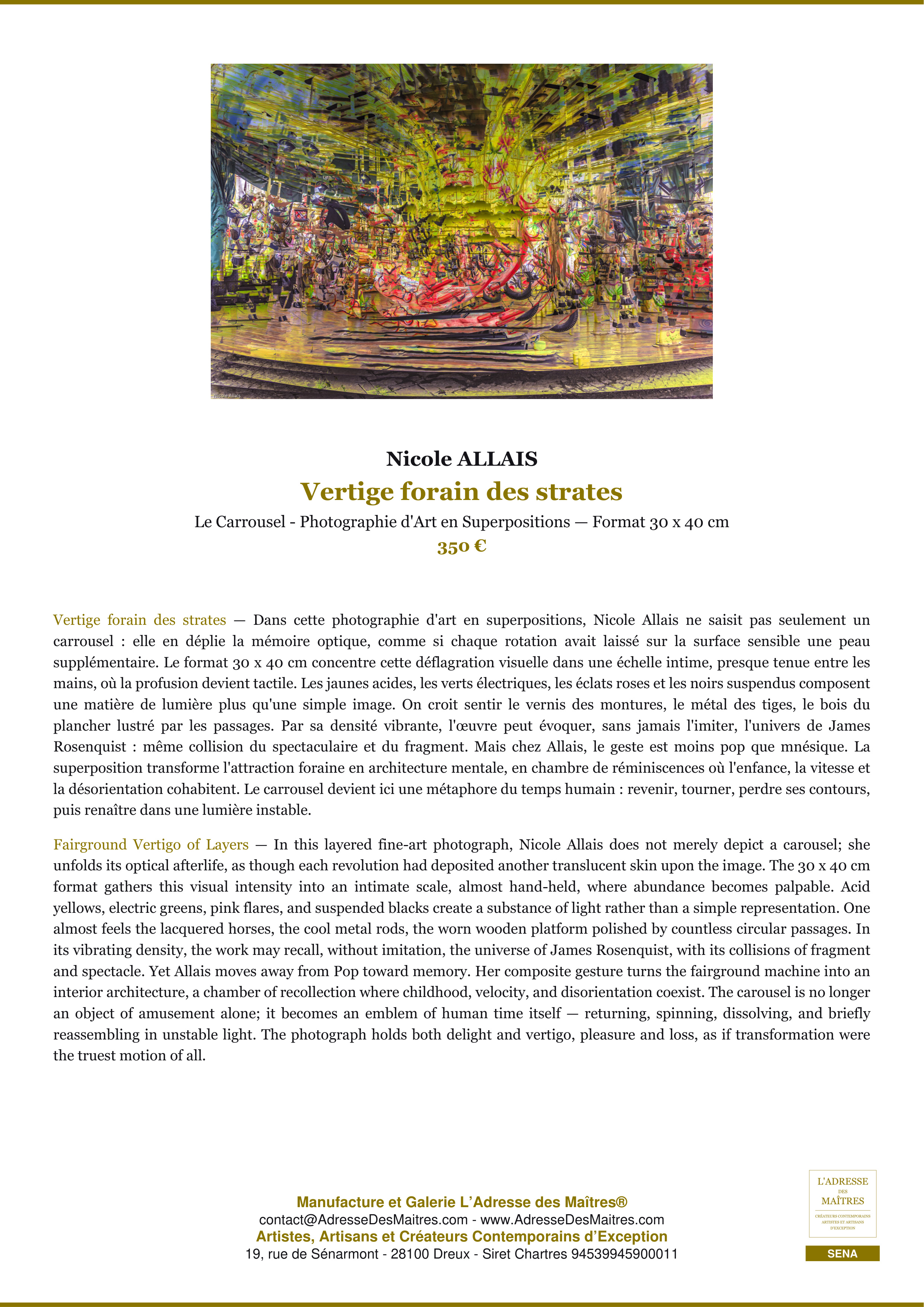
Henri BURIN, with 14 acrylic paintings, including “Cabine turquoise des syncopes,” provides a pictorial counterpoint. His works remind us that artistic jewelry can be conceived in relation to painting, color, composition, and visual space. Nicole ALLAIS, with 10 works in Layered Image Composite Photography, including “Vertige forain des strates,” raises the question of composite imagery and stratification—concepts that resonate with the assemblages and superimpositions frequently found in artist jewelry.
“Vibrato,” featuring seven works of generative art, including “La chambre accordée,” opens a dialogue with generative art and forms created through digital processes. This exhibition serves as a reminder that contemporary jewelry can also be influenced by algorithmic creation, modular structures, and new technologies. Finally, Martine BONNAMY, with 6 mixed-media works on canvas, including “Sève d’intuition, mémoire dorée,” introduces the dimension of mixed media on canvas: a field that connects with art jewelry through a shared appreciation for the hybridization of materials and artistic languages.
How to Choose and Wear Artistic Jewelry
Choosing a piece of artist-made jewelry requires a different kind of attention than that given to traditional jewelry. First, you must consider the artist’s intention: What story does the piece tell? How does it relate to the body? Is it understated, sculptural, symbolic, or experimental? A piece of artist-made jewelry can captivate not only through its immediate beauty, but also through its strangeness, its boldness, or its conceptual power.
The quality of craftsmanship remains important. Even when a piece of contemporary jewelry embraces irregularity or a raw aesthetic, it must maintain a balance between form, function, and durability. It’s a good idea to check the comfort, weight, clasp, durability of the materials, and care instructions. A delicate piece may be intended for special occasions, while a more sturdy piece can be worn every day.
When wearing it, the key is to give it space. A sculptural brooch can transform a simple jacket. An artist’s necklace can become the focal point of a understated outfit. A statement ring is often enough on its own. Artist jewelry doesn’t need to be worn in multiples: it functions as a presence, almost like a conversation between the wearer and those who see it.
Art Jewelry Auctions: A Booming Market
The art jewelry market is booming. Collectors are increasingly seeking out unique pieces that are signed, well-documented, and reflect an artistic vision. Auctions, specialized fairs, galleries, and museums are all helping to raise the profile of this field. Alexander Calder’s jewelry, for example, now commands high prices precisely because it is regarded as art in its own right.
The value of a piece of contemporary jewelry depends on several factors: the jewelry artist’s reputation, the piece’s rarity, the quality of its provenance, its condition, the work’s significance in the artist’s body of work, and whether it has been featured in exhibitions or publications. But purchasing a piece of art jewelry should not be purely speculative. Above all, it is an encounter with a wearable, intimate, and living work of art.
In a world saturated with standardized objects, art jewelry offers a meaningful and sustainable alternative. It connects the hand, the material, the body, and the mind. Whether made of precious metal, glass, ceramics, or natural materials, it affirms that adornment can become a form of expression. Contemporary jewelry is therefore not merely an accessory: it is a work of art to be worn, passed down, and contemplated.
Check out our gallery
Vous souhaitez découvrir ces courants artistiques en vrai ? Visitez la galerie en ligne de L’Adresse des Maîtres® : plus de 1633 œuvres originales d’artistes contemporains.


Leave a comment