
The Art of Framing — Enhancing a Work of Art Through Its Frame
↓ Share this articleFraming Artworks: A Balance Between Protection, Display, and Preservation
Art framing is not merely about enclosing a work of art with a decorative element. It plays an essential role in the presentation, visual interpretation, and preservation of the artwork. A good picture frame protects the artwork, balances the composition, and extends the artist’s vision without overshadowing it. Whether it’s an oil painting, a watercolor, a photograph, or a drawing, the choice of frame has a significant impact on the final impression.
At the L’Adresse des Maîtres® Art Gallery in Dreux, this issue takes on particular importance: presenting a work of art also means respecting its technique, materials, and artistic sensibility. Understanding the basics of framing therefore allows for more informed investment decisions and helps better preserve the works over time.
A Brief History of Framing: From the Renaissance to Contemporary Design
The history of the frame runs parallel to that of Western painting. During the Renaissance, frames were often imposing, carved, and gilded. They formed an integral part of altarpieces, panel paintings, and religious or aristocratic commissions. The frame was not merely an accessory: it signaled the work’s value and contributed to its solemnity.
In the 17th and 18th centuries, gilded frames evolved into a distinct decorative language. Moldings, acanthus leaves, ornamentation, and gold leaf enhanced the prestige of the paintings. In classical interiors, the frame interacted with the architecture and furnishings.
The 19th century saw a proliferation of styles. Picture frames adapted to different schools of painting, bourgeois tastes, and the growing art market. Some artists still sought ornate designs, while others preferred simpler borders to allow the composition more breathing room.
The 20th century marked a significant turning point. With the advent of modernity, frames became more streamlined. Artists and collectors began to favor simple profiles, narrow moldings, and matte or natural finishes. Frames became more understated, sometimes almost invisible. In contemporary art, this trend continues with the emergence of shadow boxes, glass-fronted displays, and minimalist metal frames.
Today, framing serves several purposes: aesthetics, historical authenticity, physical protection, and preservation. The choice no longer depends solely on the decorative style of an interior, but on the nature of the artwork itself.
The main types of frames
The wooden picture frame remains the most classic choice. It offers a wide variety of profiles, wood types, and finishes: natural wood, stained, lacquered, matte black, gilded, or weathered. It is particularly well-suited for paintings, drawings, and many works on paper. Wood adds warmth and character. A wooden frame can be very understated or, conversely, serve as a striking focal point.
Metal frames, often made of aluminum, are prized for their clean lines and modern aesthetic. Visually slimmer, they are widely used for photographs, posters, graphic art, and certain contemporary drawings. They create a crisp, structured look that is particularly well-suited to minimalist compositions.
The drop-front frame has become a popular choice for contemporary paintings. With this type of framing, the artwork appears to “float” inside the frame thanks to a slight gap between the canvas and the frame. This design highlights the edges of the canvas and creates an elegant, airy look that is highly sought after for paintings on canvas, particularly oil and acrylic works.
Glass mounting is primarily used for works on paper: watercolors, drawings, prints, photographs, and mixed media. The glass protects the artwork from dust, handling, and—depending on its quality—light radiation. However, it must be used properly, as the artwork should not come into direct contact with the glass.
Choosing the right frame for the technique
Each technique requires specific care. An oil painting on canvas has different needs than a watercolor on paper.
When it comes to oil paintings on canvas, there are several options to choose from. A traditional wooden frame may be suitable for a classic or warm-toned piece, while a shadow box frame works very well for a more contemporary style. The choice depends on the size, color palette, and visual impact of the artwork. Oil paintings often have texture, depth, and strong color intensity; the frame should complement this richness without overwhelming it.
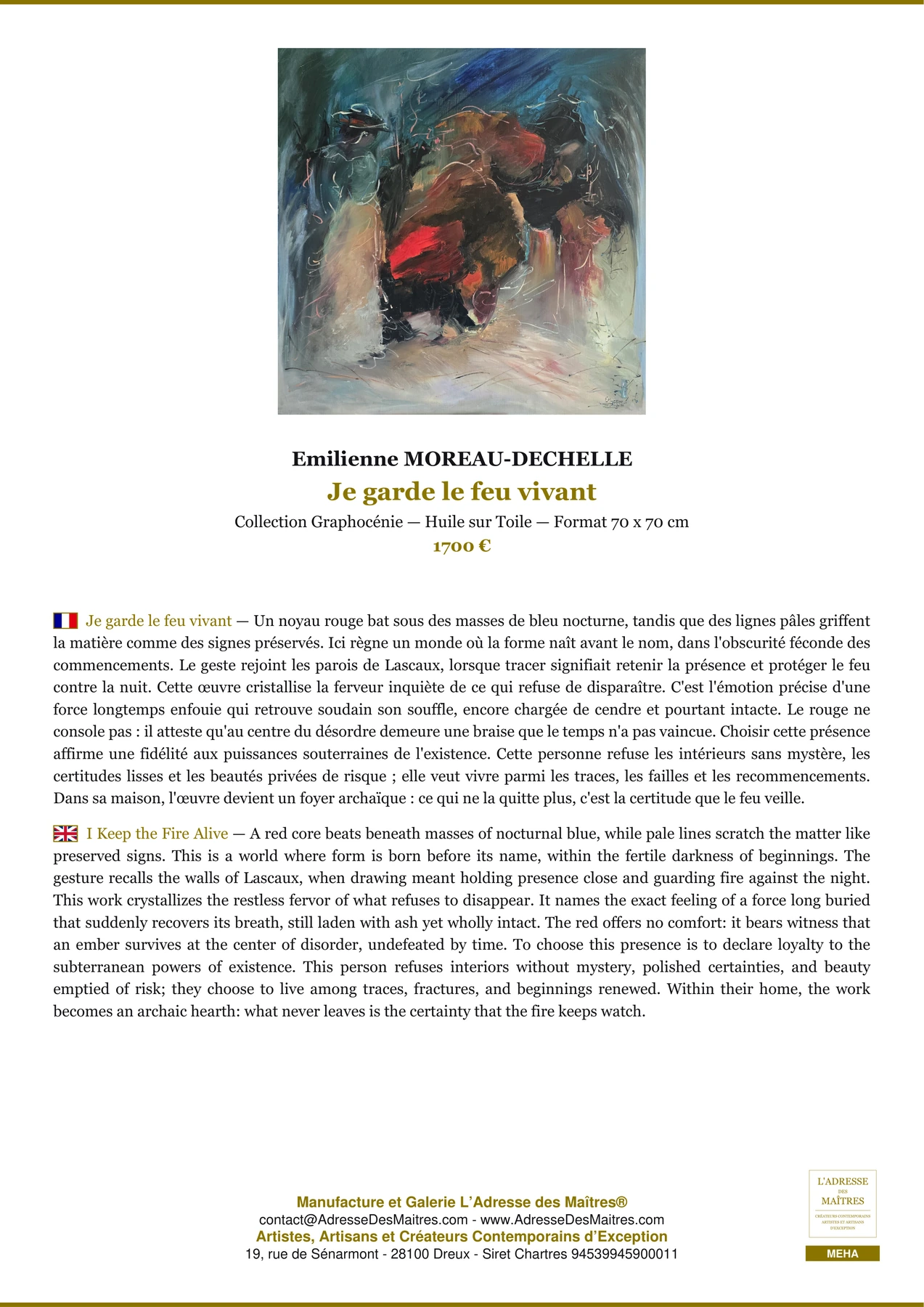
In this regard, the paintingsby Emilienne MOREAU-DECHELLE—of which the gallery is exhibiting 41 oil paintings—demonstrate how important it is for the frame to respect the evocative power of oil painting. A work such as “Passage sous les braises” naturally invites reflection on the balance between pictorial intensity and the frame’s understated simplicity. Her work clearly illustrates the need, for oil paintings, for a frame capable of supporting the presence of the medium without distracting the viewer.
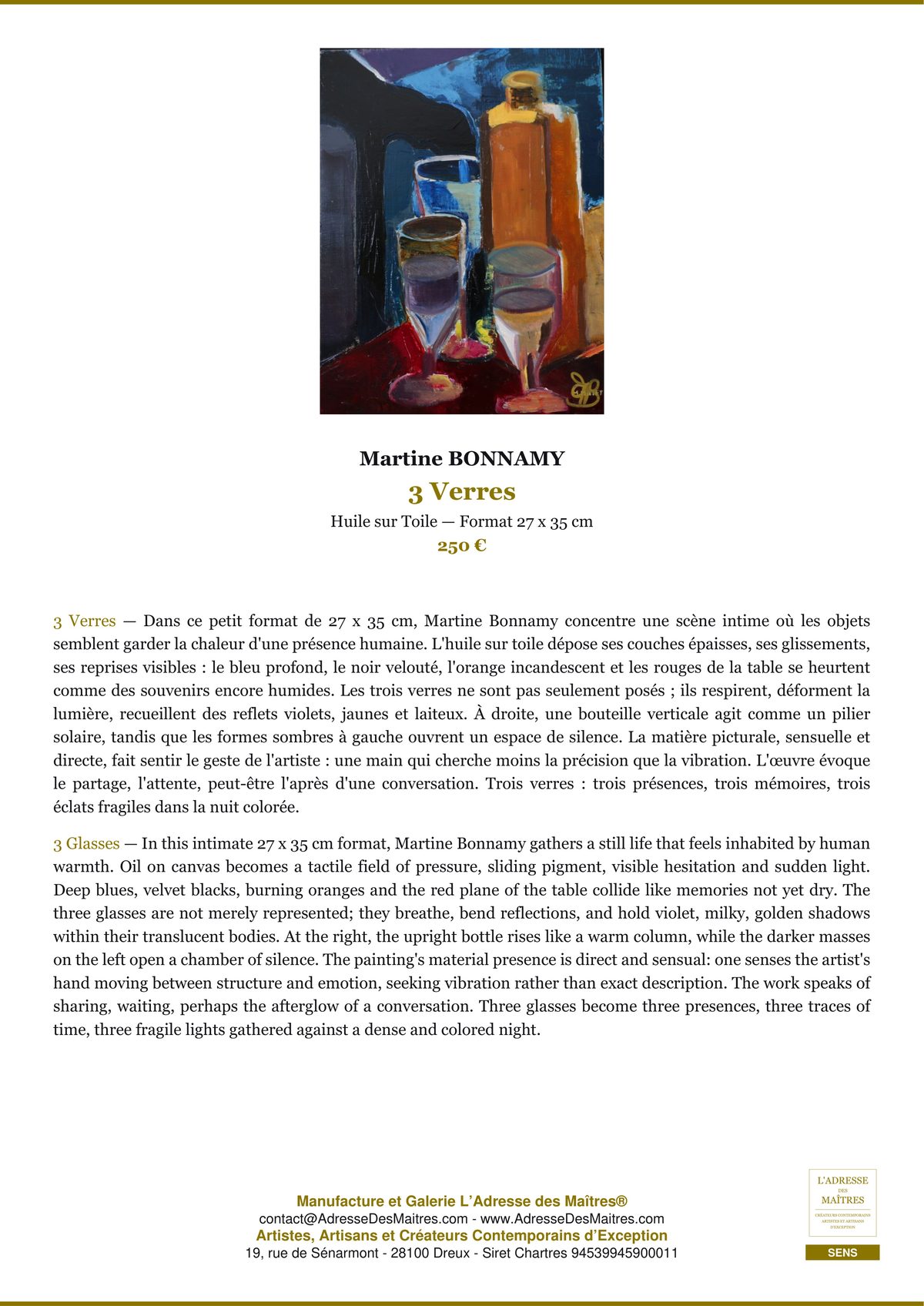
The works of Martine BONNAMY, with 35 oil paintings on display at the gallery, also provide an interesting example. The title of her piece , “Céruléenne, mémoire d’un rivage,” reminds us that an oil painting may also require a frame that allows the work to “breathe” visually and highlights the subtlety of its color harmonies. In this case, a simple stretcher frame or a drop-front frame may be particularly appropriate.
For acrylic on canvas, the principle is similar, but the often more contemporary look frequently calls for simple frames, straight profiles, or American-style frames. Acrylic lends itself well to modern displays.
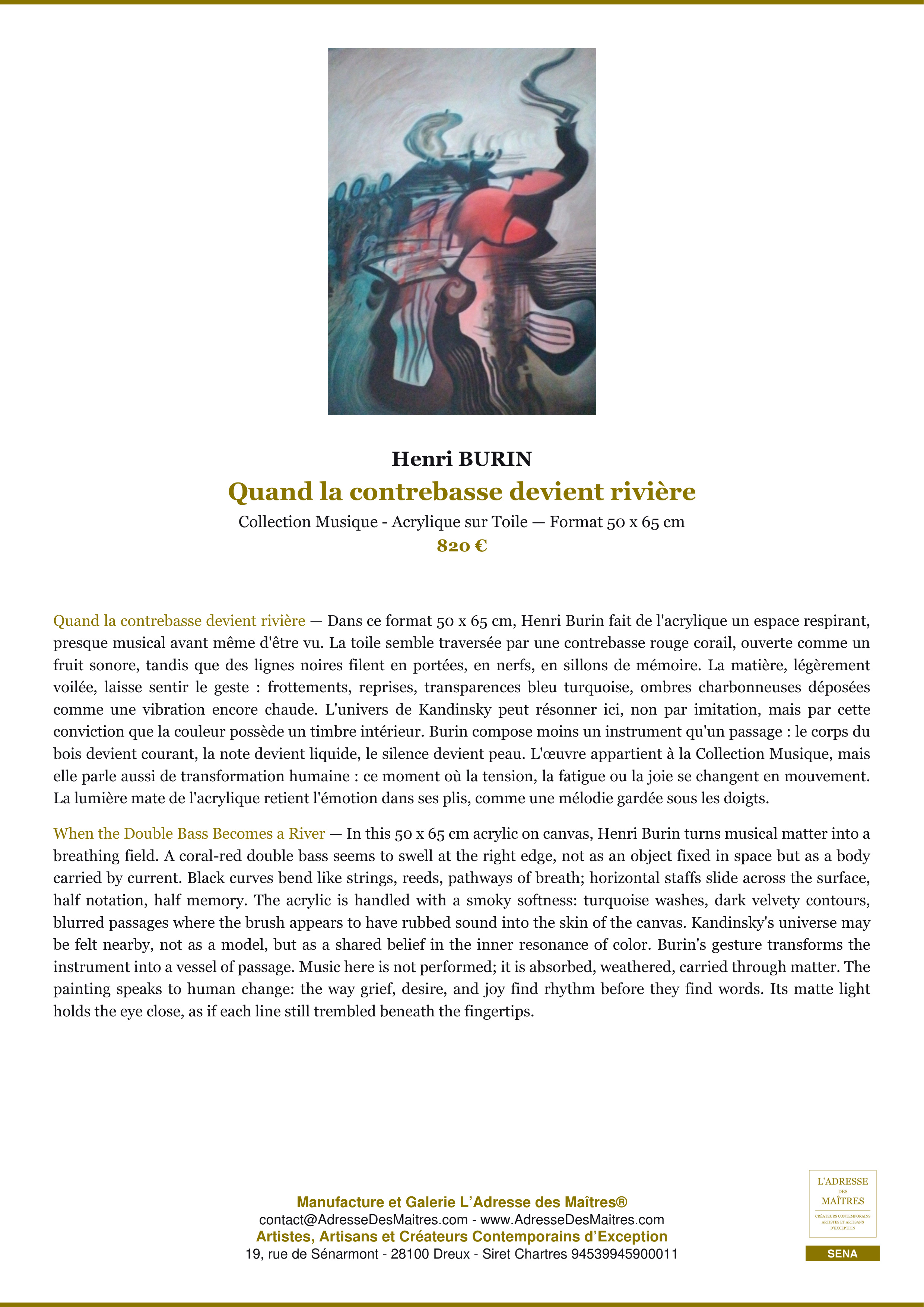
The worksof Henri BURIN—of which the gallery holds 40 acrylic paintings—are a testament to this. With a title like “When the Double Bass Becomes a River, ” the acrylic medium lends a visual presence that complements contemporary frames, which are often more minimalist. His work reminds us that a modern frame can enhance the clarity of an acrylic composition without making it seem rigid.
For a watercolor painting, framing under glass is essential. Since watercolors are highly sensitive to humidity, light, and friction, they must be mounted with a mat or a system that creates a space between the artwork and the glass. Light, airy frames that respect the delicacy of the medium are generally preferred.
Drawings, whether in pencil, charcoal, ink, or pastel, also need to be protected under glass. The frame should not overwhelm the delicacy of the lines. Neutral tones, slim frames, and well-proportioned mountings often work very well.
When it comes to mixed media, careful consideration is even more important. Sandrine DREANO, whose 12 mixed-media works featuring ink and acrylic are on display at the gallery, provides a good illustration of this with “Cartography of Inner Worlds.” A work combining ink and acrylic may require framing under glass if the substrate demands it, or a specific mounting if the materials are sensitive. Her work demonstrates the importance of adapting the frame to the technical complexity of the artwork rather than to a purely decorative logic.
Finally, when it comes to photography, black metal, natural aluminum, or understated wood are often the preferred choices. Glass or Plexiglas protects the image, while a mat can accentuate its depth and presence on the wall.
The essential role of the mat and the passe-partout
A mat is a cardboard border with a cut-out window that is placed between the artwork and the frame. Its primary function is technical: it prevents the artwork on paper from coming into contact with the glass. This simple space is crucial for preventing moisture transfer, adhesion, and certain forms of deterioration. But it also serves an aesthetic purpose: it creates breathing room around the image, refocuses the viewer’s gaze, and enhances the viewing experience.
The mat’s color is usually neutral: off-white, cream, or light gray. A color that is too bold may overshadow the artwork. Its visual thickness should be proportionate to the size and density of the composition.
A passe-partout is, depending on the context, either a small inner frame or a lined border placed between the artwork and the main frame. It creates an elegant transition, adds depth, and can subtly highlight certain tones in the artwork. It is frequently found in more refined framing, particularly for paintings or graphic works that require a delicate sense of distance.
In some cases, a mat can soften the impact of a more prominent frame. It then serves as a transitional zone between the artwork and its visual surroundings.
Conservation framing: an essential requirement
A good art frame must also serve a conservation purpose. The goal is not only to display the artwork but also to preserve it for the long term. This requires the use of appropriate materials.
Mounts, cardboard, mat boards, and backing boards must be acid-free. Acidic materials cause paper to yellow, become brittle, and gradually deteriorate. For proper conservation of artwork, it is therefore essential to choose neutral or conservation-grade materials.
Glass also plays a major role. UV-protective glass or filtered glass limits the impact of light on pigments, inks, and paper. This is particularly important for watercolors, drawings, photographs, and mixed-media works on paper. The glass can also be treated to reduce glare, which improves viewing comfort.
For works on canvas, proper conservation requires a stable mounting, non-aggressive fasteners, and a suitable environment. Even without glass, a canvas must be kept away from sources of heat, humidity, and direct sunlight.
The oil paintings by Sylvia BEAUCHAIN, 14 of which are on display in the gallery’s “Oil Painting” exhibition, also underscore the importance of this vigilance. With a title like “La mémoire des courants” (The Memory of Currents), one thinks of the richness of a painted surface that the frame must protect while allowing the painting itself to take center stage. Her work helps illustrate how the presentation of an oil painting must combine aesthetics and durability.
How much should you budget for framing a piece of art?
The cost of a picture frame depends on several factors: size, type of molding, type of glass, whether a mat is included, the quality of the preservation materials, and the complexity of the assembly.
For a small standard size, a simple frame can remain relatively affordable. However, as soon as you opt for UV-protective glass, a conservation mount, a custom shadow box, or a high-end finish, the cost increases significantly.
Generally speaking, it makes sense to view framing as an integral part of the overall investment. For a piece of art with sentimental, decorative, or heritage value, cutting corners on framing can be counterproductive. Poor mounting can detract from the artwork’s immediate aesthetic appeal and, more seriously, compromise its long-term preservation.
A simple rule of thumb is to tailor the framing budget to the importance of the artwork. For an original piece, it often makes sense to invest in custom framing using archival materials. For a fragile work on paper, this is practically essential. A simple yet well-designed frame is preferable to a flashy one made with unsuitable materials.
To frame is to interpret without distorting
Framing is an art of balance. It must protect without confining, highlight without overwhelming, and interact with the artwork without overshadowing it. The choice between wood, metal, shadow box framing, or mounting under glass always depends on the technique, the style of the artwork, and the desired effect.
Whether it’s the oil paintings ofEmilienne MOREAU-DECHELLE, Martine BONNAMY, or Sylvia BEAUCHAIN, the acrylics ofHenri BURIN, or the mixed media works of Sandrine DREANO, each approach reminds us that there is no one-size-fits-all solution. Proper framing must be considered on a case-by-case basis, with respect for the material, the light, and the preservation of the artwork.
At the L’Adresse des Maîtres® Art Gallery in Dreux, this attention to the presentation of artworks is a natural part of our commitment to promoting art. Understanding the principles ofart framing allows us to appreciate the works more fully, protect them better, and pass them on in the best possible condition.
Check out our gallery
Would you like to experience these artistic movements in person? Visit the online gallery of L’Adresse des Maîtres®—more than 606 original works by contemporary artists.


Leave a comment