
Layered Image Composite Photography — Contemporary Art
↓ Share this articleLayered Image Composite Photography: When Photography Becomes a Layering of Reality
In the vibrant field of contemporary art, certain techniques are transforming the way we view images. Layered Image Composite Photography is one such practice that blurs the boundaries between photography, painting, collage, and digital art. At the L’Adresse des Maîtres® Art Gallery in Dreux, this technique holds a unique place, with 52 works on display, notably through the work of artist Nicole ALLAIS.
Easy to understand yet rich in visual expression, Layered Image Composite Photography involves assembling multiple images, photographic fragments, textures, lighting effects, or graphic elements into a single composition. The artist does not merely capture a moment; instead, he or she builds an image layer by layer, much like a painter applying glazes or a filmmaker editing together different sequences to create a visual narrative.
An Accessible Technique: Layering to Reveal
The principle behind Layered Image Composite Photography is relatively simple to explain. The artist starts with several photographs or visual elements and then combines them to produce a final image. These layers can be visible, transparent, partially erased, blended, or set in contrast. The result is therefore not a photograph in the strictly documentary sense, but an elaborate, carefully conceived, and often poetic composition.
This technique makes it possible to create atmospheres that are impossible to capture in a single shot. A silhouette can blend into an urban landscape; a plant texture can inhabit a portrait; architecture can become a memory, a dream, or an inner vibration. The final image often gives the impression of containing several moments at once: the present moment of the photograph, the memory of a place, the emotion on a face, and the trace of a material.
In contemporary art, this approach addresses a fundamental question: How can we represent a fragmented world, saturated with images, where our perception is shaped by memories, screens, impressions, and mental associations? Layered composite photography offers a nuanced answer: it shows not only what the eye sees, but also what the mind pieces together.
Ancient origins, digital modernity
While Layered Image Composite Photography may seem closely tied to today’s digital tools, its history has its roots in 19th-century photographic experiments. From the very beginnings of photography, some artists sought to go beyond the simple reproduction of reality. Photomontages, double exposures, and combined prints already made it possible to superimpose figures, landscapes, or scenes to create astonishing images.
In the early 20th century, the artistic avant-garde extensively explored these techniques. The Dadaists and Surrealists, in particular, used photographic collage to disrupt visual logic and introduce the unconscious, the absurd, or the dream into the image. Later, experimental and conceptual photography continued to play with fragmentation, repetition, and juxtaposition.
The advent of computers, image-editing software, and digital creation tools has profoundly transformed this practice. What once required complex laboratory procedures can now be accomplished with extreme precision. But the challenge remains the same: to compose a meaningful image, to create a work that transcends the sum of its parts. Technology is merely a tool; artistic vision remains central.
A Major Technique in Contemporary Art
Incontemporary art, Layered Image Composite Photography is particularly relevant because it reflects our current relationship with images. We live in a world of superimpositions: digital streams, personal archives, social media, collective memory, and urban landscapes saturated with signs. The contemporary image is no longer always linear; it is often multifaceted, hybrid, and composite.
Artists use this technique to explore a wide range of themes: identity, memory, the body, nature, the city, time, disappearance, and the transformation of reality. A work created using superimposed images can evoke the fragility of a memory, the complexity of a personality, or the tension between the inner and outer worlds.
This process also offers great formal freedom. It allows artists to experiment with transparency, contrasts, depth, scale, and visual rhythms. Some works lean toward abstraction, while others retain a very strong figurative element. This flexibility explains why Layered Image Composite Photography appeals to many contemporary artists and naturally finds its place in an art gallery attuned to current forms of artistic expression.
Nicole ALLAIS: An Artist of Sensitive Stratification
At the L’Adresse des Maîtres® Art Gallery in Dreux, the artist featured in this medium is Nicole ALLAIS. Her work follows this approach of building up layers, in which the image becomes a space for dialogue between the visible and the invisible. With 52 works available in this medium, the gallery offers a substantial collection that allows visitors to appreciate the richness of this artistic approach.
For Nicole ALLAIS, layering is not merely an aesthetic effect. It becomes a method of visual thinking. Each layer seems to carry a memory, a sensation, a trace. The artist creates images that invite the viewer to slow down their gaze. They cannot be grasped at a glance; instead, they are discovered gradually, as if leafing through layers of meaning.
The strength of this approach lies in its balance between technical mastery and poetic intuition. Composite photography requires a keen sense of light, density, transparency, and visual correspondences. But it also demands the ability to let the image breathe, to create transitions between forms, and to evoke emotion without imposing it.
Why This Technique Appeals to Collectors
Layered Image Composite Photography is increasingly appealing to contemporary art enthusiasts and collectors because it resonates with current sensibilities. It possesses the immediacy of photography while offering the depth of a constructed work. It can be narrative, abstract, dreamlike, or meditative, depending on the artist’s intention.
For a collector, acquiring a work created using this technique often means choosing an image that reveals more than meets the eye. The richness of the visual layers creates a lasting experience. The work engages the viewer, changing depending on the light, distance, mood, or context in which it is viewed.
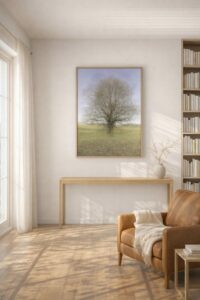
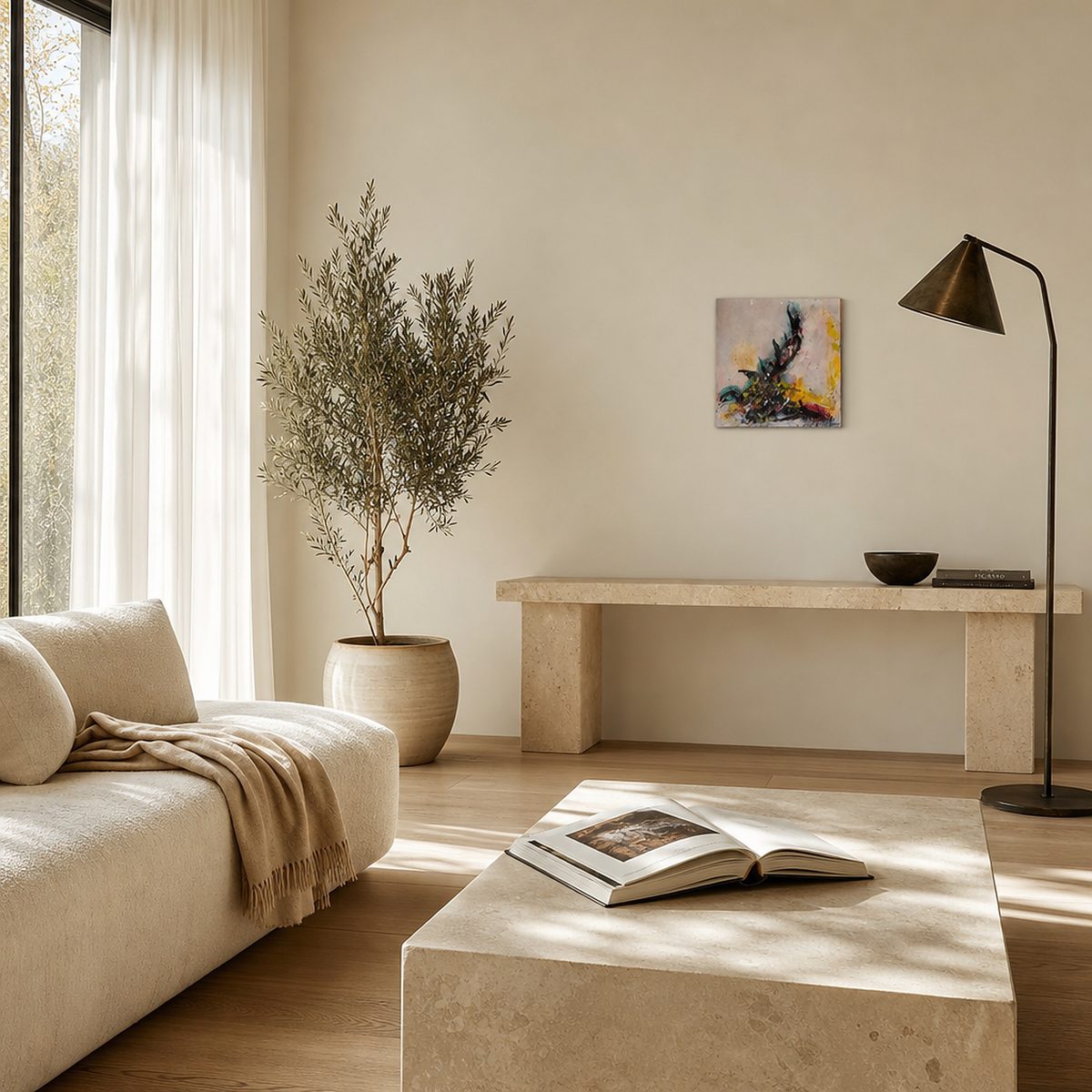
In a contemporary interior, these works have a distinctive presence. They complement both minimalist spaces and warmer, cozier environments. Their photographic quality makes them accessible, while their composite construction gives them a three-dimensional depth reminiscent of painting or collage.
Dreux and Contemporary Art: A Focus on the Visual Arts
The city of Dreux boasts a vibrant cultural scene that showcases a wide variety of artistic practices. In this context, layered composite photography plays an interesting role: it bridges the traditions of image-making with today’s digital and visual experiments. It appeals equally to photography enthusiasts and to those passionate about painting, collage, or digital art.
The inclusion of 52 works created using Layered Image Composite Photography serves as an important reference point for visitors wishing to explore this technique in an art gallery. It provides a concrete understanding of how an image can be constructed, transformed, and enriched through the interplay of layers and correspondences.
An Invitation to See Things Differently
Layered Image Composite Photography is not just a technique—it is a way of thinking deeply about the world. It reminds us that any image can contain multiple realities, multiple temporalities, and multiple emotions. In contemporary art, it allows us to go beyond the surface of the photograph to reach a form of visual poetry.
Through the works of Nicole ALLAIS, the L’Adresse des Maîtres® Art Gallery in Dreux highlights a demanding and sensitive artistic practice, in which layering becomes a revelation. For visitors—whether art lovers, collectors, or simply the curious—these compositions offer a visual experience that is both accessible and profound: that of an image that takes shape, unfolds, and continues to resonate long after it has been contemplated.
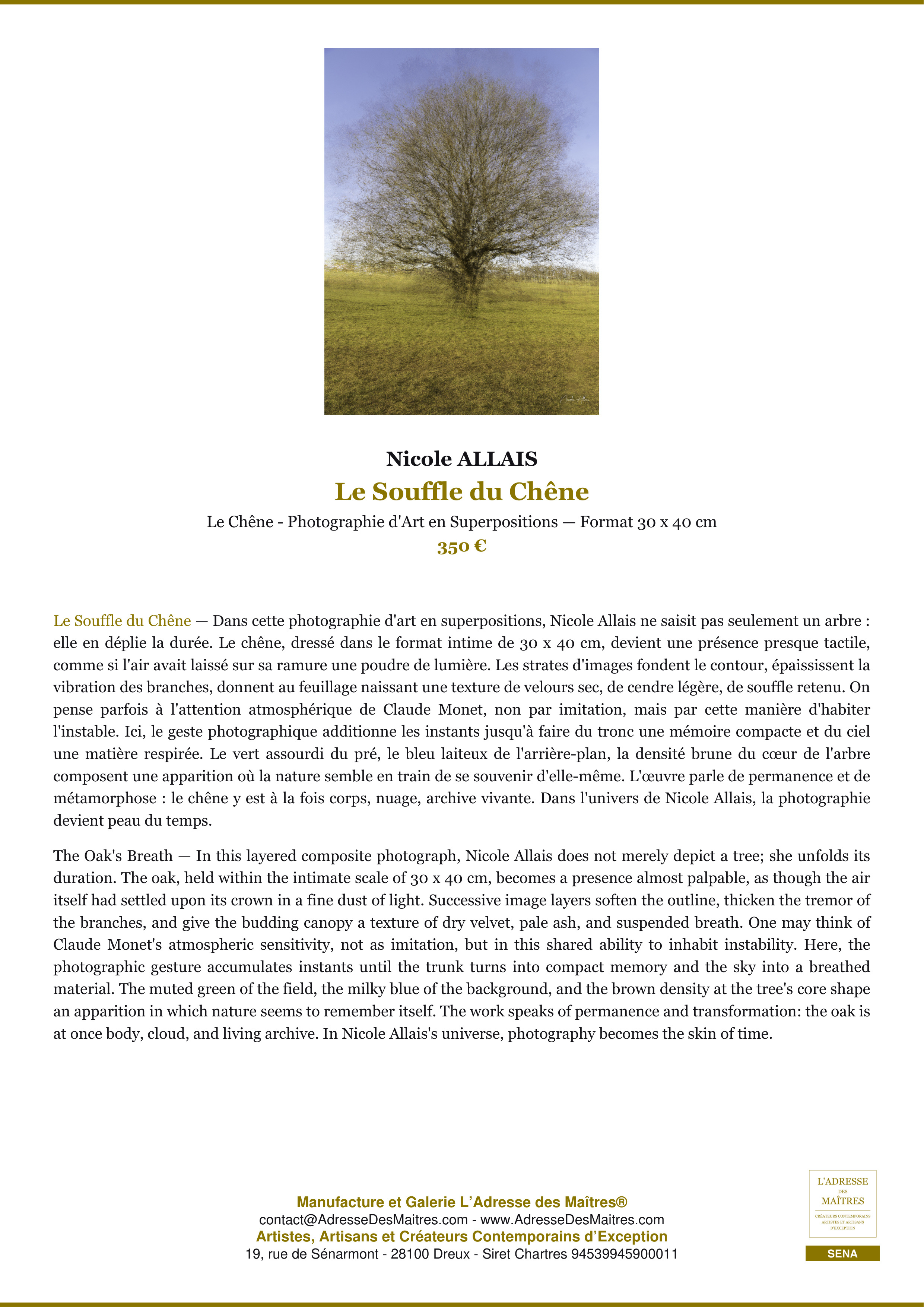
Discover 52 works of Layered Image Composite Photography in our online gallery.

Leave a comment