Contemporary Stained Glass — Light as an Artistic Medium
↓ Share this articleContemporary Stained Glass: When Light Becomes Matter
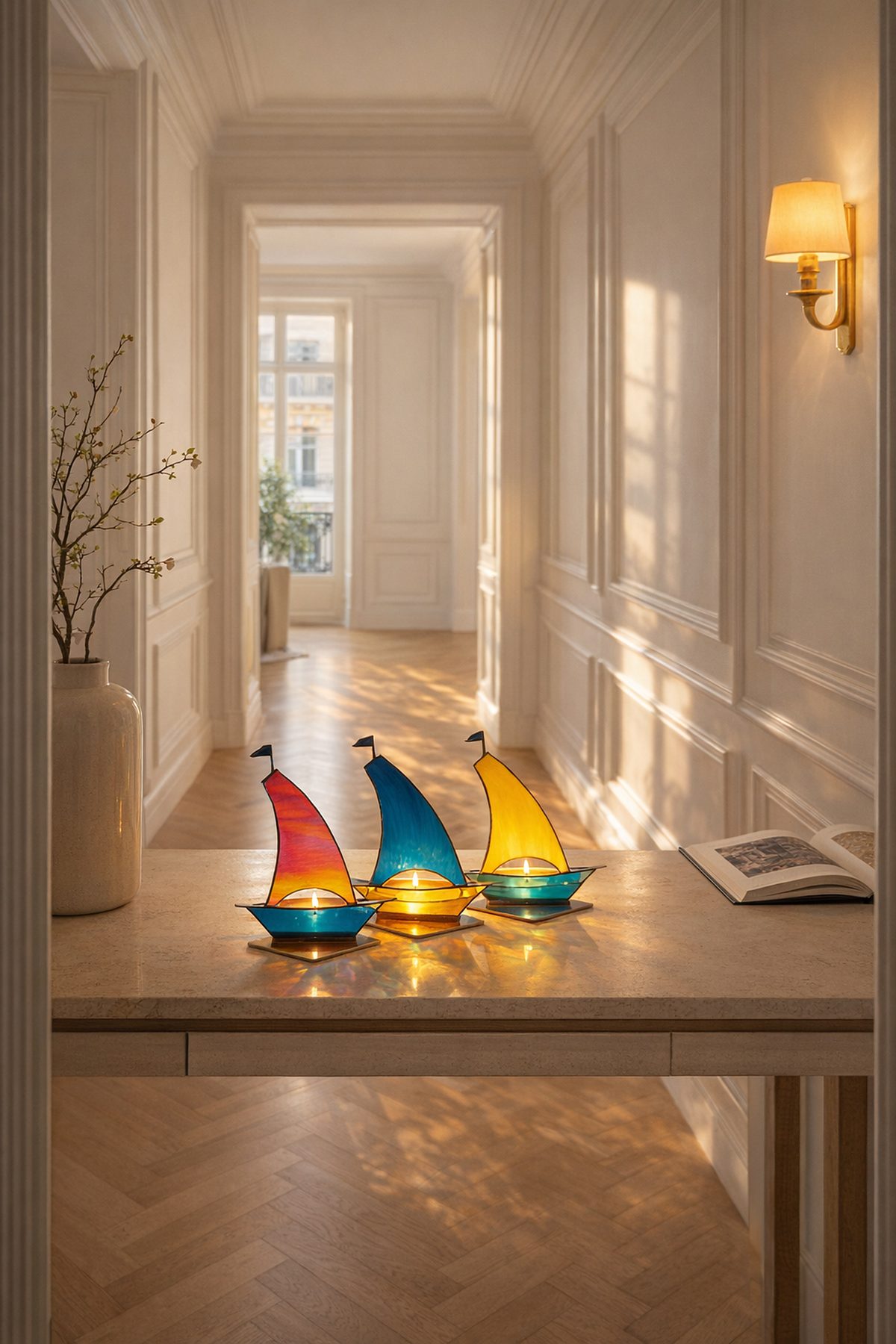
Contemporary stained glass holds a unique place in the history of glass art. Both the heir to medieval craftsmanship and a canvas for experimentation for today’s artists, it transforms light into color, architecture into a sensory experience, and artistic glass into a true visual language. Long associated with churches and cathedrals, stained glass is now finding its way into galleries, homes, hotels, cultural venues, and interior design projects. It is no longer just a window: it has become a work of art, an installation, a decorative panel, a light-filled partition, or a collector’s item.
The History of Stained Glass: From Gothic Cathedrals to Contemporary Art
The history of stained glass is inextricably linked to that of the great Gothic cathedrals. Beginning in the 12th century, religious architecture sought to open up the walls to let in more light. Flying buttresses, ribbed vaults, and large windows allowed stained-glass windows to take on spectacular proportions. Chartres, Reims, Bourges, Paris, and Strasbourg became major centers where colored light depicted scenes from the Bible, the lives of the saints, trades, donors, and the symbolic order of the medieval world.
Medieval stained glass was, therefore, a total art form. It combined architecture, theology, iconography, craftsmanship, and technical mastery. The glass, colored throughout by metal oxides, was cut, assembled using lead came, and then painted in grisaille to add details: faces, folds in clothing, inscriptions, and ornaments. Stained glass is not merely decorative; it educates, moves, and elevates the gaze.
During the Renaissance and in the centuries that followed, stained glass evolved. Glass painting became more precise, and compositions sometimes began to resemble paintings. However, interest in stained glass gradually declined in certain contexts, before experiencing a revival in the 19th century with the Neo-Gothic movement, the restoration of monuments, and the rediscovery of ancient techniques. In the 20th century, a decisive shift took place: modern artists—often painters before becoming glass artists—embraced the medium. Stained glass thus moved beyond a purely narrative approach to explore pure color, abstraction, rhythm, symbolism, and modern spirituality.
Major Techniques in Stained Glass and Artistic Glass
Lead-glass stained glass remains the best-known historical technique. Pieces of colored glass are cut according to a preparatory sketch, then set into H-shaped lead strips. The assembly is soldered, caulked, and sometimes incorporated into a metal frame. This technique allows for highly detailed designs, both figurative and abstract compositions, and excellent durability when done properly.
Blown glass is part of a broader tradition of glass art. The glassblower draws a mass of molten glass onto the end of a blowpipe, then blows to create a hollow shape. In stained glass, blown glass can be used in the form of sheets or colored pieces featuring irregularities, bubbles, nuances, and shimmering effects that lend light a unique depth. These variations are part of the charm of artistic glass: no surface is completely uniform.
Glass slabs, widely used in the 20th century, are created by using thick blocks of glass—often cut or shattered—which are then assembled using a binder, traditionally cement or resin. This technique gives the material a very physical presence. The light it creates is denser and more sculptural. It is particularly well-suited to modern architecture, light walls, and powerful abstract compositions.
Fused glass, or fusing, involves firing several pieces of glass in a kiln so that they fuse together partially or completely. It allows artists to layer colors, incorporate patterns, and create reliefs, textures, and contemporary effects. Fused glass is highly valued in interior design because it can be used to create wall panels, decorative objects, light fixtures, partitions, backsplashes, or standalone art pieces.
Stained Glass in the 20th Century: Chagall, Matisse, Fernand Léger, and the Great Cathedrals
The 20th century marked the entry of stained glass into modern art. Leading artists designed stained-glass windows that no longer merely illustrated a traditional religious theme; instead, they offered a new visual and spiritual experience. Marc Chagall is one of the most famous figures of this revival. His stained-glass windows, notably in Reims and Metz, combine deep blues, biblical figures, narrative poetry, and a dreamlike atmosphere. In Chagall’s work, color seems to float in space; it creates an inner world as much as a sacred image.
Henri Matisse, with the Chapel of the Rosary in Vence, offers an alternative approach. His work with line, color, and radical simplicity transforms the stained-glass window into a space for meditation. Plant forms, solid blocks of color, and the whiteness of the architecture create a subtle relationship between natural light and formal simplicity. Matisse demonstrates that stained-glass windows can be modern without disrupting the contemplative atmosphere of the space.
Fernand Léger, particularly through his stained-glass windows at the Sacré-Cœur Church in Audincourt, brings a highly distinctive graphic and colorful energy. His dynamic and monumental compositions make use of contrast, outlines, biomorphic forms, and chromatic intensity. Through his work, stained glass engages in a dialogue with industrial modernity, the power of the symbol, and architectural monumentality.
The great cathedrals and churches of the 20th century thus became laboratories. Reims, Metz, Vence, Audincourt—as well as many buildings rebuilt after the wars—welcomed modern artists. Stained-glass art was no longer solely the domain of traditional workshops; it became a collaboration between artists, master glassmakers, architects, institutions, and patrons.
Contemporary Stained Glass: From Sacred Architecture to Interior Design
Today, contemporary stained glass has largely broken free from its religious context. It remains a feature of sacred architecture, where it is used in restorations and in the creation of chapels, places of contemplation, and memorials. But it is also finding its way into private homes, apartments, hotels, restaurants, workspaces, and cultural venues. In a contemporary interior, a glass artwork can filter light, separate two spaces without closing them off, create a focal point, or transform the atmosphere of a room depending on the time of day.
Stained glass thus becomes an art form centered on transparency, variation, and atmosphere. An interior glass ceiling can serve as a decorative partition; a suspended panel can become a light sculpture; an existing window can be fitted with a custom-made piece; and a piece of fused glass can function as a wall hanging. This diversity explains collectors’ growing interest in art glass.
In an art gallery, contemporary stained glass is often displayed alongside other art forms: painting, photography, sculpture, and mixed media. This proximity is significant because stained glass engages with the same themes as contemporary art: color, space, memory, material, light, abstraction, image, and perception.
The L’Adresse des Maîtres® Art Gallery in Dreux and Artists to Discover
The L’Adresse des Maîtres® Art Gallery in Dreux serves as an excellent starting point for exploring works related to contemporary stained glass, glass art, and artistic explorations of light. The gallery features several artists whose work offers complementary perspectives on this field, ranging from stained glass to photography and mixed media.
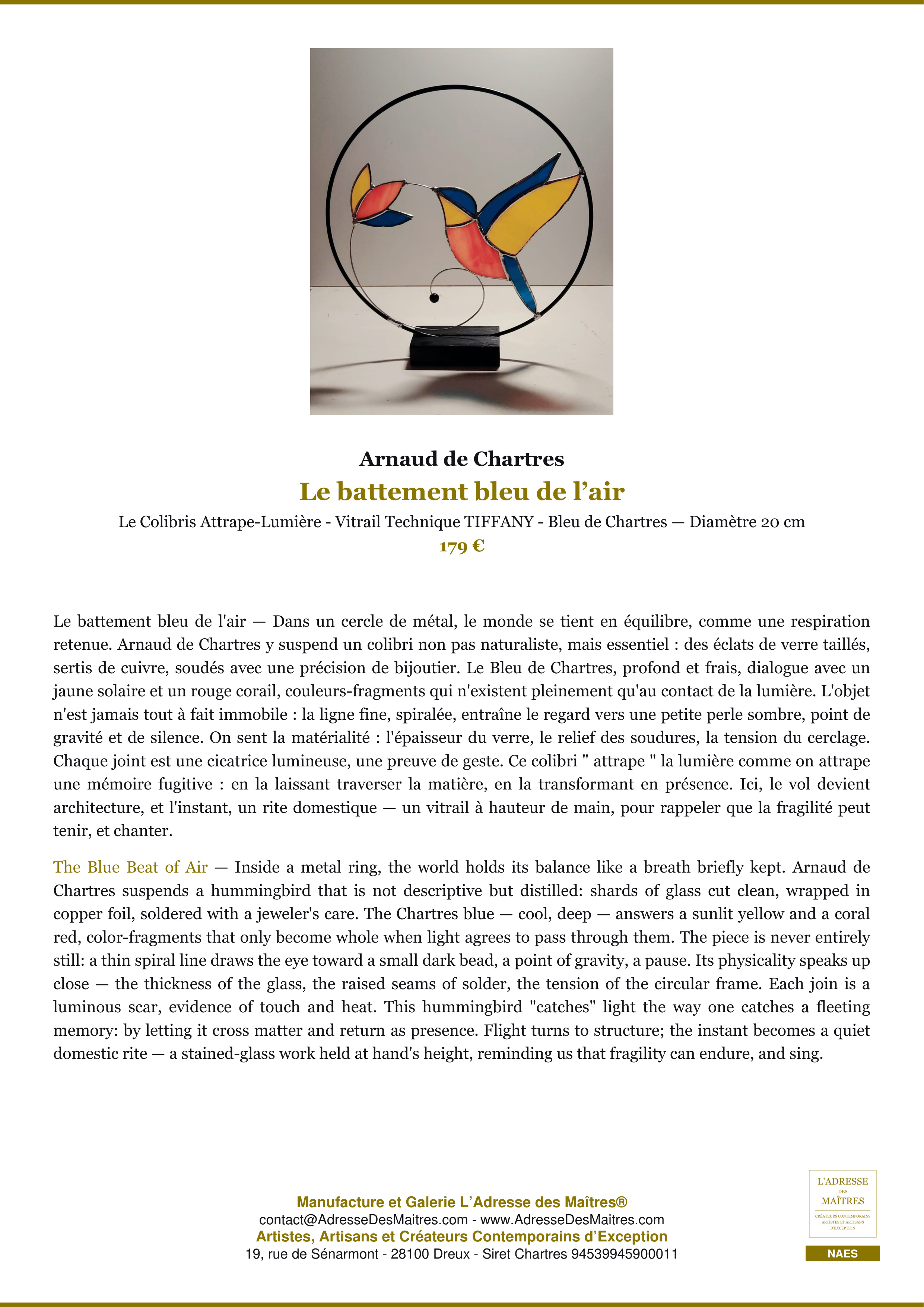
Arnaud de Chartres is represented by nine Tiffany stained glass works, including *Le battement bleu de l’air*. The Tiffany technique, which involves assembling pieces of glass held together with copper ribbon rather than traditional lead, allows for great finesse of line and flexibility of composition. Within the context of contemporary stained glass, these works offer an approach directly linked to assembled glass and the play of color.
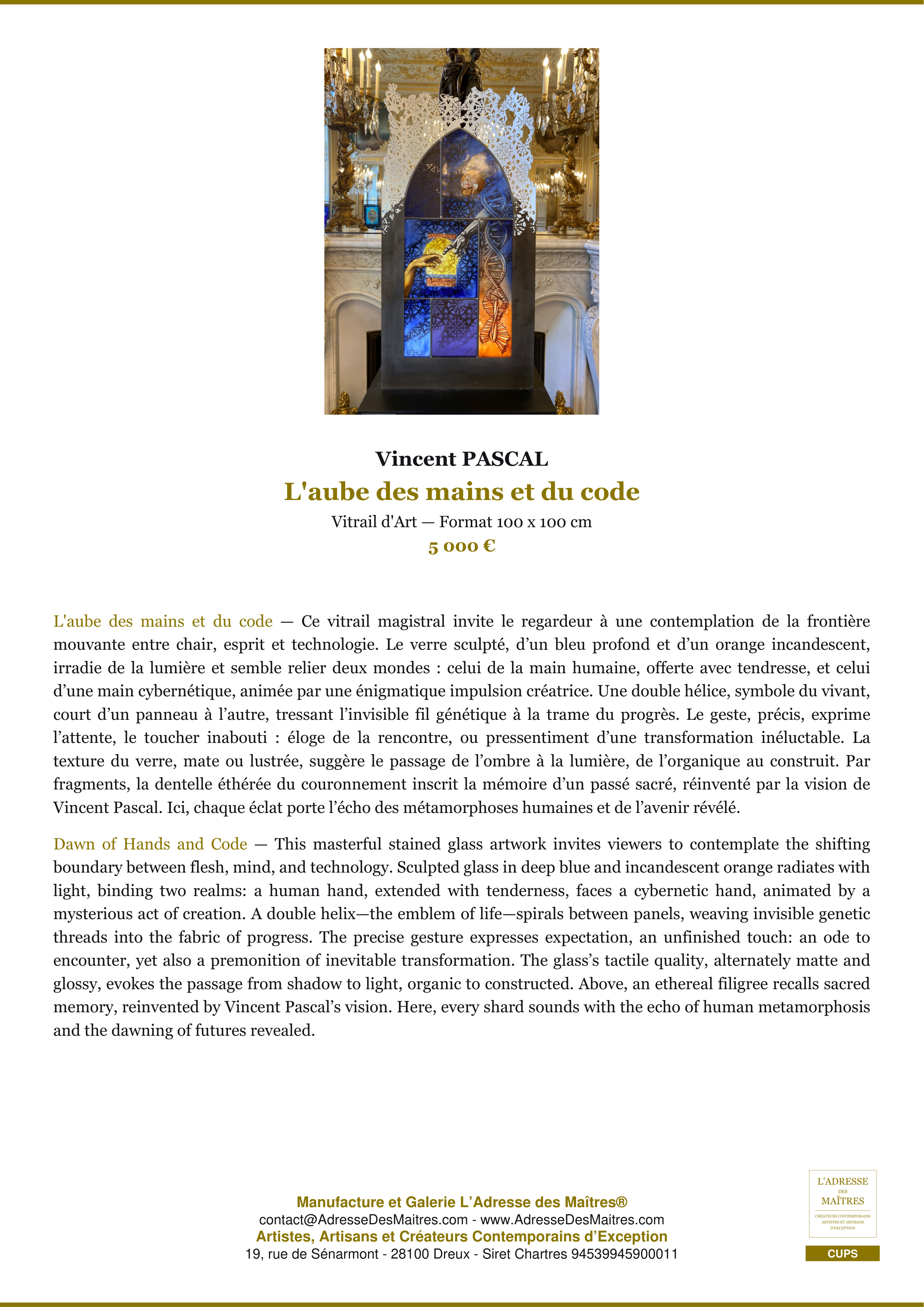
Vincent PASCAL is represented by four works in Fine Art Stained Glass, including *L’aube des mains et du code*. This presence affirms stained glass as a work of art in its own right, beyond its purely architectural function. Fine Art Stained Glass allows us to view stained glass as a collectible format, designed for contemplation, installation, and dialogue with an interior space.
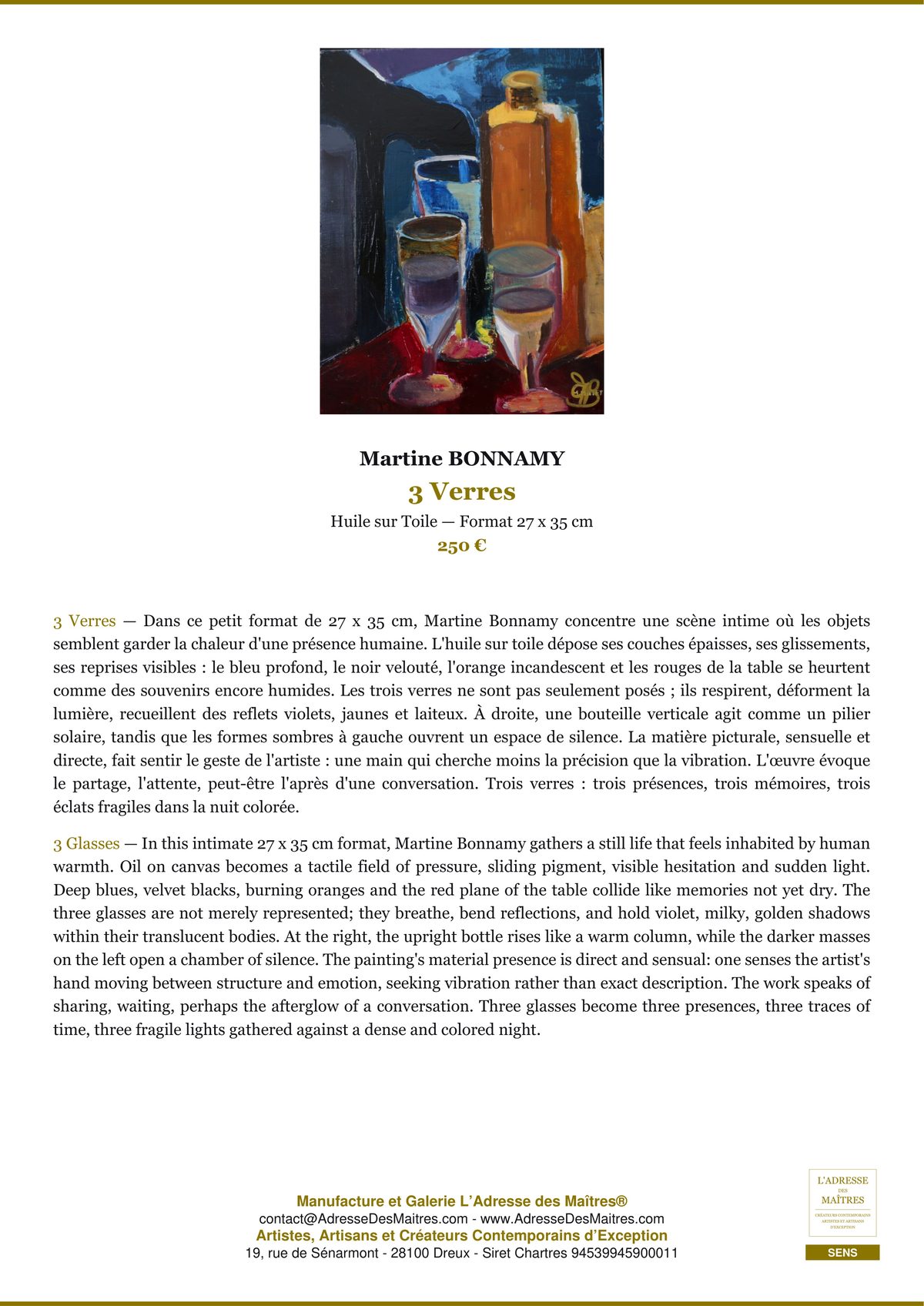
Martine BONNAMY is represented by 11 mixed-media-on-canvas works, including *Herbes de lumière, mémoire noire*. Although the listed technique is not stained glass, her works naturally fit into a reflection on light, matter, and memory—central themes in the art of glass. They allow us to connect contemporary stained glass with other visual art practices that explore surface, depth, and luminosity.
Jean-Pierre BLONDIN is represented by two works of fine art photography, including *Memory Shaped by Light*. Fine art photography shares with stained glass a fundamental dependence on light. Within this dialogue, his works offer a photographic interpretation of light as a medium of memory and composition.
Nicole ALLAIS is represented by two works in Layered Image Composite Photography, including *Guet de lumière sur la ville*. Composite photography using layered images allows the artist to explore light through strata, transparencies, and visual recompositions. This approach resonates with stained glass, which also superimposes color, medium, light, and the viewer’s gaze.
Contemporary Glass Artists to Watch
Among the contemporary glass artists to watch, some are developing monumental approaches, while others focus on standalone works or installations. Brian Clarke, for example, is known for his explorations of architectural stained glass and color on a large scale. Judith Schaechter explores intense, figurative stained glass—often narrative and highly detailed. Narcissus Quagliata has helped revitalize the relationship between glass, light, and architectural space. These approaches demonstrate that contemporary stained glass is not a static art form: it can be abstract, figurative, spiritual, decorative, experimental, or conceptual.
Alongside these international figures, galleries play a vital role in showcasing artists who work with artistic glass in formats accessible to collectors. This is precisely the appeal of a venue like the Galerie d’Art L’Adresse des Maîtres® in Dreux: to highlight the diversity of artistic practices related to light, glass, imagery, and materials.
Purchasing a Glass or Stained-Glass Artwork: Sizes, Prices, and Installation
When purchasing a contemporary stained-glass window or a glass artwork, there are several factors to consider: the size, the location, the available light, the mounting method, and the budget. Small pieces can be placed on a pedestal, hung in front of a window, or framed like wall art. Medium-sized pieces are suitable for an interior bay window, a doorway, a partition, or a hallway. Large pieces, on the other hand, often require a technical study, especially if they are to be integrated into the architecture.
Prices vary widely depending on the technique, size, complexity of execution, the artist’s reputation, and whether the work is unique or part of a series. A small decorative glass piece may be relatively affordable, while a custom stained-glass window, a monumental glass panel, or a complex fused-glass artwork can represent a much larger investment. It is advisable to ask the art gallery or the artist for specific information about the technique, dimensions, weight, installation requirements, and maintenance.
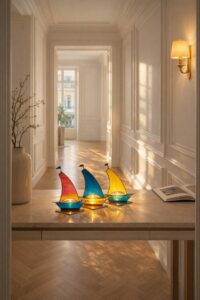
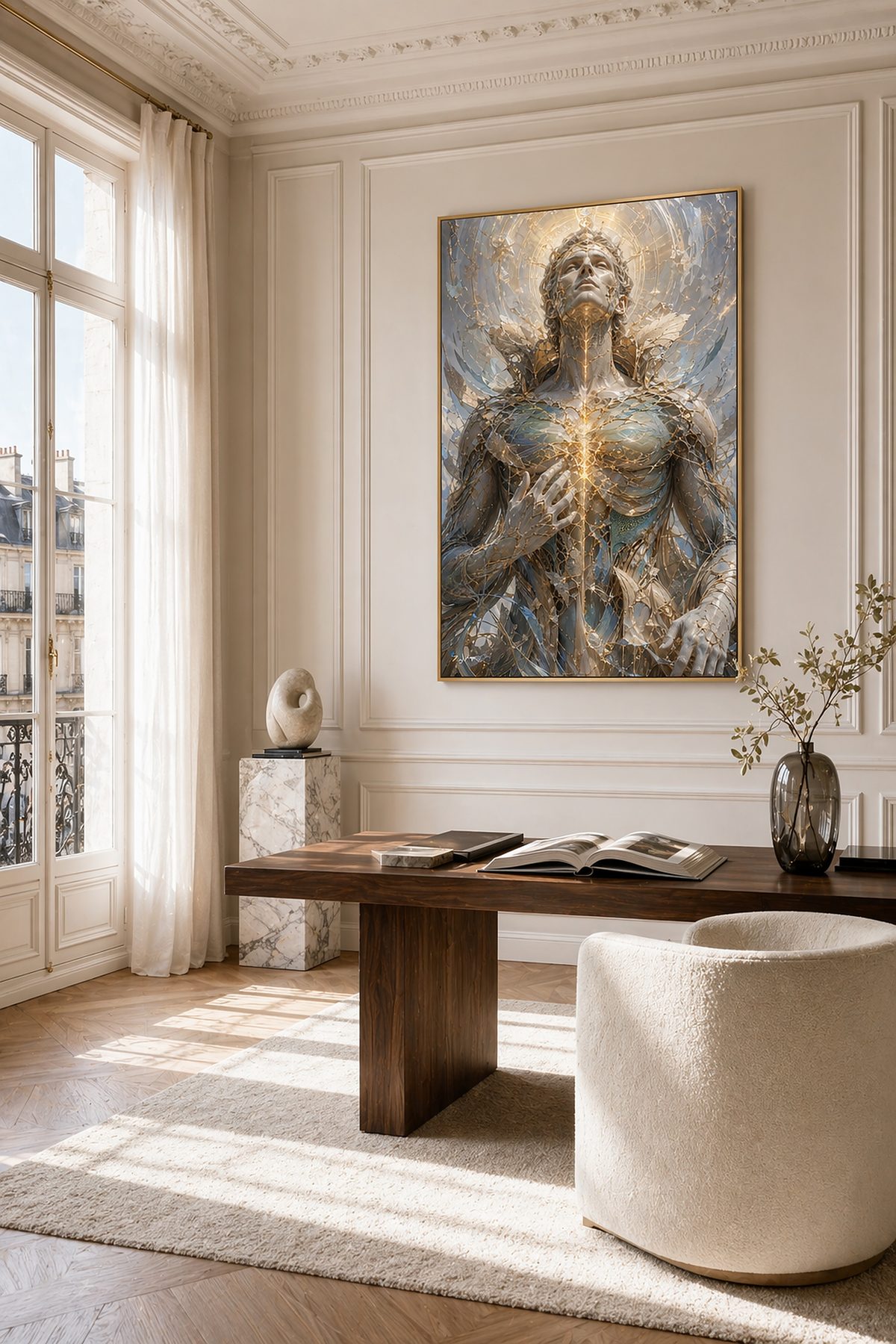
Installation is key. A stained-glass window placed in front of a natural light source will not have the same effect as one illuminated by artificial light. In an interior setting, it is important to anticipate changes in light throughout the day, ensure secure mounting, consider the risk of impact, and ensure harmony with the surrounding materials. A glass artwork can complement stone, wood, metal, concrete, or very simple white surfaces.
An ancient art form that is decidedly contemporary
Contemporary stained glass proves that the oldest traditions can remain fully alive when they engage with the challenges of their time. As the heir to Gothic cathedrals, enriched by 20th-century masters such as Chagall, Matisse, and Fernand Léger, it is now finding its way into interior design, private collections, and artistic experimentation. Blurring the lines between glass art, artistic glass, and contemporary creation, it invites us to view light not merely as illumination, but as a sensitive, ever-changing, and deeply poetic medium.
Check out our gallery
Would you like to experience these artistic movements in person? Visit the online gallery of L’Adresse des Maîtres®—more than 606 original works by contemporary artists.
Leave a comment