
The Art of Ceramics — Between Millennia-Old Tradition and Contemporary Creation
↓ Share this articleArtistic Ceramics: A Story of Materials, Fire, and Creation
Art ceramics hold a unique place in the history of the arts. Both ancient and resolutely contemporary, they bridge the primitive act of shaping clay with the most cutting-edge artistic exploration. Ranging from everyday objects to sculptures, surface experiments, and collectible works, art ceramics captivate with their technical and expressive diversity. Today, it naturally finds its place in any art gallery attuned to the dialogue between craftsmanship and contemporary creation.
In Dreux, the L’Adresse des Maîtres® Art Gallery is participating in this celebration of ceramics and its connections to other artistic practices. Its perspective allows us to approachcontemporary ceramic art not only as an autonomous discipline, but also as a space where forms, textures, memory, and invention converge.
From Ancient Pottery to Contemporary Art: A Brief History of Ceramics
The history of ceramics began long before the emergence of the fine arts as we understand them today. The earliest pottery, shaped by hand and then fired, served essential purposes: storing water, grains, and oils, and cooking food. In ancient civilizations, ceramics quickly became a major cultural medium. In Greece, painted vases depicted myths, scenes of war, or banquets. In China, advances in clay formulations and firing techniques paved the way for a refined tradition, with porcelain representing one of its pinnacles.
During the Middle Ages and then the Renaissance, ceramics flourished in prestigious production centers. They were no longer merely utilitarian: they were adorned with decorations, glazes, and intricate ornamentation. Earthenware, in particular, experienced a remarkable boom in Europe. Later, manufacturers played a role in the dissemination of objects that were both domestic and luxurious.
The 19th century—and especially the 20th century—marked a decisive turning point. Ceramics gradually broke free from its purely utilitarian function to enter fully into the realm of art. Artists embraced it as a medium for exploration. Form, material, fracture, firing, chance, relief, and color became artistic elements in their own right. Incontemporary ceramic art, a piece is no longer necessarily intended to contain or serve a practical purpose: it can explore space, the body, memory, time, and transformation through fire.
Major Ceramic Techniques
To understand ceramic art, one must distinguish between its main techniques. Each has its own properties, limitations, and aesthetic language.
Sandstone
Stoneware is a dense ceramic fired at high temperatures. This high-temperature firing gives it great strength and often a certain visual simplicity, which is highly valued in modern and contemporary design. Stoneware can feature rich textures, nuanced glazes, and a particularly strong connection to the material itself. It is often chosen for sculptural pieces or objects where the goal is to combine sturdiness with artistic impact.
Earthenware
Earthenware is a type of terracotta covered with glaze, typically fired at a lower temperature than stoneware or porcelain. It allows for a wide variety of decorations and vibrant colors. Historically linked to the decorative arts, it remains widely used in artistic ceramics thanks to its decorative versatility. Its glazed surface lends itself to graphic designs, painted motifs, and contrasts between tradition and modernity.
Porcelain
Porcelain is distinguished by its delicacy, whiteness, and, at times, translucency. It requires a high degree of technical skill. Long associated with refinement and prestige, it is now also used in highly contemporary approaches. Its apparent delicacy can be employed in conceptual or minimalist works, as well as in pieces that are very daring in terms of form.
Raku
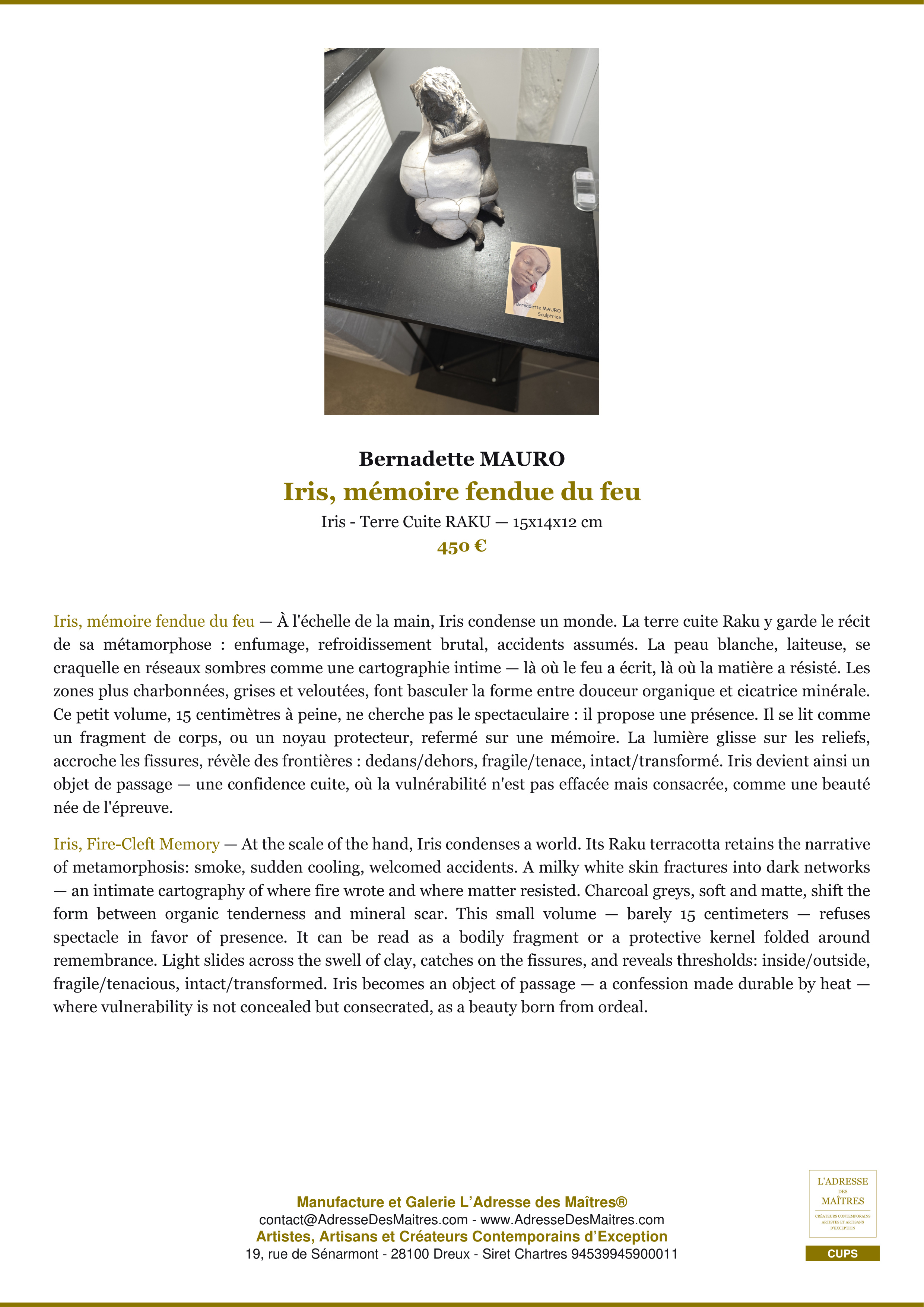
Raku is a rapid firing technique characterized by unpredictability and thermal shock effects. The crackling, smoke marks, and surface variations make it a particularly expressive art form. Highly regarded in contemporary ceramic art, this technique introduces an element of unpredictability that is an integral part of the artwork. Raku highlights the relationship between the artist’s control over the process and the influence of fire.
Terracotta
Terracotta is one of the oldest forms of ceramics. It can be left unglazed or treated with engobes and patinas. Warm, direct, and often very tactile, it maintains a strong connection to sculpture. In many works, it evokes the original closeness between the artist’s hand and the molded material. Its more natural or archaic appearance can become a powerful aesthetic choice incontemporary ceramic art.
Great Ceramic Artists: From Picasso to Fontana, Through to Contemporary Practices
Several major 20th-century artists helped bring ceramics into the realm of modern and contemporary art. Pablo Picasso developed a passion for ceramics and explored its formal possibilities with remarkable freedom. His works demonstrated that an artist already recognized in other disciplines could engage with this medium on an equal footing, bringing to it drawing, humor, inventiveness, and visual power.
Lucio Fontana, for his part, used ceramics as a space for sculptural experimentation. His work reminds us that ceramics is not merely about decorative objects: it can become gesture, tension, relief, and spatiality. Through his work, fired clay takes on a fully modern expressive intensity.
Contemporary ceramic artists are building on and revitalizing this legacy. Some focus on a return to traditional craftsmanship, while others develop conceptual, organic, or architectural forms. Many blur the boundaries between sculpture, design, installation, and object. Ceramics is today one of the most vibrant mediums, precisely because it bridges ancient techniques and contemporary concerns.
Artists' Perspectives at the L’Adresse des Maîtres® Art Gallery
At the L’Adresse des Maîtres® Art Gallery in Dreux, several artists shed light on the challenges of ceramics and, more broadly, the use of materials in art.
Bernadette MAURO is represented there by 15 ceramic works, including “Iris, mémoire fendue du feu.” Through these works, we see a contribution directly linked to the very heart of ceramic art: the memory of the material transformed by firing, the presence of fire, and the ability to turn cracks or tension into a poetic dimension of the work. Her presence in an art gallery such as L’Adresse des Maîtres® firmly anchors ceramics within the realm of contemporary art.
Nicolas PERAL is featured with two ceramic works, including “Le rêve prend chair d’argile.” This title highlights an approach in which clay serves as a bridge between the imagination and form. His work naturally reinforces the idea that ceramic art can give shape to an inner vision, transforming clay not only into a technical medium but also into a vehicle for dreams and embodiment.
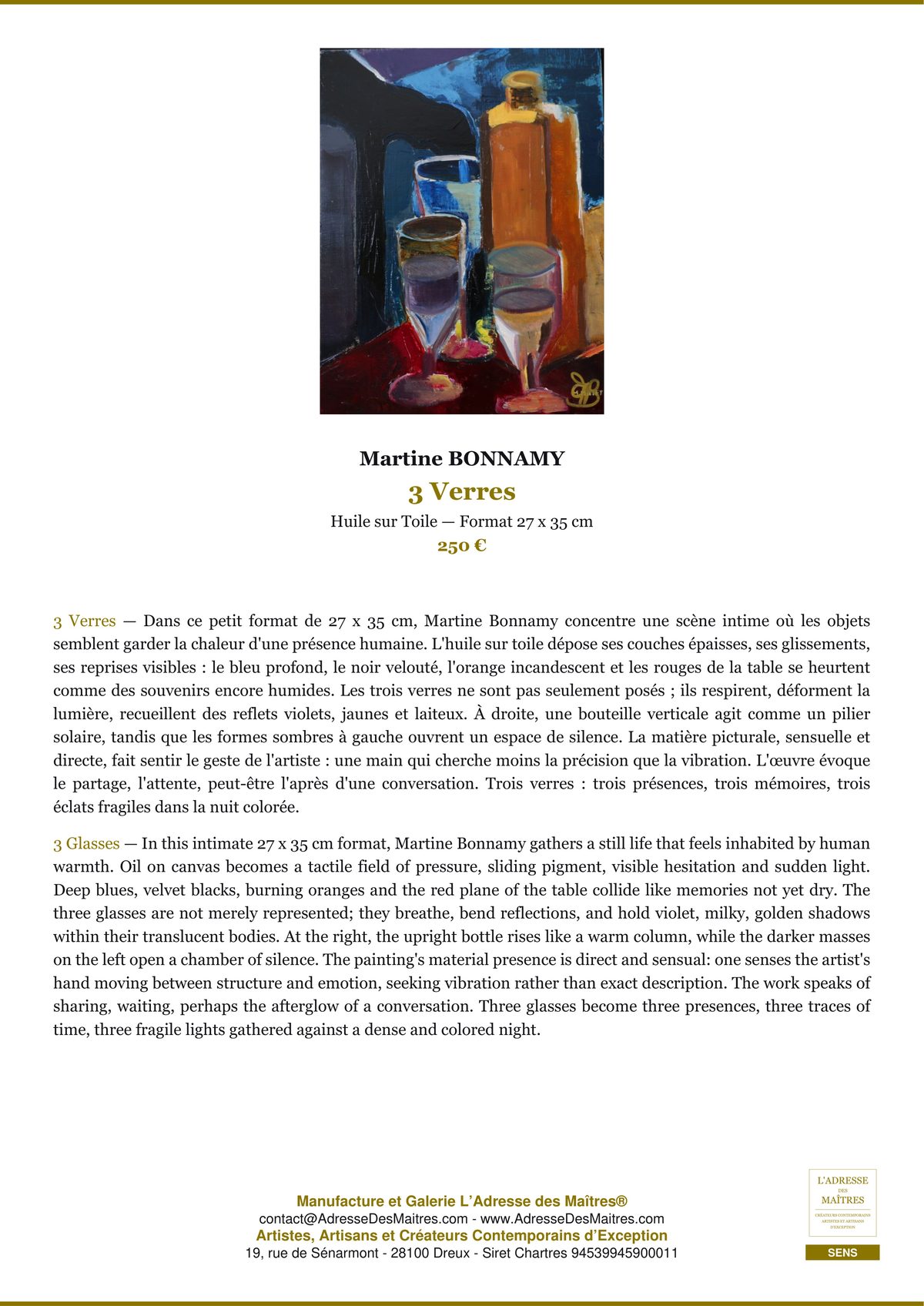
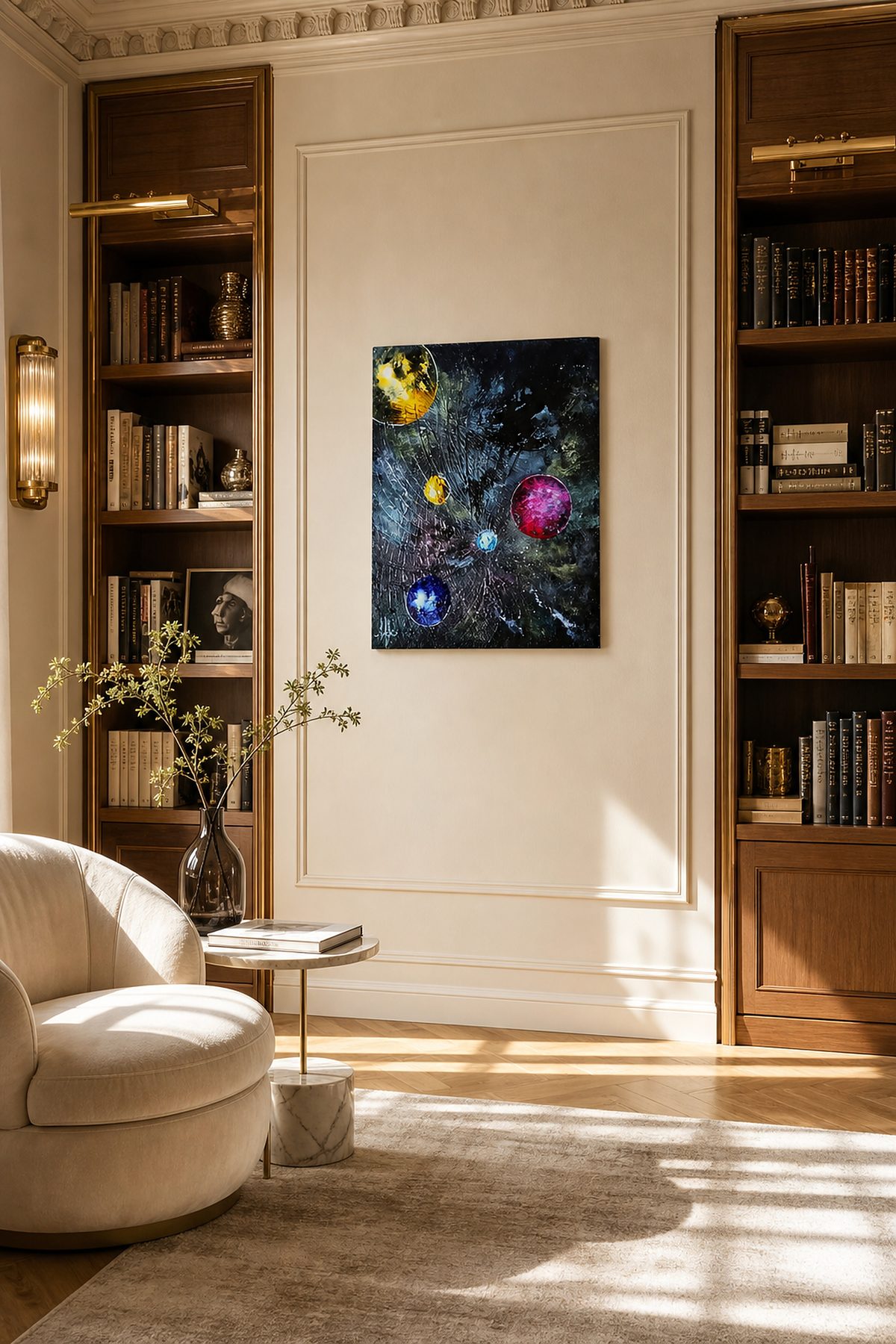
Martine BONNAMY, with 63 mixed-media works on canvas—including “Herbes de lumière, mémoire noire”—is not represented here with ceramics but rather through her mixed-media practice on canvas. Her inclusion remains relevant to this collection, as it underscores how reflections on material, memory, and surface cut across multiple disciplines. In the context of an art gallery, her work enriches the dialogue with ceramics by highlighting subtle correspondences between textures, visual depth, and poetic evocation.
Art object or utilitarian object: a line that is becoming increasingly blurred
Ceramics have long been associated with practical use: bowls, vases, plates, jars, serving dishes, and teapots. However, this utilitarian aspect does not preclude artistic value. On the contrary, the history of ceramics shows that beauty and function have often gone hand in hand. An object can be designed to serve a purpose and, at the same time, be a work of art.
Today, the line between a work of art and a utilitarian object is often deliberately blurred. A bowl can become a sculpture. A vase may serve only a symbolic purpose. A piece inspired by a household object may be designed to be viewed rather than used. This ambiguity is what makes ceramic art so rich: it engages the eye, the hand, the space, and sometimes even its use.
Incontemporary ceramic art, some artists emphasize function, while others set it aside. Still others play precisely on this ambiguity. Collectors must therefore learn to look beyond categories: what matters is the coherence of the artist’s approach, the quality of the form, technical mastery, and the work’s powerful presence.
How to Collect Art Ceramics
Collecting art ceramics requires sensitivity, curiosity, and a systematic approach. The first piece of advice is to look at a lot of pieces: visit exhibitions, studios, specialized fairs, and key venues such as art galleries. Observing the differences in clay, glaze, firing, weight, balance, and finish helps you gradually refine your eye.
It is also helpful to learn about the technique used. A porcelain piece does not produce the same impression or the same effects as stoneware or raku. Understanding the technique helps you better appreciate the quality of the craftsmanship and the uniqueness of the work.
A beginner collector may start by buying based on emotion, but will benefit from documenting their acquisitions: the artist’s name, the title of the work, the medium, the dimensions, the date (if known), the provenance, and the certificate of authenticity. These details are essential for the traceability and future value of the collection.
It is also recommended to purchase from recognized professionals, particularly at an art gallery that can guide the collector. In Dreux, the Galerie d’Art L’Adresse des Maîtres® provides an ideal setting for discovering artists, understanding their artistic practices, and engaging in an informed dialogue about the works.
Finally, collecting means building a cohesive collection. Some choose a specific technique, such as raku or porcelain. Others focus on a particular period, a theme, or the work of contemporary artists who explore ceramics as a sculptural language.
Care and Preservation of Ceramic Pieces
Ceramics are durable, but they are still susceptible to impact, sudden temperature changes, and certain types of rough handling. To properly care for a piece, you must first place it in a stable location, away from high-traffic areas, vibrations, and the risk of it falling.
Cleaning should be gentle. In general, a clean, dry cloth is sufficient for dusting. For certain pieces, very light cleaning with a slightly damp cloth may be appropriate, provided that abrasive or harsh products are avoided. Works with craquelure, complex reliefs, or unique surfaces must be handled with even greater care.
It is best to take special care with raku pieces, which often have a more fragile surface, as well as with works that have delicate or protruding parts. Always handle ceramics with both hands, supporting them by the base rather than grasping them by a handle, neck, or decorative element.
In the event of a crack or accident, it is best to consult a specialized restorer rather than attempt a DIY repair. Improper handling can permanently damage the work’s aesthetic and heritage value.
Why Is Artistic Ceramics So Popular Today?
If ceramics are experiencing such a resurgence in popularity, it is undoubtedly because they fulfill several contemporary aspirations. They highlight the time taken in the act of creation, the skill of the hand, the direct relationship with the material, and the beauty of controlled imperfection. They also allow us to view the work in a different light: not merely as an image, but as a physical presence, a volume, a surface, and a trace of fire.
Straddling ancient heritage and innovation, ceramic art has established itself as a vital field of creative expression. Whether it’s stoneware, earthenware, porcelain, raku, or terracotta, it reflects a profound dialogue between technique and sensibility. In an art gallery like the Galerie d’Art L’Adresse des Maîtres® in Dreux, it finds the ideal setting to be understood, viewed, and collected.Contemporary ceramic art is thus revealed there in all its richness: an art of transformation, memory, and living form.
Check out our gallery
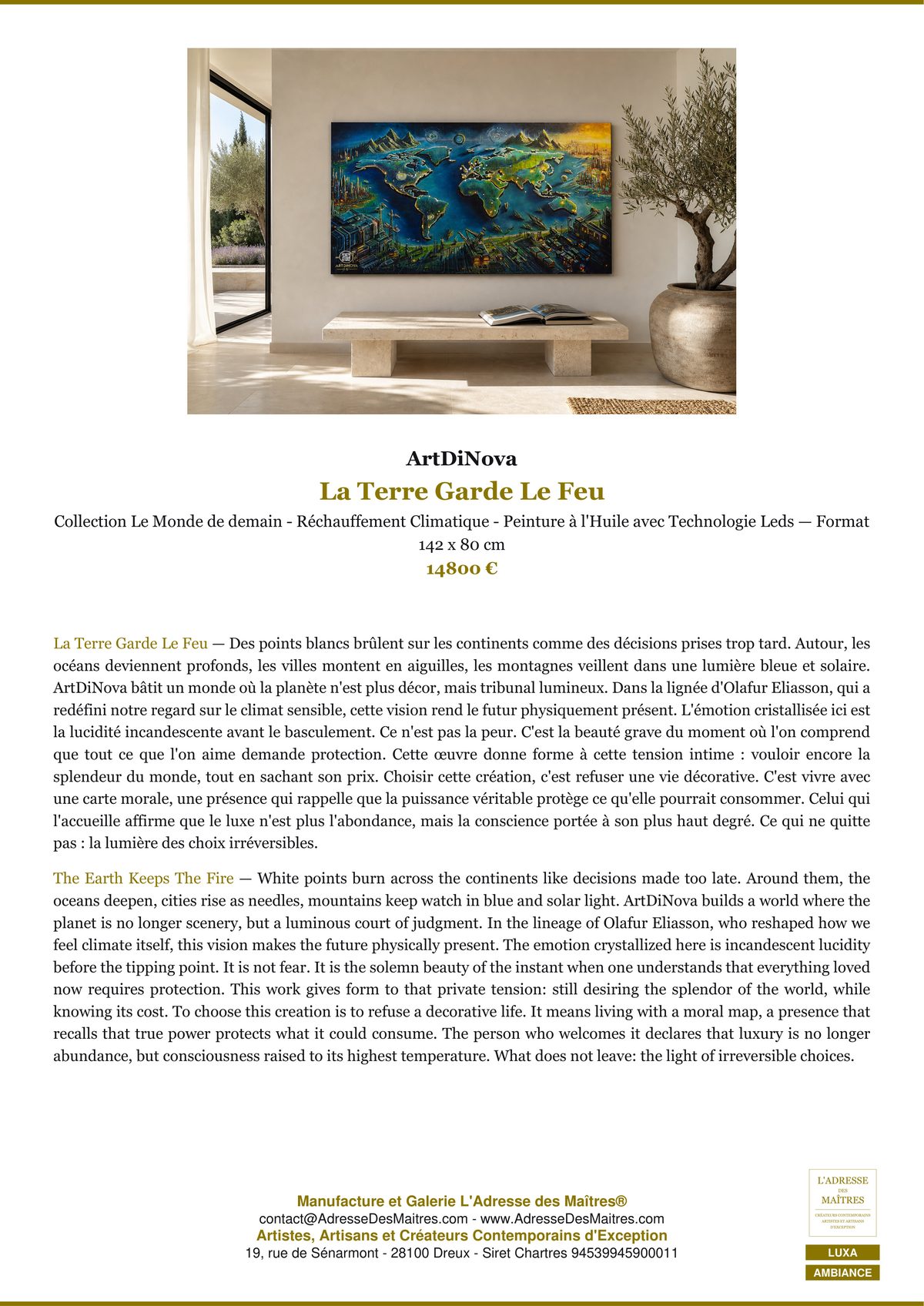
Would you like to experience these artistic movements in person? Visit the online gallery of L’Adresse des Maîtres®—more than 606 original works by contemporary artists.
Leave a comment