Small Formats, Big Impact — Art on a Modest Scale
↓ Share this articleSmall-format art: a grand story in a small space
Small-format art holds a unique place in the history of artistic creation. It is often associated with intimacy, discretion, or accessibility, but it would be reductive to consider it a “minor” art form. A work of modest dimensions can embody great artistic ambition, strong emotional intensity, and remarkable technical mastery. In an era when many art lovers wish to collect affordable art, small-format paintings offer a relevant gateway into the world of collecting, without compromising artistic standards.
Small-format works appeal to both novice collectors and seasoned art lovers. They fit seamlessly into a space, interact with other works, and invite close contemplation. Unlike a large canvas, which immediately commands attention, a small-format work sometimes calls for a slower, more attentive gaze. It rewards close observation: a brushstroke, a texture, or a compositional detail can take on considerable significance.
A Story from the Past: Persian Miniatures, Cabinets of Curiosities, and Dutch Painters
The history of small-scale art is long and distinguished. Persian miniatures, for example, are among the most refined examples of small-scale art. Created with extreme precision and often intended to accompany manuscripts, they demonstrate that small size does not preclude narrative complexity, chromatic richness, or technical excellence. In these works, the viewer is invited to enter a rich and detailed world where every detail matters.
During the Renaissance and later in the modern era, cabinets of curiosities also fostered the rise of small-scale objects and works of art. These private spaces housed paintings, drawings, scientific objects, minerals, shells, antiquities, and natural curiosities. Small-scale works naturally found their place there: they made it possible to collect, compare, classify, and admire them. The work was not merely decorative; it contributed to a worldview, to a form of knowledge gained through observation.
Seventeenth-century Dutch painters, too, contributed significantly to the recognition of smaller formats. In the bourgeois interiors of the United Provinces, small- and medium-sized paintings were highly sought after. Still lifes, genre scenes, landscapes, and intimate portraits: these works were suited to domestic spaces where art was part of everyday life. They demonstrate that the small format can be an art of precision, light, silence, and observation.
Why Small-Format Art Appeals to Beginner Collectors
For a beginner collector, smaller-sized works offer several practical advantages. The first is often the price. Given comparable artists, periods, and quality, a smaller work may be more affordable than a large-format piece. This isn’t an absolute rule, but it’s often a reality of the market. This allows you to start a collection with an original work—rather than a reproduction—and to establish a direct connection with the artist’s materials, technique, and presence.
Logistics is another advantage. A small painting is easier to transport, frame, store, and hang. It doesn’t necessarily require a large empty wall or any special setup. Whether in an apartment, a townhouse, or an office, it easily finds its place. This flexibility reassures first-time buyers, who are sometimes hesitant to purchase a work of art for fear of not knowing where to display it.
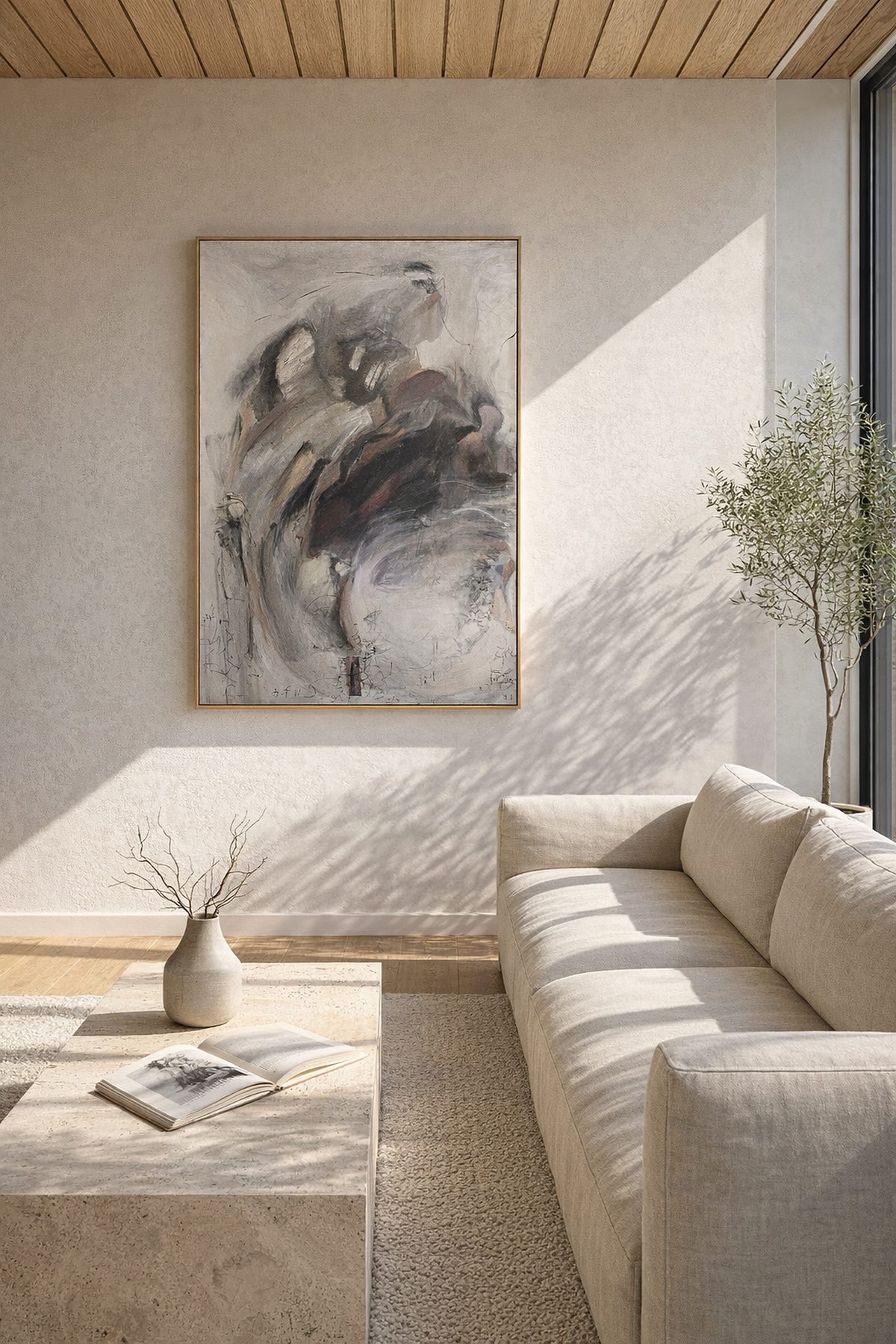
Finally, small-format art is an excellent addition to interior design. It can accent a hallway, complement a bookshelf, enliven an entryway, create a focal point above a piece of furniture, or form part of a wall arrangement. It allows you to gradually build a personal atmosphere. Collecting doesn’t necessarily mean immediately filling large spaces: it can start with a single, carefully chosen piece—one you look at every day and that becomes part of your daily life.
Small size doesn't mean small ambition
A common misconception is that a small work of art is necessarily less significant than a large one. Yet artistic value is not measured solely in centimeters. On the contrary, the small format imposes demanding constraints. The artist must focus the composition, master the balance of forms, avoid clutter, and imbue a few elements with power. While large-scale works can impress with their scale, small-scale works must captivate through their density.
This intensity can be visual, emotional, or technical. A small painting can contain a very strong chromatic tension, a subtle treatment of texture, or a particularly masterful use of light. It can also foster a more intimate connection with the viewer. One does not view a small-format work from a distance, as one would a monumental fresco; one moves closer to it. This proximity alters the aesthetic experience. It creates a one-on-one encounter with the work.
Technical mastery is often crucial here. In a confined space, any clumsiness quickly becomes apparent. Every line, every stroke, every color relationship can take on greater significance. That is why many artists consider the small format a demanding exercise—one that is sometimes more difficult than it appears. It is not just a matter of “painting small,” but of composing the image just right.
Chardin, Morandi, Wayne Thiebaud: Great Painters, Modest Formats
Several great artists have demonstrated the power of modest formats. Jean-Baptiste-Siméon Chardin, an 18th-century French master, imbued simple objects with an extraordinary presence. His still lifes and domestic scenes, often modest in size, reveal a rare attention to texture, light, and the stillness of objects. In Chardin’s work, the modest takes on profound meaning.
Giorgio Morandi, in the 20th century, also built a major body of work around a limited range of subjects: bottles, vases, boxes, and understated landscapes. Many of his paintings and prints are relatively small in scale, yet their ambition is immense. Morandi demonstrates that repetition, restraint, and subtle variation can produce an exceptional meditative intensity.
Wayne Thiebaud, known for his cakes, pies, ice cream, and everyday objects, also imbued his often centered and accessible compositions with a unique power. Even when his works are not tiny, they demonstrate how a simple subject and a seemingly straightforward composition can become a field of exploration into color, volume, light, and visual desire. These artists remind us of an essential truth: size does not limit ambition.
The L’Adresse des Maîtres® Art Gallery in Dreux and Artists to Discover
The L’Adresse des Maîtres® Art Gallery in Dreux is part of this broader discussion on access to art, the diversity of techniques, and the connection between artworks and collectors. For art lovers interested in small-format art or making their first purchase, a gallery offers the opportunity to see the works in person, examine the materials, compare techniques, and ask questions about the artists’ careers.
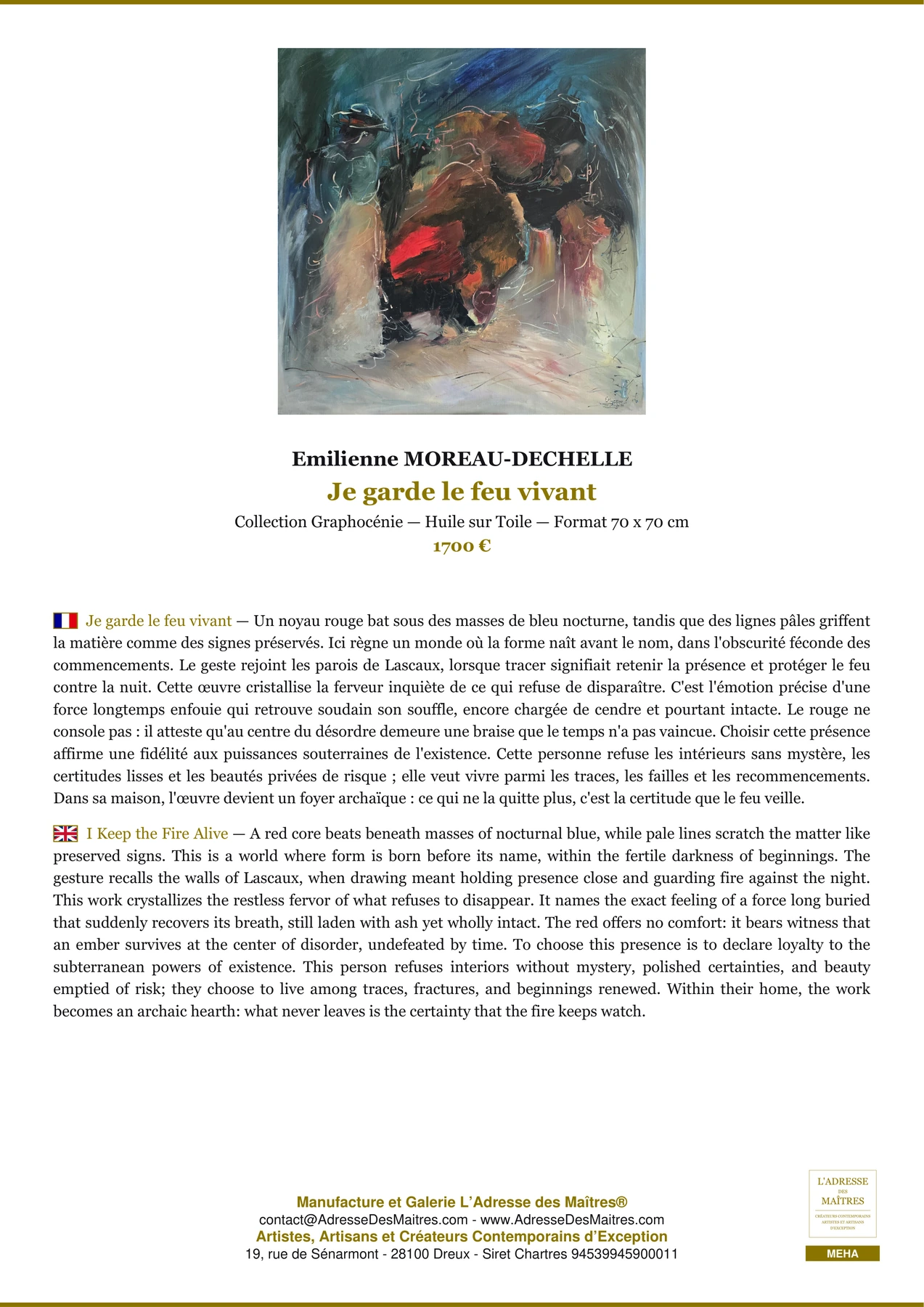
Among the artists at Galerie L’Adresse des Maîtres® whose work relates to this theme, Emilienne MOREAU-DECHELLE is represented by 41 oil paintings, including “Passage sous les braises.” In a reflection on painting in modest formats, this collection of oil paintings demonstrates just how effectively this technique can convey the depth, nuances, and material presence of a work, regardless of its scale.
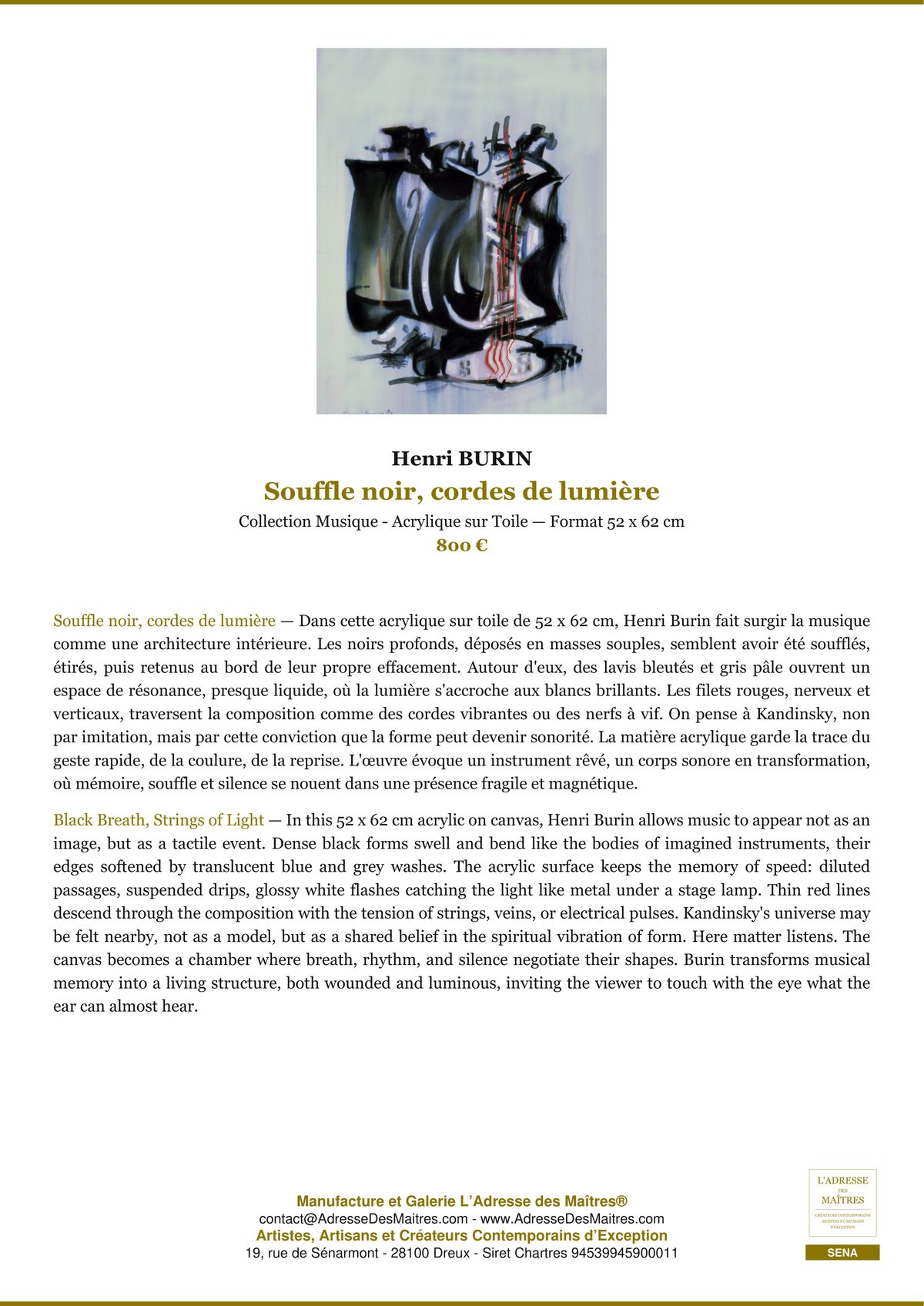
Henri BURIN has created 40 works in acrylic, including “La contrebasse rêve sous rideau.” Acrylic, with its quick drying time and great versatility, lends itself particularly well to experiments with composition and color in a variety of formats. His body of work thus offers an interesting starting point for understanding how a painting can assert its presence without relying solely on large dimensions.
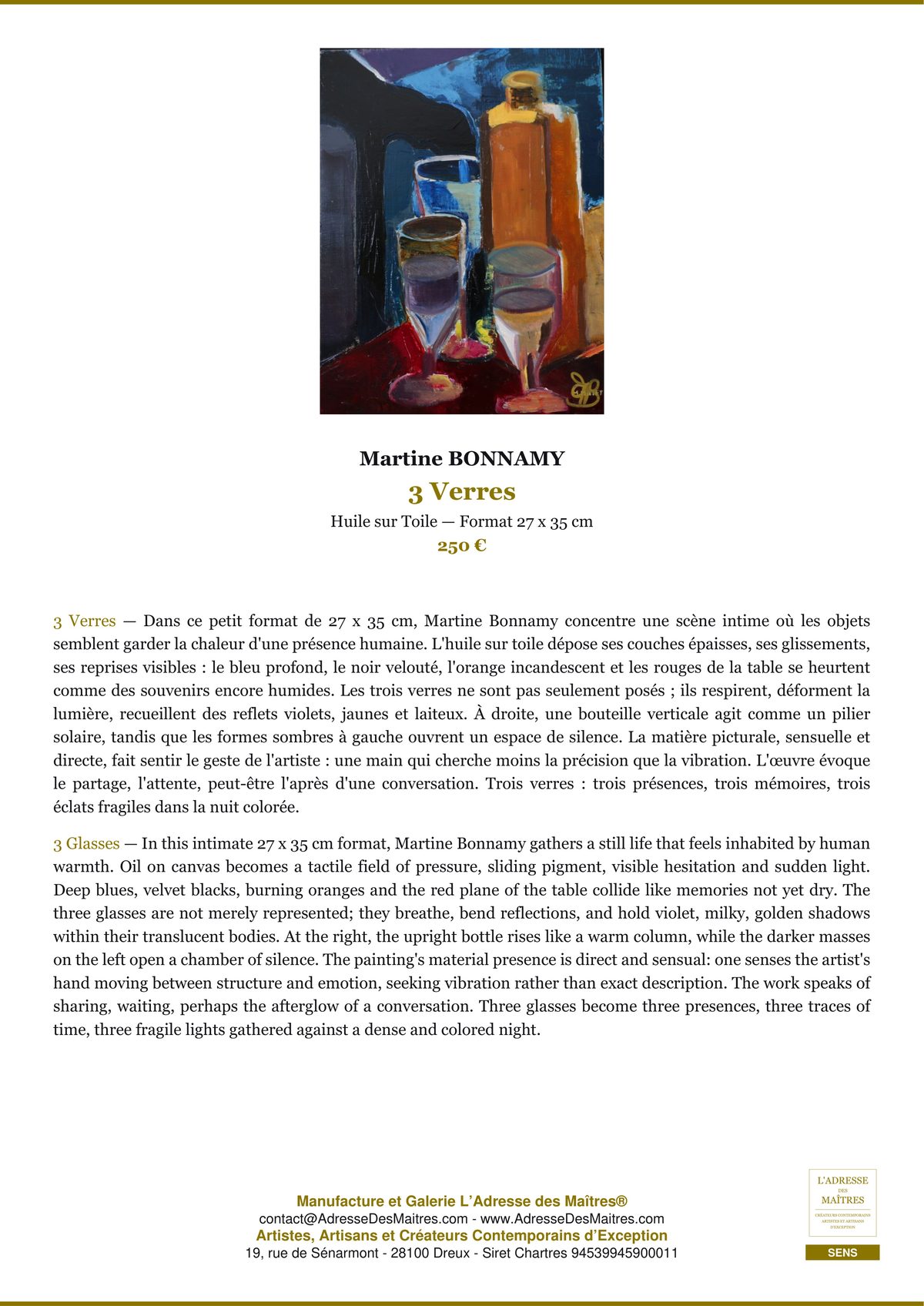
Martine BONNAMY is represented by 35 oil paintings, including “Céruléenne, mémoire d’un rivage.” Oil painting, with its potential for depth and layering, reminds us that even a modest format can serve as a space for pictorial focus. A work of art does not need to be monumental to invite the viewer to slow down and explore its surface.
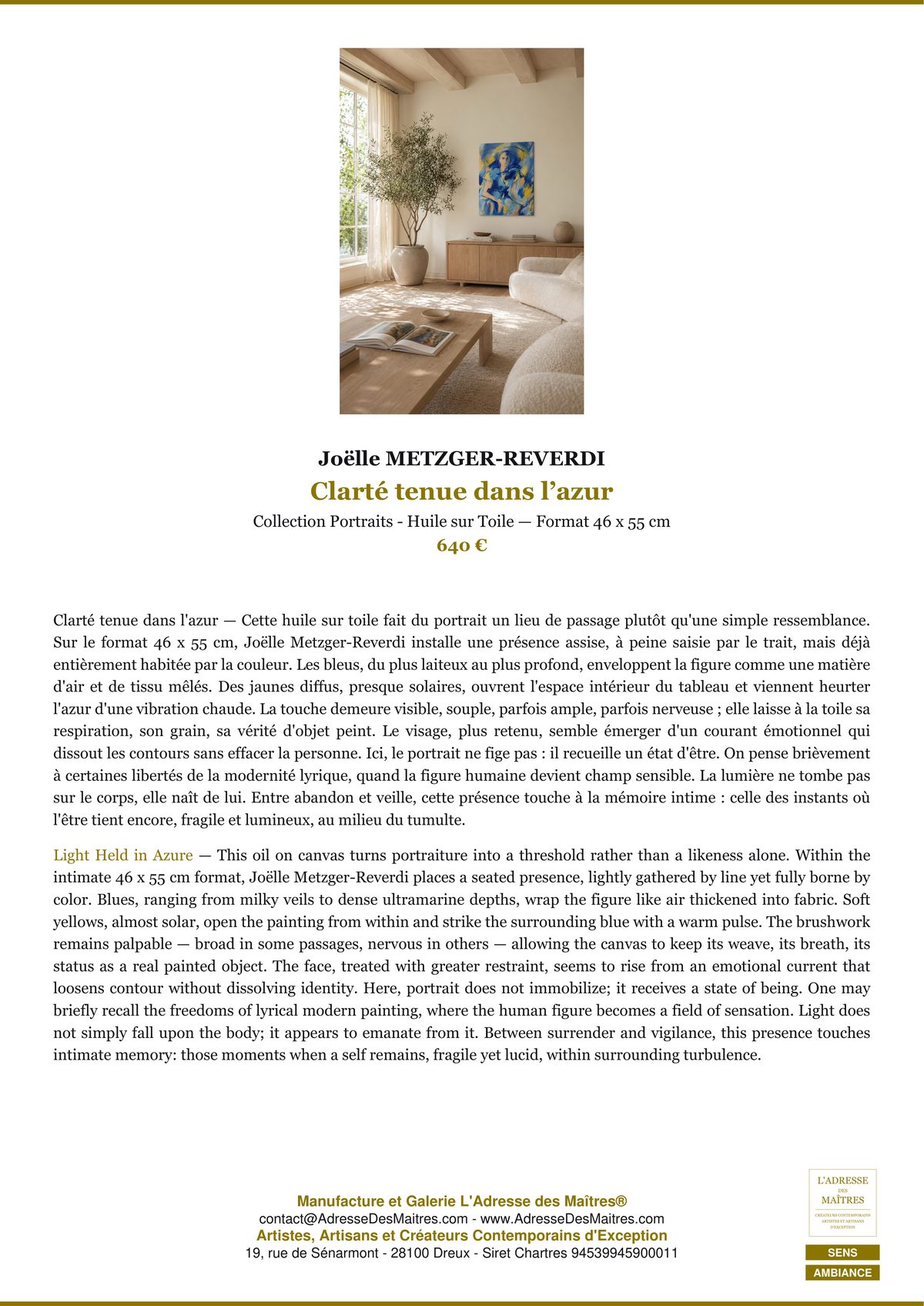
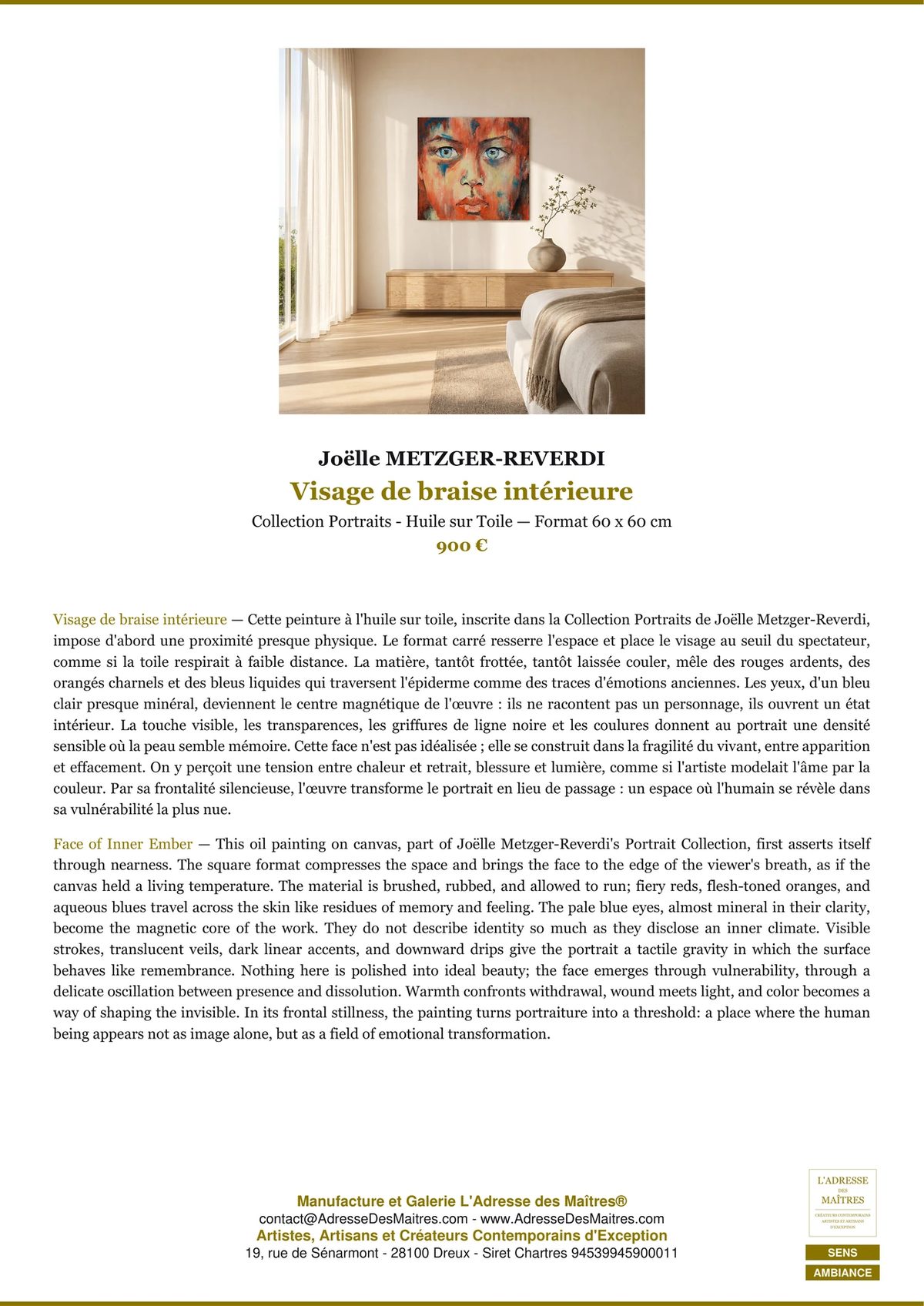
Joëlle METZGER-REVERDI has created 21 oil paintings, including “Visage de braise intérieure.” As part of a nascent collection, the inclusion of oil paintings allows viewers to appreciate the relationship between technique, subject matter, and visual intensity. When chosen, framed, and viewed with care, a small-format work can become a true focal point of expression.
Sylvia BEAUCHAIN is represented by 14 oil paintings, including “La mémoire des courants.” Her body of work highlights the value of comparing several pieces created using the same technique to understand the possible variations in medium, composition, and presence. For collectors, this comparison is invaluable: it helps them develop their eye before making a purchase.
Displaying Small-Format Art at Home: Framing, Hanging, and Grouping
Displaying a small artwork properly requires careful attention. The frame plays an essential role. A frame that’s too heavy can overwhelm the artwork; one that’s too understated can make it disappear. The choice depends on the painting’s style, era, colors, and the space where it will be displayed. A mat can provide some breathing room around the artwork, especially for a drawing, print, or small painting on paper.
When hanging artwork, consider the viewer’s eye level. A small piece placed too high may get lost. It often looks best when hung at eye level, in a spot where people can get close to it. An entryway, a landing, an office, a reading nook, or a narrow wall can all be ideal locations. Lighting is also important: soft, non-glaring light highlights the texture of the artwork without creating excessive glare.
Grouping is another effective solution. Several small pieces can come together to form a dynamic wall display, provided there is a sense of cohesion. This cohesion can stem from a theme, a color palette, a type of frame, or a pattern of arrangement. You can align the works, create a regular grid, or opt for a more free-form composition. In any case, be sure to leave enough space between the pieces so that each one retains its own identity.
How to Determine the Price of a Small-Format Item
Determining the price of a small-format painting is not simply a matter of calculating its surface area. Size matters, of course, but it is only one factor among many. The price also depends on the artist’s reputation, market value, the technique used, the date of creation, the condition, rarity, provenance, and the intrinsic quality of the work. An exceptional small painting may be worth more than a large, less accomplished one.
Technique also influences the market. An oil on canvas, an acrylic, a drawing, a gouache, or a print do not always fall within the same price ranges. But here again, no hard-and-fast rule suffices. You have to look at the work itself: Is the composition strong? Is the medium handled with skill? Is the subject characteristic of the artist? Is the work signed, dated, and documented?
When collecting affordable art, small-format works are therefore a smart choice—provided you don’t buy solely “by the square meter.” A work that is modest in size can still be ambitious in its composition, intensity, and ability to hold the viewer’s gaze over time. The right choice stems from a balance between budget, emotion, knowledge, and trust in the place of purchase.
The Art of Connection
Small-format art is the art of intimacy. It brings the artwork closer to the viewer, makes the collection more accessible, and allows art to take center stage in everyday life. From Persian miniatures to the Dutch painters, from Chardin to Morandi, it has proven its historical richness and aesthetic power. Even today, it remains an excellent gateway for both novice collectors and seasoned art lovers. In a gallery such as the Galerie d’Art L’Adresse des Maîtres® in Dreux, taking the time to look at, compare, and reflect on the works helps one understand that the greatness of a painting never depends solely on its size.
Check out our gallery
Would you like to experience these artistic movements in person? Visit the online gallery of L’Adresse des Maîtres®—more than 606 original works by contemporary artists.
Leave a comment