Art Photography — When a Photo Becomes a Work of Art
↓ Share this articleArt Photography: When an Image Becomes a Work of Art
Long considered merely a technical process for reproducing reality, art photography has gradually established itself as an artistic discipline in its own right. Today, it occupies a prominent place in museums, specialized fairs, auctions, and, of course, in any art gallery attentive to contemporary expressions. Art photography appeals to both seasoned collectors and enthusiasts who wish to acquire a work that is accessible, powerful, and often more intimate than a painting or a sculpture.
Understanding fine art photography means exploring its history, genres, printing techniques, leading figures, and the criteria used to assess its value. It also means discovering how certain galleries, such as the Galerie d’Art L’Adresse des Maîtres® in Dreux, showcase artists who explore the many languages of the image.
Photography Recognized as Art: From the Pictorialists to Contemporary Artists
Photography was not immediately recognized as art. In the 19th century, it was initially viewed as a scientific and mechanical feat. Many considered it too closely tied to reality to qualify as a work of art. It was in this context that the Pictorialist movement emerged in the late 19th and early 20th centuries. Pictorialists sought to bring photography closer to painting and printmaking through the use of blur, textural effects, carefully crafted compositions, and post-processing techniques.
This first step is essential: it asserts that the photographer’s intention, perspective, and style can transform an image into a work of art. Then came the modernist avant-garde movements, which, on the contrary, championed the unique qualities of the photographic medium: sharpness, immediacy, composition, light, and geometry. Photography no longer needs to imitate other arts in order to exist.
In the 20th century, fine art photography diversified considerably. It drew inspiration from photojournalism, street photography, formal experimentation, staged photography, and later digital tools. Today, artistic photography encompasses everything from documentary images to abstract works, complex montages, conceptual series, and creations resulting from generative processes. This openness explains its current richness and its growing presence in art galleries.
The Major Genres of Fine Art Photography
Art photography cannot be reduced to a single style. It encompasses several major genres, each with its own conventions, aesthetic concerns, and collectors.
The Portrait
Photographic portraiture explores the subject’s identity, expression, presence, and sometimes psychology. It can be frontal, spontaneous, staged, or experimental. Some portraits seek the truth of a face, while others play with masks, poses, or storytelling. In art, portraiture often goes beyond mere likeness: it explores the human condition, intimacy, or social roles.
The landscape
Landscape has always played a central role in fine art photography. Whether natural, urban, or industrial, it invites us to reflect on our relationship with the world, with place, with time, and with the environment. Photographic landscape can be contemplative, monumental, minimalist, or socially engaged. It often transforms a real place into a visual and sensory experience.
The Abstract
Abstract photography breaks away from literal representation. It plays with textures, shadows, details, movement, layering, and image manipulation. Here, the viewer does not always identify a specific subject; instead, they first perceive rhythms, shapes, and sensations. This genre demonstrates that artistic photography can become pure composition.
The documentary
Documentary photography captures reality, but in the realm of art, it does more than simply inform. It reflects the artist’s perspective. The choice of framing, timing, series, exhibition context, and print gives the documentary image an aesthetic and reflective dimension. It can address social, political, environmental, or human subjects with great visual impact.
The Conceptual
In conceptual photography, the idea is just as important as the image itself. The photograph becomes the medium for an intellectual, symbolic, or narrative project. Staging, repetition, reinterpretation, text, series, or protocols may all come into play. This genre has grown in importance within contemporary art, where photography engages in dialogue with other practices such as installation, performance, and digital art.
Art prints: limited editions, fine art paper, numbered
One key factor distinguishes an ordinary image from a photographic work intended for the art market: the print. In art galleries, the term “art prints” is generally used to refer to prints produced according to specific technical standards and publishing guidelines.
Limited edition status is a key factor. An art photograph is often produced in a limited number of copies: 5, 8, 10, or 30, depending on the case. This scarcity contributes to its value. The more limited the edition, the more likely the work is to attract collectors—provided, of course, that the artist is well-known and the quality is up to par.
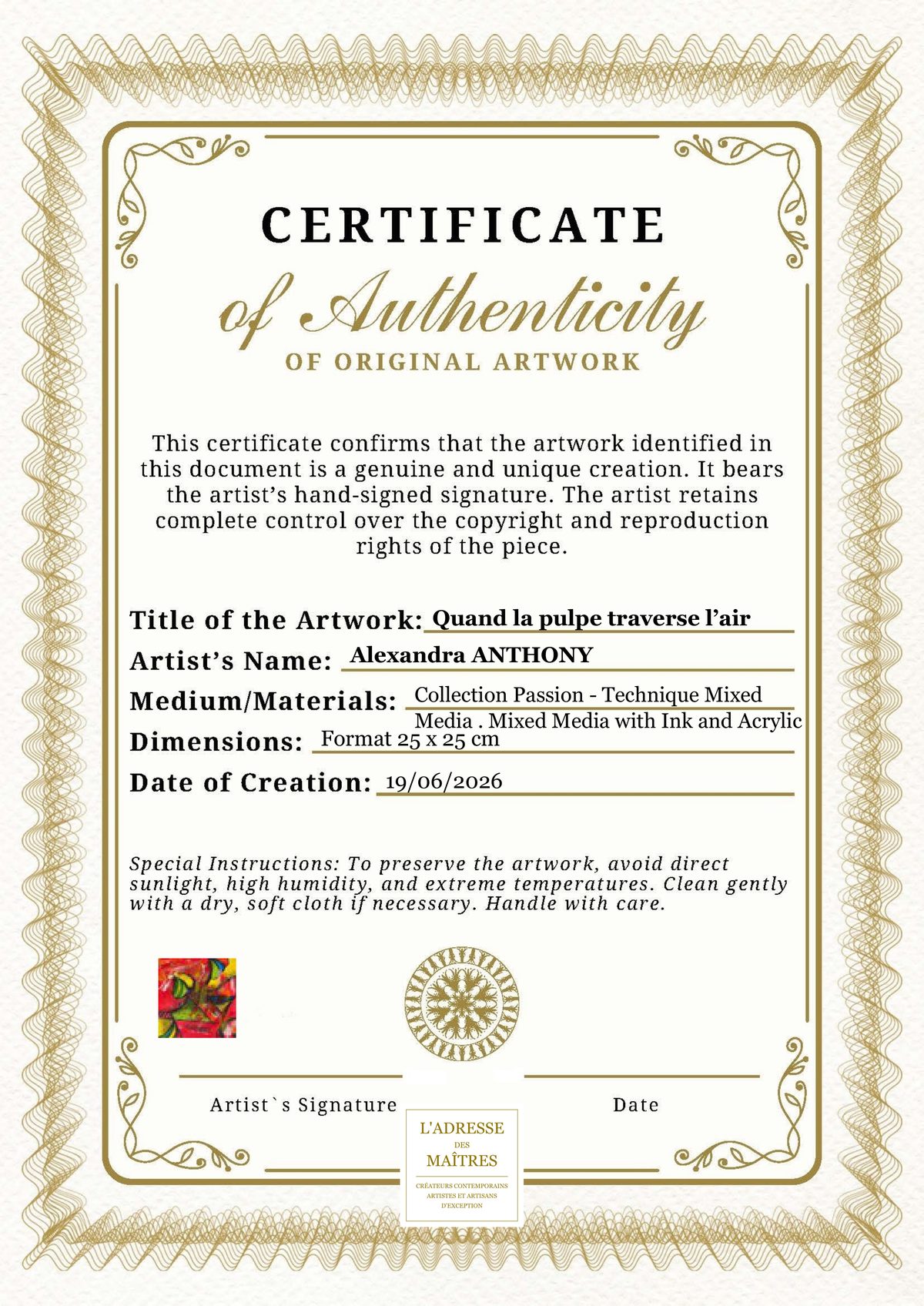
Numbering identifies each copy, for example 2/8 for the second print in a total edition of eight. This notation, accompanied by the artist’s signature when applicable, contributes to the work’s authenticity and traceability. A certificate may also accompany the print.
The choice of fine art paper is just as important. These high-end papers are selected for their stability, their rendering of blacks, their fine texture, their color depth, or their matte finish. They help preserve the artwork over time and enhance its visual impact. In fine art photography, the physical properties of the medium matter greatly: the same file can produce very different results depending on the paper, ink, and format.
The format, framing, and storage conditions also play a role. A well-printed, well-presented, and well-documented art photograph inspires greater confidence in the buyer and fits more naturally into a collector’s collection.
The Great Names in Fine Art Photography
Several photographers have left a lasting mark on the history of the field and helped bring photography into art institutions and collections.
Henri Cartier-Bresson is famous for his concept of the “decisive moment.” His mastery of framing, composition, and timing has influenced generations of photographers. He demonstrated that an everyday scene could achieve exceptional formal and poetic intensity.
Robert Doisneau left behind an iconic body of work centered on urban life, passersby, simple gestures, and subtle emotions. His work, often associated with Paris, transforms ordinary scenes into a profoundly human theater.
Nobuyoshi Araki occupies a unique place in contemporary art photography. His intense and provocative work explores intimacy, desire, memory, and staging with striking formal freedom.
Andreas Gursky is known for his monumental, often spectacular images that explore the structures of the contemporary world: the economy, consumerism, architecture, and globalization. His photographs have played a major role in the rise of very large-format works in the art market.
Sebastião Salgado has given documentary photography a universal dimension. Through the power of his black-and-white images, the rigor of his series, and the scope of his subjects, he has demonstrated that documentary photography can achieve significant aesthetic and humanistic depth.
Artists to discover at the L’Adresse des Maîtres® Art Gallery in Dreux
The L’Adresse des Maîtres® Art Gallery in Dreux embraces this diversity of photographic and visual styles by showcasing artists whose techniques expand the scope of artistic photography.
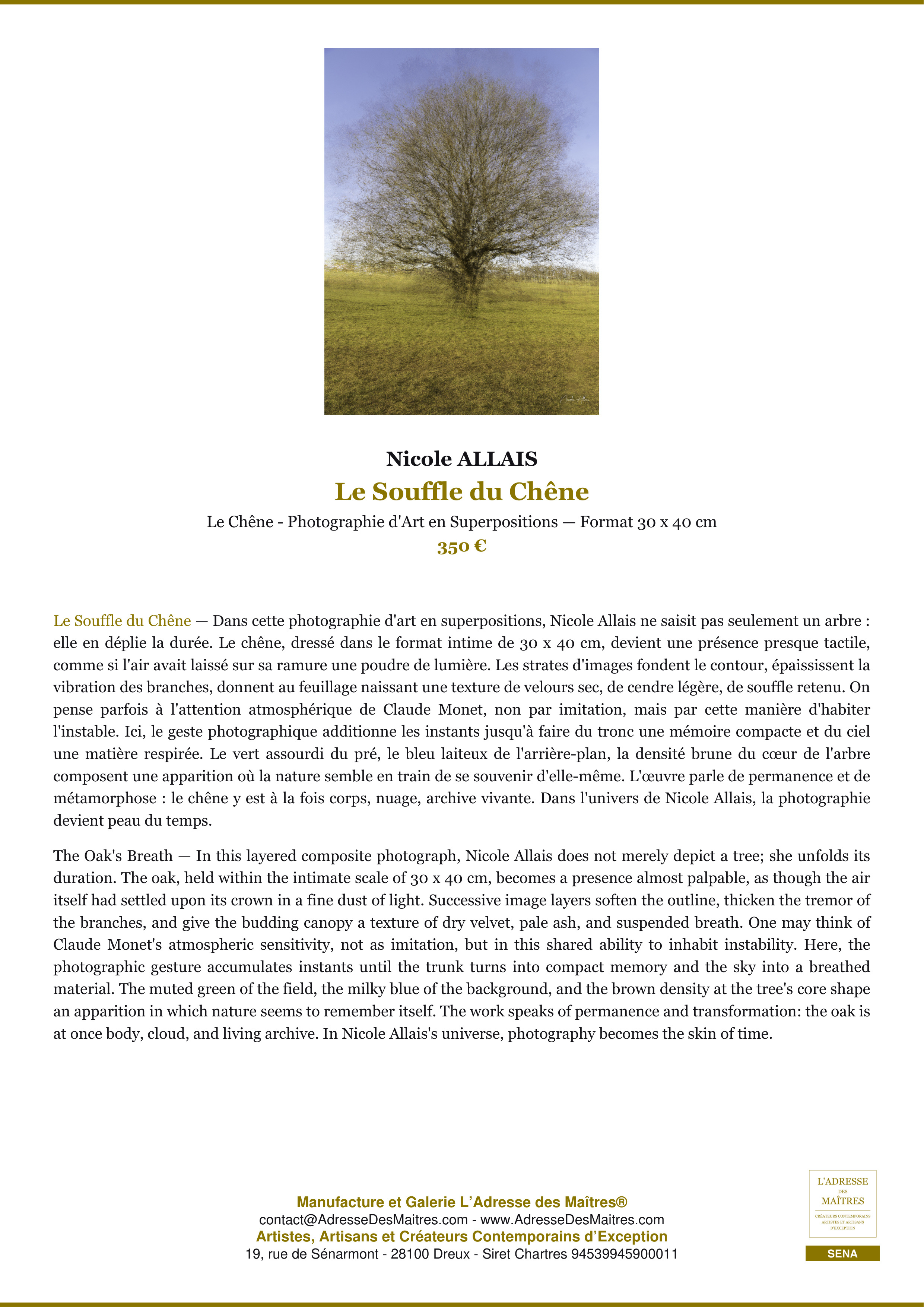
Nicole ALLAIS is featured with 52 works in Layered Image Composite Photography, including “Le souffle du chêne.” This approach, which involves layering images, brings a dimension of visual construction and layered perception to fine art photography. It illustrates how contemporary photography can go beyond the simple capture of a moment to become a space for complex composition.
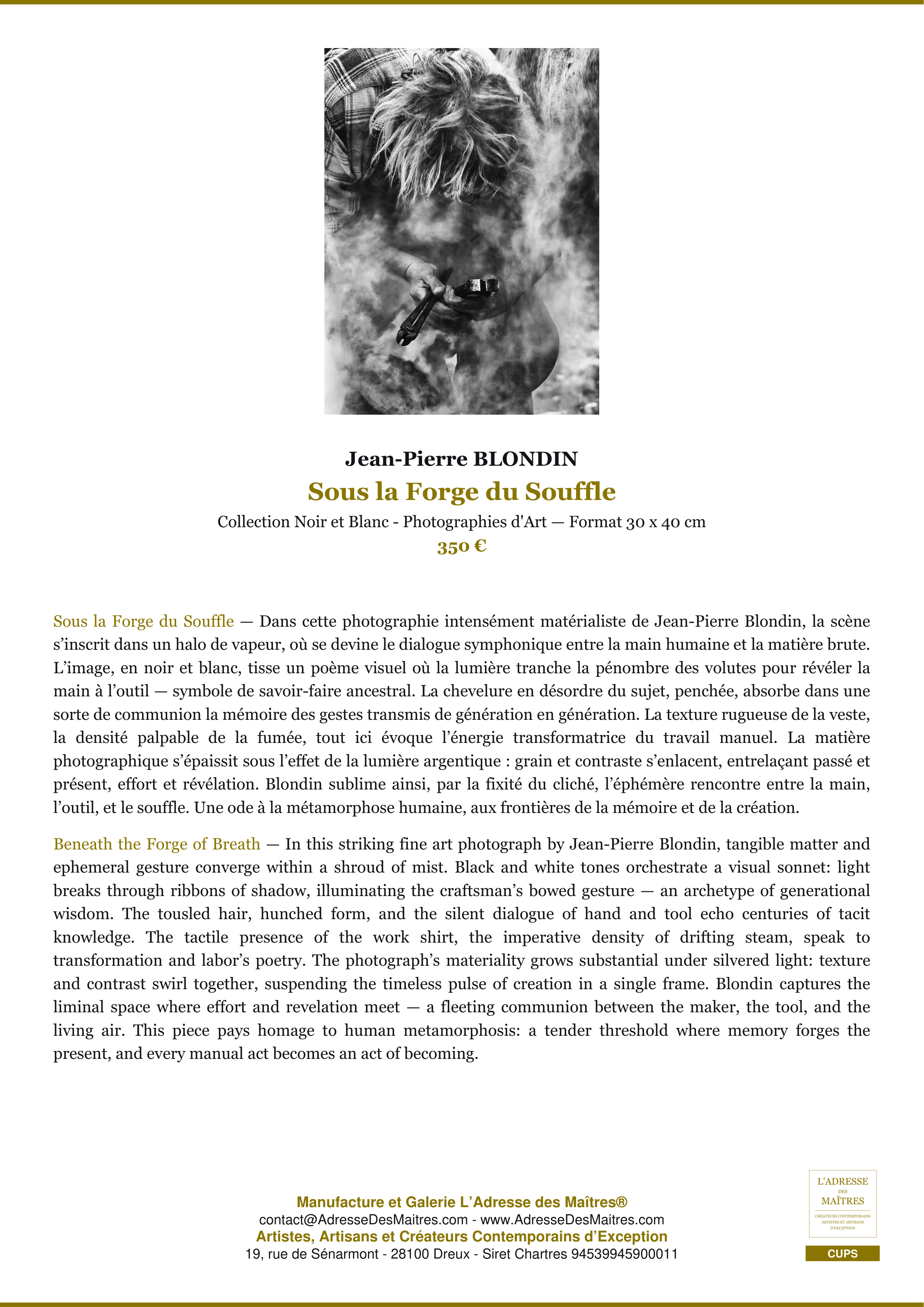
Jean-Pierre BLONDIN presents 22 works of fine art photography, including “Sous la Forge du Souffle.” By explicitly positioning itself within the realm of fine art, his work underscores the importance of the print, the rendering, and the artistic intent in recognizing a photograph as a work of art. It helps highlight the material and aesthetic qualities that distinguish an art print from a purely utilitarian image.
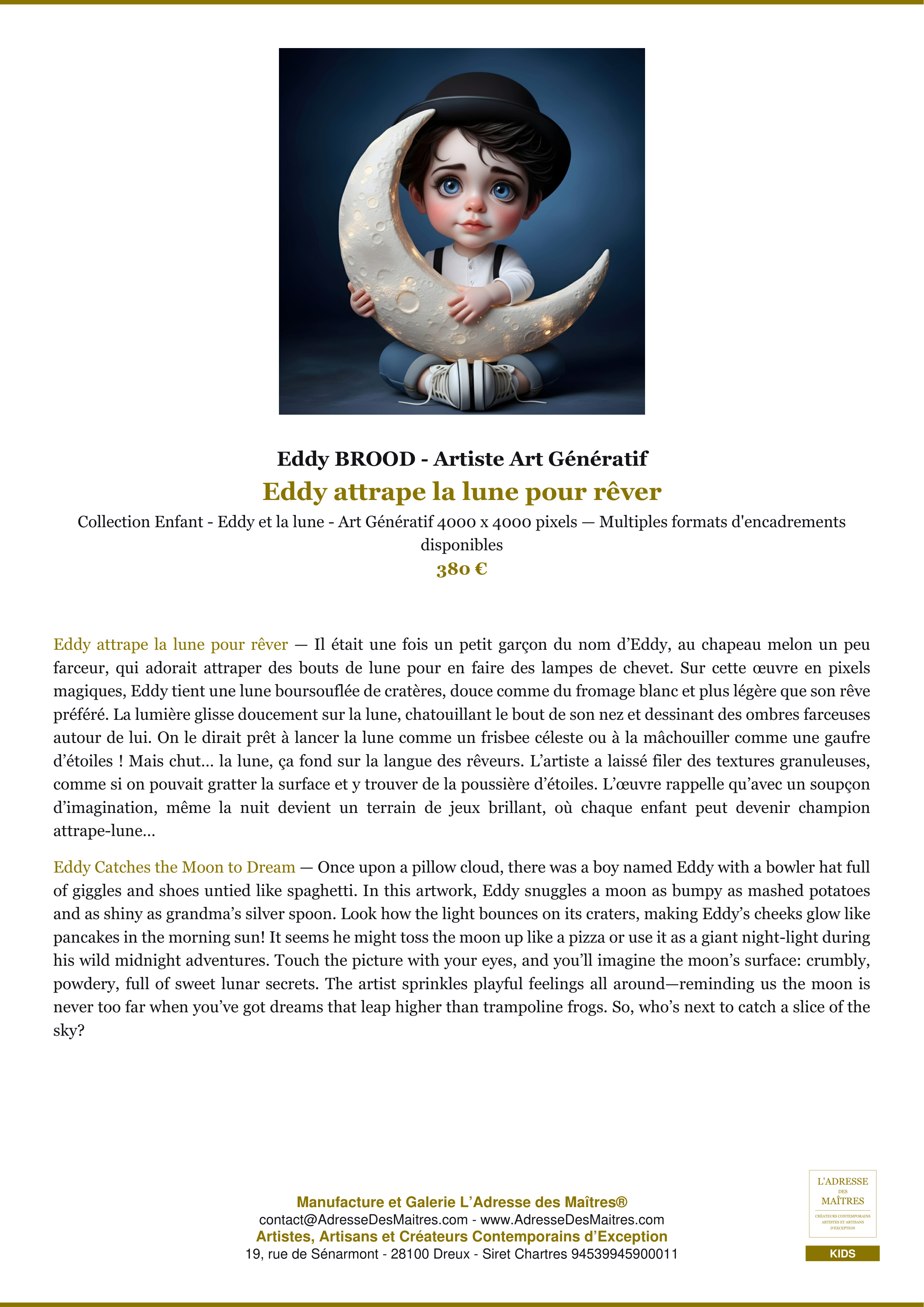
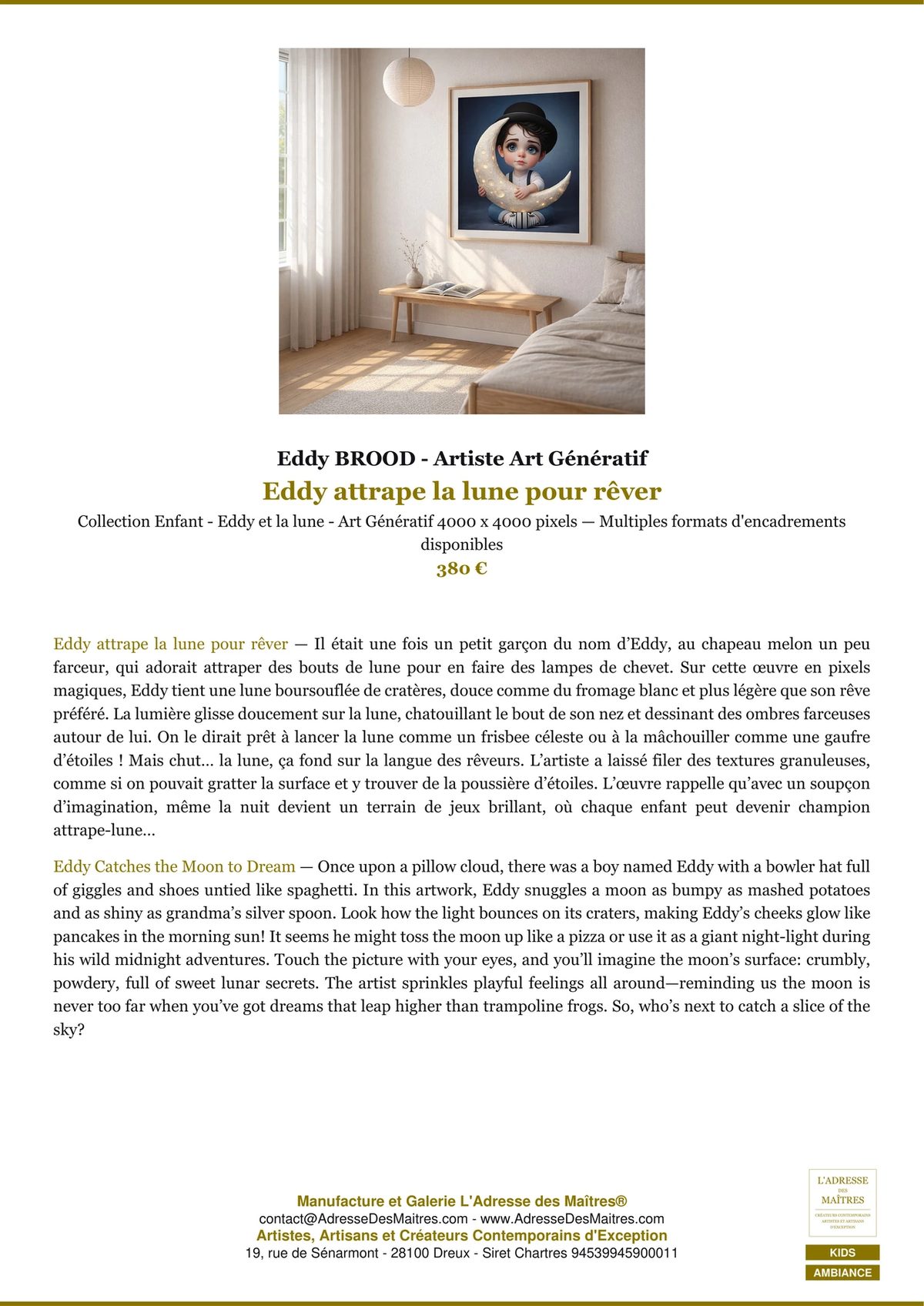
Eddy BROOD, a generative artist, is featured with one work of generative art, “The Little Photographer of Dreams.” His presence demonstrates how the boundaries of art photography are now intersecting with digital and generative practices. This openness enriches the contemporary art scene by introducing visual forms in which the image is also conceived through assisted or generated creative processes.
How to Determine the Value of an Art Photograph
Assessing the value of a fine art photograph requires considering several factors. The first is the artist’s reputation. A photographer whose work is exhibited in museums, included in public collections, represented by a well-known art gallery, or regularly sold at auction will generally command a higher market value.
The second criterion is rarity: the size of the edition, whether artist’s proofs exist, the availability of the print, and the age of the work. An early print, produced close to the date the photograph was taken, may be more valuable than a later reprint, depending on the circumstances.
The quality of the print matters greatly: fine art paper, color accuracy, condition, signature, certificate, and provenance. A well-preserved and well-documented work will be more reassuring to the buyer.
It is also important to considerthe significance of the work within the artist’s career. Certain images become emblematic of a series, a period, or a particular body of work. As a result, they are in greater demand.
Finally, value depends on the market: current trends, collector demand, institutional visibility, and presence at art fairs and public auctions. As with all art, price reflects not only aesthetic quality but also cultural and economic context.
Tips for Starting a Photography Collection
Starting a fine art photography collection doesn’t necessarily require a huge budget. In fact, it’s one of the most accessible ways to enter the art market. The first piece of advice is simple: start by buying what truly speaks to you. A lasting collection is built on personal vision, emotion, and coherence.
Visit exhibitions, art fairs, and galleries. Compare styles, formats, and printing techniques. Learn about the artists, their artistic approach, their reputation, and the terms of sale. A reputable gallery will be able to explain the numbering, the paper, the edition, and conservation.
Look for works that come with clear information: title, date, technique, edition number, and any certificate of authenticity. Learn to assess the print quality, the details, the depth of the image, and the appropriateness of the format.
You can also start with emerging artists or contemporary practices that are still affordable. With this in mind, exploring the collection at the Galerie d’Art L’Adresse des Maîtres® in Dreux can be a wonderful introduction to the world of artistic photography, particularly through diverse approaches such as Layered Image Composite Photography, Fine Art Photography, and Generative Art.
Finally, keep preservation in mind: avoid direct sunlight, choose appropriate framing, handle the prints with care, and keep all documents related to the artwork. A well-maintained collection is not only more enjoyable to experience but also remains consistent over time.
Conclusion
Today, fine art photography is a vast, vibrant, and exciting field. From the legacy of the Pictorialists to the most open-minded contemporary creations, it has continually asserted its artistic legitimacy. Portrait, landscape, abstract, documentary, or conceptual: each genre reveals a unique way of seeing and of showing others. Fine art prints, limited editions, and high-quality materials further enhance this artistic dimension.
For both art lovers and collectors, artistic photography offers an exceptional realm of exploration. And in an art gallery like the Galerie d’Art L’Adresse des Maîtres® in Dreux, this diversity comes to life through artists such as Nicole ALLAIS, Jean-Pierre BLONDIN, and Eddy BROOD, each of whom, through their respective techniques, demonstrates the current richness of practices related to the image.
Check out our gallery
Vous souhaitez découvrir ces courants artistiques en vrai ? Visitez la galerie en ligne de L’Adresse des Maîtres® : plus de 1633 œuvres originales d’artistes contemporains.


Leave a comment