

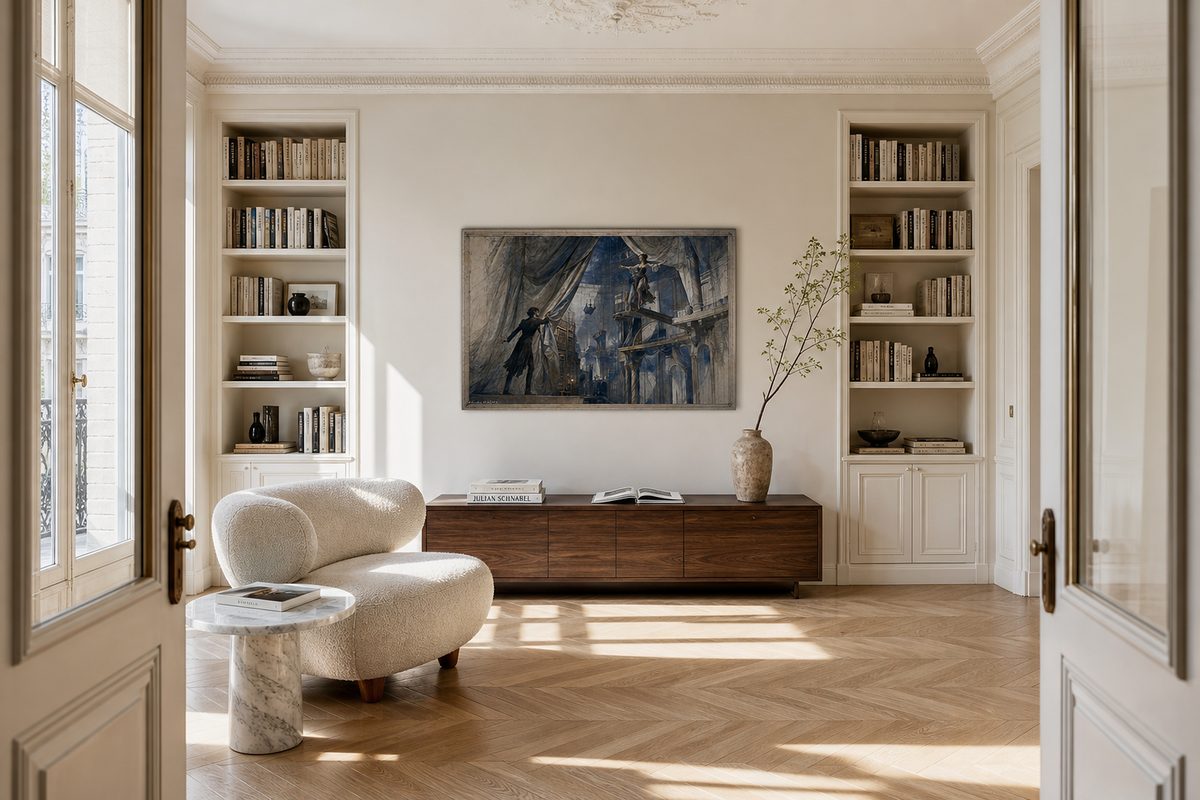
First Purchase at an Art Gallery — 10 Questions to Ask Yourself
↓ Share this articleSEO Guide for First-Time Art Gallery Buyers: 10 Questions to Ask Yourself Before Buying
Buying a work of art for the first time is both exciting and intimidating. Between falling in love with a piece, budget constraints, potential value, technique, format, and the paperwork to review, first-time buyers can quickly feel overwhelmed. However, buying from an art gallery remains one of the most reassuring ways to start a collection, as it allows you to view the works, ask questions, and receive guidance in making your decision.
This guide is intended for anyone looking to purchase their first piece of art from a gallery, whether to decorate their home, support an artist, build a collection, or make an investment in art. In Dreux, the L’Adresse des Maîtres® Art Gallery can serve as a go-to resource for discovering artworks and discussing a potential purchase. Before making your decision, here are the 10 essential questions to ask yourself.
1. How much should you budget for your first purchase at an art gallery?
The first issue to clarify is the budget. There is no set price for purchasing a work of art: it all depends on your financial means, your expectations, and the type of work you’re looking for. For a first purchase, it’s advisable to set a realistic budget, which may include costs for framing, shipping, insurance, or installation.
A clearly defined budget prevents excessive indecision and allows the gallery to guide you toward suitable works. The goal isn’t necessarily to buy the most expensive piece, but rather the one that resonates with you, fits your space, and aligns with your vision. When visiting a gallery, don’t hesitate to clearly state your price range: it’s useful information, not a sign of weakness.
2. Should you buy on a whim or as an investment?
This is one of the big questions first-time buyers face: Should you buy a piece of art because it moves you, or because it might increase in value? The most balanced answer is often to prioritize what speaks to you, while still being mindful of the purchase’s overall coherence. A piece of art that you’ll look at every day must, above all, speak to you.
Investing in art is a reality, but it comes with uncertainties. An artist’s market value can rise, remain stable, or fluctuate depending on many factors. For a first purchase, it’s therefore best not to focus solely on profitability. Ask yourself a simple question: if this artwork never increased in value, would you still be happy that you bought it? If the answer is yes, your choice is based on solid ground.
3. How can you verify the authenticity of a work of art?
Authenticity is a key consideration when purchasing a work of art. At a gallery, you should be able to obtain clear information about the artist, the title of the work, the medium, the dimensions, and, when applicable, the signature. An original work must be identifiable and properly documented.
The gallery’s role is also to ensure the security of the purchase by providing the necessary documentation for traceability. Ask whether the artwork is signed, dated, and accompanied by a certificate or a technical sheet. This information is important not only at the time of purchase, but also for insurance purposes, potential resale, or bequest.
4. What format should you choose for your first work?
First-time buyers often underestimate the importance of size. A piece of art may catch your eye in a gallery, but you also need to picture it in your home. Before you go to the gallery, measure the available space on your wall or in the room where you plan to hang it. Consider the hanging height, the viewing distance, natural light, and how it will complement your furniture.
A large piece can become a focal point in a living room, entryway, or office. A more intimate piece may be suitable for a bedroom, hallway, or reading nook. The important thing is not to choose based solely on size, but on the desired visual impact. A small piece can have a big presence, while a large canvas needs enough space to breathe.
5. Which artistic medium should you choose: oil, acrylic, drawing, or photography?
The technique used influences a work’s appearance, texture, durability, and sometimes its price. Oil painting is prized for its depth, nuances, and texture. Acrylic, which often dries more quickly, also offers a rich variety of colors and effects. Other techniques, such as drawing, printmaking, photography, or mixed media, may also be suitable for a first purchase.
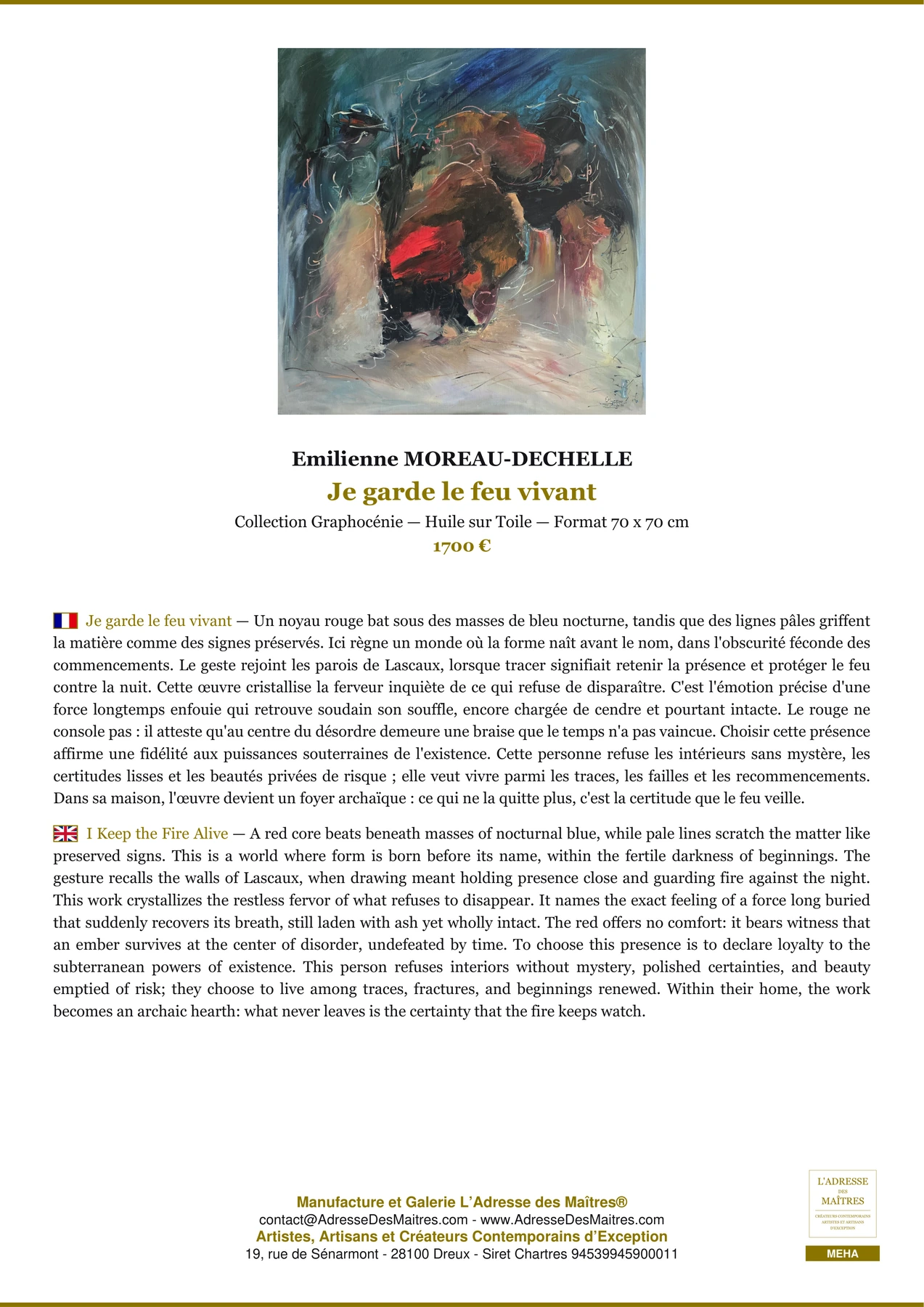
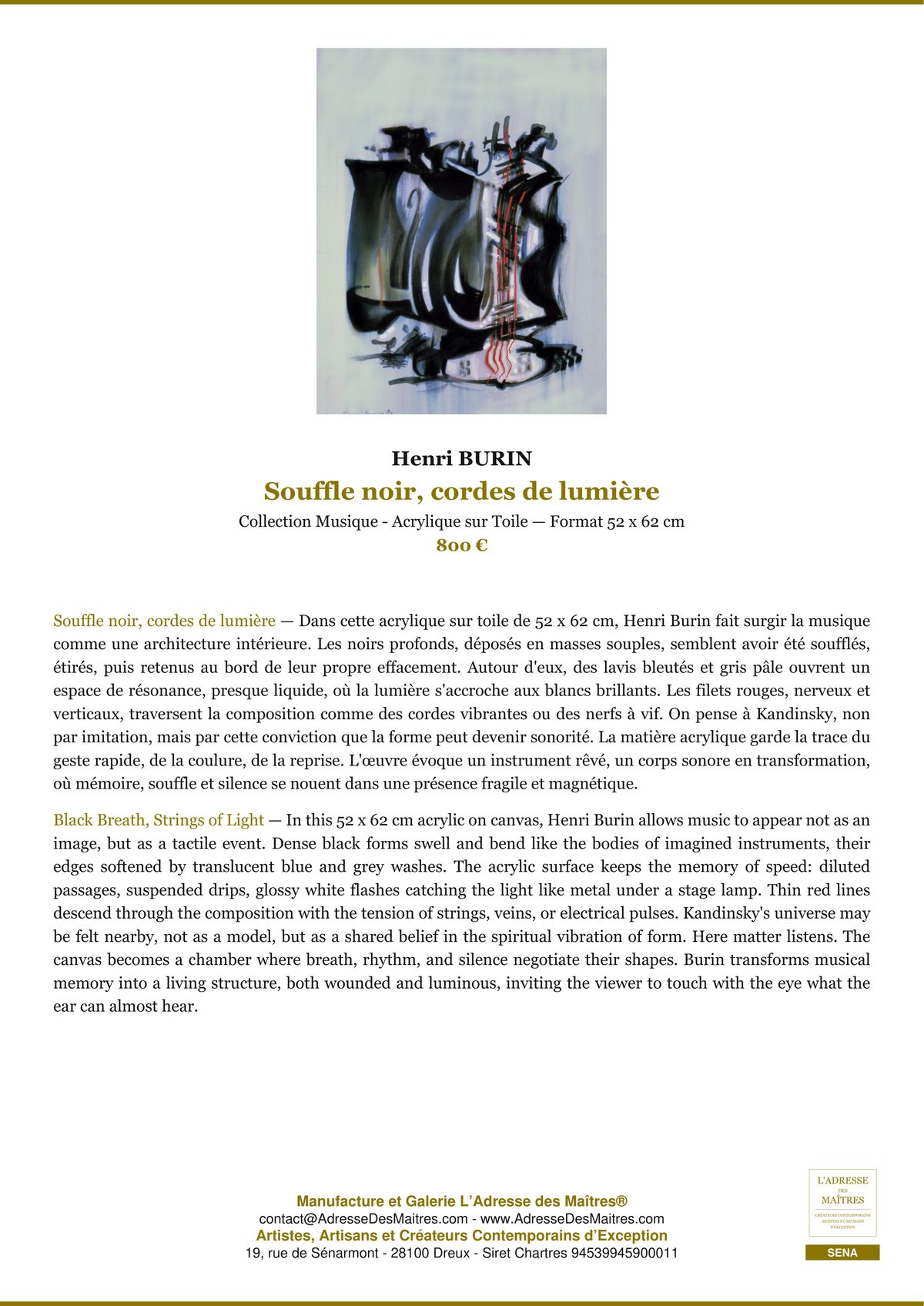
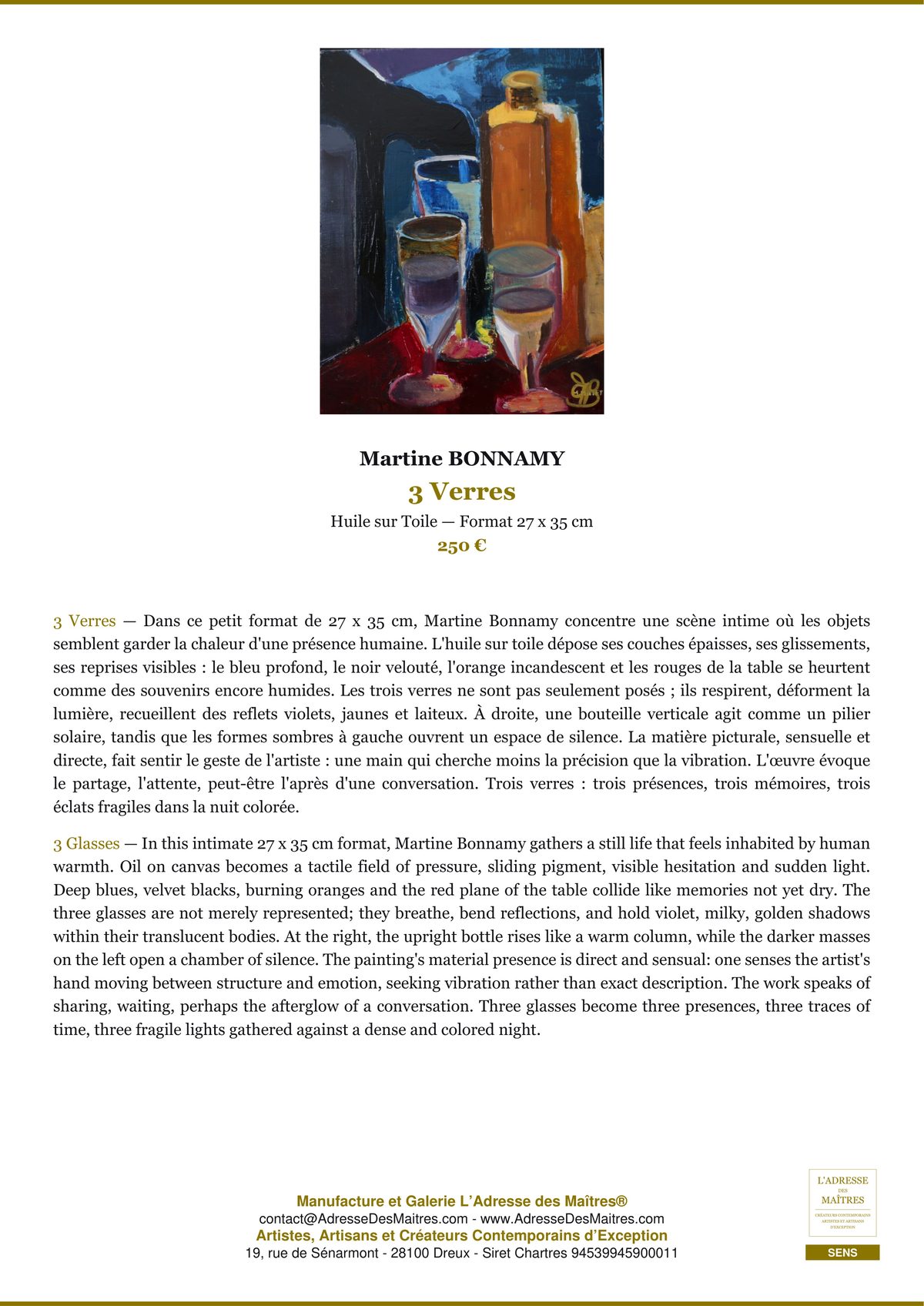
At the L’Adresse des Maîtres® Art Gallery in Dreux, certain artists are listed according to specific techniques. For example, Emilienne MOREAU-DECHELLE is listed there with 41 works in oil painting, Henri BURIN with 40 works in acrylic painting, and Martine BONNAMY with 35 works in oil painting. This technical information can help a buyer better understand the nature of the works on display, without prejudging their style or value.
6. Is it better to buy art by an emerging artist or an established artist?
The choice between an emerging artist and an established artist depends on your goal. Buying work by an emerging artist can be a way to support a developing artistic practice, and prices are sometimes more affordable. It’s also an opportunity to follow the evolution of an artist’s career from the very beginning. On the other hand, this often means having less perspective on the artist’s future recognition.
An established artist can offer more points of reference: exhibitions, career trajectory, gallery representation, publications, or sales history. This doesn’t automatically mean the purchase is a better one, but it does mean the buyer has more information on which to base their decision. In any case, avoid buying solely because an artist is described as “promising” or “established.” Look at the artwork, reflect on your connection to it, and then research the artist’s career.
7. Why is the certificate of authenticity important?
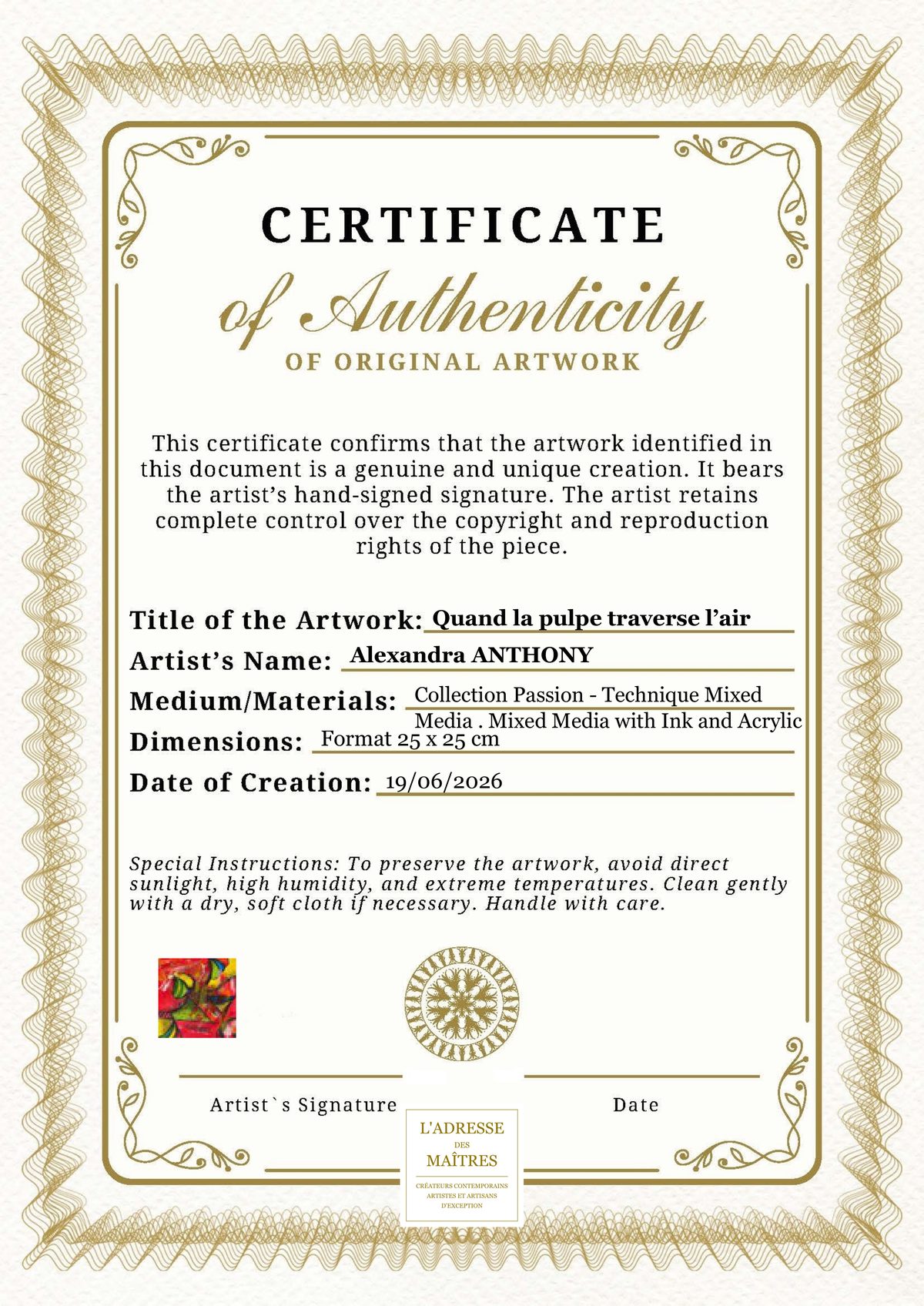
The certificate of authenticity is an essential document. It identifies the artwork and confirms its provenance. It may include the artist’s name, the title, the date, the medium, the dimensions, a photograph, the artist’s or gallery’s signature, as well as information specific to the artwork.
For a first-time buyer, this document is important because it accompanies the artwork over time. It may be requested by an insurer, an appraiser, a specialized framer, or a future buyer. Keep it in a safe place, separate from the artwork, ideally along with the purchase invoice. Do not treat it as a mere formality: it is an integral part of the purchase.
8. What is the purpose of a work’s technical data sheet?
The technical sheet provides additional information about the artwork. It may specify the medium, technique, exact dimensions, year of creation, framing method, conservation recommendations, or specific physical characteristics. It is particularly useful for comparing multiple works and understanding exactly what you are purchasing.
If this is your first purchase from a gallery, ask to see this information sheet when it’s available. It will help you distinguish between a painting on canvas, a work on paper, a mixed-media piece, and a print. These details are important for how the work is hung, preserved, valued, and displayed in your home.
9. How can you tell if the artwork will suit your home?
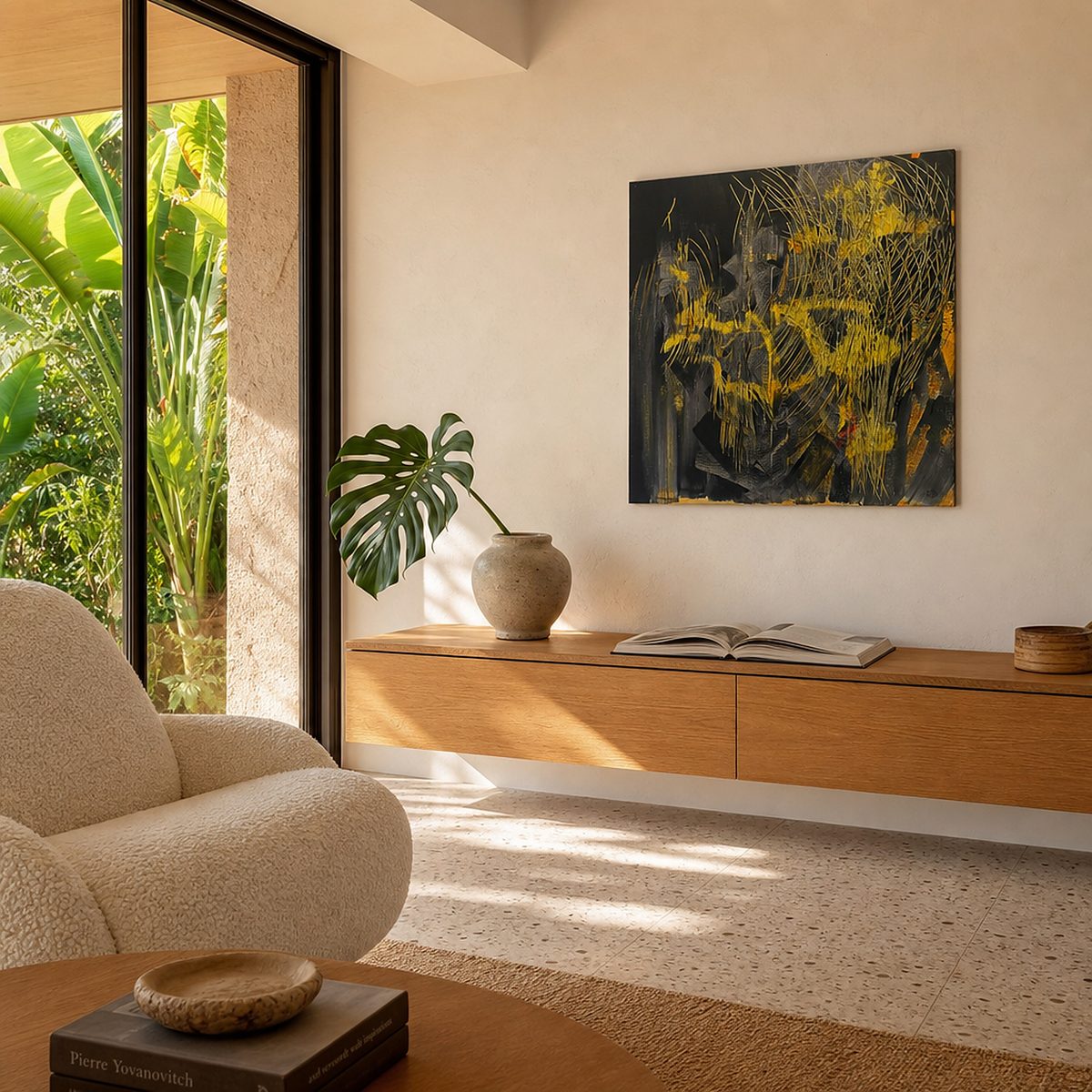
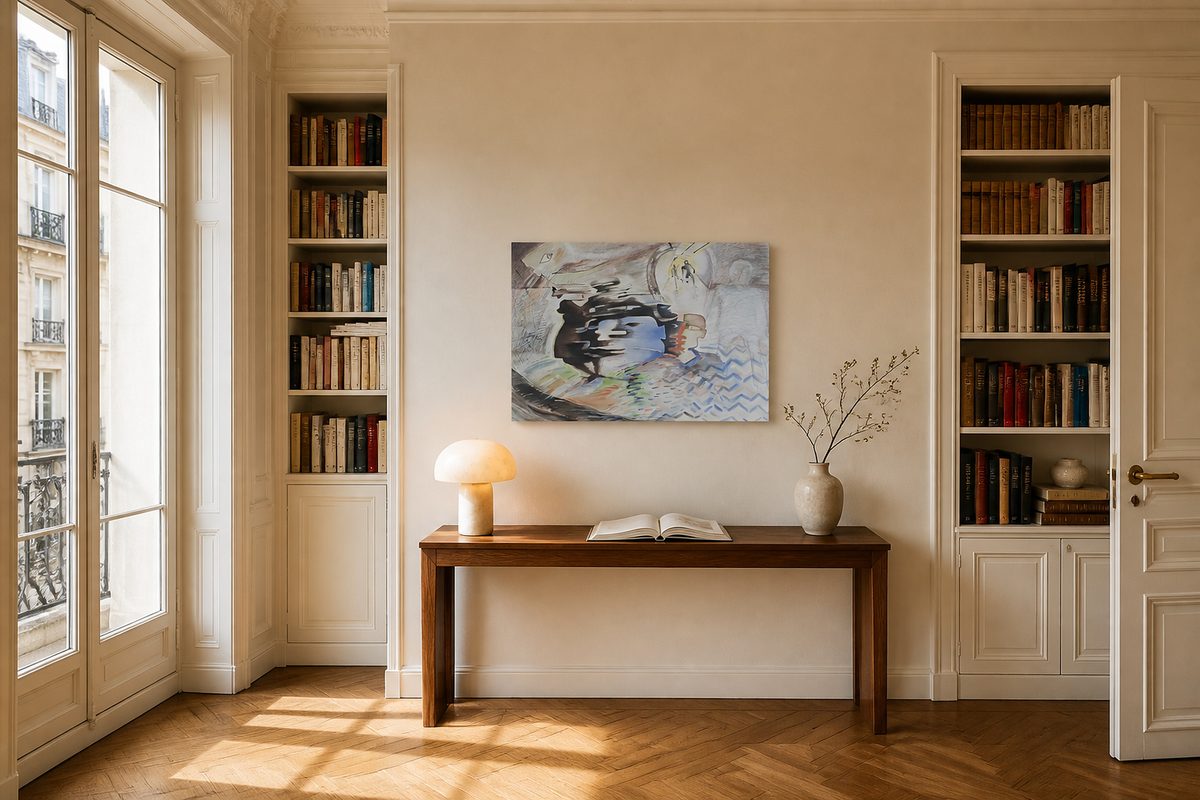
A work of art shouldn’t just “match the sofa.” It should create a presence, evoke an emotion, or engage in a dialogue with the space. However, it’s still important that it blends into your interior. Consider the room’s dominant colors, the style of the furniture, the lighting, the size of the wall, and the atmosphere you’re aiming for.
If you’re unsure, take photos of your home before visiting the gallery. This will make it easier for you to ask for advice. Some artworks require a plain wall, while others work well in a busier setting. Also consider the lighting: a poorly lit artwork can lose much of its impact. Avoid direct and prolonged exposure to sunlight, especially for delicate works on paper or those containing certain pigments.
10. What questions should you ask the gallery before buying?
Before finalizing your purchase, prepare a few simple questions. Who is the artist? What technique was used? Is the artwork one-of-a-kind? Is it signed? Is there a certificate of authenticity? Is a technical description provided? What are the terms of payment, delivery, or pickup? Can the gallery offer advice on hanging or framing the artwork?
These questions aren’t intrusive—they’re part of making a well-informed purchase. A reputable gallery should be able to answer them clearly or point you to the available information. At the Galerie d’Art L’Adresse des Maîtres® in Dreux, as in any gallery, talking with the gallerist or the staff can help first-time buyers refine their eye, understand the artworks, and buy with greater confidence.
Practical Tips for a Successful First Art Purchase
Take your time. Visit several exhibitions, compare the formats, observe the techniques, and go back to see a piece if it makes an impression on you. A true favorite often stands the test of a few days’ reflection. If you’re still thinking about a piece after leaving it behind, that’s a good sign.
Don’t try to understand everything right away. Art isn’t just a matter of expertise; it’s also an emotional experience. You may love a piece of art before you can explain why. Later, information about the artist, the technique, the certificate, and the technical specifications will help solidify your choice.
Finally, buy a piece of art that you’ll enjoy having in your daily life. A first purchase at an art gallery is often the start of a more personal relationship with art. Whether it’s an oil painting, an acrylic, a small piece, or a more ambitious work, the key is to choose with care, curiosity, and sincerity.
Conclusion: Buying Your First Piece of Art at a Gallery with Confidence
For a first-time buyer, purchasing a work of art may seem complicated, but asking the right questions can simplify the decision. Setting a budget, balancing personal preference with investment potential, verifying authenticity, understanding the technique, choosing the right format, requesting a certificate, and reviewing the technical specifications are essential steps.
By working with a gallery, you’ll benefit from a more reassuring environment in which to explore, compare, and make a decision. The L’Adresse des Maîtres® Art Gallery in Dreux is one such place where a buyer can explore featured works, notably those by Emilienne MOREAU-DECHELLE in oil painting, Henri BURIN in acrylic painting, and Martine BONNAMY in oil painting. For your first purchase, proceed methodically, but let emotion play a central role: it is often emotion that transforms a work of art into a true lifelong companion.
Check out our gallery
Explorez plus de 1633 œuvres dans notre galerie en ligne — Fiches Premium, Certificats d’Authenticité et Ambiances disponibles pour chaque œuvre.

Leave a comment