Artistic Silk Carpets — An Exceptional Textile Heritage
↓ Share this articleSilk art carpets: an exceptional textile heritage
The silk art rug holds a unique place in the history of decorative arts. At the intersection of master craftsmanship,textile art, and cultural heritage, it captivates with the delicacy of its material, the richness of its patterns, and the virtuosity of its execution. Much more than a mere decorative object, the silk carpet is often regarded as a work of art in its own right, capable of enduring the centuries while retaining its luster.
From workshops in Persia to the imperial manufactories of Turkey, via Chinese traditions, the silk carpet tells a millennia-old story of cultural exchange, technical innovation, and symbolism. Even today, it continues to captivate collectors, lovers of fine interiors, and art gallery visitors who appreciate the nobility of the materials and the craftsmanship involved.
The millennia-old history of silk carpets: Persia, Turkey, China
The origins of the carpet date back to antiquity, but the silk carpet stands out as a particularly refined form of this art. In Persia, workshops played a decisive role in the rise of the prestige carpet. The Persian tradition perfected the use of floral motifs, medallions, and garden-inspired compositions, giving the carpet both decorative and symbolic significance. Silk was used there for the most precious pieces, intended for palaces, places of worship, or diplomatic gifts.
In Turkey, the art of carpet-making developed as an extension of Anatolian and Ottoman traditions. Turkish carpets are distinguished in particular by the regularity of their compositions, the precision of their knotting, and the diversity of their designs. With the Ottoman Empire, the carpet became a symbol of international prestige. Major manufacturers then responded to an increasingly demanding market, where silk took center stage for ceremonial pieces.
China, too, has developed a remarkable tradition of silk carpets. Within the imperial context, this art form developed its own distinctive decorative vocabulary: dragons, clouds, stylized flowers, and symbols of longevity or harmony. Chinese silk carpets are often distinguished by their graphic refinement and the subtlety of their colors. Exchanges between the East and the West, particularly along trade routes, have played a major role in introducing these textile masterpieces beyond their regions of origin.
Through these three major centers—Persia, Turkey, and China—the silk carpet has established itself as an object of culture, social representation, and aesthetic expression. Each region has imbued it with its own unique sensibility, making the silk carpet a world of great diversity.
Hereke carpets: jewels of Turkish textile art
Among the most admired creations, Hereke rugs hold a special place. Originating from the town of Hereke in Turkey, they are often regarded as one of the pinnacles of Ottomantextile art. Their reputation is based on a rare combination: exceptional silk quality, extremely fine weaving, and sophisticated patterns.
Historically, Hereke has established itself as a prestigious production center, known for its high-end commissions. The carpets produced there met extremely high standards of beauty, precision, and durability. Their aesthetic often combines floral motifs, symmetry, arabesques, and meticulous attention to detail.
Another distinctive feature of Hereke carpets lies in their weaving technique. They are renowned for their extremely high knot density, which allows for exceptionally sharp patterns. The higher the density, the more precise, nuanced, and almost painterly the design can be. This delicacy gives Hereke carpets a remarkable visual depth, which is particularly enhanced by the shimmering sheen of natural silk.
Knotting plays a crucial role here. In the world of rugs, the quality of a piece depends largely on the mastery of the craft. Regular, tight, and carefully aligned knots result in a surface that is supple, durable, and visually striking. In a Hereke rug, this technical precision translates into unparalleled elegance.
In Dreux, the L’Adresse des Maîtres® Art Gallery showcases this tradition of excellence through its collection of Hereke rugs. In an art gallery like this, the rug is not presented as a mere decorative accessory, but as a work of art to be contemplated, understood, and passed on.
Manufacturing process: natural silk, plant-based dyes, knot density
The creation of an artistic silk rug requires patience, precision, and a deep understanding of the materials. The most crucial element is natural silk. This fiber, renowned for its softness, strength, and luster, gives the rug a distinctive sheen. Depending on the angle of the light, the surface can shift in appearance, revealing subtle contrasts and a sense of movement.
The quality of the silk directly affects the fineness of the work. High-quality silk produces a more even thread, resulting in more precise knotting. This level of detail is essential for the most elaborate rugs, particularly Hereke rugs, where the complexity of the patterns demands exceptional skill.
Plant-based dyes are another hallmark of quality. Derived from plants, bark, roots, or flowers, they offer deep, vibrant hues. Unlike some more industrial dyes, they often produce a chromatic quality that is highly prized by connoisseurs. Over time, these colors can evolve elegantly without losing their harmony.
Knot density is, after all, a fundamental criterion. It refers to the number of knots made within a given area. A high density means more time-consuming and costly work, but also a finer and more complex design. In the world of silk art carpets, this density is often one of the most visible indicators of excellence. A very dense carpet can reproduce details comparable to those of a miniature or a textile painting.
The entire process takes months, sometimes even longer, depending on the size of the piece and the intricacy of its design. It is this deliberate, carefully controlled pace that makes a silk carpet both atextile workof art and a collector’s item.
How to Identify an Authentic Art Rug
Given the diversity of the market, it is essential to know how to identify an authentic art rug. There are several factors that allow for a thorough evaluation of a piece.
First, it is essential to examine the materials. Genuine natural silk has a soft texture, a delicate fineness, and subtle sheen. The back of the rug should also reveal the precision of the knotting: a clear pattern on the reverse side is often a good indicator of quality.
Next, labels, certificates, and documentation of origin play an important role. They can attest to the item’s provenance, the materials used, or the artisanal nature of its production. However, a document is no substitute for the expert eye of a specialist.
Expertise therefore remains a key factor. Consulting a reputable firm or a specialized art gallery provides an opinion grounded in experience, an understanding of techniques, and knowledge of regional traditions. For a buyer, this offers valuable assurance, especially when it comes to a Hereke rug or an antique piece.
It is also important to consider the overall consistency of the piece: the intricacy of the patterns, the evenness of the knots, the balance of colors, and the quality of the finish. An authentic art rug typically reveals a mastery that is evident even in the smallest details.
Care and Maintenance of a Silk Rug
A silk rug is a delicate piece that requires special care. Regular maintenance helps preserve its luster and structure over time.
The first rule is to avoid prolonged exposure to direct sunlight, which can cause colors to fade. It is also advisable to limit excessive humidity and sudden temperature changes. Indoors, a stable and clean location is best.
Dusting should be done gently and regularly. Avoid harsh movements or overly powerful devices that could damage the fibers. If a stain occurs, it is best to act quickly without rubbing and to consult a qualified professional for cleaning.
To preserve the rug, rotating it periodically helps distribute wear and tear if it is exposed to foot traffic or light. When a silk rug needs to be stored, it should be rolled up carefully and kept in a clean, dry, and well-ventilated environment.
Any restoration work should be entrusted to specialists intextile art who are capable of respecting the structure, materials, and spirit of the work. Improper handling could diminish both the aesthetic and heritage value of the rug.
Silk carpets as an art investment
Beyond its decorative value, the silk carpet is often viewed as an artistic investment. This is due to several factors: the rarity of high-quality pieces, the extensive time required for production, the historical prestige of the workshops, and collectors’ enduring interest in textile arts.
The most sought-after rugs, particularly certain Hereke rugs, combine technical excellence with cultural value. When they are well-preserved, properly documented, and acquired from reliable sources, they can serve as a legacy to be passed down. As with any work of art, provenance, condition, authenticity, and craftsmanship are key factors.
In this context, a specialized art gallery plays an essential role: it guides the viewer’s eye, informs their choices, and situates the carpet within the broader history of artistic creation. At the Galerie d’Art L’Adresse des Maîtres® in Dreux, the inclusion of a collection of Hereke carpets is part of this approach to highlighting craftsmanship and fostering a dialogue between tradition and contemporary sensibilities.
A dialogue with contemporary art at the L’Adresse des Maîtres® Art Gallery
The world of silk carpets finds an intriguing parallel in certain artistic approaches showcased by the L’Adresse des Maîtres® Art Gallery. Without conflating the techniques, these parallels offer a deeper understanding of the enduring nature of the textile craft, the memory of the pattern, and the materiality of the work.
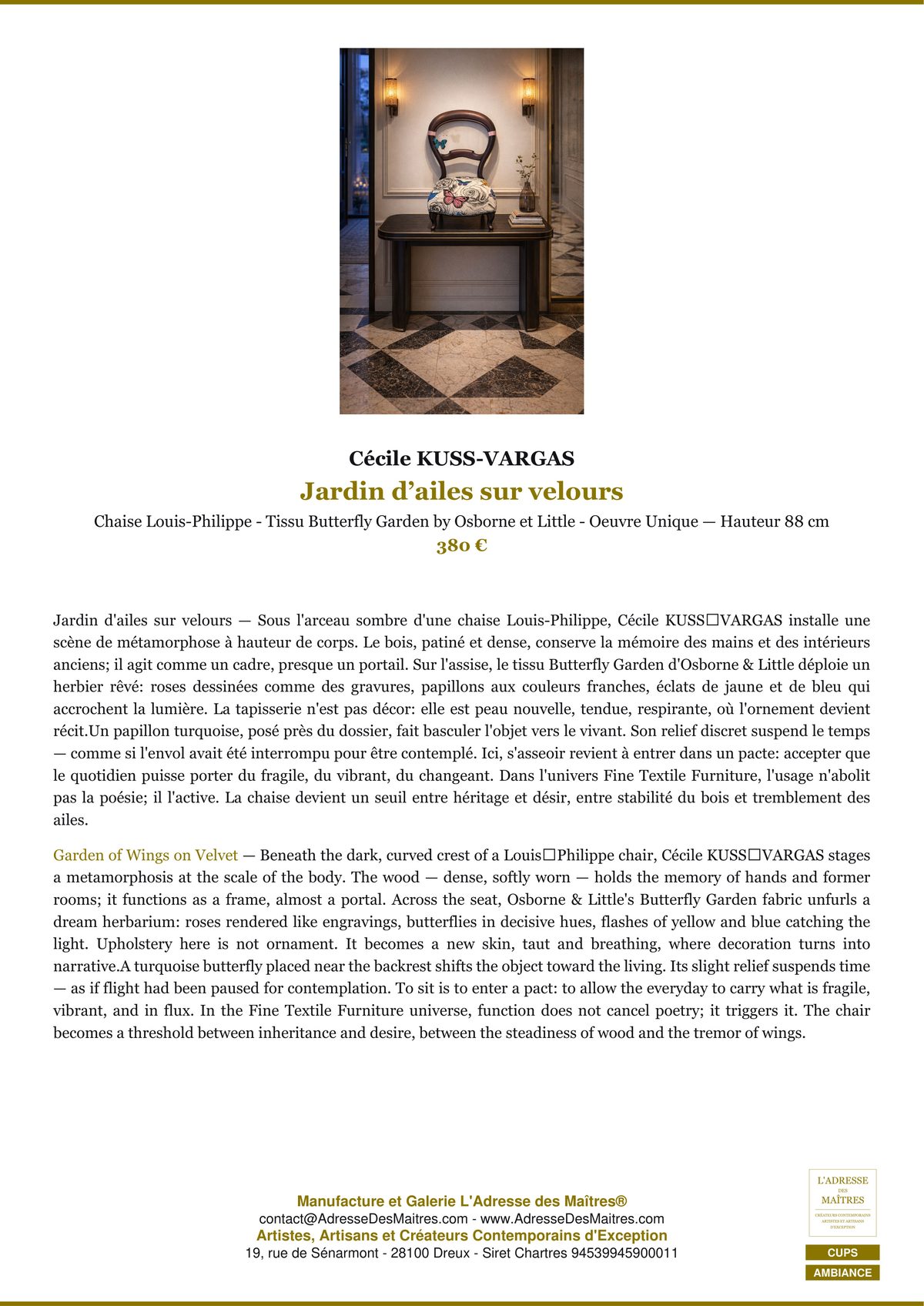
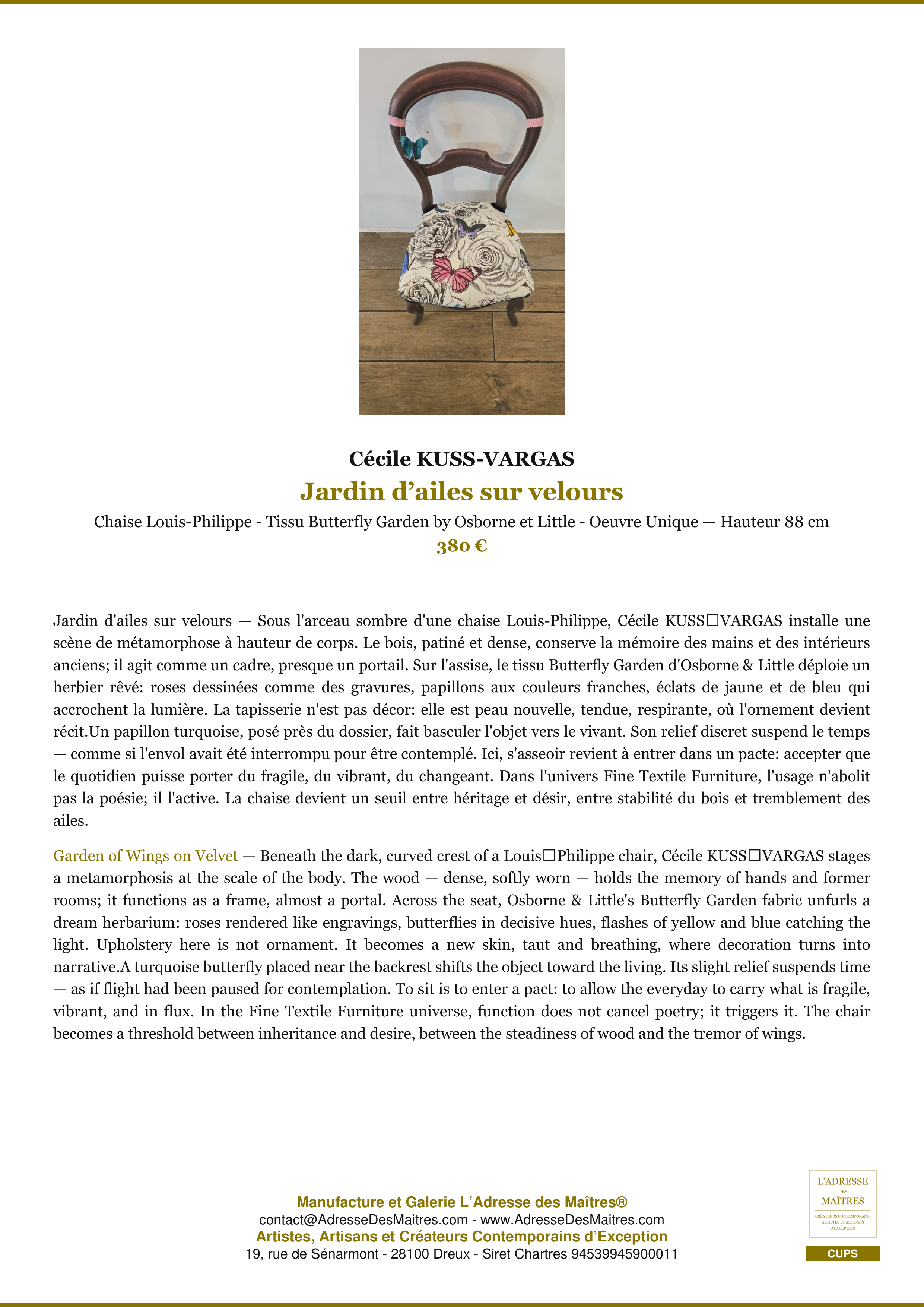
Cécile KUSS-VARGAS, with two works in Fine Textile Furniture—including the piece “Jardin d’ailes sur velours”—directly highlights the textile dimension of the art rug. Through her technique, she reminds us how much the material, the medium, and the tactile experience can contribute fully to the aesthetic experience. In the context of silk art carpets, this approach helps us perceive textiles not as a minor art form, but as a creative language in its own right.
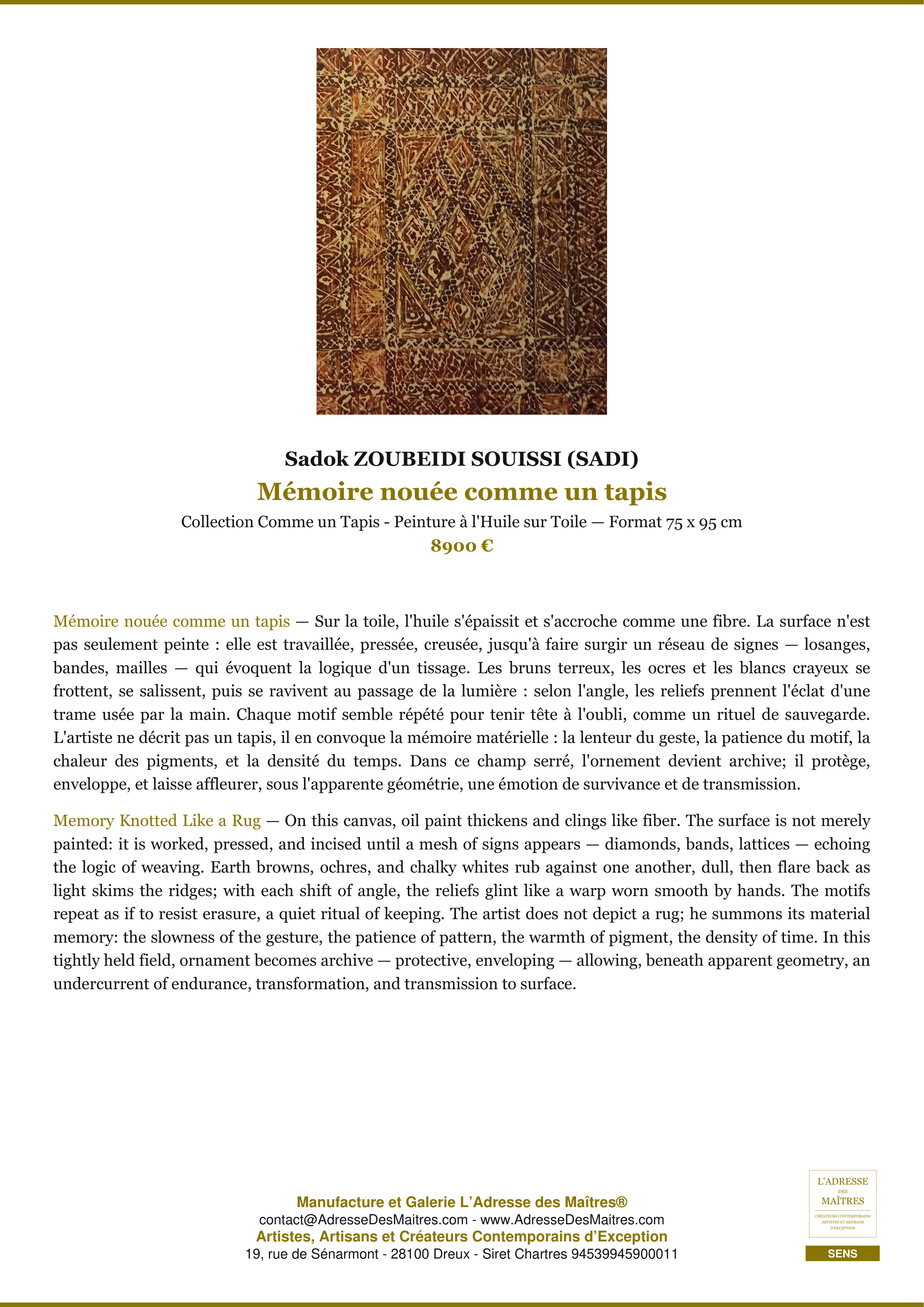
Sadok ZOUBEIDI SOUISSI (SADI), with one oil painting—for example , “Memory Knotted Like a Rug”—establishes a particularly evocative connection with the world of rugs. Without straying from the realm of oil painting, the title suggests the rich memory and symbolism attached to the carpet as a cultural object. His contribution to this dialogue lies in his ability to present the carpet as a form of memory that is woven, knotted, and passed down.
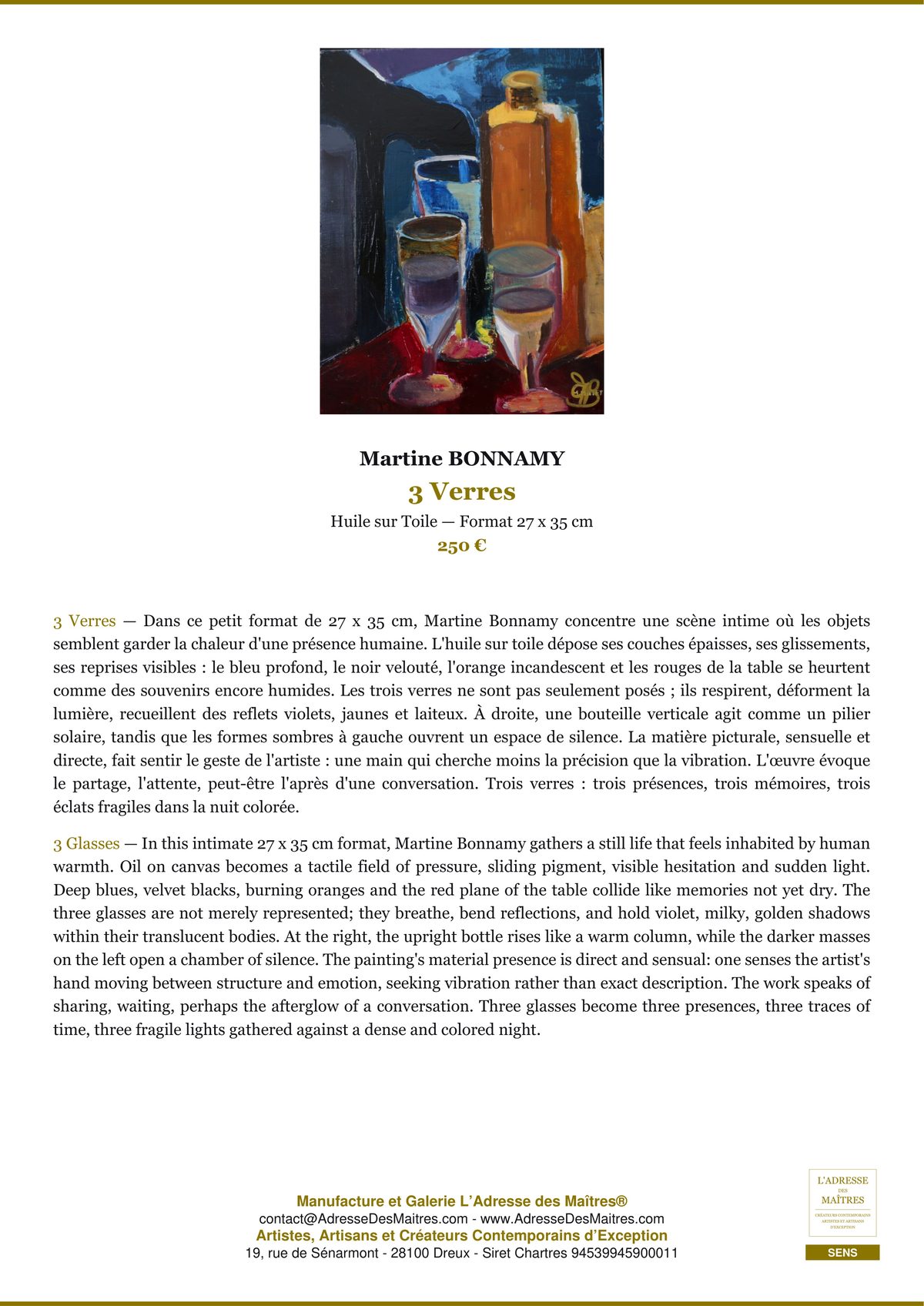
Martine BONNAMY, with 63 mixed-media works on canvas, including “Herbes de lumière, mémoire noire,” enriches this exploration through the interplay of materials, layers, and visual associations characteristic of mixed media. Her work can be likened to the experience of a silk tapestry due to the complexity of its surfaces and the way the material becomes a vessel for visual memory. In a contemporary interpretation oftextile art, this presence underscores that the work is also constructed through accumulation, texture, and vibration.
Conclusion
Silk carpets remain one of the pinnacles of globaltextile art. Rooted in a millennia-old history spanning Persia, Turkey, and China, they combine the elegance of natural silk, the subtlety of their dyes, the precision of their knotting, and the symbolic richness of their patterns. Hereke carpets, in particular, embody this pursuit of excellence that elevates the carpet to a true work of art.
Knowing how to recognize an authentic piece, caring for it properly, and viewing it as part of our artistic heritage allows us to fully appreciate its value. In this regard, the L’Adresse des Maîtres® Art Gallery in Dreux, with its collection of Hereke carpets and its openness to other forms of artistic expression, offers a unique setting for discovering silk art carpets in all their historical, aesthetic, and cultural depth.
Check out our gallery
Would you like to experience these artistic movements in person? Visit the online gallery of L’Adresse des Maîtres®—more than 606 original works by contemporary artists.

Leave a comment