Acrylic and Posca Painting on Canvas — Contemporary Art
↓ Share this articleAcrylic and Posca Painting on Canvas: A Vibrant Technique in the Service of Contemporary Art
In the vibrant landscape ofcontemporary art, certain techniques captivate viewers with their freedom, immediacy, and ability to create a dialogue between multiple visual languages. This is the case with“Acrylic and Posca Painting on Canvas.” This hybrid approach combines the pictorial depth of acrylic with the graphic precision of Posca markers, creating dynamic, colorful, and often highly expressive works.
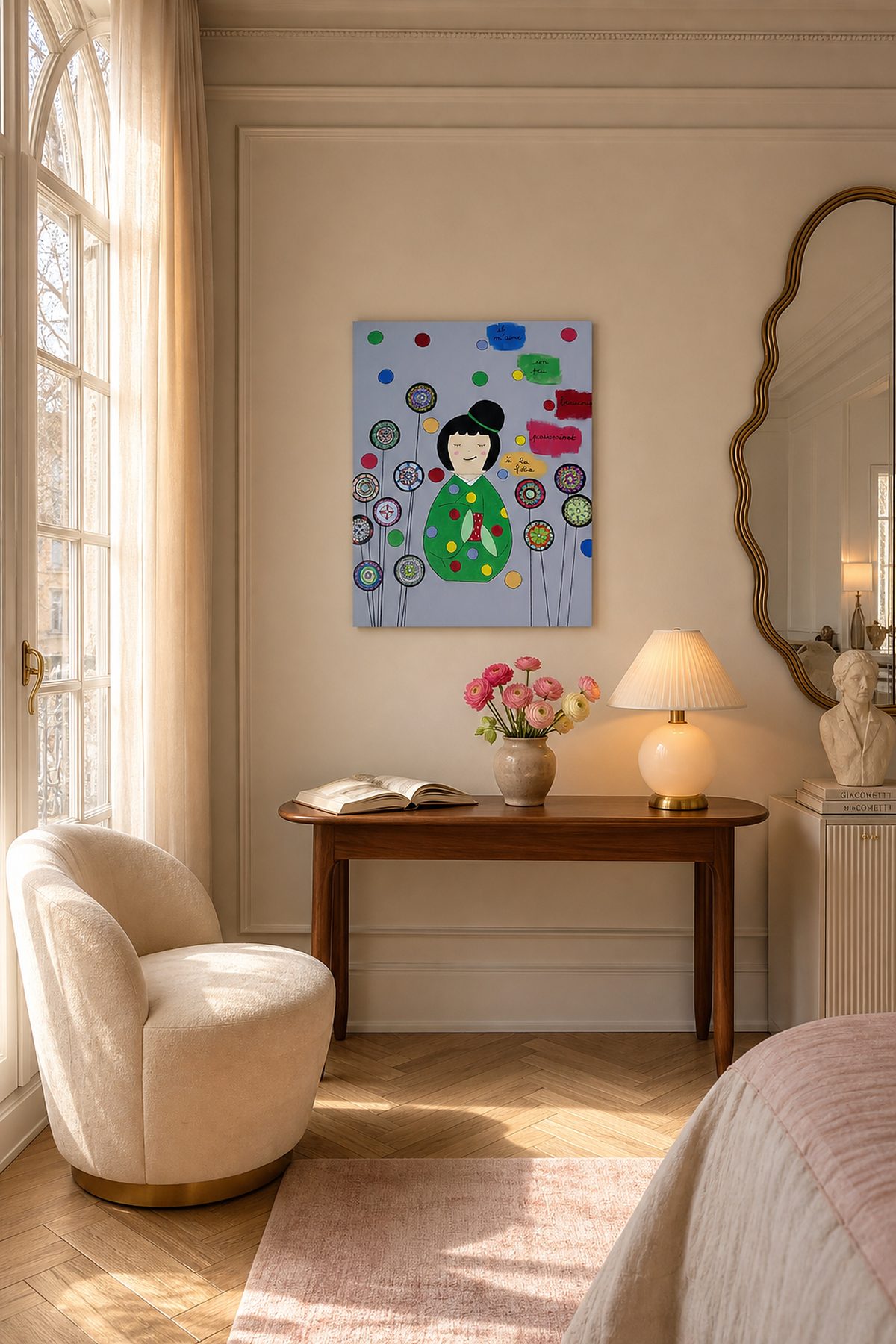
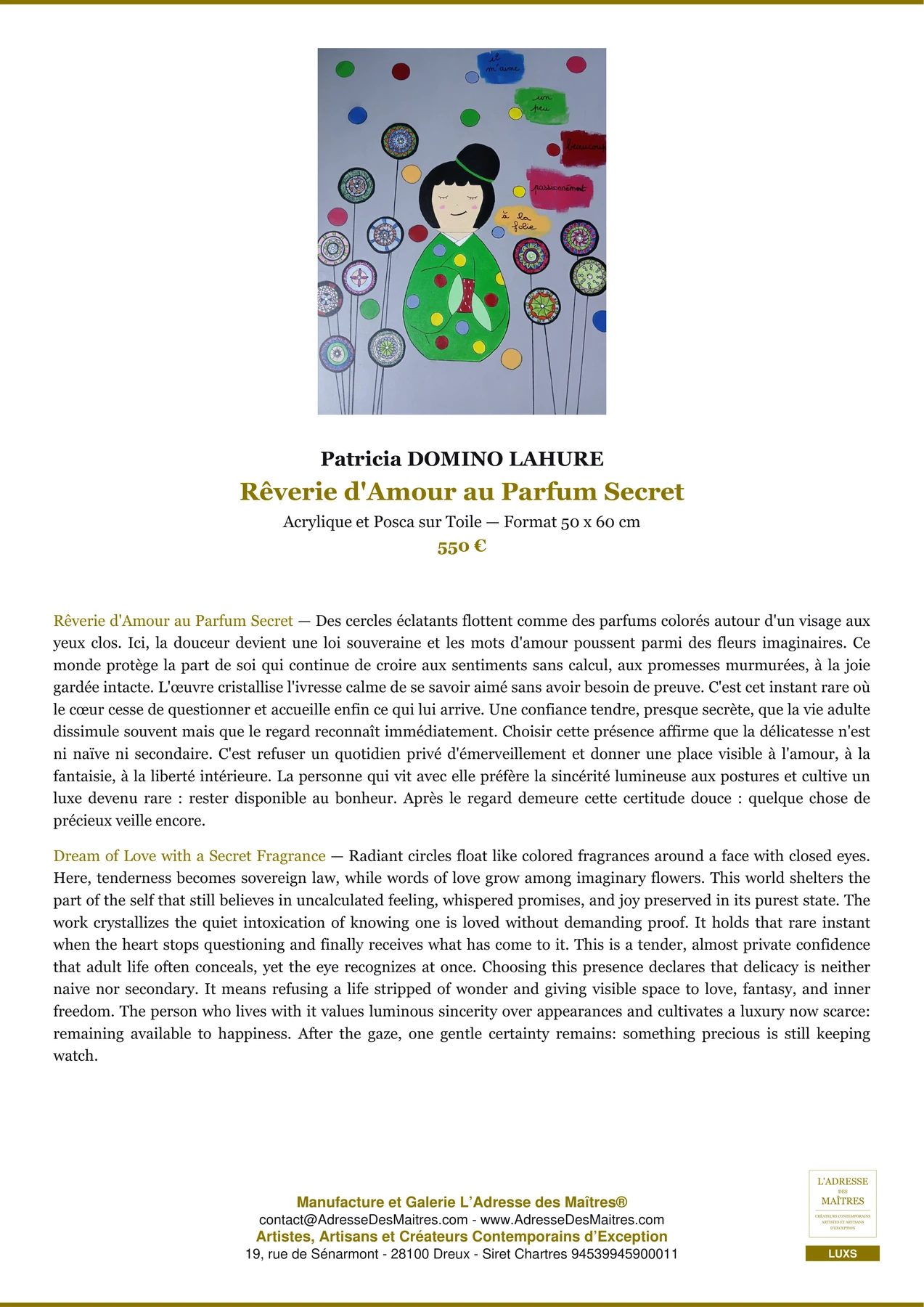
At the L’Adresse des Maîtres® Art Gallery in Dreux, this technique is showcased through eight works, notably by the artist Patricia DOMINO LAHURE. Her work demonstrates the richness of this process, which combines spontaneity, sculptural composition, and chromatic intensity.
Understanding the Technique: Between Painting and Drawing
Acrylic and Posca Painting on Canvas is based on the combined use of two complementary mediums. On the one hand, acrylic paint, valued for its quick drying time, durability, and wide variety of effects. It can be applied as solid areas, glazes, impasto, or layers. On the other hand, Posca markers, which contain water-based paint, produce a crisp, opaque, and vibrant line.
On canvas, this combination opens up a vast field for experimentation. Acrylic paint allows the artist to build the background, set the mood, and create contrasts or textures. The Posca marker then serves as a precision tool: it highlights, structures, sketches, adds calligraphic elements, or incorporates graphic details. The artist can thus shift from broad, painterly strokes to finer, almost illustrative touches.
This technique is particularly accessible in principle, but it requires true mastery. One must know how to apply layers in the right proportions, balance colors, anticipate the effects of layering, and maintain the coherence of the composition. The result can be figurative, abstract, urban, symbolic, or decorative, depending on the artist’s intention.
A story tied to the evolution of artistic practices
Acrylic paint emerged in the 20th century and quickly gained popularity in artistic circles beginning in the 1950s. It was adopted by many modern and contemporary painters for its versatility. Unlike oil paint, it dries quickly, can be diluted with water, and allows artists to work in successive layers without having to wait several days. This speed aligns perfectly with the evolution of modern art, and later contemporary art, where gesture, experimentation, and formal freedom play a central role.
Posca markers, on the other hand, are associated with a more recent visual culture. Popularized in the worlds of street art, graphic design, illustration, design, and object customization, they have gradually found their place in artists’ studios. Their opacity, vibrant colors, and ability to adhere to a wide variety of surfaces make them a particularly popular tool among contemporary creators.
The combination of acrylic and Posca on canvas thus reflects a major shift in contemporary art: the gradual blurring of strict boundaries between painting, drawing, illustration, urban art, and graphic arts. Contemporary artists no longer hesitate to blend media, references, and influences to create unique works.
An iconic technique in contemporary art
Incontemporary art,acrylic and Posca painting on canvas is often used to create images with a strong visual impact. The bold colors, defined contours, and striking contrasts immediately catch the eye. This technique also conveys a very contemporary energy, reminiscent of urban rhythms, popular culture, and modern graphic design.
It is equally suited to abstract compositions and narrative works. Some artists use it to create stylized figures, imaginary scenes, interior landscapes, or symbolic motifs. Others favor a more intuitive approach, consisting of free-form shapes, symbols, lines, and colors in motion.
Posca markers often play a key role in making the artwork legible. They can highlight text, a silhouette, a repetitive pattern, or an expressive detail. They bring a kind of graphic vibrancy that contrasts with the more painterly quality of acrylic. This tension between the painted surface and the drawn lines gives the canvas a distinctive presence.
Patricia DOMINO LAHURE: An Artist Represented in Dreux
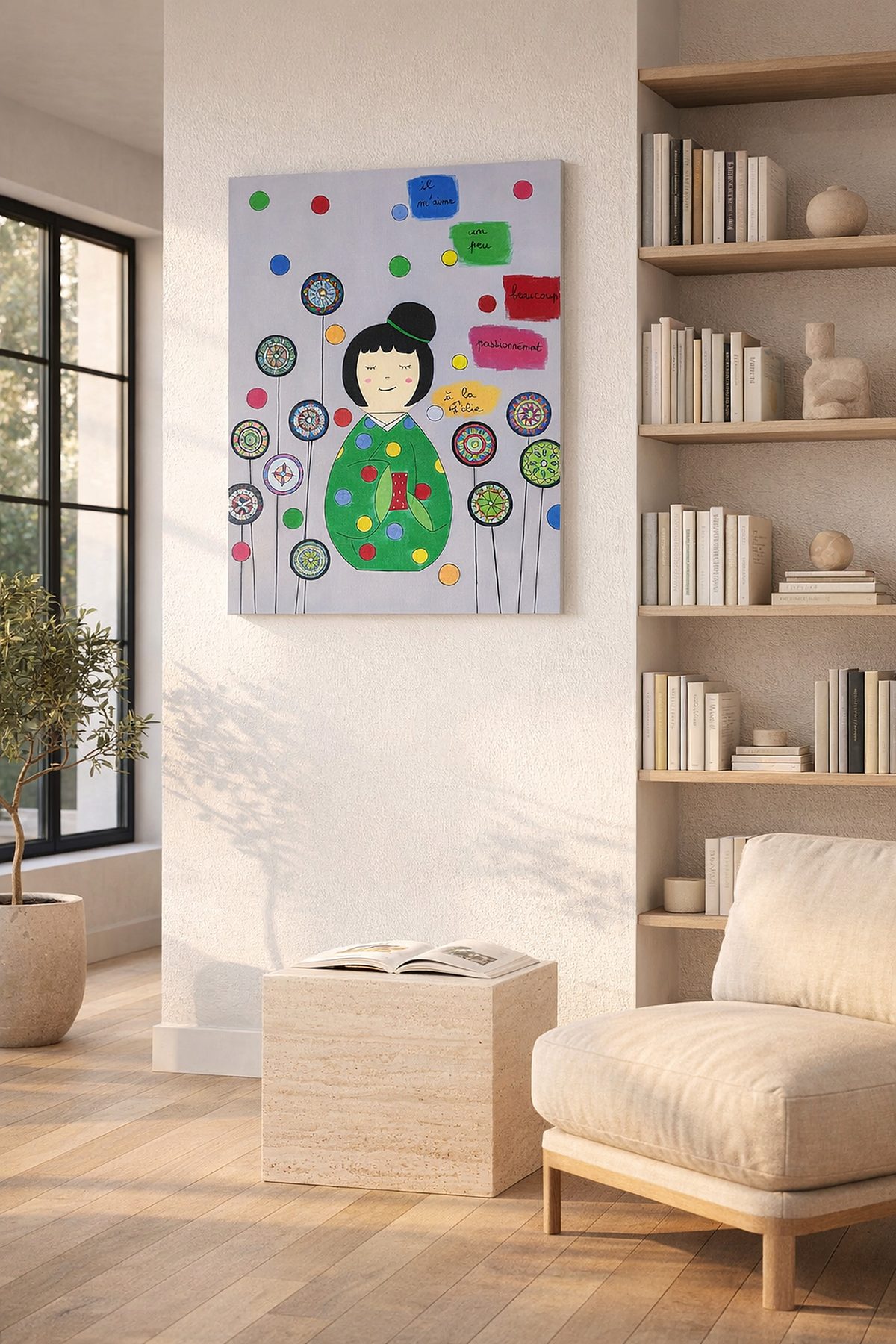
Among the artists featured at the gallery, Patricia DOMINO LAHURE employs this technique with a personal touch. Her works, created using acrylic and Posca paint on canvas, demonstrate how this process can become a true artistic language. Far from being a mere fad, the combination of acrylic and Posca allows her to create expressive compositions in which color and line engage in an intense dialogue.
The eight works on display at the L’Adresse des Maîtres® Art Gallery in Dreux allow visitors to discover the diversity of this artistic approach. Each painting can be viewed on several levels: first, in terms of its overall impact, and then in terms of the subtlety of its details. The viewer’s gaze moves between the colorful backgrounds, the precise lines, the bold shapes, and the more delicate areas.
This type of work is particularly appealing to art lovers who want to explore the contemporary art world without feeling excluded by overly theoretical discourse. The technique speaks to the viewer immediately through its color, rhythm, and energy, while still allowing room for a more intimate interpretation.
Why does this technique appeal to collectors?
Acrylic and Posca painting on canvas is increasingly appealing to collectors because it embodies the aesthetic of our time. It evokes both the tradition of painting on canvas and the influence of contemporary visual arts. It can find its place in a modern interior, a professional space, a private collection, or a more daring installation.
Canvas remains a noble and durable medium, while acrylic paint ensures that colors hold up well. When used with care and protected by a suitable varnish, Posca markers help preserve the vibrancy of the lines. This combination of physical durability and graphic freshness partly explains the growing interest in this technique.
For a collector, acquiring a work created using this process also means choosing a piece that reflects the spirit of its time. The work is more than just decorative: it embodies a contemporary way of thinking about the image, straddling the realms of painting, symbol, and movement.
Discover Acrylic and Posca Painting on Canvas at an art gallery in Dreux
Viewing a work of art online can never fully replace the experience of seeing it in person. When standing in front of a canvas, you can better appreciate the textural depth, the layering, the richness of the colors, and the precision of the brushstrokes. This is especially true for“Acrylic and Posca Painting on Canvas,” where the richness of the surface plays an essential role.
The L’Adresse des Maîtres® Art Gallery in Dreux thus offers visitors the opportunity to discover this technique in an exceptional setting, through the works of Patricia DOMINO LAHURE. Forcontemporary art enthusiasts, the curious, interior designers, and collectors alike, these eight works provide a wonderful introduction to a contemporary, vibrant, and accessible art form.
In Dreux, this fusion of acrylic paint and Posca markers reveals just how effectively contemporary art can breathe new life into traditional media. The canvas becomes a space for experimentation, where color takes on a material quality and the line becomes energy. This technique is well worth exploring to gain an understanding of one of the most vibrant forms of contemporary artistic expression.
Découvrez 10 œuvres en Acrylic and Posca Painting on Canvas dans notre galerie en ligne.

Leave a comment