Jewelry — Contemporary Art
↓ Share this articleThe “Bijou” Technique: When Contemporary Art Is Worn Close to the Body
In the field of contemporary art, jewelry occupies a unique place: at once a work of art, a miniature sculpture, an adornment, and an aesthetic statement, it defies overly rigid categories. Long associated with luxury, ornamentation, or social status, jewelry is now fully recognized as a realm of creativity. At the L’Adresse des Maîtres® Art Gallery in Dreux, this art form is showcased through 11 works, notably byHélène RAGOT Bijoux, whose creations explore materials, form, and the intimate relationship between the piece and the person wearing it.
Understanding the Technique of Jewelry in Art
The art of jewelry-making is based on a principle that seems simple at first glance: creating a piece meant to be worn, held, and placed close to the body. But behind this simplicity lies a wealth of craftsmanship. Jewelry can incorporate metal, stone, glass, ceramics, textiles, wood, resin, pearls, enamel, or even recycled materials. It can be precious or deliberately modest, perfectly polished or rough-hewn, understated or spectacular.
In a contemporary approach, jewelry is no longer viewed merely as an accessory. It has become a visual language. A ring, a necklace, a brooch, or a pair of earrings can be seen as true small-scale sculptures. The artist works with volume, light, color, weight, balance, and texture. The body then becomes a living, mobile pedestal that transforms the perception of the work.
An ancient history, with traditions that are constantly being reinvented
The history of jewelry is as old as that of human civilizations. As far back as prehistoric times, seashells, bones, drilled stones, and animal teeth were used as ornaments. These early items worn as jewelry often served a symbolic purpose: protection, group identity, social status, or a spiritual connection. In ancient Egypt, jewelry was a constant presence in both life and death, imbued with religious significance and highly refined aesthetic codes.
Over the centuries, jewelry has evolved across all cultures. It has served as a symbol of power among rulers, a mark of wealth in European courts, and a sentimental keepsake in family traditions. During the Renaissance, and later in the 18th and 19th centuries, the art of goldsmithing reached remarkable heights of virtuosity. Precious stones, gold, silver, and enamels became the mediums for great decorative ingenuity.
The 20th century marked a decisive turning point. The artistic avant-garde, followed by modernist movements, challenged established norms. Jewelry is no longer necessarily valuable because of the materials used; it can be valuable because of its concept, its form, or its expressive power. Artists and designers explored abstraction, surrealism, design, assemblage, and the repurposed object. Artist-made jewelry emerged as an autonomous work of art—sometimes a one-of-a-kind piece, sometimes produced in limited editions.
Jewelry in Contemporary Art: An Intimate and Expressive Art Form
Incontemporary art, jewelry engages with many disciplines: sculpture, design, fashion, decorative arts, and performance. It can be minimalist, organic, narrative, baroque, conceptual, or experimental. Some designers prioritize clean lines and formal balance; others seek to evoke surprise, irregularity, tactile emotion, or contrasts in materials.
What particularly sets contemporary jewelry apart is its relationship to the body. Unlike a painting hanging on a wall or a sculpture placed on a pedestal, jewelry accompanies a gesture, a posture, a presence. It contributes to the identity of the person wearing it. It can reveal a personality, express a sensibility, or spark a conversation. It is a work of art that becomes part of everyday life without losing its aesthetic dimension.
Contemporary jewelry also plays with the concept of value. Whereas traditional jewelry often emphasizes the rarity of gemstones and precious metals, the contemporary artist may choose a simple, fragile, or unexpected material. A glass bead, a fragment of oxidized metal, a hand-sculpted form, or a textile assemblage can evoke an emotion just as powerful as that of a diamond. The value, then, lies in the artist’s vision, in the creativity, and in the uniqueness of the work.
Hélène RAGOT Jewelry: The Sensitivity of Materials
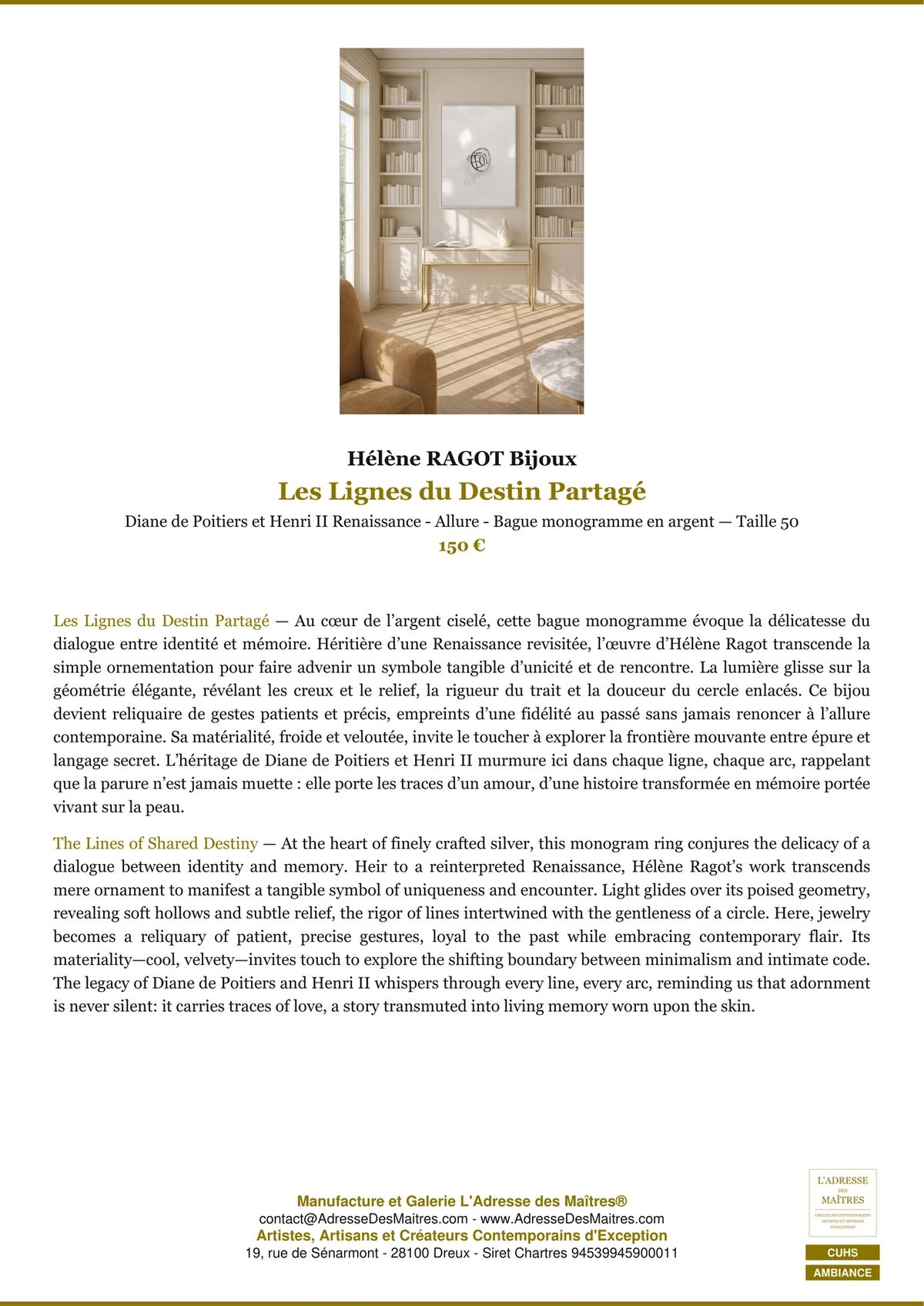
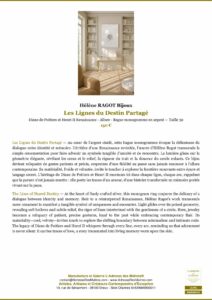
At the L’Adresse des Maîtres® Art Gallery in Dreux, the art of jewelry is represented by Hélène RAGOT Bijoux. Her creations embody a contemporary approach in which jewelry becomes a work of art in its own right. Each piece reflects a careful attention to materials, form, and balance. Far from being mere ornaments, these pieces possess a strong visual presence capable of captivating both art lovers and enthusiasts of artisanal craftsmanship.
Hélène RAGOT Bijoux’s work invites you to observe the details. A curve, a texture, a sparkle, or a combination of colors can completely change how a piece is perceived. In artist-crafted jewelry, nothing is trivial: the clasp, the volume, the feel against the skin, and the way light glides across the surface all contribute to the aesthetic experience. The work is revealed as much through the eye as through wear.
The 11 works presented in this technique at the gallery offer a glimpse into the diversity of contemporary jewelry. They demonstrate just how much artistic intensity a small-scale creation can convey. Jewelry becomes a space of freedom: it brings together the artist’s hand, the idea, the gesture, and the artist’s sensibility in an object that can be contemplated, treasured, or worn.
Why collect artist-designed jewelry?
Collecting contemporary jewelry means choosing a piece that has a direct connection to one’s inner self. Unlike other art forms that are admired from a distance, jewelry can be a part of everyday life or mark important moments. It is at once a work of art, a memory, and a constant presence. This closeness gives it a special emotional significance.
For collectors, artist-designed jewelry also offers an exciting gateway tocontemporary art. Its format makes it accessible, but its artistic demands can be very high. A brooch, a pendant, or a ring can reveal a complete artistic approach: choice of materials, formal exploration, sense of rhythm, and relationship to the body and space.
In an art gallery, an exhibition of contemporary jewelry serves as a reminder that art is not limited to monumental formats or traditional media. Aesthetic emotion can arise from an object just a few centimeters in size, provided it is imbued with a vision. It is precisely this concentrated intensity that makes jewelry such a powerful artistic medium.
Discover Contemporary Jewelry in Dreux
In Dreux, discovering contemporary jewelry offers a sensitive and accessible way to experience art. The L’Adresse des Maîtres® Art Gallery in Dreux showcases this art form through a selection of 11 works inspired by the world of Hélène RAGOT Bijoux. For visitors, it’s an opportunity to explore an art form centered on detail, materials, and presence.
Contemporary jewelry reminds us that a work of art can be intimate, mobile, and alive. It can be worn while still being contemplated. It can adorn without being reduced to mere decoration. It can be precious without depending solely on the value of its materials. Somewhere between miniature sculpture and personal expression, artist-made jewelry has firmly established its place in the contemporary art scene.
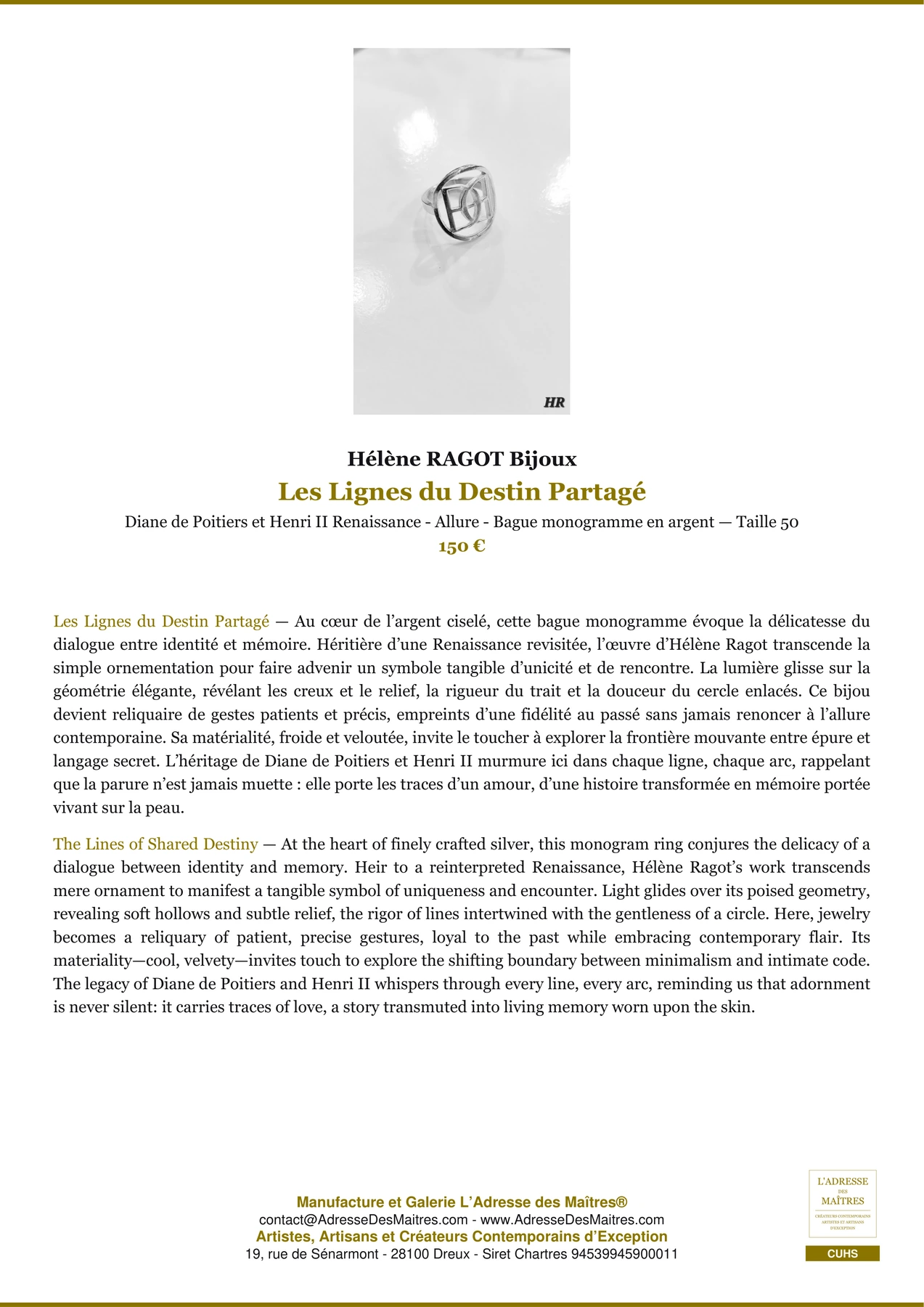
Discover 11 pieces of jewelry in our online gallery.

Leave a comment