Generative Art — Contemporary Art
↓ Share this articleGenerative Art: When Algorithms Become Creative Partners
In the vast landscape of contemporary art, generative art occupies a unique place: it is an artistic practice in which the artwork emerges from a system, a set of rules, a program, or an autonomous process conceived by the artist. Contrary to popular belief, the artist does not simply “delegate” the creation to a machine. Rather, the artist designs a framework, a logic, and a visual grammar from which the artwork can emerge. The result can take the form of digital images, prints, animations, sculptures, interactive installations, or even evolving works.
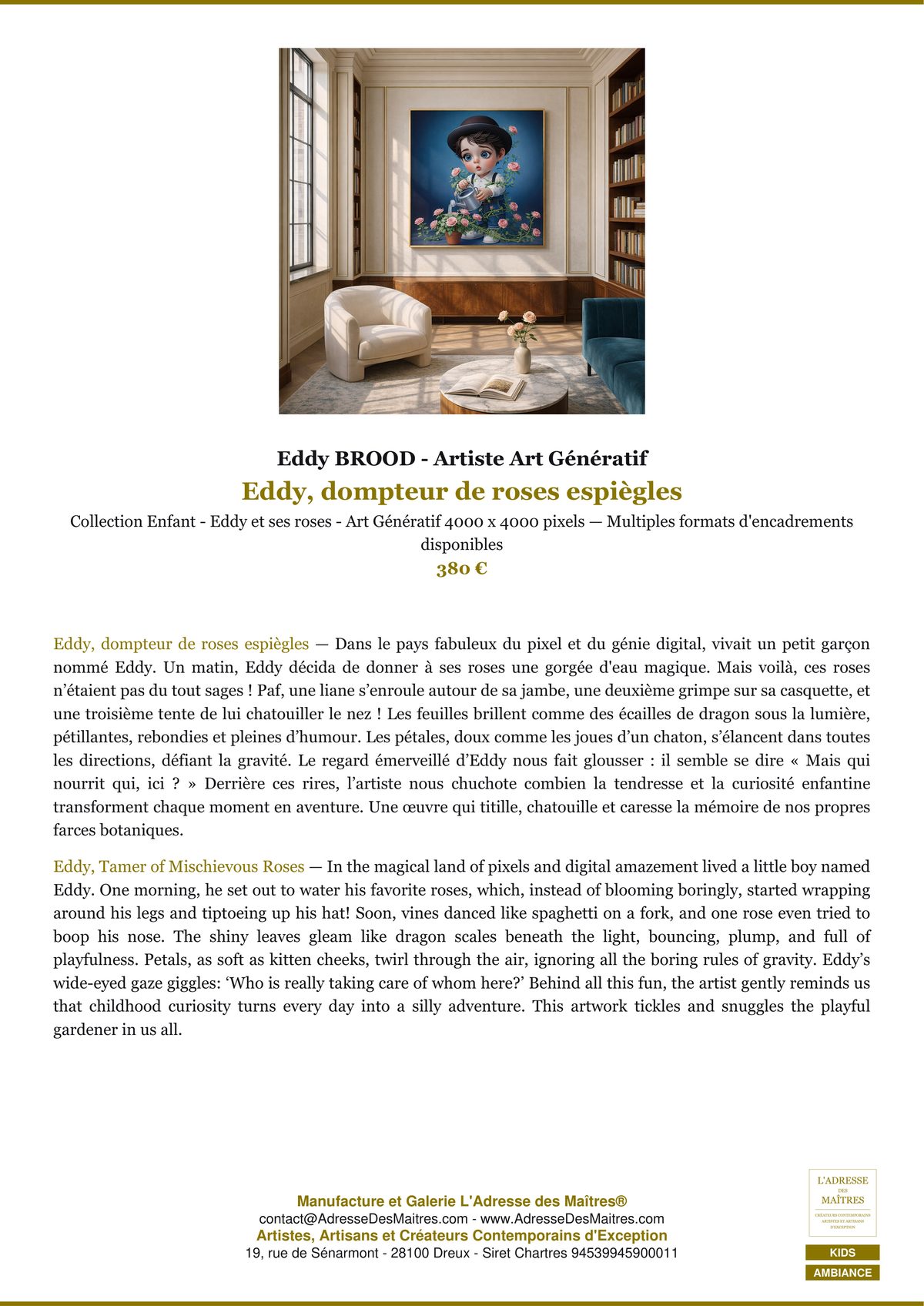
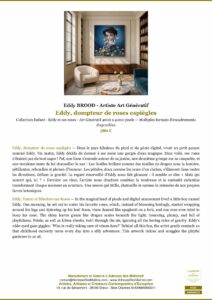
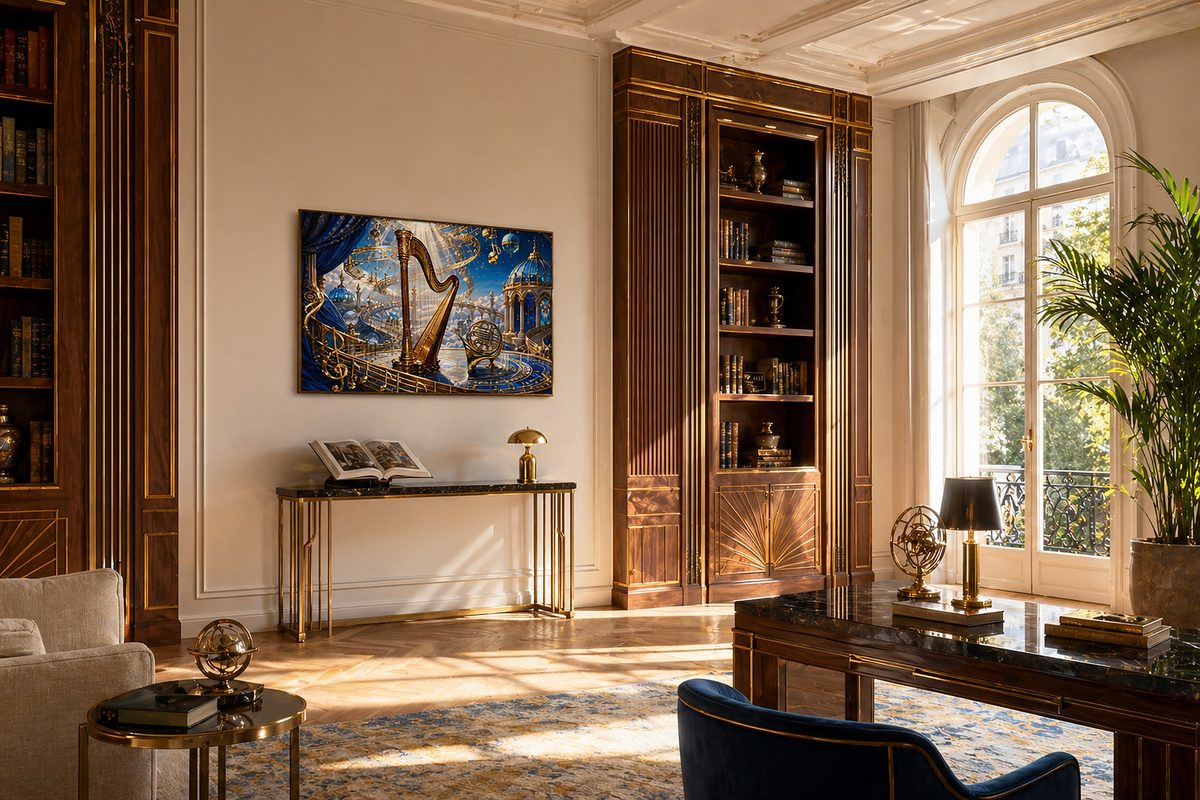
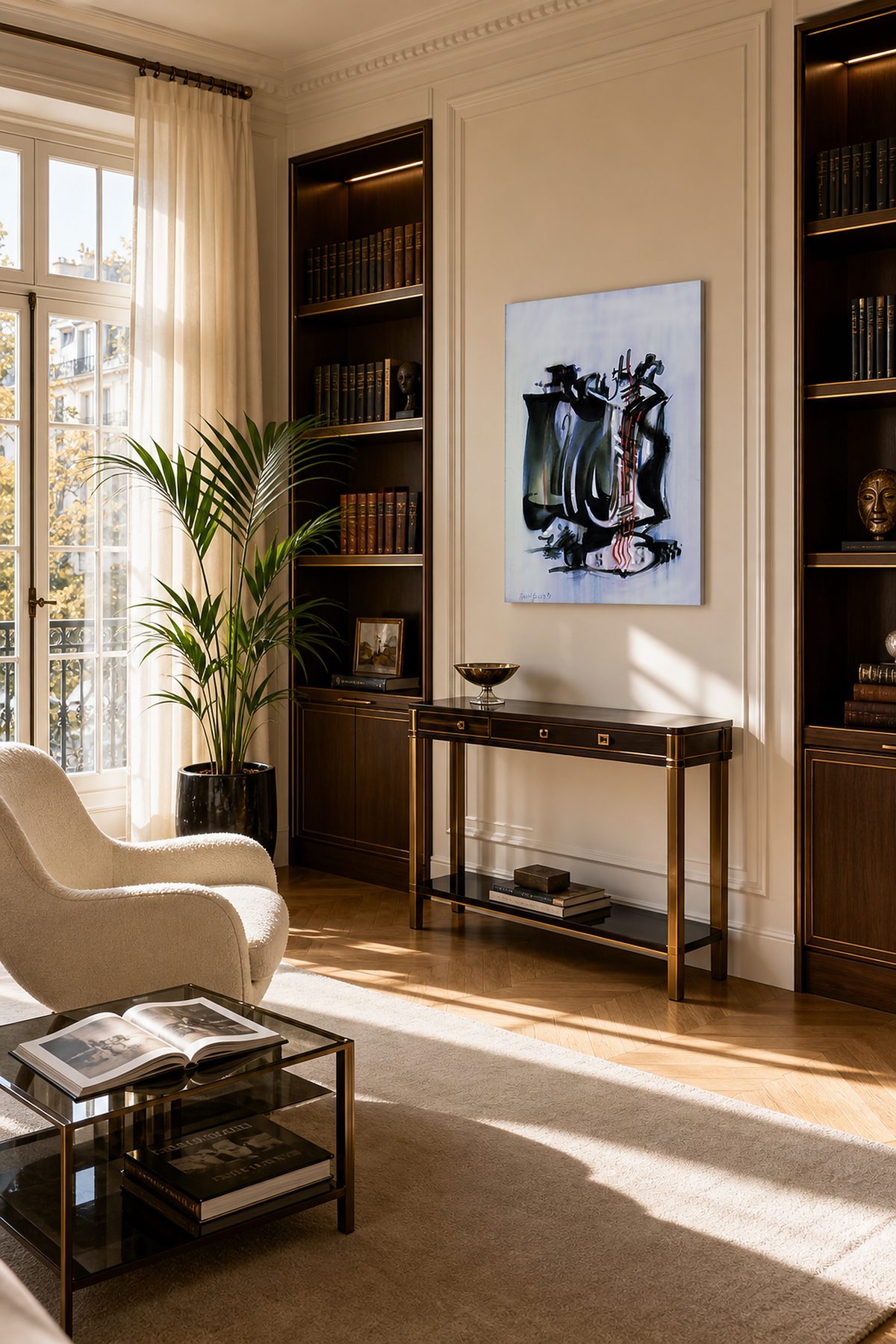
At the L’Adresse des Maîtres® Art Gallery in Dreux, this technique is showcased through 49 works, notably by the artist Eddy BROOD—a generative artist. His work perfectly illustrates the richness of this approach: an art form where structural rigor meets the unexpected, and where mathematical thinking engages with artistic sensibility.
Understanding Generative Art: An Accessible Technique
Generative art is based on a simple idea: the artist creates a system capable of producing a work of art. This system can be a computer program, a set of instructions, a mathematical formula, a combination of data, or even a manual protocol. The artist defines the parameters: colors, shapes, rhythms, densities, variations, and compositional rules. The system then generates one or more visual proposals.
This practice could be compared to that of a composer writing a score. The score is not the same as the music we hear: it is the framework, the structure, and the potential for that music. In generative art, the code or protocol plays the role of the score. Each execution can produce a different result—sometimes unpredictable—but always tied to the artist’s original intention.
This technique thus makes it possible to explore complex forms, infinite repetitions, and subtle or spectacular variations. It highlights an aesthetic of movement, transformation, series, and emergence. The viewer encounters an image that seems at once calculated and organic, controlled and free.
The Origins of Generative Art
While the term “Generative Art” is often associated with digital technologies, its origins go back much further. As early as the 20th century, many artists sought to incorporate rules, automated processes, or procedures into their creative work. The avant-garde movements—from Concrete Art to Kinetic Art—paved the way by focusing on systems, geometric structures, and optical effects.
In the 1960s, with the advent of the first computers available to laboratories and universities, some artists began using computer processing as a creative tool. Pioneers at the time experimented with automated drawings, code-generated images, and algorithm-based compositions. This period marked a decisive turning point: the computer was no longer merely a technical tool, but a true aesthetic partner.
Generative art then evolved alongside advances in hardware, software, and programming languages. The 1990s and 2000s saw the emergence of more accessible tools, allowing many creators to experiment with code, digital images, and interactivity. Today, this practice is fully integrated intocontemporary art, while maintaining strong ties to research, science, design, and digital cultures.
A contemporary aesthetic that balances chance and control
What makes generative art so fascinating is its ability to combine two seemingly opposing concepts: control and randomness. The artist designs a precise system but leaves room for openness in the process. A color may vary, a shape may shift, a density may intensify, or a line may branch off. It is within this tension that the artwork comes into being.
In contemporary art, this approach addresses very current concerns. We live in a world shaped by data flows, algorithms, networks, and invisible systems. Generative art makes these underlying mechanisms perceptible. It gives tangible form to what usually remains abstract: computation, variation, probability, and complexity.
But generative art is not just about technology. It can be deeply poetic. Some works evoke landscapes, constellations, cells, imaginary architectures, or natural phenomena. The patterns generated can be reminiscent of plant growth, the movement of water, the formation of crystals, or the rhythms of light. The machine does not replace nature; rather, it becomes a means of reinterpreting nature’s principles.
Eddy BROOD: Generative Art as a Visual Language
Among the artists represented at the gallery, Eddy BROOD—a generative artist— stands out for a practice that explores the visual possibilities of digital media and algorithmic generation. His works invite the viewer’s gaze to wander through compositions in which forms seem to organize themselves according to an internal logic—sometimes geometric, sometimes vibrational—yet always purposeful in their intent.
In Eddy BROOD’s work, generative art becomes a visual language in its own right. It is not merely a matter of producing images on a computer, but of constructing an aesthetic universe based on variation, structure, and surprise. Each work can be seen as the result of a dialogue between the artist and the system he has designed. The viewer does not merely observe a final image; they sense a process, a dynamic, and the energy of creation.
The 49 works created using this technique on display at the L’Adresse des Maîtres® Art Gallery in Dreux offer a glimpse into the diversity of generative art. This significant collection gives visitors the opportunity to discover an art form that is still sometimes little known, yet essential to understanding the evolution of contemporary art.
Generative Art in an Art Gallery Today
Exhibiting generative art in an art gallery is a statement that digital creation has a rightful place in the art market and art history. For a long time, works created through code or computers were often perceived as difficult to collect or exhibit. Today, that perception has changed profoundly. Collectors are increasingly interested in digital practices, limited editions, high-quality prints, and works that reflect our technological age.
A generative work can take the form of a printed piece, a digital creation, an animation, or an installation. It may be a unique piece or part of a controlled series. In any case, its value lies in the artistic intent, the coherence of the visual language, the mastery of the process, and the power of the aesthetic experience.
In a city like Dreux, the presence of such an exhibition in a gallery helps broaden perspectives on contemporary art. It shows that artistic innovation is not limited to major international centers: it can be discovered, appreciated, and collected locally, through direct engagement with the works and the professionals who present them.
Why Explore Generative Art in Dreux?
Discovering generative art means embracing a new way of thinking about creation. The artist no longer works solely with a brush, a medium, or a direct gesture; they also work with rules, data, probabilities, and systems. Yet emotion remains central. A successful generative work does more than simply impress with its technical prowess: it captures the viewer’s attention, evokes a sensation, and opens up a space for interpretation.
The L’Adresse des Maîtres® Art Gallery in Dreux thus offers art lovers, collectors, and the curious an opportunity to explore a major facet ofcontemporary art. Through the works of Eddy BROOD and the rich variety of the 49 pieces presented using this technique, the public can appreciate how algorithms become artistic material—not cold or impersonal, but imbued with rhythm, beauty, and creativity.
At a time when digital technology is transforming our relationship with the world, generative art has emerged as one of the most emblematic practices of our era. It explores the artist’s place, the role of the machine, the concept of originality, and the element of the unexpected in all creative work. In this sense, it is not merely a technique; it is a genuine way of looking at the present.
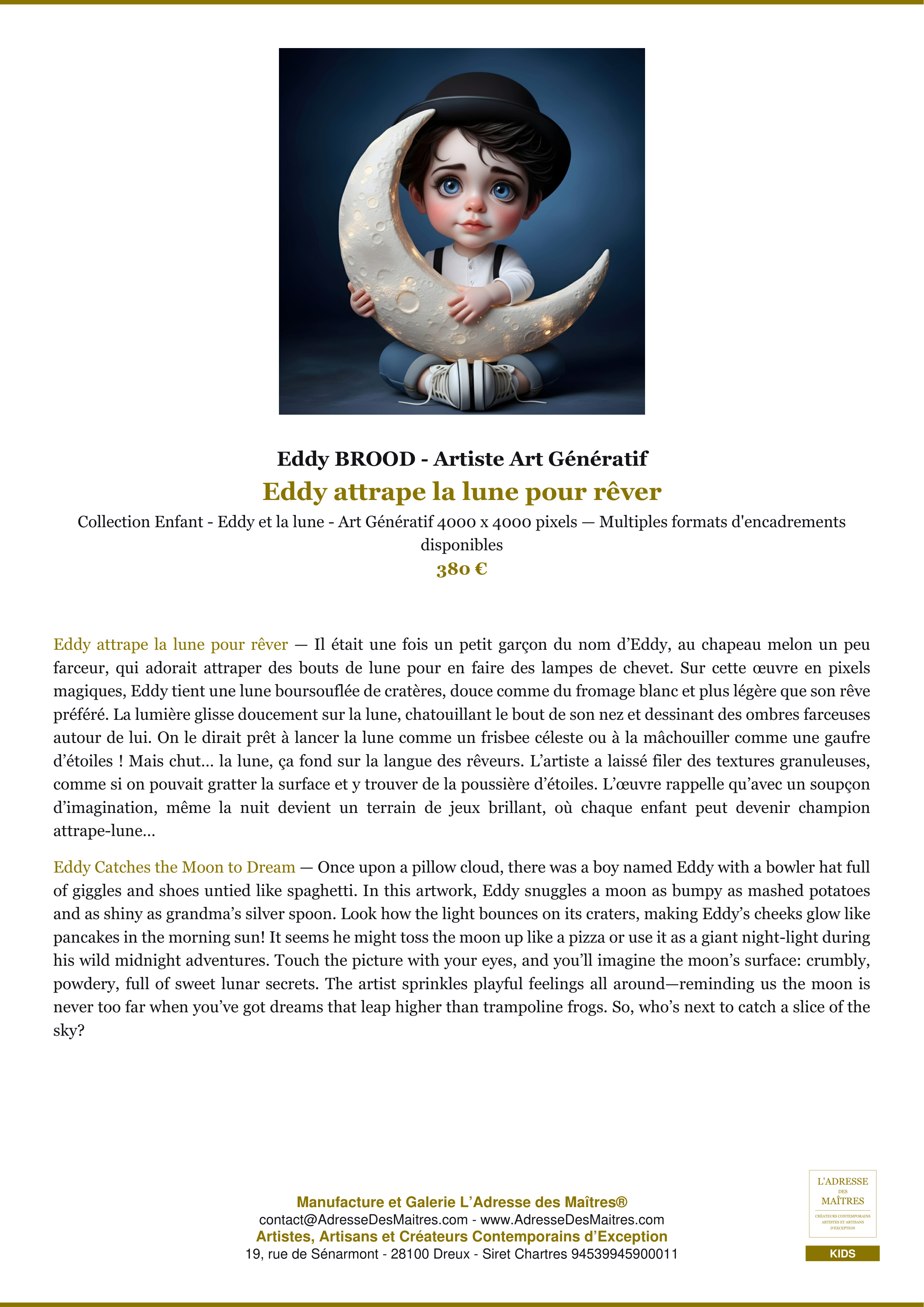
Discover 49 works of generative art in our online gallery.

Leave a comment