Mixed Media — The Art of Blending and Hybridization
↓ Share this articleMixed Media in Contemporary Art: Definition and Origins
Mixed media refers to works that combine several mediums, materials, or techniques within a single creation. A work may thus combine painting, drawing, photography, artistic collage, textiles, paper, found objects, ink, pastels, digital printing, or sculptural elements. In contemporary art, this freedom to combine elements has become one of the most fruitful forms of artistic expression, as it allows artists to transcend the traditional boundaries between painting, sculpture, drawing, and installation.
The history of mixed media truly began in the early 20th century with Cubist collage. Pablo Picasso and Georges Braque incorporated fragments of newspapers, wallpaper, sheet music, and labels into their works. This was a revolutionary move: the artist no longer merely depicted reality but physically incorporated pieces of it. The painting became a space where pictorial illusion and concrete material clashed. Artistic collage thus paved the way for a new conception of the artwork: it was no longer merely painted; it was constructed.
Following Cubism, the Dadaists and Surrealists continued this exploration. They used photomontage, found objects, cut-outs, and unexpected assemblages to challenge aesthetic conventions. Later, in the mid-20th century, Pop Art, New Realism, and Conceptual Art further expanded the range of materials used. A work may incorporate images from magazines, advertisements, traces of consumption, industrial objects, or photographs. Today, mixed media can be found in galleries, museums, artists’ studios, and contemporary art fairs, where it reflects the visual and material complexity of the modern world.
Common combinations: painting, drawing, collage, and photography
Among the most common combinations, the pairing of painting and drawing remains fundamental. An artist may begin with a painted composition and then add lines in pencil, ink, charcoal, or pastel. Drawing often brings an immediate, dynamic, or graphic quality, while painting introduces color, depth, and texture. This combination allows the spontaneity of the line and pictorial richness to coexist.
The combination of acrylic paint and collage is also very common. Acrylic paint dries quickly, can be layered easily, and adheres to many surfaces. It is therefore particularly well-suited to artistic collage: printed paper, newspaper clippings, fabric, cardboard, cut-out images, or textured elements can be incorporated into the surface. The artist can then cover, scrape, reveal, or conceal these fragments, creating a work built up in successive layers.
The combination of oil paint and photography is more delicate but highly expressive. A photograph can serve as a foundation, a narrative fragment, or a documentary anchor, while oil painting alters the image, interprets it, or makes it more ambiguous. Oil paint, with its slow drying time and rich color palette, allows the artist to explore the transition between the mechanical image and the pictorial gesture. This encounter between photography and painting explores memory, representation, and the truth of the image.
There are also works that combine painting and textiles, ink and digital printing, watercolor and pencil, cut-out paper and resin, or found objects and painting on canvas. In all cases, mixed media is not simply a matter of combining materials: it requires artistic coherence, intention, and a mastery of the interactions between the various components.
Why do contemporary artists use mixed media?
Contemporary artists use mixed media because it offers great freedom of expression. Today’s world is saturated with images, signs, screens, archives, texts, and visual fragments. Mixed media allows artists to convey this fragmented reality. A mixed-media work can evoke memory, identity, urban life, social violence, the personal, or the political by juxtaposing different materials and sources.
Mixed media also allow us to break away from the idea of a single medium. In art history, painting, sculpture, and drawing have long been considered distinct disciplines. Contemporary art blurs these categories. A work can be at once a painting, an object, an archive, and a writing surface. This breaking down of boundaries reflects an era in which artists seek less to adhere to tradition than to invent a language suited to their subject.
Finally, mixed media gives the artwork a strong physical presence. The viewer isn’t just looking at an image: they’re observing layers, transparencies, imperfections, collages, marks, and textures. This tactile dimension creates a more physical connection to the art. It invites the viewer to get closer, to trace the layers, and to understand how the artwork was created.
Leading Figures in Mixed Media: Rauschenberg, Basquiat, Louise Bourgeois
Robert Rauschenberg is one of the leading artists associated with mixed media. His famous “Combines” blend painting, found objects, fabrics, photographs, and everyday items. He brings the real world into his work without establishing a hierarchy between fine and ordinary materials. In his work, the surface becomes a space for accumulation, memory, and visual collision.
Jean-Michel Basquiat also left his mark on the history of mixed media and contemporary art. His works combine painting, drawing, words, symbols, anatomical fragments, historical references, and urban energy. Even when working on canvas, he often combines multiple elements: writing, imagery, symbols, layering, and erasure. His art demonstrates how mixed media can become a language of tension, speed, and critique.
Louise Bourgeois, for her part, explores materials in a variety of forms: sculpture, drawing, textiles, installation, and assemblage. Her work demonstrates that mixed media are not limited to painting. They can engage with space, the body, family memory, and deep emotions. Her use of diverse materials allows her to address intimate themes with considerable symbolic power.
The L’Adresse des Maîtres® Art Gallery in Dreux and Artists to Discover
The L’Adresse des Maîtres® Art Gallery in Dreux offers a hands-on exploration of the diversity of contemporary artistic practices, particularly in the areas of mixed media, oil painting, and acrylic painting. In this context, several featured artists provide useful entry points for understanding the relationships between mediums, surfaces, and visual languages.
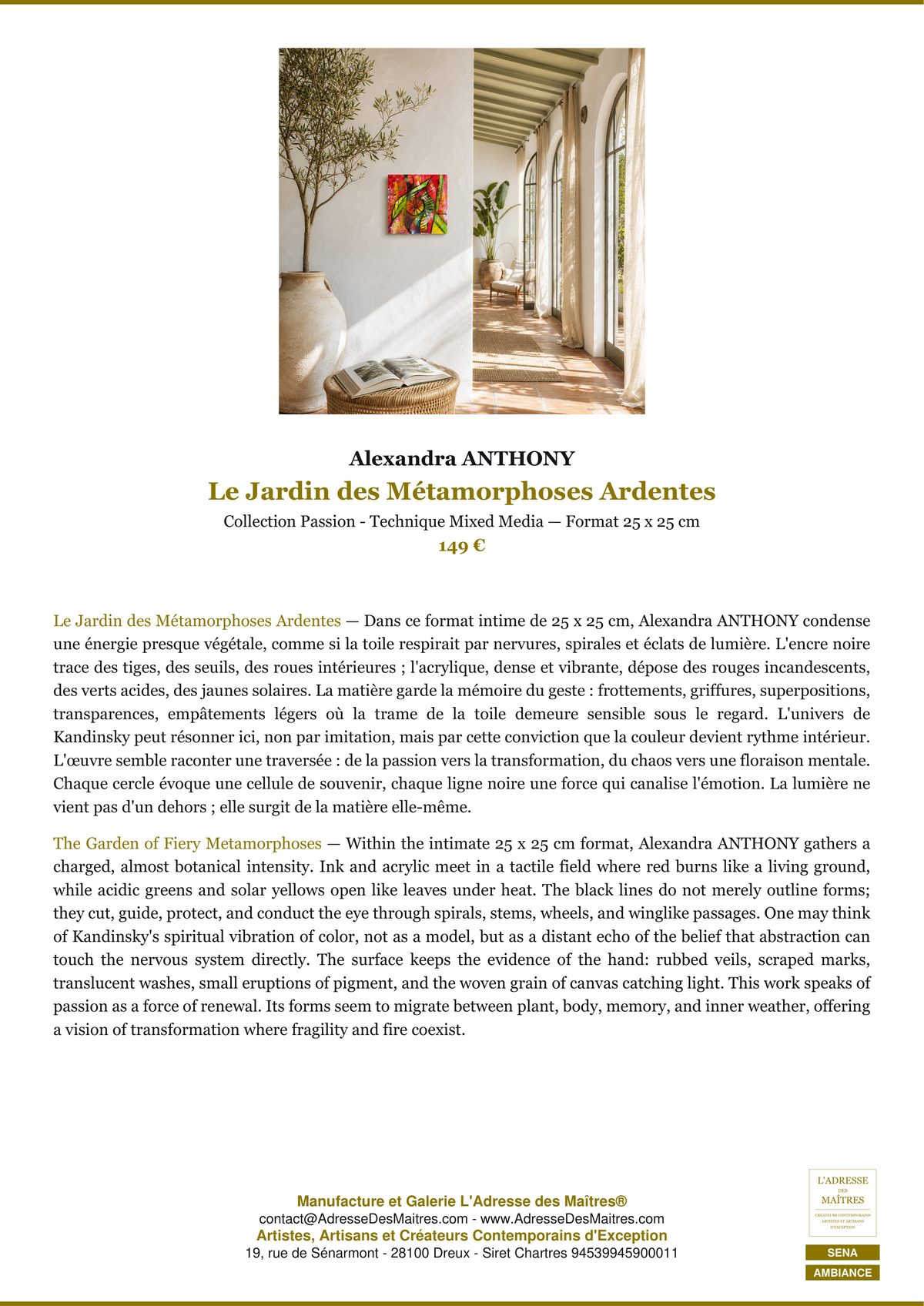
Martine BONNAMY’s work is directly related to the theme, featuring 63 mixed-media-on-canvas pieces. Her work *Herbes de lumière, mémoire noire*, as a mixed-media piece on canvas, illustrates the importance of the pictorial medium as a space for combination. Her presence helps establish mixed media as a contemporary practice in its own right, rather than merely a decorative addition.
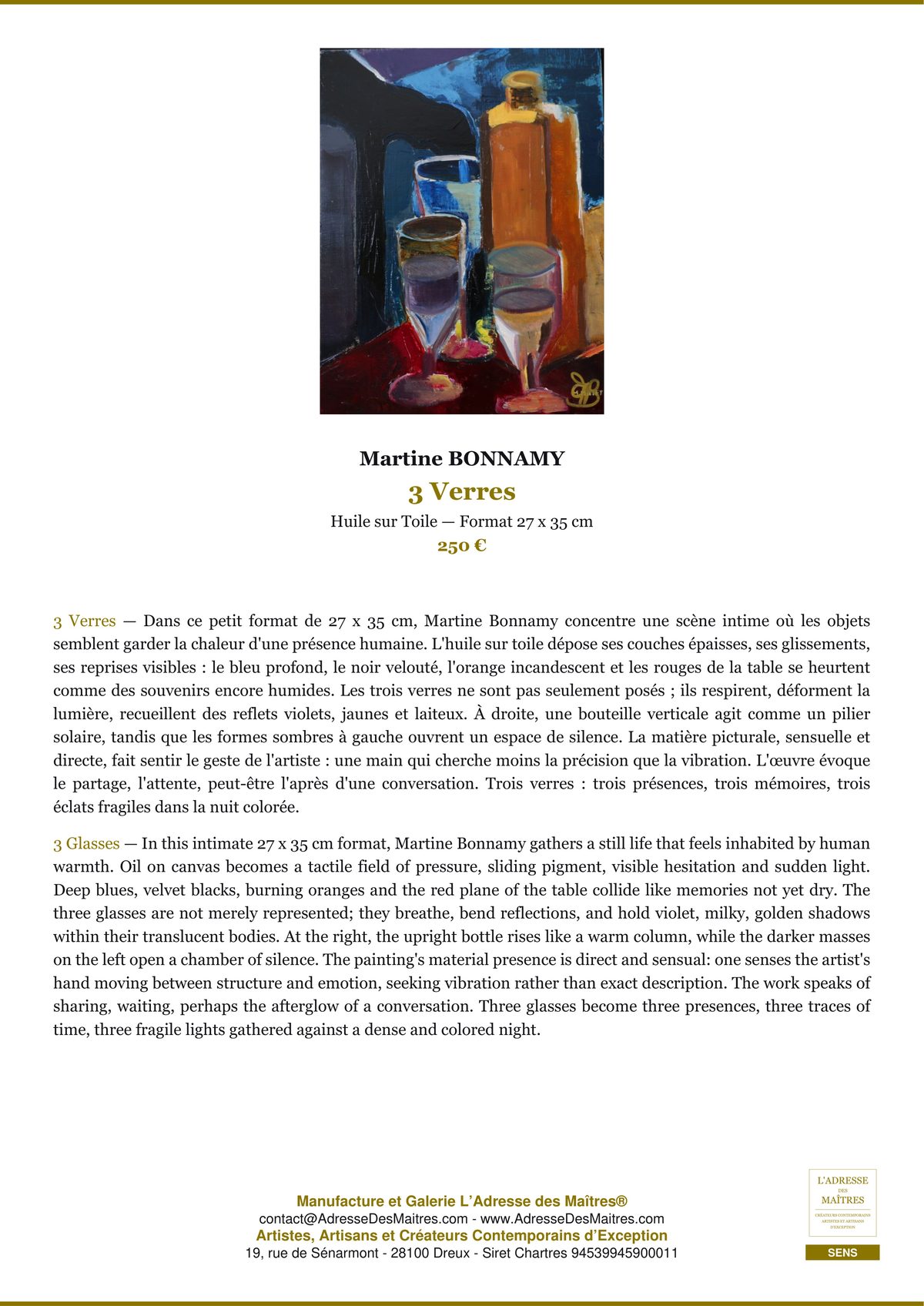
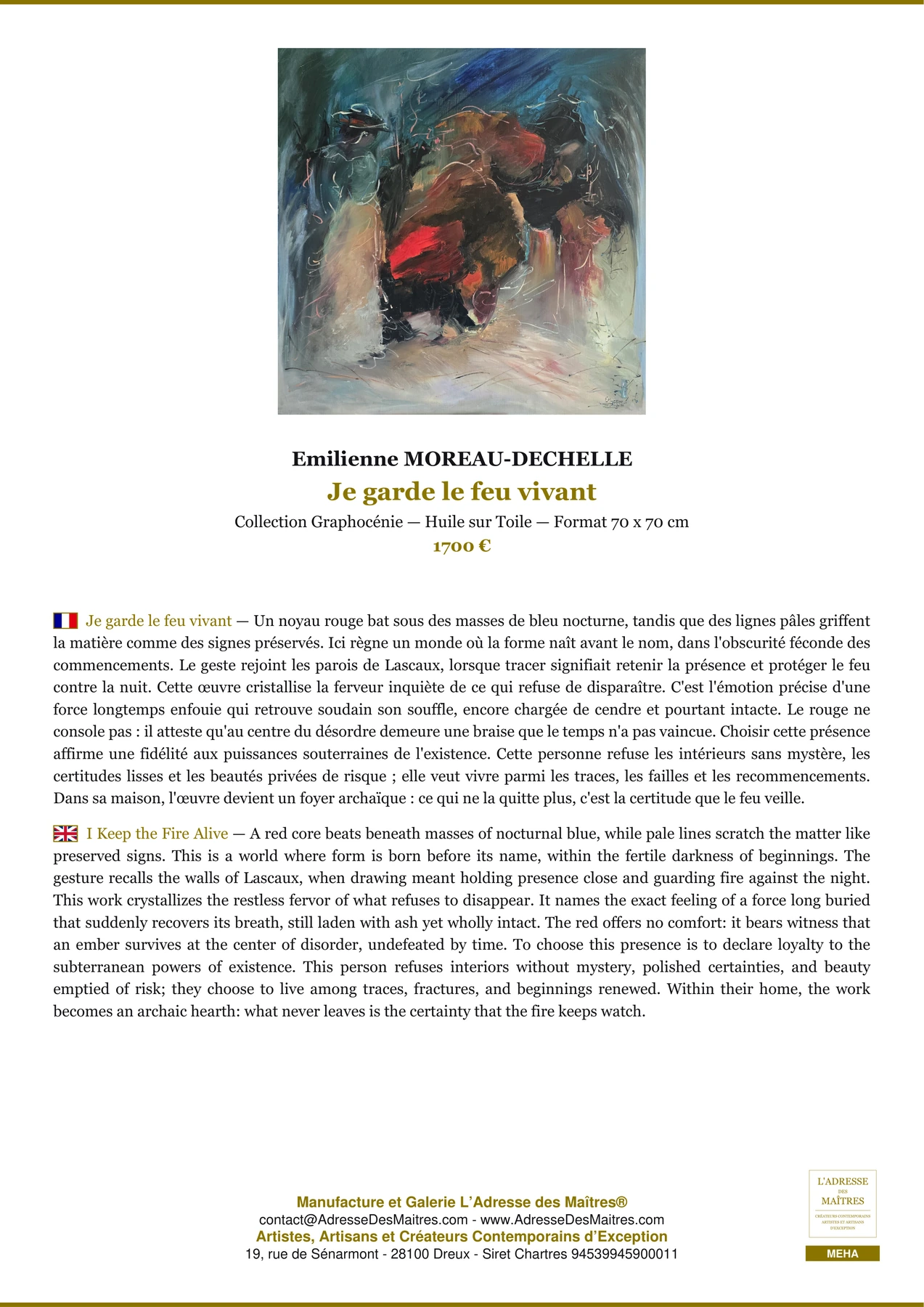
Emilienne MOREAU-DECHELLE is represented by 41 oil paintings, including *Passage sous les braises*. Although the provided information identifies her work as oil painting, her inclusion here is valuable for understanding the dialogue between media: oil remains a major artistic language that artists in contemporary art can juxtapose with other techniques such as photography, collage, or drawing.
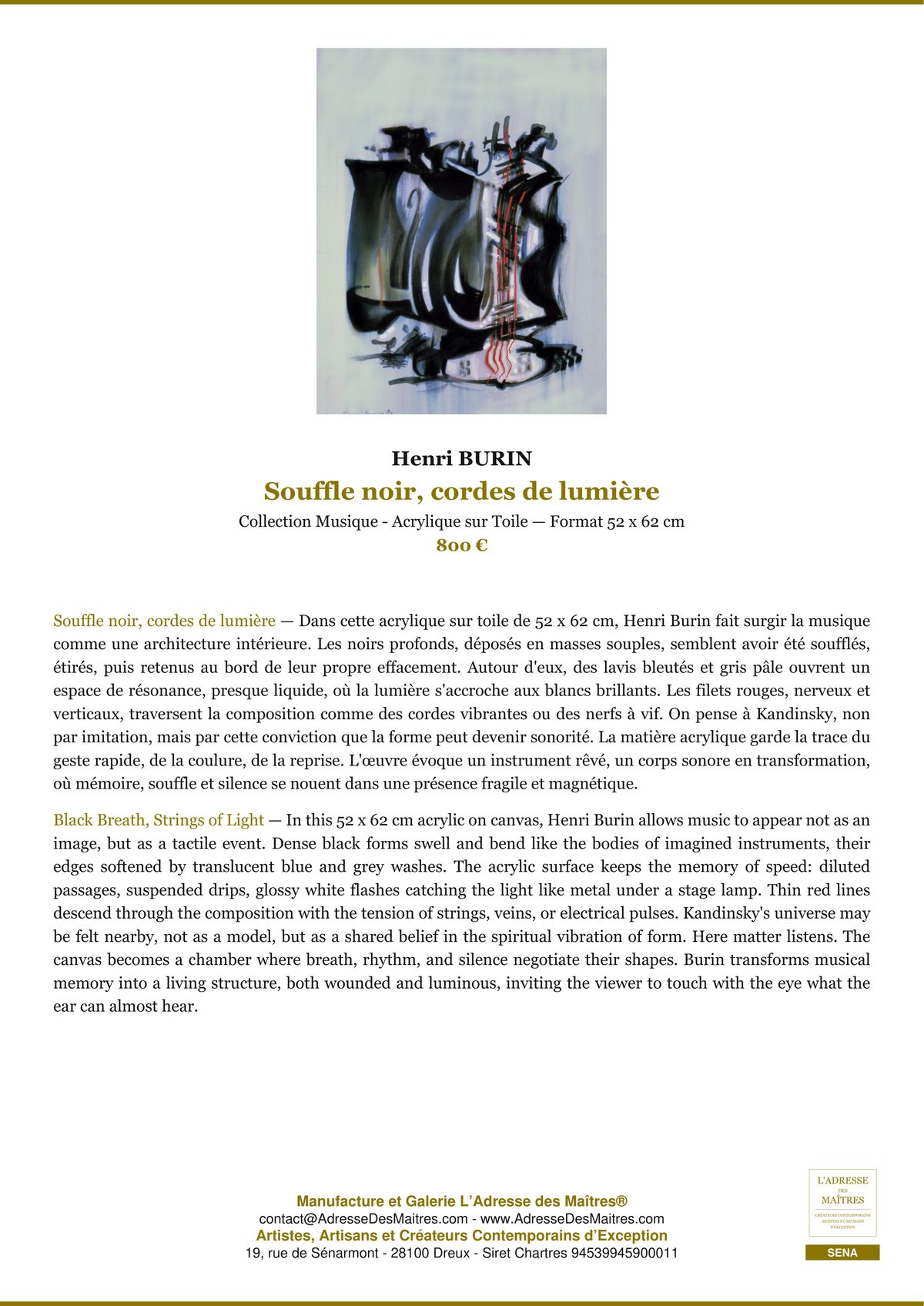
Henri BURIN has created 40 works in acrylic, including *La contrebasse rêve sous rideau*. Acrylic is one of the media best suited to mixed media, particularly because it dries quickly and is highly versatile. Henri BURIN’s works identified as acrylic thus provide a useful point of reference for understanding the role of this medium in contemporary art practices.
Joëlle METZGER-REVERDI is represented by 21 oil paintings, including *Visage de braise intérieure*. Her presence serves as a reminder that oil painting retains significant expressive power in contemporary art. In a reflection on mixed media, her work positions oil not only as an autonomous medium but also as a material capable of engaging in dialogue with other images and surfaces.
Sylvia BEAUCHAIN is represented by 14 oil paintings, including *La mémoire des courants*. Her work, identified as oil painting, provides another point of comparison with mixed media: it helps distinguish a work created in a single primary medium from one that combines multiple techniques. This distinction is essential for properly recognizing and evaluating a contemporary artwork.
Conservation and Restoration: A Complex Challenge
The conservation of mixed-media works is often more complex than that of works created using a single medium. Each material reacts differently to light, humidity, temperature, and aging. Paper can yellow, adhesive can lose its bonding strength, certain plastics can degrade, photographs can fade, and paint layers can crack or peel away.
The conservator must therefore precisely identify the materials used before beginning any work. A work that combines oil paint, photography, and collage cannot be treated as a simple painting on canvas. Solvents, varnishes, adhesives, and cleaning methods must be chosen with extreme care. Sometimes, the goal is not to make the artwork “look brand new,” but to stabilize its condition while respecting the artist’s intent.
The issue of durability is an integral part of mixed media. Some artists deliberately use fragile, humble, or ephemeral materials. In such cases, the aging process can become part of the work’s meaning. Museums, galleries, and collectors must document the materials, keep the certificates, photograph the work’s condition, and maintain appropriate display conditions.
How can you tell if a work of art is created using mixed media?
To identify a mixed-media work, you need to observe the surface carefully. The presence of multiple textures is often the first clue: collaged paper, painted areas, drawn lines, photographic fragments, raised elements, fabric, or writing. Differences in sheen, thickness, and material can reveal the combination of media used.
It is also important to read the artwork’s technical specifications. Terms such as “mixed media on canvas,” “collage and acrylic,” “oil and photography,” or “assemblage” indicate that the artist has used multiple techniques. However, it’s important to avoid making assumptions: a highly textured work may be created using only oil or acrylic, while a more understated piece may incorporate several materials.
How do you evaluate a mixed-media artwork?
The evaluation of a mixed-media work is based on several criteria. The first is artistic coherence: Are the materials integrated effectively? Do they serve the work’s purpose? A good mixed-media work is not merely an accumulation of effects; it orchestrates the tensions between materials, images, and gestures.
The second criterion is technical proficiency. The collages must be stable, the layers clearly visible, and the materials compatible as much as possible. The condition of the work is also a determining factor: peeling, yellowing, cracks, mold, or photographic deterioration can affect its value and display conditions.
Finally, the appraisal takes into account the work’s provenance, signature, certificate of authenticity, the artist’s standing in the market, the work’s rarity, and its significance within the artist’s creative career. At a specialized gallery such as the Galerie d’Art L’Adresse des Maîtres® in Dreux, this information helps guide the collector’s perspective and provides a deeper understanding of the uniqueness of each work.
Conclusion: A Major Language of Contemporary Art
From the Cubist collages of Picasso and Braque to contemporary mixed-media creations, mixed media has profoundly transformed the way we conceive of works of art. It allows artists to combine painting, drawing, photography, artistic collage, and various materials to produce complex, evocative images that are rooted in their time. By blurring the boundaries between disciplines, they offer artists an exceptional field for experimentation and viewers a rich visual experience that is at once physical, intellectual, and emotional.
Check out our gallery
Would you like to experience these artistic movements in person? Visit the online gallery of L’Adresse des Maîtres®—more than 606 original works by contemporary artists.

Leave a comment