Understanding Abstract Art — Origins, Techniques, and Major Artists
↓ Share this articleUnderstanding Abstract Art: A Free and Universal Visual Language
Abstract art is as fascinating as it is perplexing. For some, it opens up a space of total freedom; for others, it seems difficult to grasp, far removed from the familiar reference points of figurative art. Yet abstract painting is neither random nor devoid of meaning: it simply offers another way of seeing, feeling, and thinking about the image. Colors, lines, textures, rhythms, and compositions become the true subjects of the work.
For over a century, abstraction has played a major role in the history of art. It has profoundly transformed modern art and continues to inspire every contemporary artist who explores new visual territories. In any art gallery dedicated to 20th- and 21st-century art, abstraction remains an essential artistic language today.
But where exactly does it come from? How can you identify its major movements? And above all, how can you learn to appreciate abstract art when you’re just starting out? Here is a clear and engaging guide to help you explore this fascinating world.
The Origins of Abstraction: Breaking Away from Representation
The history ofabstract art began at the turn of the 20th century, against a backdrop of profound upheaval. Artists sought to break free from the faithful representation of reality. Photography was already capturing the visible world; painting could therefore take on a different mission: to express the invisible, the spiritual, emotion, structure, or even pure energy.
Wassily Kandinsky is often regarded as one of the pioneers of abstract art. For him, forms and colors possess an inner power comparable to that of music. In his writings as well as in his paintings, he advocates for a style of painting capable of touching the soul without resorting to the imitation of reality. His compositions, made up of dynamic lines, colorful patches, and visual tension, pave the way for a sensitive and expressive abstraction.
Piet Mondrian, for his part, took a different path. He gradually simplified the visible world until he retained only its essential elements: vertical and horizontal lines, rectangles, primary colors, black, and white. Through the De Stijl movement, he developed a rigorous, balanced, almost architectural form of abstraction. For him, painting became a quest for universal harmony.
Kazimir Malevich takes this break with tradition even further. Through Suprematism, he asserts the primacy of pure sensation over representation. His famous *Black Square on a White Background* marks a decisive turning point: the work no longer needs to represent an object in order to exist. It becomes a presence, an idea, a visual manifesto.
These three artists, each in their own way, laid the foundations of abstract painting. Thanks to them, art is no longer merely a window onto the world: it has become a self-contained space, where shapes and colors create their own reality.
Major Trends in Abstract Art
Abstraction is not a monolithic entity. On the contrary, it encompasses a variety of sensibilities—sometimes conflicting—that reflect the richness of this artistic language.
Lyrical abstraction: emotion above all else
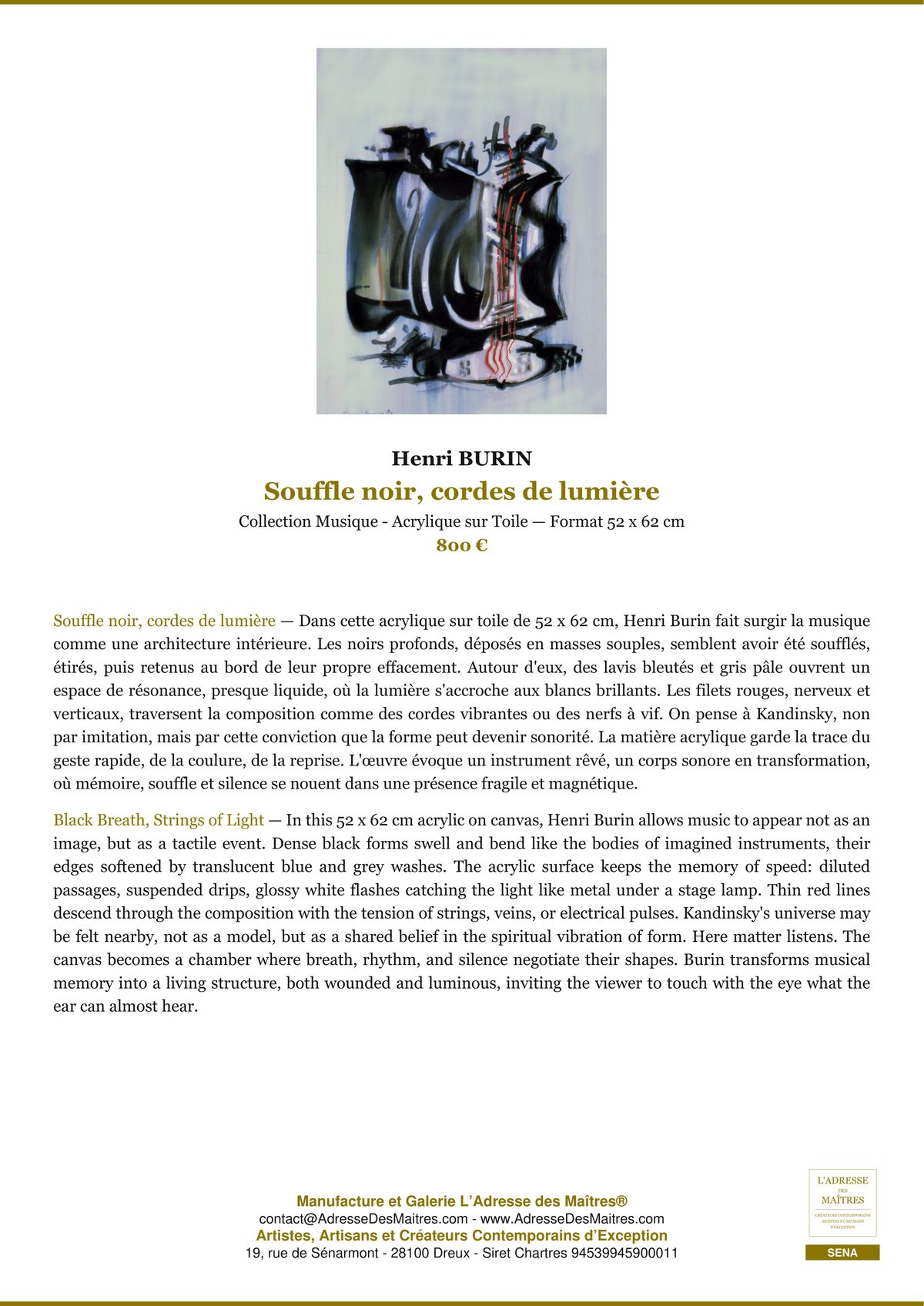
Lyrical abstraction emphasizes momentum, spontaneity, and sensation. Here, the artist gives ample room to gesture, intuition, and the vibrancy of color. The canvas becomes a vehicle for inner expression, often intense and immediate.
This trend gained particular momentum in Europe after World War II. It is characterized by fluid forms, drips, layering, and freehand strokes. The viewer is not meant to recognize specific objects, but rather to sense an atmosphere, a tension, and an energy.
In this type of abstract painting, the connection to music, poetry, or pure emotion is often central. The work is experienced rather than interpreted.
Geometric abstraction: order, structure, and balance
In contrast to this freedom of movement,geometric abstraction is based on the precision of forms. Squares, circles, triangles, lines, grids, and modular constructions organize space with precision. The artist seeks a visual language that is stable, rational, and often universal.
Drawing inspiration from Mondrian as well as movements such as Constructivism and the Bauhaus, this abstract art explores the relationship between order and perception. It may seem more austere at first glance, but it possesses a meditative quality and great compositional power.
In an art gallery, these works often captivate viewers with their formal elegance and their ability to interact with the interior architecture. They demonstrate that abstraction can also be synonymous with clarity, mastery, and sophistication.
Abstract Expressionism: The Canvas as a Canvas for Action
Abstract Expressionism, which emerged in the United States in the 1940s and 1950s, gave abstraction a monumental and dramatic dimension. New York thus became a major center of modern art.
This movement encompasses a variety of approaches, but all share a common emphasis on the intensity of the gesture and the importance of the creative process. In the work of Jackson Pollock, for example, paint is thrown, poured, and splattered onto a canvas laid flat on the floor. The artwork captures the movement of the body. In the work of Mark Rothko, large, floating fields of color create a contemplative and almost spiritual experience.
Abstract Expressionism reminds us thatabstract art is not merely a decorative arrangement of forms: it can be a physical, psychological, and existential experience.
How do you “interpret” an abstract work when you’re just starting out?
Many visitors think they have to “understand” an abstract work of art as if they were solving a puzzle. In reality, the best approach is often to start by simply observing and experiencing it.
First tip: look at the overall composition. Is the work calm or dynamic? Dense or airy? Symmetrical or asymmetrical? Does the eye move easily across the image, or does it encounter tension? These first impressions are invaluable.
Next, take a closer look at the colors. Are the tones warm, cool, contrasting, muted, or bright? Color is one of the fundamental languages of abstract painting. It can evoke an immediate emotion: energy, melancholy, peace, or mystery.
Then observe the shapes and lines. Are they sharp or blurred? Geometric or organic? Repetitive or spontaneous? A vertical line can evoke stability; a diagonal, movement; a floating shape, uncertainty or daydreaming.
We must also consider the material. A smooth surface does not produce the same effect as thick impasto or a scraped mark. Texture gives the work a physical presence.
Finally, ask yourself a simple question: How does this painting make me feel? There isn’t always a single answer. Abstraction invites the viewer to play an active role. Your gaze, your memory, and your sensibility all contribute to the experience.
In places like the L’Adresse des Maîtres® Art Gallery in Dreux, this approach is particularly rewarding: seeing the works in person allows you to appreciate the nuances of format, texture, and light that digital reproductions often fail to capture.
Techniques in Abstract Art: From Oil Painting to Mixed Media
The diversity ofabstract art is also reflected in the techniques used. Each medium offers specific possibilities in terms of transparency, texture, speed, or depth.
Oil painting remains a timeless classic. It allows for subtle blends, glazes, successive layers, and a rich palette of colors. Its slow drying time makes it ideal for touch-ups and delicate nuances. Many artists appreciate it for the depth it lends to surfaces.
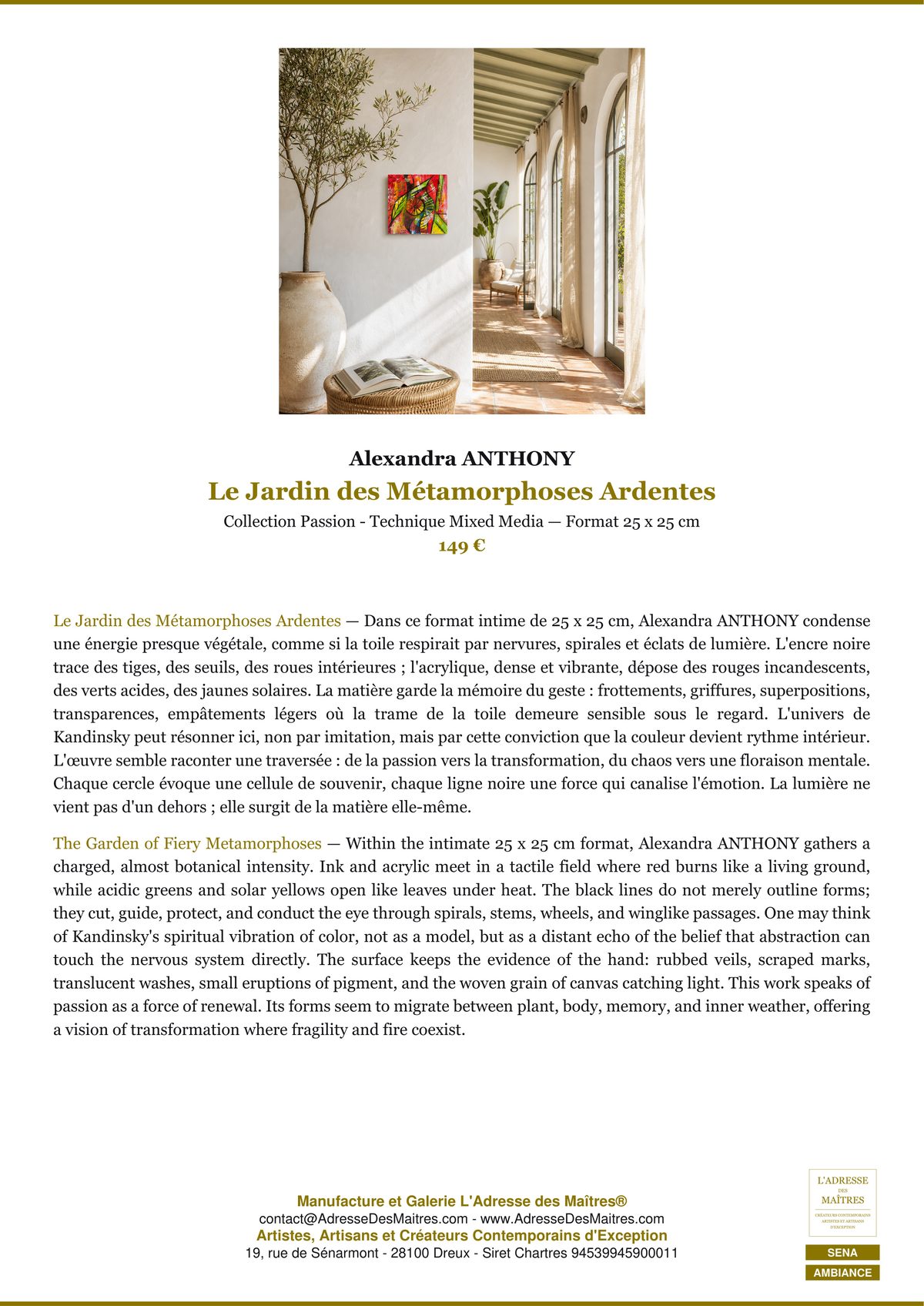
Acrylic paint, a more recent medium, is highly prized bycontemporary artists. It dries quickly, can be applied in flat washes or as a thick paste, and works well on a variety of surfaces. It is particularly well-suited to spontaneous brushstrokes, large formats, and rapid layering. Its visual intensity makes it the medium of choice for energetic, contemporary abstract painting.
Mixed media is becoming increasingly popular. It combines painting, collage, ink, sand, paper, pigments, resins, and even textile elements. These combinations enrich the surface and introduce elements of texture, spontaneity, and surprise. Abstraction lends itself particularly well to this experimental freedom.
Some artists also work with knives, spatulas, dripping, frottage, scraping, or drips. Others incorporate digital tools, prints, or unconventional media. In a specialized art gallery, these technical choices offer a deeper understanding of each artist’s personality and the uniqueness of their artistic approach.
Abstract Art Today in Contemporary Galleries
Far from being a closed chapter in the history of art, abstraction is more alive today than ever before. It plays a vital role in contemporary galleries, where it engages in dialogue with design, architecture, photography, and new forms of artistic expression.
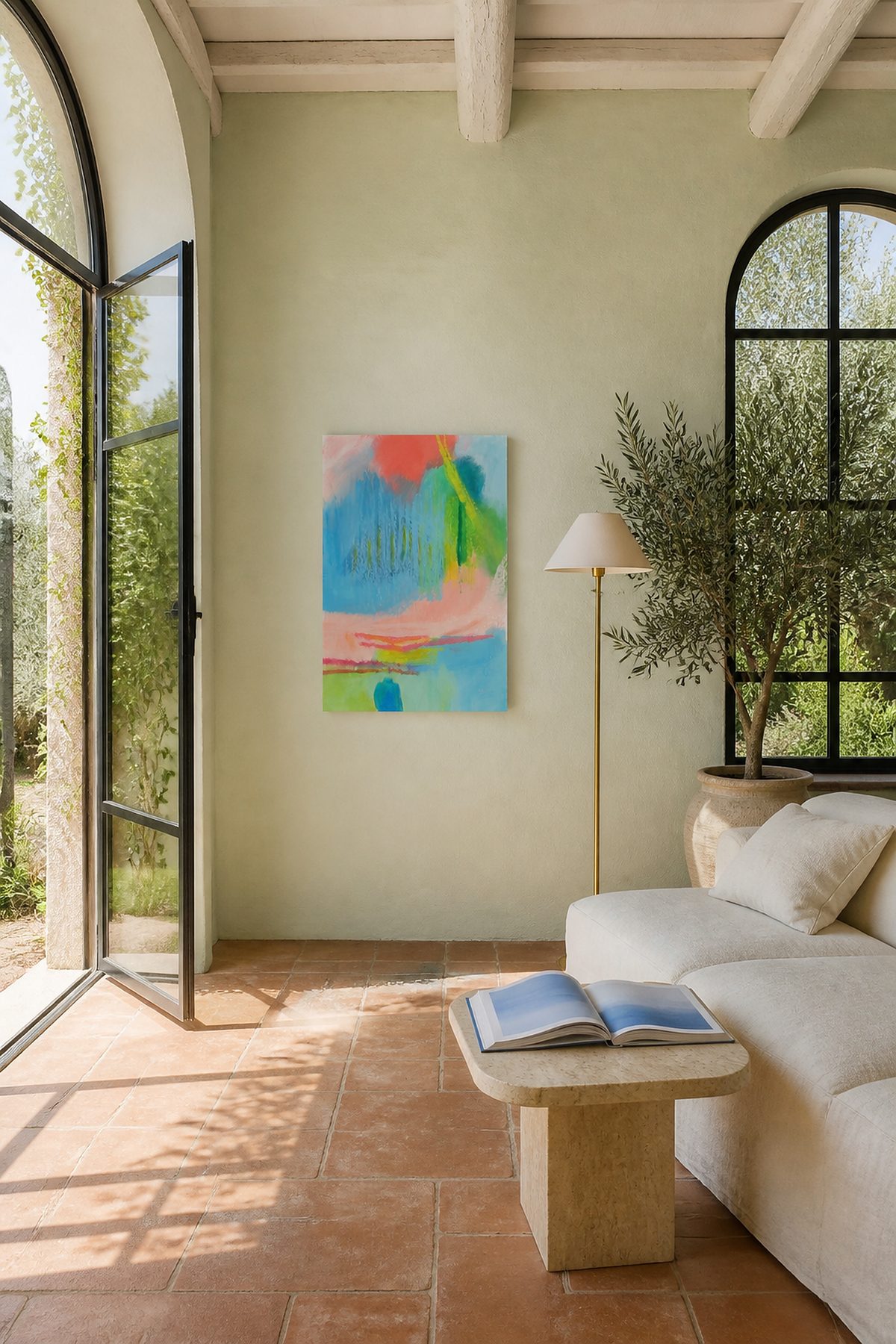
There are several reasons for this success. First, abstraction is highly universal: it transcends languages and cultures without relying on figurative narratives. Second, it blends naturally into contemporary living spaces, adding rhythm, depth, and character. Finally, it offers artists an almost limitless canvas for experimentation.
Today, many collectors are seekingabstract artworks by contemporary artists, whether emerging or already established. Galleries play a crucial role in this regard: they curate, support, contextualize, and bring artists’ work to the public’s attention.
The L’Adresse des Maîtres® Art Gallery in Dreux is part of this movement, showcasing works that offer a glimpse into the diversity of contemporary abstract styles. Visiting a gallery also means learning to refine your eye, compare styles, understand formats, and appreciate the originality of each artistic vision.
Why Abstract Art Remains a Sound Investment
Purchasing a workof abstract art is, first and foremost, an aesthetic and emotional choice. But it is also, quite often, a well-considered investment. Abstract art has a solid place in art history and a consistent presence on the market, which gives it genuine legitimacy among collectors.
Its greatest strength is its enduring appeal. From Kandinsky, Mondrian, and Malevich to today’s artists, abstract painting has never stopped evolving without losing its relevance. It transcends trends while constantly reinventing itself.
Its second advantage is its versatility in fitting into a wide range of interiors. An abstract artwork can fit just as well in a traditional space as it can in a minimalist, contemporary, or professional setting. This versatility helps drive demand for it in the market.
Third point: Abstraction makes it possible to identify promising artists early on. Supporting a contemporary artist at the right time, with the guidance of a reputable art gallery, can be a wise move for building a cohesive and valuable collection.
Of course, investing in art requires discernment, sensitivity, and knowledge. It is important to consider the artist’s background, the quality of the work, the artist’s technique, the work’s authenticity, and its visibility. The guidance of a professional remains essential. In this regard, the L’Adresse des Maîtres® Art Gallery in Dreux can serve as a valuable resource for discovering works, understanding their context, and making an informed purchase.
An art of freedom, still relevant today
Abstract art is not an exclusive art form reserved for specialists. On the contrary, it is an invitation to see things differently. From the pioneering insights of Kandinsky, Mondrian, and Malevich to the most recent explorations, it has continually expanded the realm of the visible and the perceptible.
Whether lyrical, geometric, or close to abstract expressionism, abstract painting teaches us that emotion can arise from a color, a line, a texture, or a rhythm. It also reminds us that a work of art is not limited to what it depicts: its value also lies in what it makes us feel and think.
In an age saturated with images, abstraction retains a unique power. It slows the gaze, stimulates the imagination, and offers a deeply personal experience. For the novice art lover as well as the seasoned collector, it remains a thrilling aesthetic adventure, and is more relevant than ever in any art gallery attentive to contemporary art.
Check out our gallery
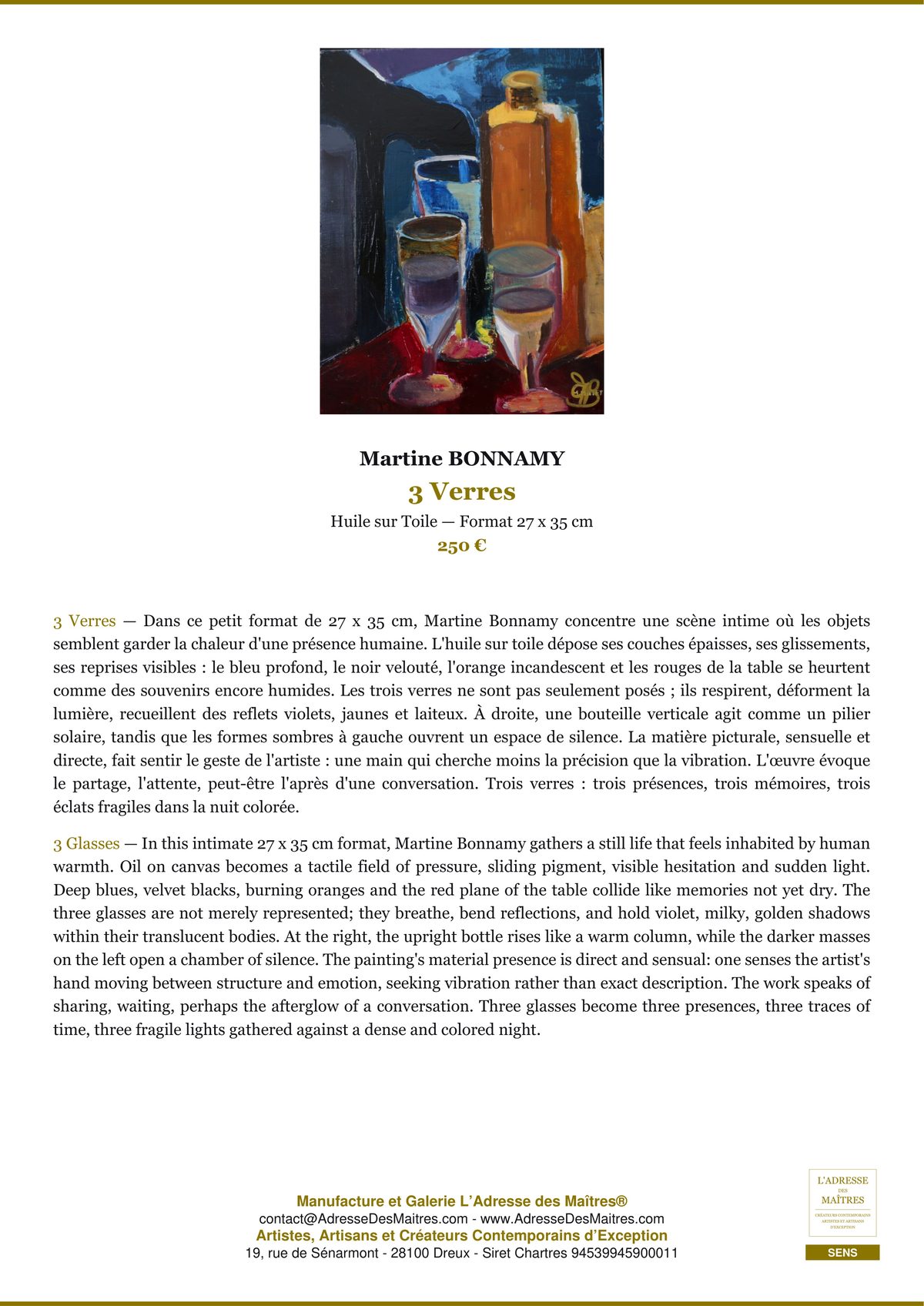
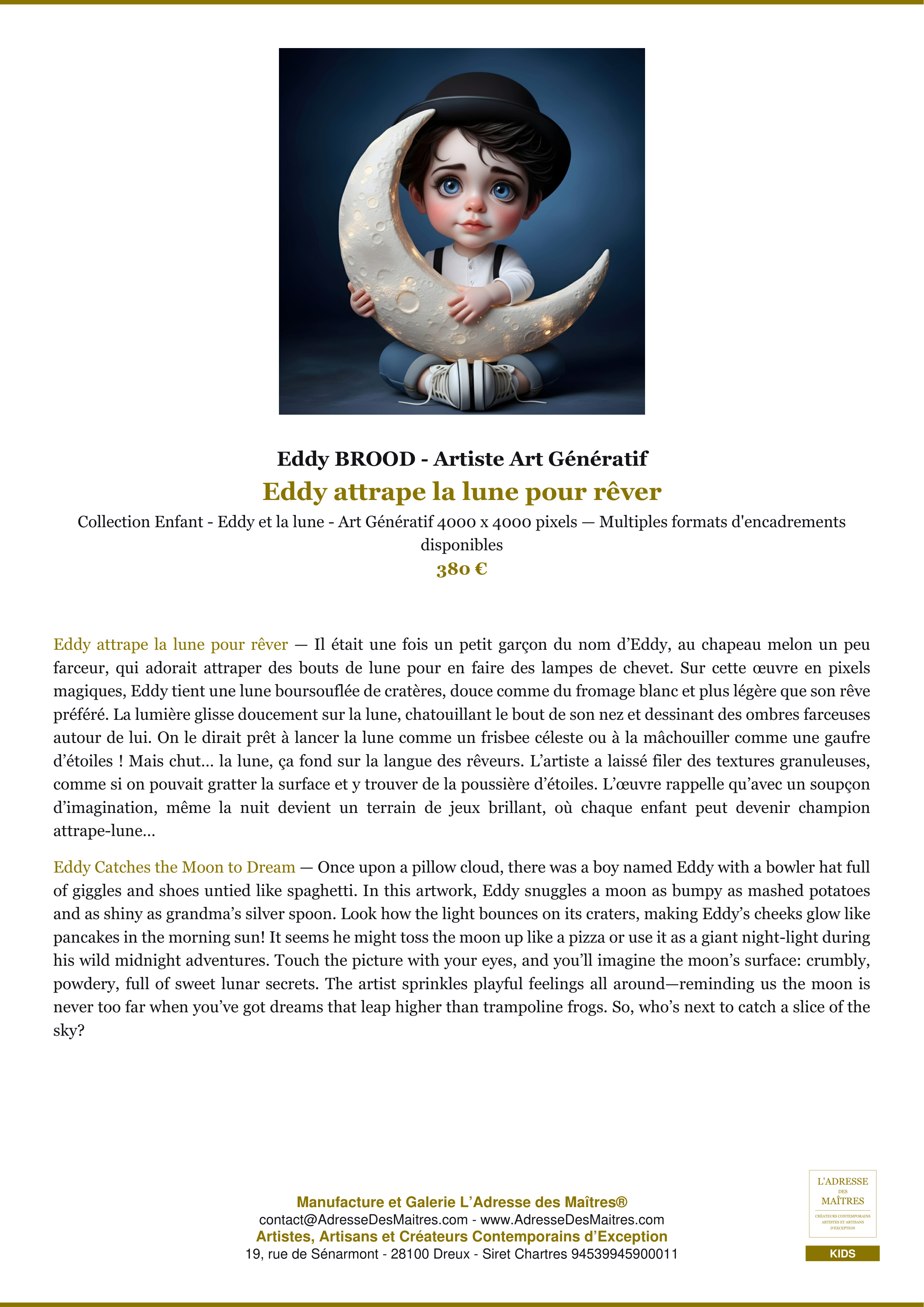
Would you like to experience these artistic movements in person? Visit the online gallery of L’Adresse des Maîtres®—more than 606 original works by contemporary artists.
Leave a comment