Conceptual Art — When the Idea Takes Precedence Over the Object
↓ Share this articleUnderstanding Conceptual Art: When the Idea Becomes the Work
Conceptual art is one of the most influential movements in contemporary art. It can be disconcerting at first glance, as it does not always seek to captivate through the beauty of an object, the virtuosity of a gesture, or the richness of a material. Its approach is more radical: the idea, the protocol, the intention, or the question posed matter more than the final object. A conceptual work can take the form of a text, a photograph, an art installation, a performance, a video, or even a simple instruction. It invites the viewer to think as much as to look.
The Origins: Duchamp, the Readymade, and the Break with the Art Object
To understand conceptual art, we must look back to Marcel Duchamp. As early as the 1910s, Duchamp upended the definition of a work of art with the “readymade”: an ordinary object, chosen by the artist and presented as a work of art. His most famous example, *Fountain*, a signed urinal, challenges the notion of artistic value: is it the artist’s hand that creates the work, or is it the choice, the context, and the idea? With Duchamp, art ceased to be solely a matter of craftsmanship. It became a mental act, a decision, and sometimes an intellectual provocation.
This break paved the way for many 20th-century artists. In the 1960s and 1970s, Conceptual Art emerged more clearly as a movement. Joseph Kosuth was a major figure in this movement: with works such as *One and Three Chairs*, he juxtaposed an object, its photographic image, and its textual definition. The viewer is no longer simply faced with a chair, but with the question: What is a chair? What is a representation? What is a work of art? Art becomes a space for language and thought.
Sol LeWitt, Yoko Ono, and the Work as Instruction
Sol LeWitt also plays a key role. For him, the idea is a machine that produces art. His wall drawings can be executed by others based on precise instructions. The artwork is therefore not only the visible result on the wall, but also the concept that enables its creation. This approach profoundly transforms the artist’s role: the artist is no longer necessarily the one who executes the work, but rather the one who conceives it. The protocol becomes just as important as the form.
Yoko Ono, associated with Fluxus and experimental practices, also contributed to this evolution. Her works often take the form of poetic instructions or actions to be carried out mentally or physically. In her works, the viewer’s imagination becomes active. The work can exist in reading, in gesture, in participation, or even in thought. This participatory dimension is fundamental to understanding conceptual art: the audience is not merely an observer; it sometimes becomes a co-creator of the experience.
The central philosophy: the idea is the work, not the object
The simplest way to summarize conceptual art is as follows: the idea is the work, not the object. This does not mean that the object is unimportant, but rather that it is no longer necessarily the center of the artistic experience. A photograph can document a past action; a text can be enough to trigger a mental image; an art installation can give form to a line of reasoning; a video can show a process rather than a result. Conceptual art therefore often requires us to shift our focus: it’s not just a matter of asking, “Is this beautiful?” but “What does this make me understand, question, or imagine?”
This philosophy explains why conceptual art has sometimes been perceived as difficult or elitist. Yet it is often based on very simple questions: Who decides what art is? Why does an object in a museum change its status? What is the value of an idea? What is the viewer’s role? How can a word, an instruction, or a trace create an aesthetic experience? In this sense, conceptual art does not eliminate emotion; it shifts it toward reflection, wonder, doubt, or awareness.
Media of conceptual art: installation, performance, photography, text, video
Conceptual art is distinguished by the diversity of its media. An art installation allows for the organization of a space through which the viewer moves, constructing their own relationship with the work. Performance art emphasizes action, the body, time, and sometimes the ephemeral. Photography can serve as a trace, evidence, or a staging of an idea. Text can become a work in its own right, particularly when it formulates an instruction, a definition, or a mental proposition. Video, for its part, allows for the recording of a process, the repetition of a gesture, or the creation of a specific sense of time.
This diversity makes conceptual art a very open field. It can intersect with digital art, mixed media, generative art, documentation, archives, and even language. In contemporary art, the boundaries between techniques are becoming increasingly blurred. A work can be at once visual, textual, auditory, digital, and performative. What connects it to conceptual art is not necessarily its appearance, but the primacy of a structuring idea.
How to Appreciate a Conceptual Artwork When You're Not Used to It
When faced with a conceptual artwork, it’s normal to feel disoriented. The first piece of advice is not to immediately look for traditional beauty. You have to be willing to slow down and read the label, the title, the description, or the instructions. In conceptual art, these elements are not incidental: they are often part of the artwork itself. The title can guide your interpretation, the text can reveal the mechanism behind the work, and the context can completely transform your perception.
It’s also helpful to ask yourself a few simple questions. What idea is the artist exploring? Why was this medium chosen? Does the work ask me to participate, to imagine, to compare, to question? What would happen if the object were removed and only the idea remained? A conceptual work can be understood gradually. It does not always require an immediate reaction; it can have an effect later, when we reflect on how it has shifted our way of seeing.
Conceptual Art in Contemporary Galleries Today
In contemporary galleries, conceptual art plays an important role, even if it is not always presented under that label. Many contemporary works carry on its legacy by emphasizing processes, systems, devices, or ideas. An art installation, a photographic series, a digital work, or a mixed-media piece can thus be considered part of a conceptual approach if the subject matter, method, or conceptual framework is at the heart of the project.
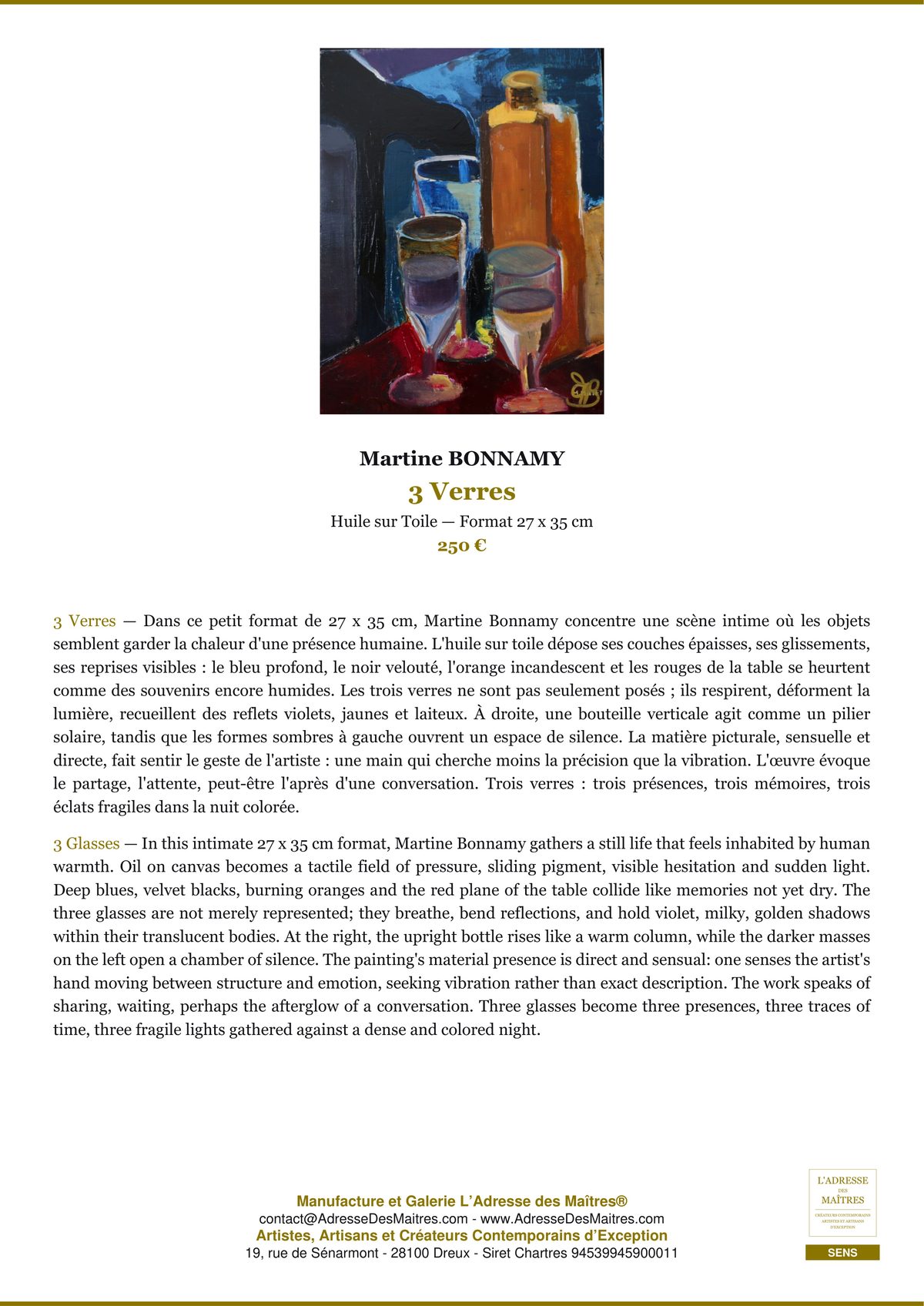
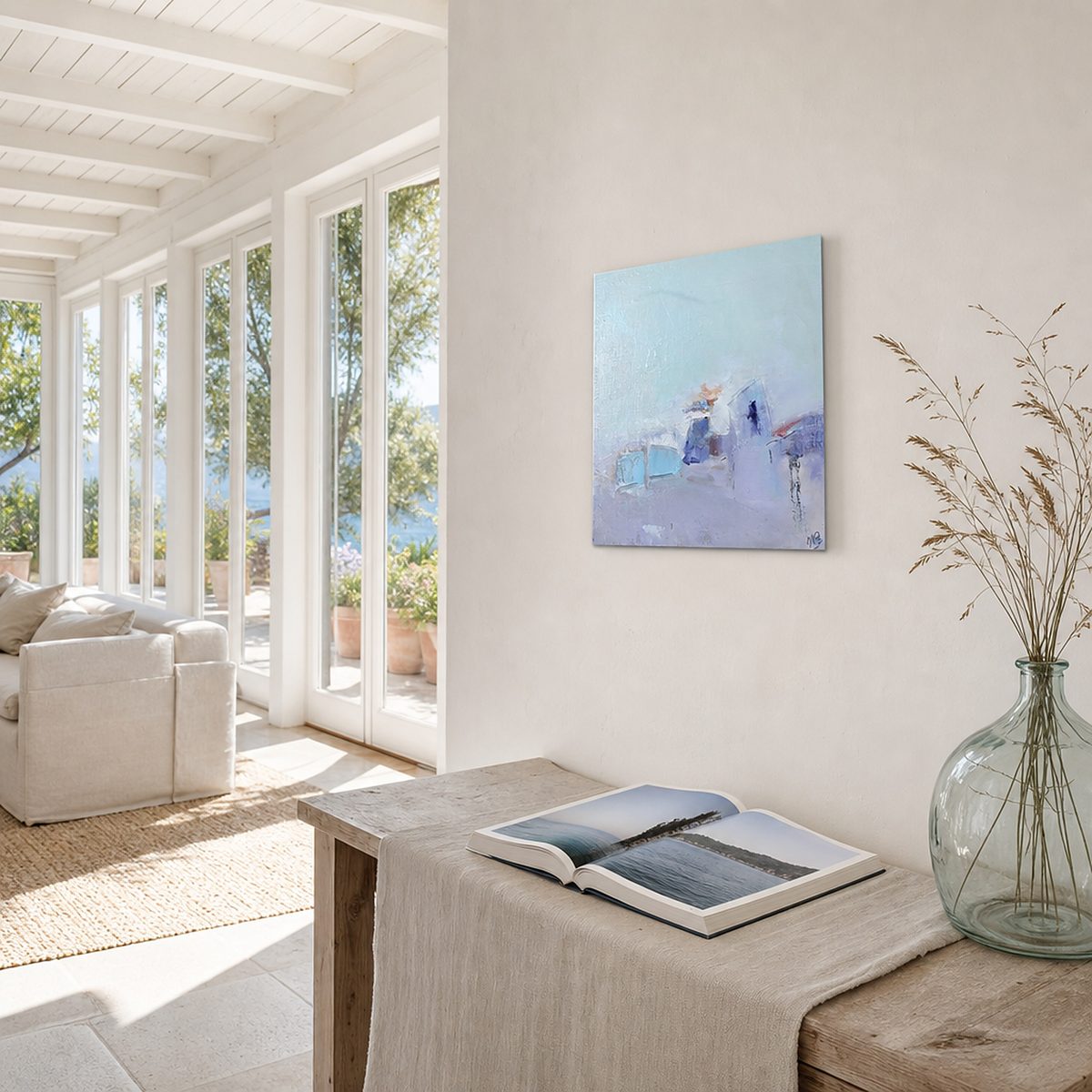
The L’Adresse des Maîtres® Art Gallery in Dreux is part of this contemporary art scene, showcasing artists whose techniques engage with conceptual, digital, or experimental themes. Martine BONNAMY, with 28 mixed-media-on-canvas works, including *Herbes de lumière, mémoire noire*, brings a dimension of material composition and the layering of media that invites viewers to interpret the canvas as a space of memory and a relationship between matter and idea. This approach reminds us that concept can also be conveyed through surface, texture, and the combination of materials.
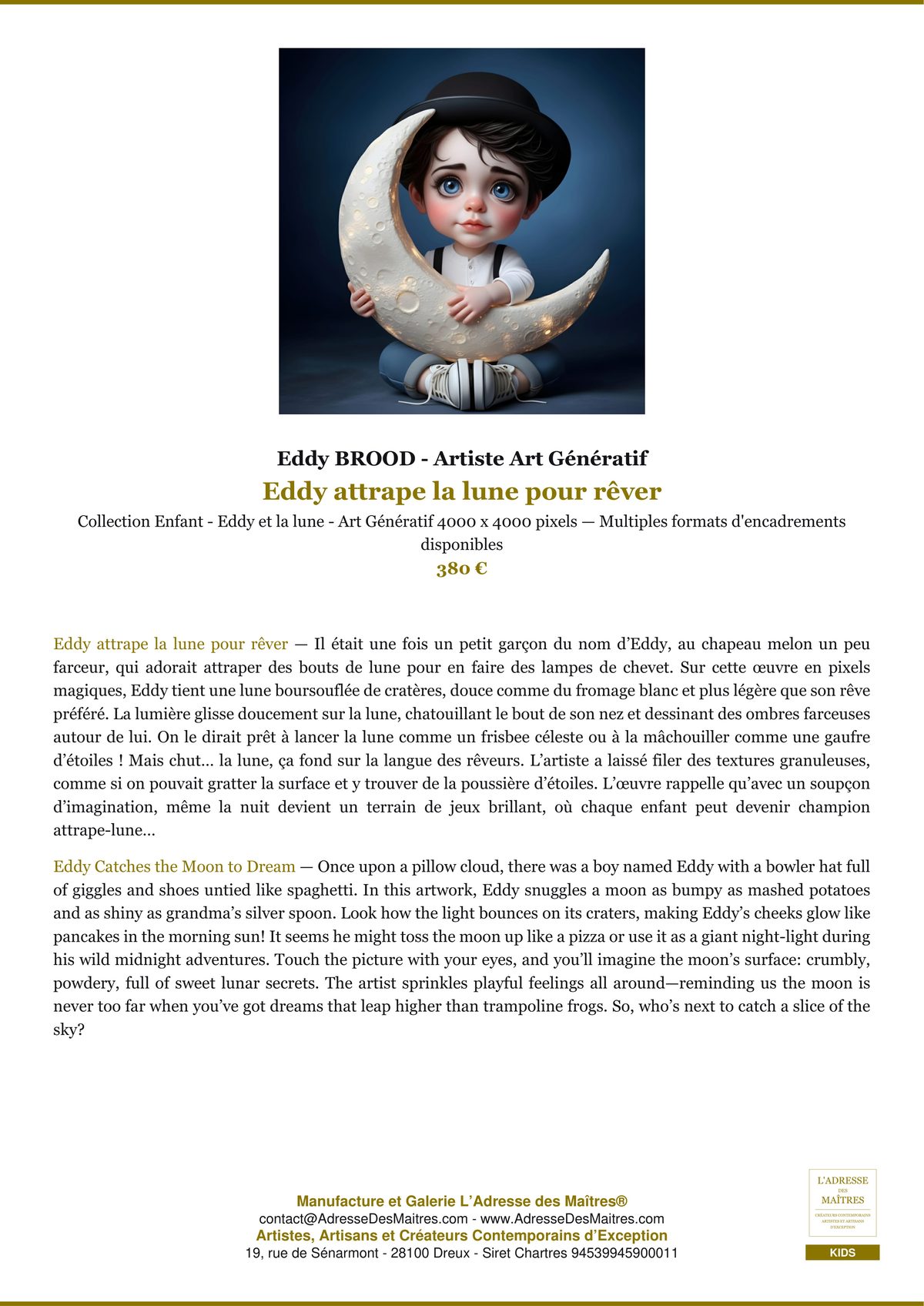
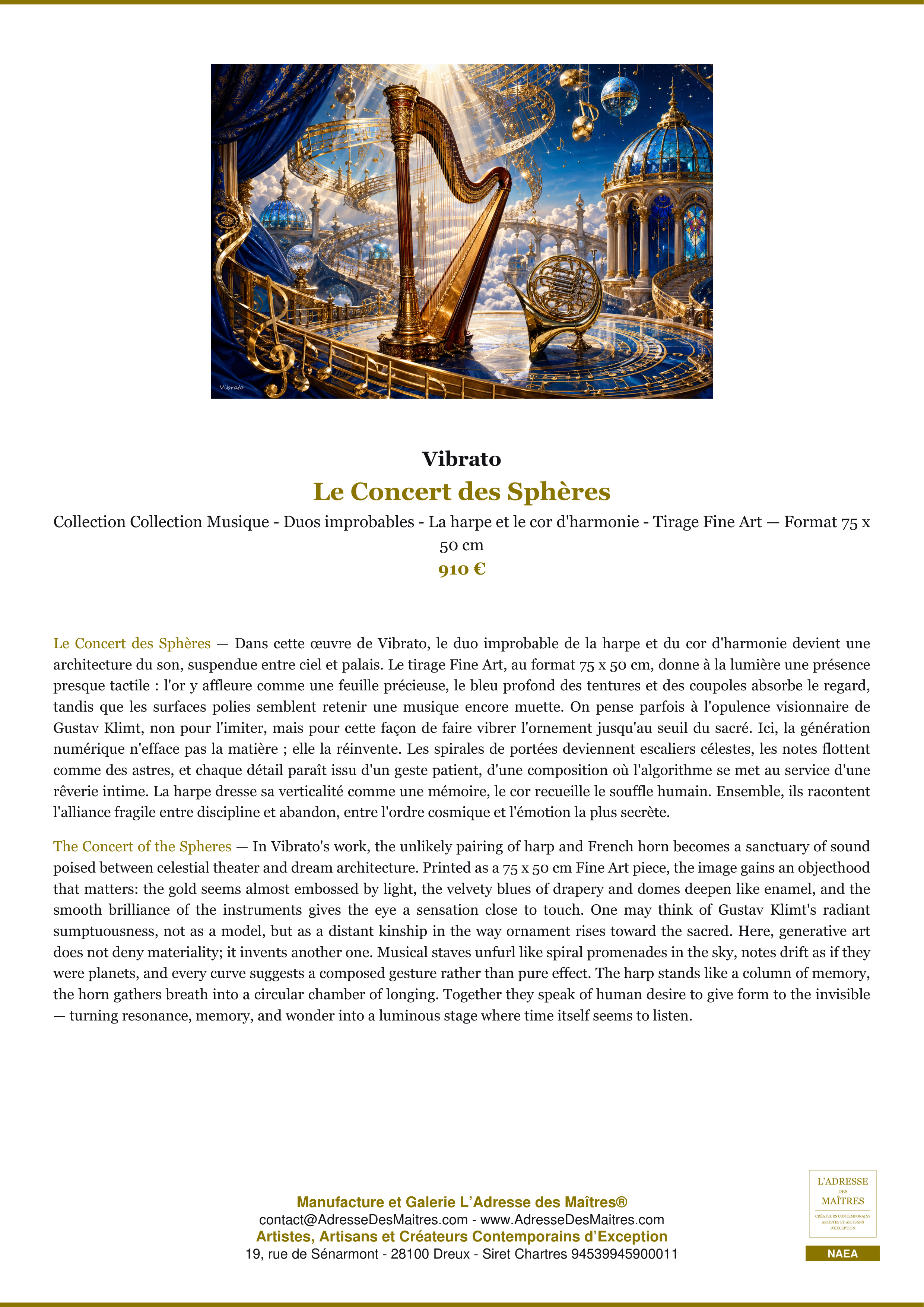
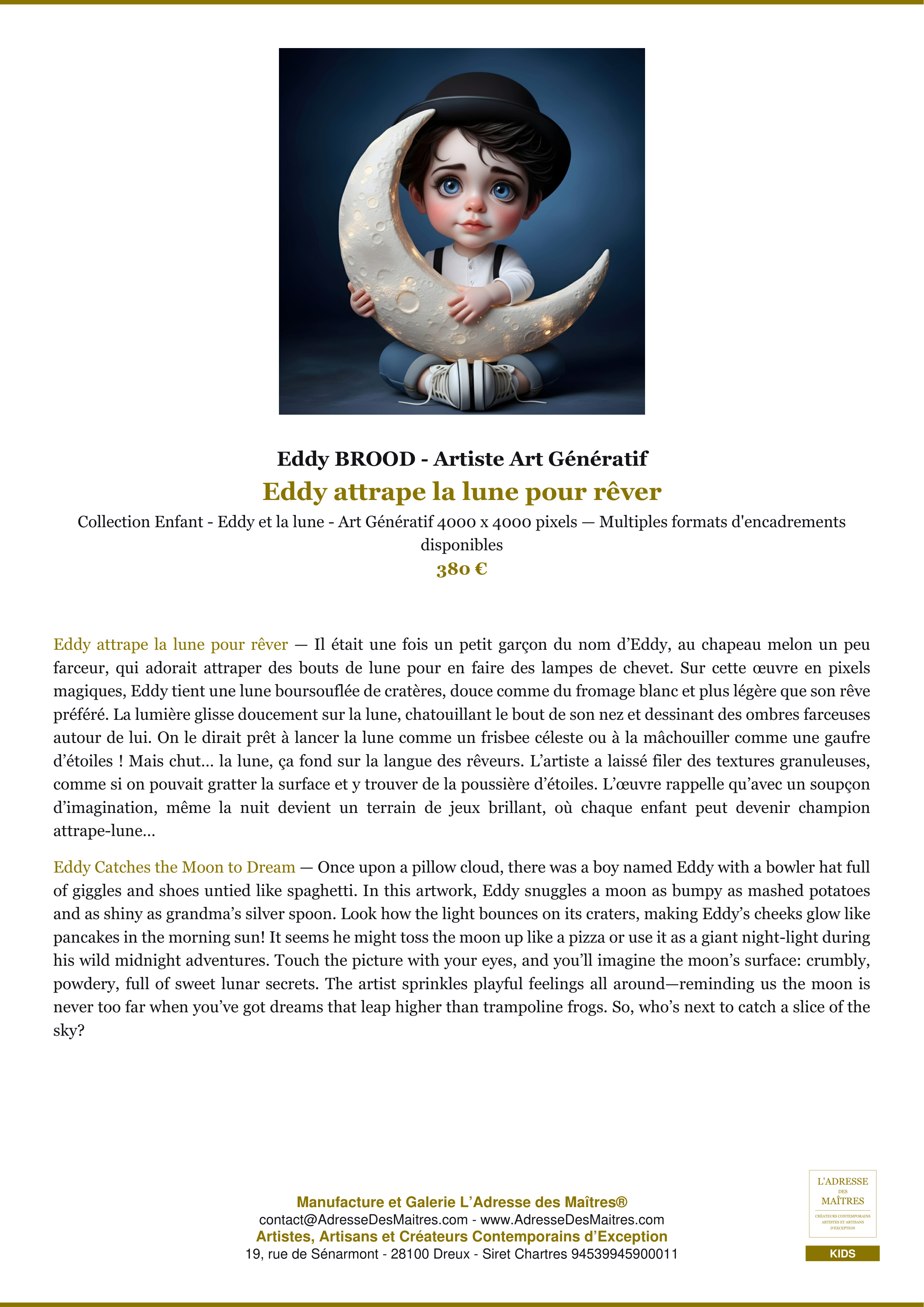
Vibrato, featuring 17 works of generative art, including *Le Concert des Sphères*, highlights a particularly timely field: generative art. In this type of practice, a work can be conceived through a system, a rule, or a generative process. This ties into the conceptual legacy of Sol LeWitt, in which instruction and structure play a decisive role. Eddy BROOD—a generative artist with 14 works in generative art, including *Eddy Catches the Moon to Dream*—also explores this relationship between visual creation, process, and digital imagination.
LENTO (Milan), featuring 12 works of digital art, including *Les Grues de la Pluie*, and LENTO, featuring 10 works of digital art, including *Sous l’arche, la veille*, demonstrate how digital art can expand upon the themes of conceptual art. Digital art allows us to conceive of the image as a construction, as a visual environment, or as the result of a technical language. Without reducing these works to a single interpretation, their medium reminds us that contemporary art today explores ideas as much as forms, and devices as much as images.
Why Collectors Are Interested in Conceptual Art
Collectors are interested in conceptual art for several reasons. First, because it plays a major historical role in the evolution of contemporary art. Collecting a conceptual work often means collecting an idea, an approach, or an intellectual stance. Second, because these works can offer a lasting connection: they do not always reveal themselves at first glance, but are rediscovered over time. Their value lies not solely in the physical object, but in the strength of the concept, the coherence of the process, and the relevance of the approach.
Conceptual art also appeals to collectors who are drawn to new forms of artistic expression: art installations, documentary photography, video, text, generative art, digital art, and hybrid works. In the case of generative and digital art, the focus is often on the process, the rule, the variation, or the system that produces the image. This aligns well with the conceptual spirit: the artwork is not only what we see, but also the logic that makes it possible.
How to Acquire a Conceptual Artwork
When acquiring a conceptual work, there are several factors to consider. It is important to understand what is being sold: an object, an edition, a certificate, instructions, documentation, a digital file, an installation to be reactivated, or a unique work. The certificate of authenticity is often essential, as it guarantees the work’s identity and the conditions under which it is presented. For installations, performances, or digital works, the technical specifications can be just as important as the final appearance.
The gallery’s role is therefore central. It guides the collector in understanding the artist’s approach, the medium, any edition details, and the conservation and presentation of the work. A gallery such as the Galerie d’Art L’Adresse des Maîtres® in Dreux can thus help contextualize works of mixed media, generative art, or digital art within the contemporary art landscape. For a novice collector, the best advice remains to choose a work that continues to challenge, intrigue, and spark a dialogue. This is precisely where conceptual art reveals its strength: it is not merely something to be owned; it continues to think alongside us.
Check out our gallery
Would you like to experience these artistic movements in person? Visit the online gallery of L’Adresse des Maîtres®—more than 606 original works by contemporary artists.
Leave a comment