Art and Nature — From Traditional Landscape to Land Art
↓ Share this articleArt and Nature: An Age-Old Dialogue That Is Constantly Renewed
The relationship between art and nature runs through the entire history of creation. From decorated caves to contemporary outdoor installations, artists observe, transform, celebrate, or question the natural world.Nature art is not limited to depicting trees, flowers, rivers, or mountains; it also raises a fundamental question about humanity’s place within the living world. Nature can serve as a backdrop, a motif, a symbol, a testing ground, or a philosophical subject.
Within this broad field, landscape painting, land art, andenvironmental art play a central role. Each offers a different way of connecting the artwork to the natural world: painting observes and interprets, land art intervenes directly in the landscape, while environmental art draws attention to the fragility of the environment. This diversity explains why nature remains one of the major themes in art, for both artists and collectors.
Landscape Painting: From Constable and Corot to the Impressionists
Landscape painting gradually established itself as a major genre. For a long time, the landscape served as a backdrop for religious, mythological, or historical scenes. But beginning in the 18th century—and especially in the 19th century—it became a subject in its own right. Artists no longer painted merely an action set against a backdrop; they painted the light, the atmosphere, the seasons, the mist in the sky, or the depth of a path.
John Constable, in England, played a decisive role in this evolution. His landscapes pay remarkable attention to clouds, fields, waterways, and changes in the weather. Nature is not idealized in an abstract way; rather, it is observed intently, in all its changes and vitality. In France, Camille Corot occupies a pivotal position between classical tradition and modern sensibility. His landscapes, often bathed in soft light, herald a more sensitive and freer approach to nature.
The Impressionists carried this revolution in perception forward. Claude Monet, Camille Pissarro, Alfred Sisley, and Pierre-Auguste Renoir were less interested in the fixed outlines of objects than in the visual impression created by light. A field, a river, or a garden became laboratories of perception. The brushstroke becomes fragmented, colors vibrate, and the moment becomes the true subject of the painting. With them, landscape painting no longer sought merely to describe a place: it revealed an experience of nature—fleeting and ever-changing.
Gardening as an Art Form: Monet in Giverny
The example of Monet in Giverny shows that the relationship between art and nature can extend beyond painting. Monet did not merely depict a garden; he designed, planted, organized, and transformed it as a living work of art. His water garden, his water lilies, his Japanese bridge, and his flower beds form a space where nature becomes at once a model, a studio, and a creation.
Gardening, in this case, becomes an artistic practice in its own right. Planting, pruning, combining colors, planning blooms, and composing reflections: these actions stem from a visual artistic sensibility. The garden is not merely a place of leisure, but an evolving work of art, subject to the seasons, growth, climate, and time. In Giverny, Monet created an environment designed to inspire his vision and his painting. Nature is no longer merely observed: it is staged, cultivated, and experienced.
Land Art: Art in Nature
In the 20th century, land art radically transformed the relationship between art and nature. Artworks no longer necessarily represent the landscape; instead, they are directly integrated into it. They may incorporate earth, stone, sand, ice, leaves, branches, or light. The museum is no longer the sole venue for art; beaches, forests, deserts, and mountains have become spaces for creation.
Christo, often associated with monumental interventions in public and natural spaces, has captured the public’s imagination with his wrappings and temporary installations. His works transform the perception of a site by playing with scale, color, fabric, and the movement of the gaze. They remind us that a landscape can be rediscovered when an artistic gesture temporarily alters its appearance.
Andy Goldsworthy, for his part, works with natural materials: leaves, stones, snow, ice, stems, and petals. His creations are often fragile and ephemeral. They can disappear with the wind, melting, rain, or the tide. This temporary nature is essential: it shows that the work belongs to the natural cycle rather than to the permanence of a museum. Richard Long, for his part, turns walking into an artistic practice. His lines of stones, his tracks, and his routes connect human action to the space traversed. Through these artists, land art becomes a way of conceiving of nature as place, matter, and duration.
Art and Ecology: The Emergence of Environmental Art
Environmental art addresses a major contemporary concern: the ecological crisis. Faced with global warming, pollution, the collapse of biodiversity, and the depletion of resources, many artists choose to make the environment a central theme in their work. Their goal is not always to create a pleasant image of nature, but to raise awareness.
Some artists use recycled materials, work with waste, document the transformation of landscapes, or highlight the fragility of natural environments. Others collaborate with scientists, urban planners, gardeners, or local communities. Art thus becomes a tool not only for raising awareness but also for taking action. It brings to light what statistics and technical discourse alone cannot always convey: the endangered beauty of an ecosystem, the disappearance of a region, and humanity’s responsibility toward living things.
From this perspective, nature art is not merely about aesthetics. It becomes ethical. It is no longer simply a matter of admiring a landscape, but of questioning the way we inhabit it. The artist can thus serve as a witness, a voice of warning, or a mediator between the public and environmental issues.
Nature as a decorative motif or as a philosophical subject
Nature can be used in two very different ways in art. First, it can serve as a decorative motif. Flowers, foliage, birds, fruits, and stylized landscapes have long adorned textiles, ceramics, wallpaper, furniture, and works of art. In this context, nature brings rhythm, harmony, color, and elegance. It beautifies our living spaces and creates a meaningful connection to the plant and animal worlds.
But nature can also become a philosophical subject. It then raises questions about time, death, memory, transformation, and humanity’s place in the universe. A forest can evoke the unknown, a sea can suggest infinity, and a wilted flower can remind us of the fragility of existence. Still lifes, for example, are not merely compositions of objects, fruits, or flowers: they can be meditations on the passage of time and the vanity of things.
This distinction between decoration and reflection is not always clear-cut. A work of art can be beautiful, decorative, and pleasing to the eye, while still conveying a profound meaning. This is precisely one of the strengths of nature art: it draws us in through the beauty of the visible world, and then invites us to reflect on what that beauty means.
The L’Adresse des Maîtres® Art Gallery in Dreux and artists associated with nature art
The L’Adresse des Maîtres® Art Gallery in Dreux is part of this dialogue between artistic creation and a sensitivity to nature by showcasing artists whose works can be approached through the concepts of material, memory, shoreline, current, or chromatic intensity. Without reducing their work to a single theme, certain titles and techniques invite reflection on the connections between painting, the inner landscape, and the natural imagination.
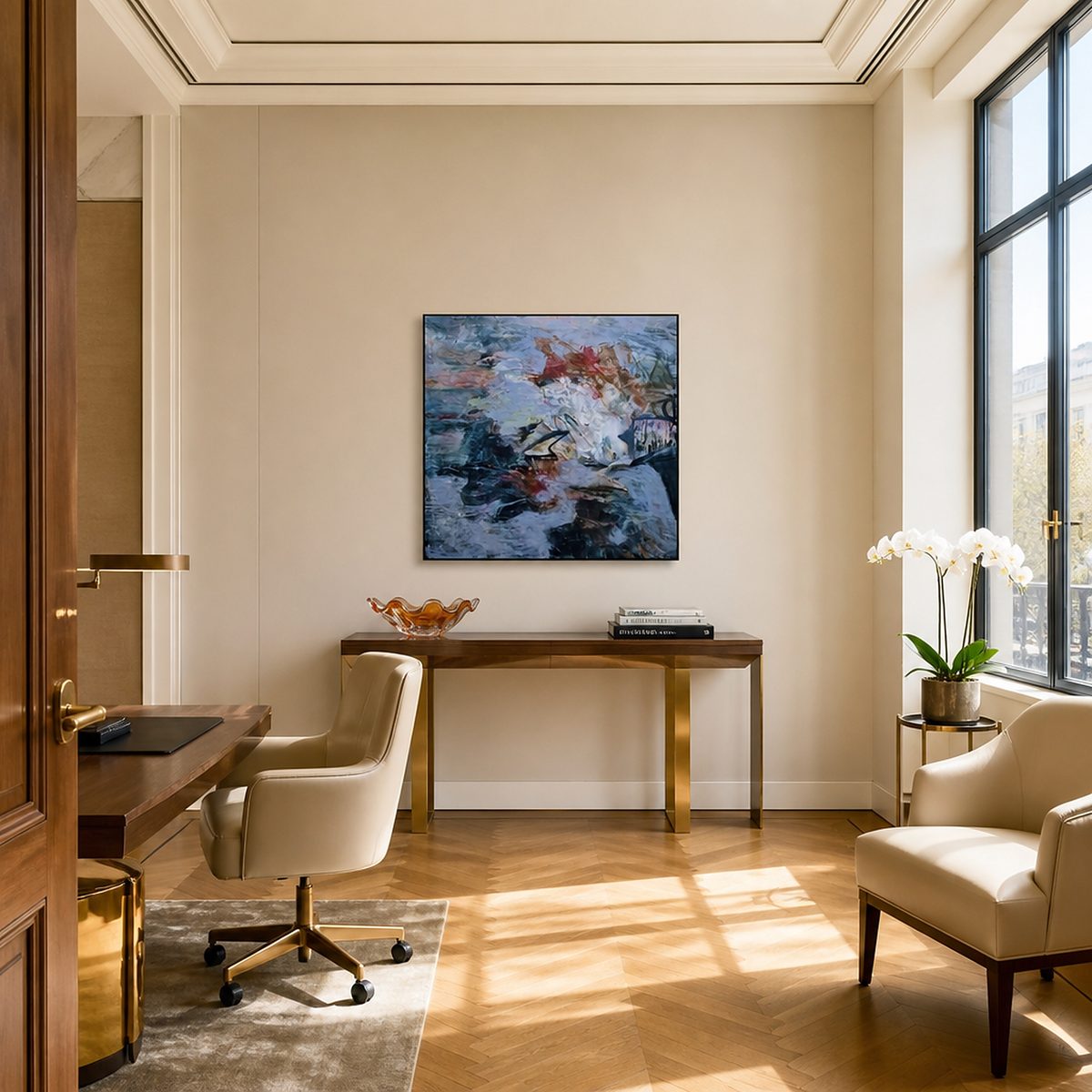
Martine BONNAMY is represented by 48 oil paintings, including “Céruléenne, mémoire d’un rivage.” Through the medium of oil painting and a title that evokes the color cerulean, memory, and the shoreline, this work resonates with the themes of water, the coastline, and memory. It thus adds a dimension linked to traces and evocation to the discourse on nature art.
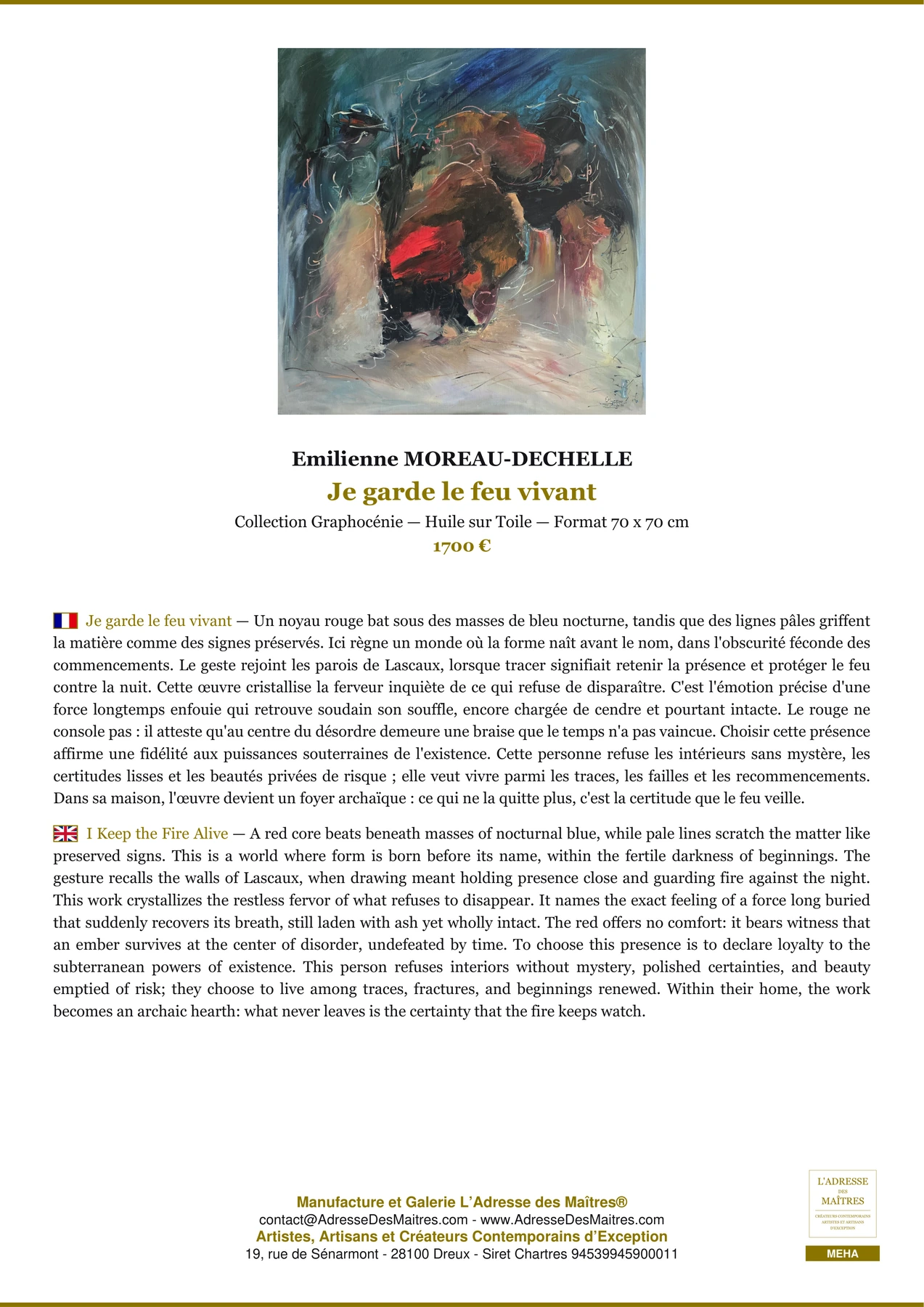
Emilienne MOREAU-DECHELLE has created 41 oil paintings, including “Passage sous les braises.” This title suggests the intensity of movement and fiery matter. As part of a reflection on art and nature, this work explores the evocative power of the elements without necessarily depicting a landscape literally.
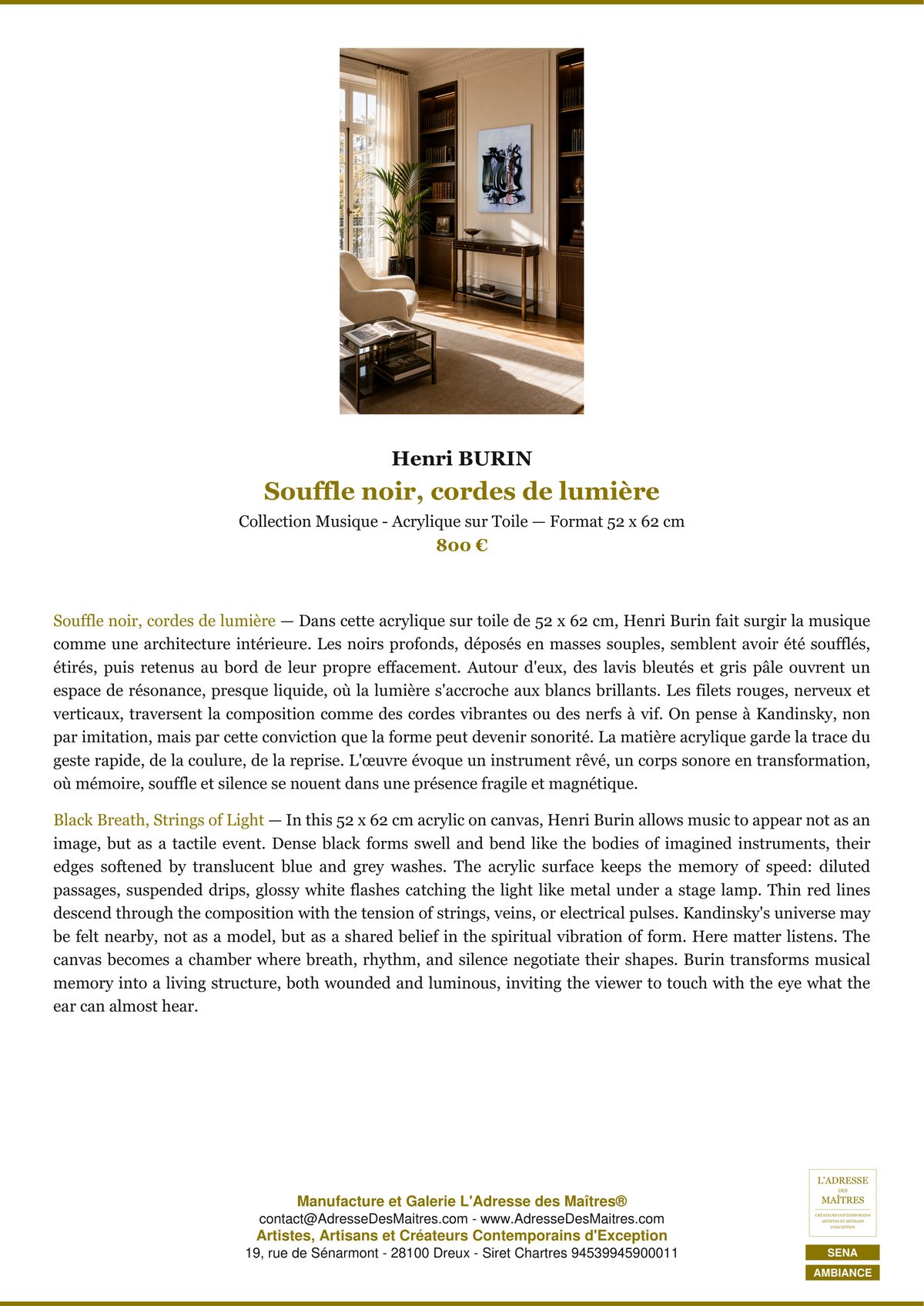
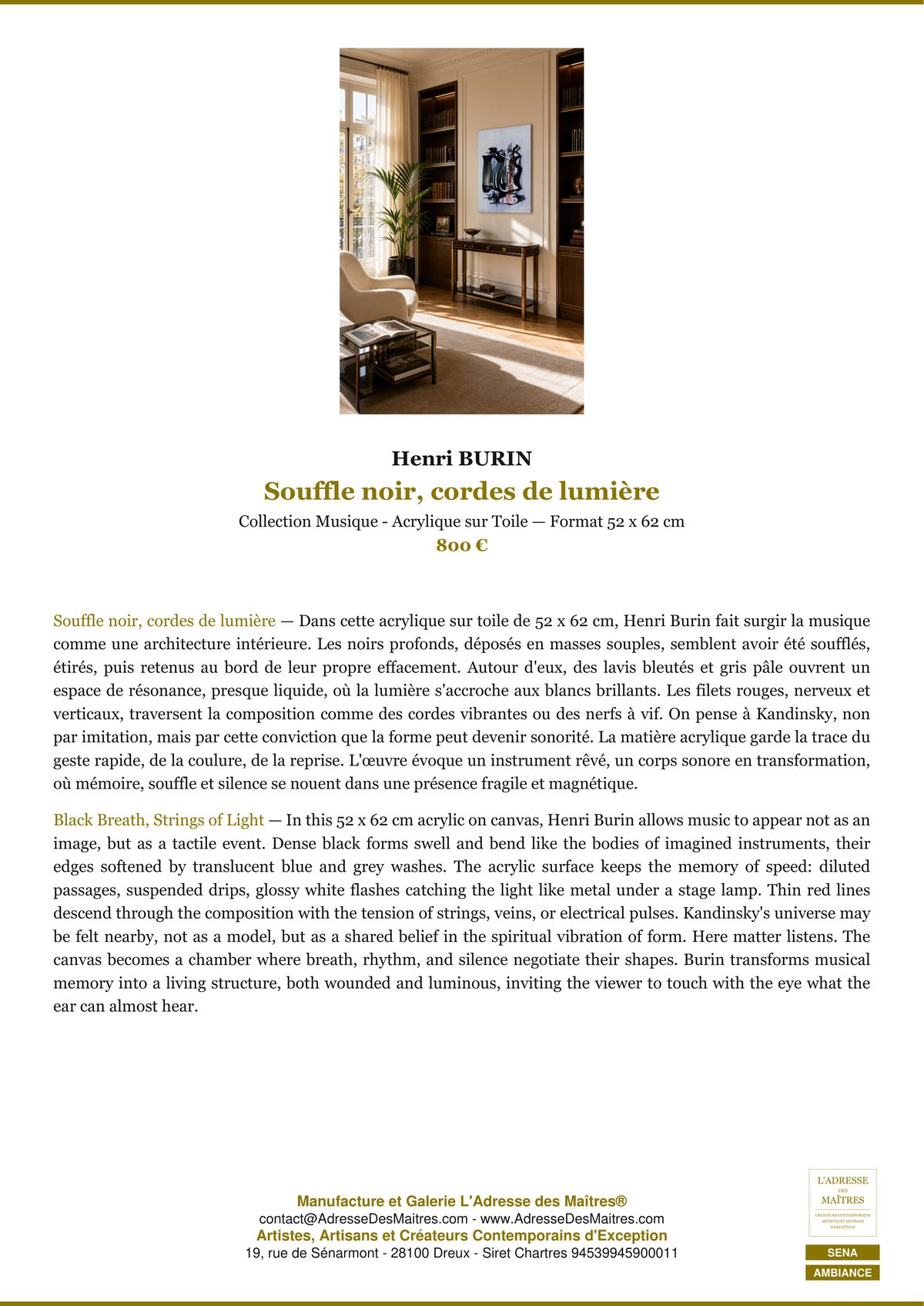
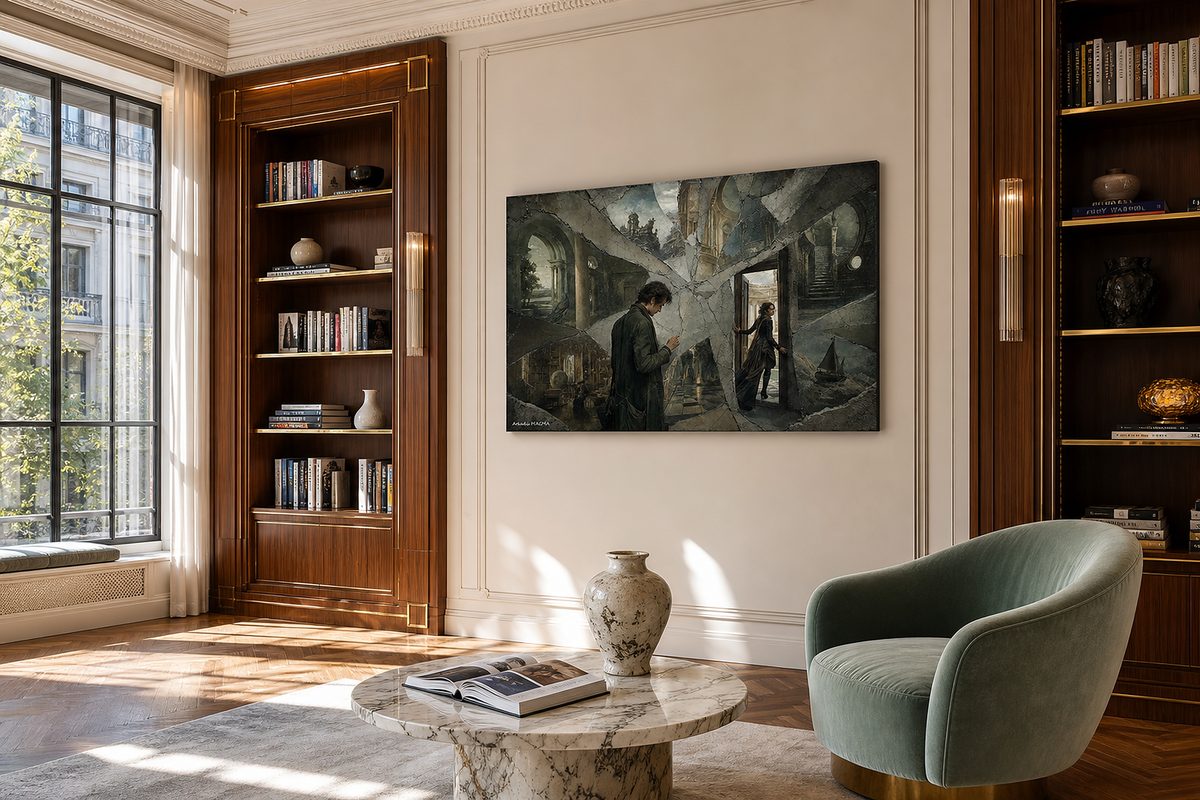
Henri BURIN is featured with 40 acrylic paintings, including “La contrebasse rêve sous rideau.” Through the use of acrylic and a title that combines an instrument, a dream, and a curtain, this work reminds us that our relationship with nature can also be expressed through the imagination, rhythm, and atmosphere. It enriches the subject by demonstrating that nature art can engage in a dialogue with other poetic forms.
Joëlle METZGER-REVERDI presents 21 oil paintings, including “Visage de braise intérieure.” This title emphasizes a fiery inner life. From a philosophical perspective on nature, it can be linked to the idea of an inner element, symbolic fire, and perceptible transformation.
Sylvia BEAUCHAIN has created 14 oil paintings, including “La mémoire des courants.” This title directly evokes water, movement, and memory. It adds a fluid dimension to the theme of nature art, linked to currents, traces, and the memory of the elements.
Collecting Nature Art: Landscapes, Still Lifes, and Botanical Art
Collectingnature art means choosing works that have a meaningful connection to the natural world. Landscapes remain a popular choice: they can depict countryside, seascapes, forests, mountains, or gardens. They often bring a sense of visual and emotional openness to an interior. A landscape painting can evoke a real place, a memory of a trip, or a dreamlike atmosphere.
Still lifes are another important genre. Flowers, fruits, branches, seashells, and other natural objects are carefully arranged in these works. They allow viewers to appreciate color, texture, light, and symbolism. Botanical works, for their part, captivate viewers with their precision, elegance, and connection to the history of the natural sciences. They appeal equally to art enthusiasts and collectors with an appreciation for the plant world.
To build a cohesive collection, it’s helpful to vary your approaches: a landscape painting to capture space and light, a still life to convey intimacy, and a more abstract or evocative work to explore the philosophical dimension. The key is to choose works that deepen your personal connection to nature.
Conclusion: Art as a Way of Engaging with Life
From Constable to Corot, from the Impressionists to Land Art, from Monet the gardener to artists engaged in environmental art, nature remains a vast realm of creativity. It can be depicted, cultivated, traversed, transformed, or defended. It can adorn our homes, but it can also fuel our deepest reflections.
At a time when environmental issues are taking center stage, nature art is taking on new significance. It reminds us that looking at a landscape, a flower, a river, or a natural material is never a neutral act. It is a way of learning to see, respect, and inhabit the world.
Check out our gallery
Would you like to experience these artistic movements in person? Visit the online gallery of L’Adresse des Maîtres®—more than 606 original works by contemporary artists.
Leave a comment