Engraving and Printmaking — The Quintessential Form of Multiple Art
↓ Share this articleEngraving and Printmaking: Understanding the Art of the Multiple Image
Engraving and printmaking occupy a central place in the history of images. They are based on a simple yet fruitful idea: creating a matrix—that is, a surface that has been engraved, drawn on, or otherwise prepared—in order to produce multiple prints on paper or another medium. A print is therefore not merely a reproduction; it is an original work designed to be printed. From medieval woodcuts to contemporary prints, this field has kept pace with the technical, social, and artistic developments of the Western world, while remaining a vibrant arena for experimentation to this day.
From Medieval Origins to the Spread of Images
The history of European printmaking began, in particular, with woodcut printing, or xylography, which was widely used in the Middle Ages. The process involves carving a wooden block while leaving the areas intended to receive ink uncarved. The image is then transferred to paper by applying pressure. This technique made it possible to distribute religious images, playing cards, popular illustrations, and, later, illustrated books. Even before Gutenberg’s invention of the printing press, woodcut printing fulfilled a fundamental need: to reproduce images and make them accessible.
During the Renaissance, printmaking became a major art form. It was no longer merely a means of dissemination, but a medium for showcasing artistic virtuosity. Artists realized that an engraved plate could offer a richness of lines, textures, and nuances comparable to that of drawing. Prints circulated easily, crossed borders, and contributed to artists’ reputations. They also became a tool for learning: people collected engravings to discover works of art, landscapes, and historical or mythological scenes.
Major Engraving Techniques: Principles and Differences
Among the major printmaking techniques, intaglio refers to processes in which the design is engraved into a plate, usually made of copper or zinc. Ink settles into the recesses, and the plate’s surface is then wiped clean before being pressed against dampened paper. The paper picks up the ink from the engraved lines. Intaglio printing produces precise lines, deep blacks, and a wide range of tonal subtleties. The burin, a sharp, hand-held tool, is one of the most demanding forms of this technique.
Etching is also part of the intaglio family, but it relies on the action of an acid. The artist coats the plate with a protective varnish, then draws by removing the varnish with a needle. The plate is then immersed in an acid bath, which etches the metal in the exposed areas. Etching offers a freedom similar to that of pen-and-ink drawing. It allows for quick strokes, corrections, and vibrant atmospheres. It is a technique particularly favored by artists seeking an expressive style.
Lithography, invented in the late 18th century, is not based on intaglio or relief, but on the incompatibility between water and oil. The artist draws on a limestone or plate using a pencil or oil-based ink. After chemical treatment, the drawn areas retain the ink while the others repel it. Lithography revolutionized poster art, illustration, and art publishing, as it allows for a very direct, fluid, and tonal style of drawing.
Screen printing is a stencil printing technique that uses a stretched fabric screen—originally made of silk, but now typically made of synthetic fibers. The ink passes through the open areas of the screen and is deposited onto the substrate. It can be used on paper, canvas, fabric, wood, or metal. Widely used in 20th-century art, screen printing is associated with solid blocks of color, modern visual culture, and the repetition of images. It played a major role in Pop Art.
Finally, linocut is similar to woodcut but uses a linoleum plate, which is softer and easier to work with. The artist carves out the areas that will remain white and inks the raised sections. This technique is accessible, straightforward, and expressive. It is suitable for both beginners and professional artists. Its sharp contrasts and powerful graphic quality make it a popular medium for contemporary art.
The Concept of an Edition: Print Run, Numbering, and Artist’s Proof
An original print is usually produced in a limited edition. The print run corresponds to the total number of copies printed from the plate. Each sheet may be numbered, for example, 12/50: this means that it is the twelfth copy in a print run of fifty. This numbering provides important information to the collector, as it indicates the relative rarity of the work.
In addition to the numbered print run, there are artist’s proofs, often marked with the letters E.A. These are reserved for the artist and are generally produced in small quantities. There are also test prints, which are used to check the condition of the plate, the inking, or the color before the final print run. In the print market, the artist’s signature, the quality of the paper, the condition of the print, the proofing process, and provenance are essential factors.
Dürer, Rembrandt, Goya, Picasso: Four Masters of Printmaking
Albrecht Dürer is one of the great names in Renaissance printmaking. His woodcuts and copperplate engravings demonstrate exceptional mastery of line, detail, and composition. Through printmaking, his art spread throughout Europe. Works such as his religious series and allegorical images helped elevate printmaking to the status of a fine art.
Rembrandt brought an unparalleled depth to etching. He used the plate as a space for experimentation, sometimes altering his compositions from one state to the next. His prints explore light, shadow, the psychology of faces, and the very substance of the ink. For him, the print was never secondary: it was an intimate laboratory of vision.
Francisco de Goya turned printmaking into a tool for social critique. His series—particularly those devoted to the horrors of war or the whims of society—demonstrate the moral and political power of the print. Through the mass reproduction of images, printmaking became a means of exposing injustices, raising questions, and preserving a dark record of human history.
In the 20th century, Pablo Picasso explored numerous printmaking techniques: etching, linocut, lithography, and aquatint. His body of print work is vast and reveals constant inventiveness. He understood that printmaking allowed him to vary the stages of production, colors, media, and creative rhythms. For Picasso, printmaking was a form of ongoing exploration.
Contemporary Printmaking: Revival, Hybridization, and Today’s Artists
Contemporary printmaking is experiencing a true renaissance. Far from being limited to traditional techniques, it engages in dialogue with photography, digital art, installations, artist’s books, and mixed media. Printmaking studios remain places of collaboration between artists and craftspeople, while many creators are rediscovering manual techniques: etching, press printing, cutting, layering, and stamping. This tension between tradition and experimentation gives printmaking a strong relevance today.
In contemporary art, the concept of the imprint is central. Printmaking explores the traces, repetition, variation, and memory of images. A single plate can produce different prints depending on the inking, the paper, the pressure, or manual intervention. The printed work thus becomes a field of variations rather than a uniformly repeated object. Contemporary artists are also interested in the ecology of materials, inks, papers, monumental formats, and printed installations.
The L’Adresse des Maîtres® Art Gallery in Dreux and Practices Related to Multiple Images
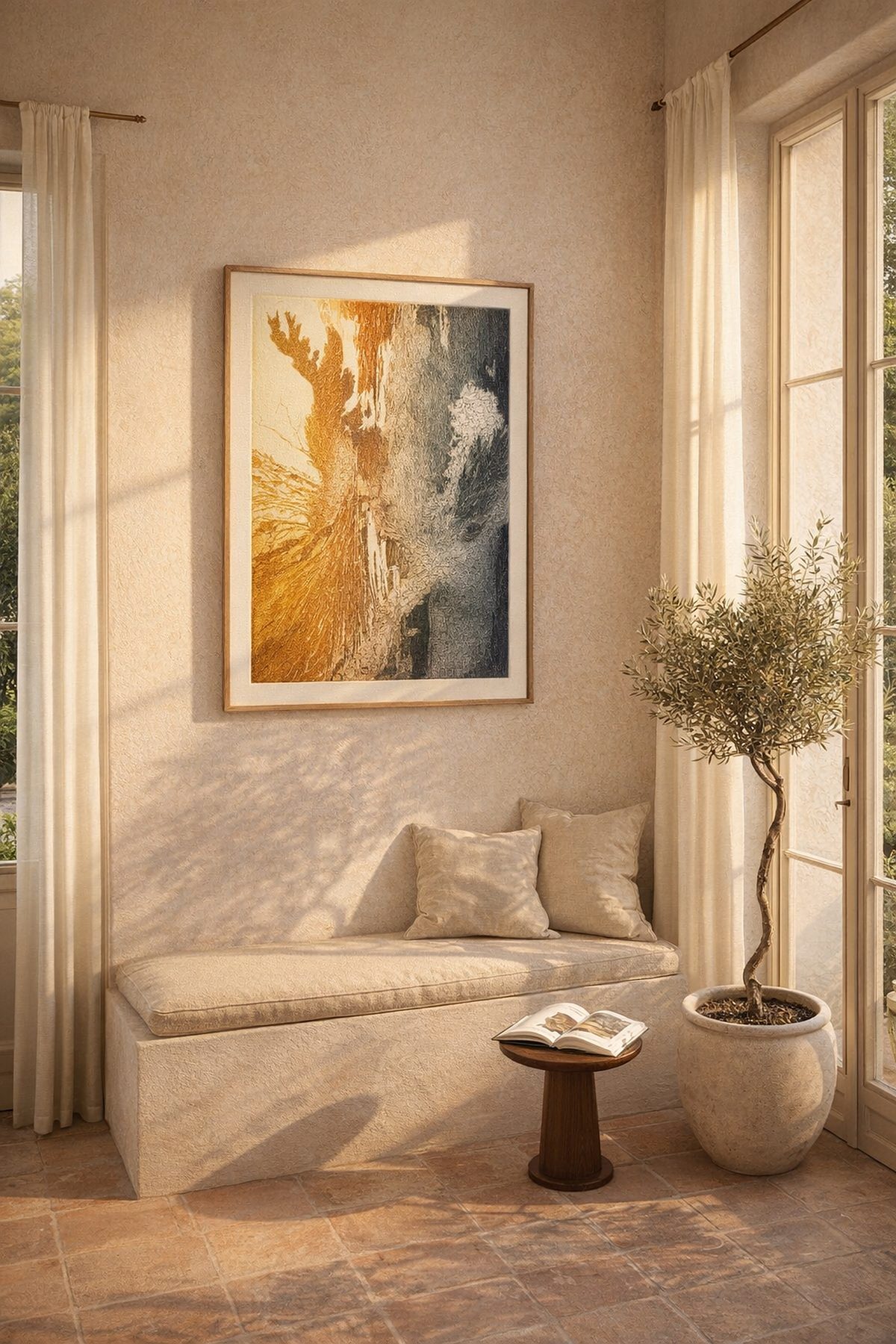
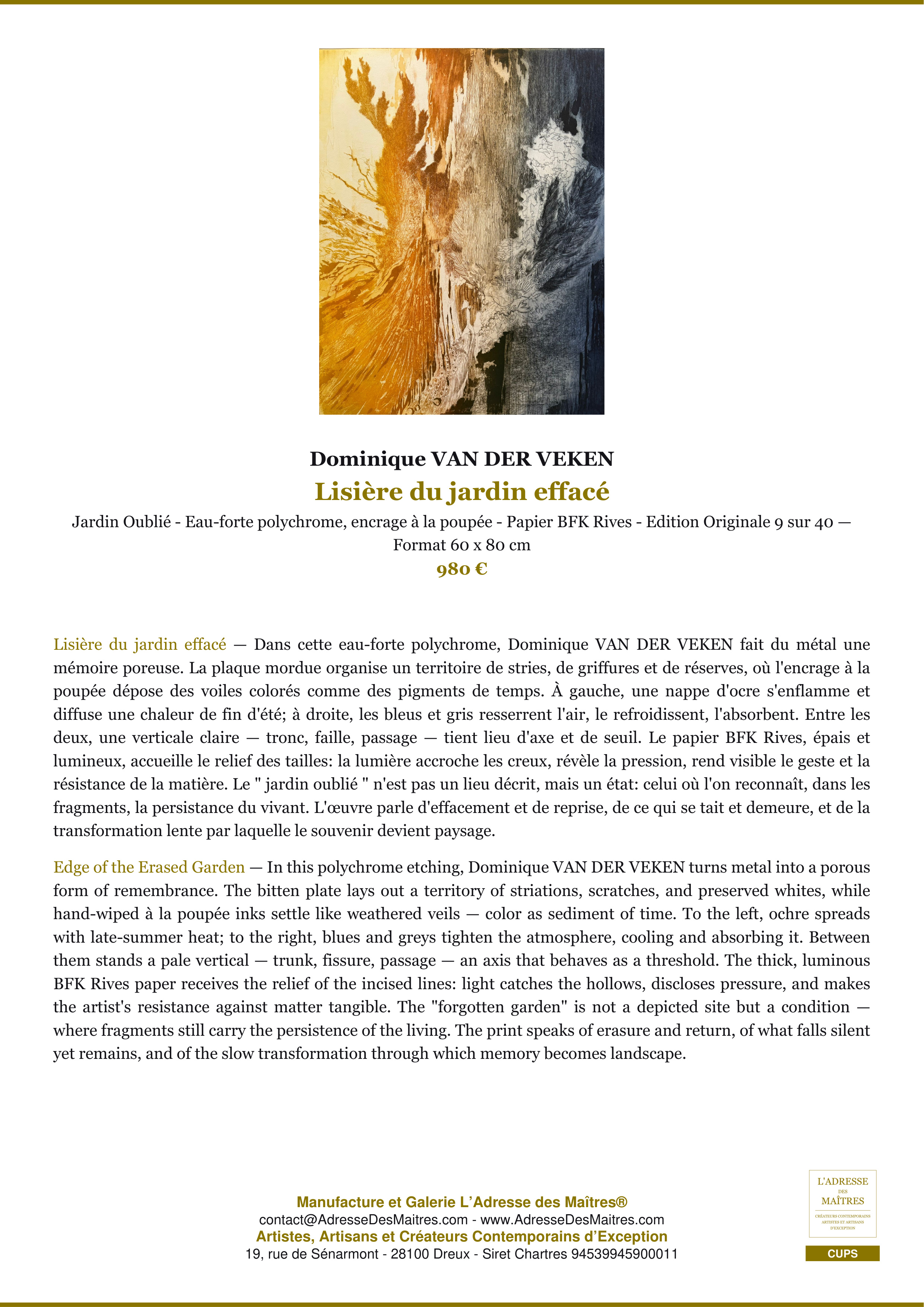
The L’Adresse des Maîtres® Art Gallery in Dreux explores these questions through works that engage with the printed image, layering, and contemporary practices. Among the artists exploring this theme, Dominique VAN DER VEKEN is featured with three printmaking works, including “Lisière du jardin effacé.” This focus on printmaking falls squarely within the realm of printmaking and underscores the ongoing importance of printing processes in artistic creation.
Martine BONNAMY is represented by 63 mixed-media works on canvas, including “Herbes de lumière, mémoire noire.” Although this practice falls under the category of mixed media on canvas, it enriches the discussion of printmaking techniques through its exploration of the blending of media and the construction of the image. In a contemporary context, the boundaries between printmaking, painting, surface, and material are often explored, and mixed-media works contribute to this expansion of boundaries.
Nicole ALLAIS is featured with 52 works in Layered Image Composite Photography, including “Le Souffle du Chêne.” This practice of composite photography using superimposed images broadens the concept of the contemporary print to explore the themes of layers, visual memory, and the gradual construction of the image. While not to be confused with traditional printmaking, it resonates with the idea of stratification, which is central to many contemporary printmaking practices.
Collecting Prints: Affordability and Criteria for Value
Collecting prints is often an excellent way to get started in art. Compared to a one-of-a-kind painting, a limited-edition print can be more affordable while still meeting high artistic standards. Prints thus allow collectors to acquire an original, signed work—sometimes by a well-known artist—at a more affordable price than other mediums.
Several factors influence the value of a print. The first is the artist’s significance and the work’s place in the artist’s career. Next come the technique used, the rarity of the print run, the quality of the print, the condition of the paper, the signature, the numbering, and the provenance. A well-preserved print, free of sun damage, major stains, or tears, will naturally be more valuable. The subject matter, the period in which it was created, and market demand also play a role.
It is also important to distinguish between an original print and a photomechanical reproduction. In an original print, the artist is involved in the design of the plate or the printing process, and the edition is generally controlled. A reproduction, even a high-quality one, reproduces a preexisting work without necessarily involving a creative printmaking process. For a collector, this distinction is fundamental.
An ancient art form that is still alive today
From medieval woodcuts to contemporary prints, the history of the printed image is one of continuous innovation. Printmaking techniques have made it possible to disseminate ideas, explore line, manipulate light, critique society, and expand the range of forms. Dürer, Rembrandt, Goya, and Picasso demonstrated that printmaking could be a major art form, capable of rivaling drawing, painting, or sculpture in intensity.
Today, printmaking is once again captivating artists and collectors because it combines craftsmanship, experimentation, and accessibility. It is both a testament to an ancient craft and a laboratory for new forms. In galleries, studios, and collections, the print remains a work of contact: contact between the hand and the plate, between ink and paper, and between history and the contemporary gaze.
Check out our gallery
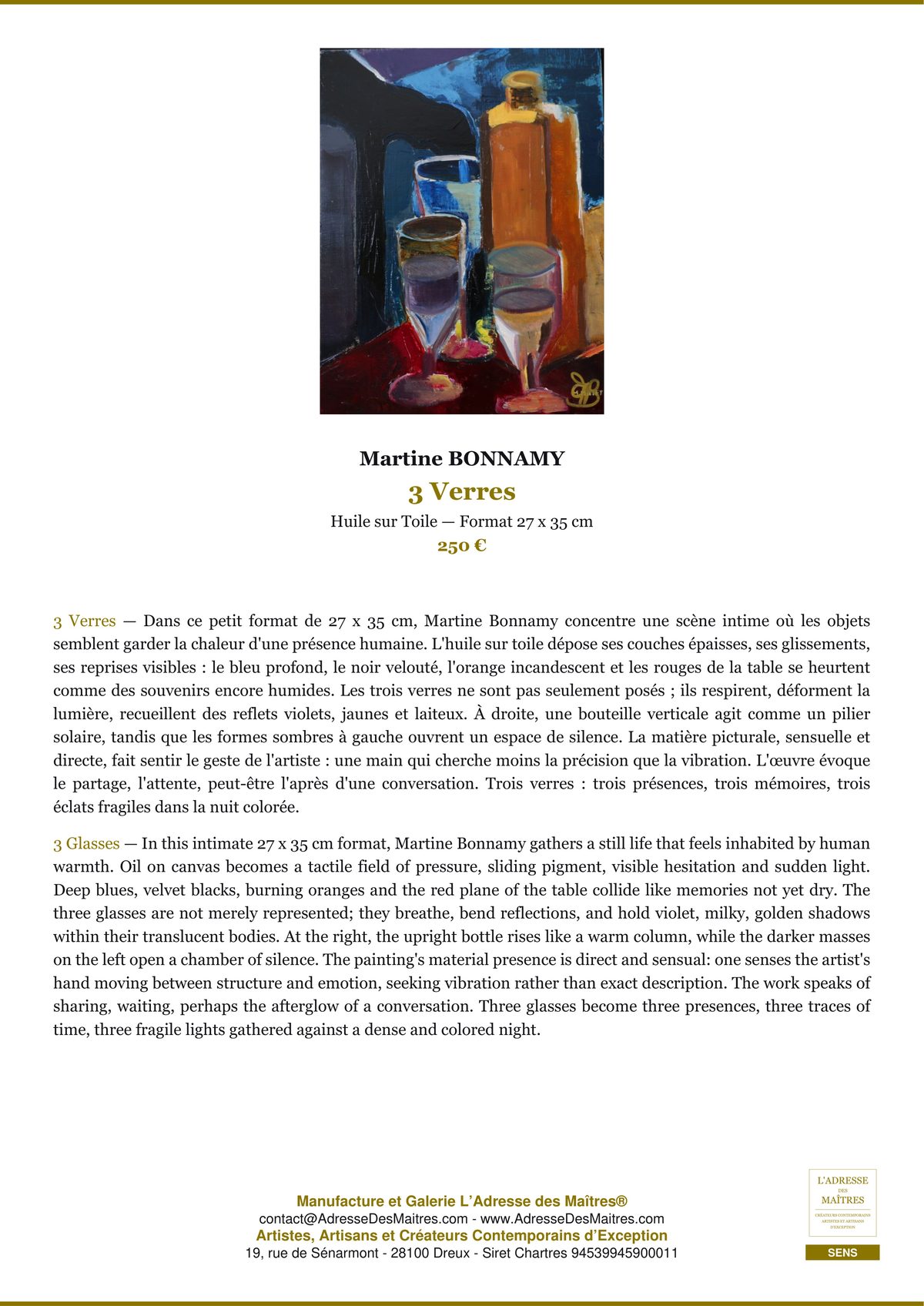
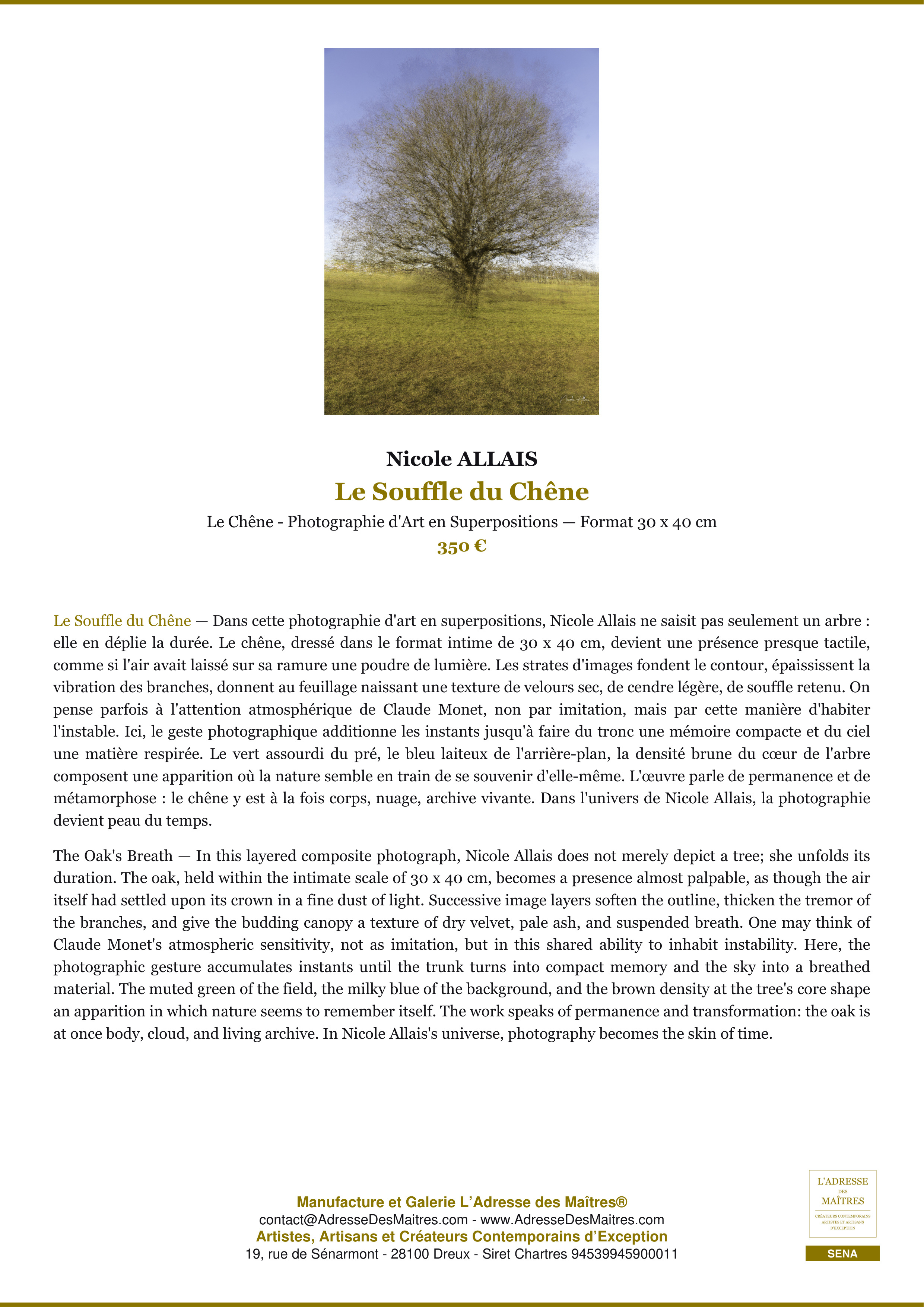
Would you like to experience these artistic movements in person? Visit the online gallery of L’Adresse des Maîtres®—more than 606 original works by contemporary artists.
Leave a comment