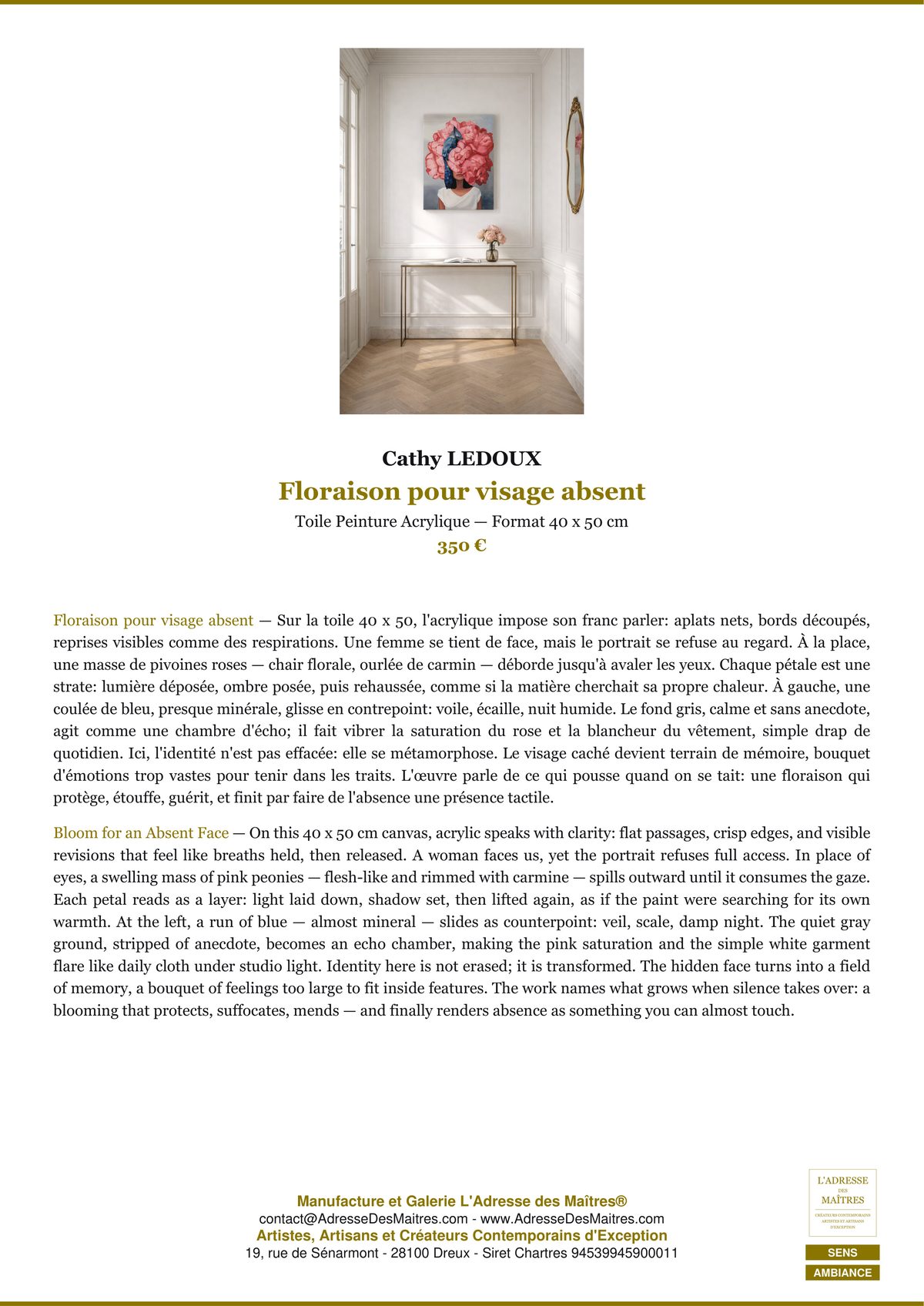
The Contemporary Portrait — Between Resemblance and Interpretation
↓ Share this articleThe Contemporary Portrait: An Ancient Mirror for New Questions
The contemporary portrait occupies a unique place in art history: it is both one of the oldest genres and one of the most current. Depicting a face, a body, a presence, or an identity has never been a neutral act. Behind every portrait painting, every photograph, and every digital image lie fundamental questions: Who is looking? Who is being depicted? What message are we trying to convey? Today, the contemporary portrait is no longer limited to physical resemblance. It explores memory, social status, gender, cultural diversity, the construction of self, and the way each person wishes to be seen.
In figurative art, the portrait serves as a space for experimentation. It can be realistic, expressive, fragmented, symbolic, political, or intimate. It can celebrate a person, denounce invisibility, challenge stereotypes, or blur the boundaries between subject and artist. It is this tension between tradition and innovation that makes the portrait so vibrant in contemporary art.
A Thousand-Year History: From Egyptian Pharaohs to Digital Selfies
The history of portraiture spans civilizations. In ancient Egypt, depictions of pharaohs and dignitaries served more than just an aesthetic purpose: they affirmed power, eternity, and a connection to the divine. The portrait was thus an instrument of memory and symbolic survival. In ancient Greece and Rome, sculpted busts sought more to capture individual features, the signs of aging, and family or political prestige.
In the Middle Ages, portraiture developed primarily within a religious and social context. Patrons sometimes appeared in altarpieces, alongside sacred figures. During the Renaissance, portraiture became a major genre. Princes, merchants, humanists, and artists themselves sought to assert their place in the world. Resemblance, psychological depth, and technical mastery became essential. Leonardo da Vinci, Titian, Holbein, and Dürer imbued the face with a new depth.
In the modern era, portraiture has evolved alongside societal changes. Formal portraits celebrate rulers and the elite, while more intimate portraits reveal personal tastes, sensibilities, and ambitions. In the 19th century, the bourgeoisie turned to painters on a massive scale to capture its image. But one invention would permanently transform this tradition: photography.
Today, the digital selfie is a popular and everyday form of self-portraiture. It is part of a very long history: that of the human desire to represent oneself, to control one’s image, and to share it. Yet, there remains a profound difference between the instant selfie and the contemporary portrait—whether painted, photographed, or sculpted. A work of art does more than simply capture an appearance: it offers an interpretation, a critical distance, and symbolic depth.
The Photographic Revolution and Its Impact on Portrait Painting
The advent of photography in the 19th century radically transformed portrait painting. Until then, the painter had been one of the primary mediators of likeness. Photography made this process more accessible, faster, and often less expensive. Some people therefore predicted the end of the painted portrait. However, the opposite occurred: freed from the obligation to faithfully reproduce facial features, painting was able to explore other dimensions of the face.
The Impressionists, Expressionists, Cubists, and later modern artists shifted the focus of portraiture. It was no longer simply a matter of showing “what” a person looked like, but of conveying a perception, an energy, an inner tension. The face could be deconstructed, rendered in unrealistic colors, distorted, or reduced to a few symbols. Portrait painting opened itself up to subjectivity.
Photography itself has become a portrait art form in its own right. It has made it possible to document social identities, urban transformations, minorities, anonymous people, celebrities, and bodies that fall outside dominant norms. In contemporary art, painting and photography are in constant dialogue. Many painters use photographic images as a starting point, while photographers borrow from painting its conventions of composition, lighting, and staging.
Contemporary Issues: Identity, Gender, Diversity, Representation
Contemporary portraiture is closely tied to current debates on identity. In a world shaped by migration, feminist demands, LGBTQIA+ struggles, postcolonial issues, and reflections on visibility, depicting a face has become a powerful act. Who has the right to be portrayed? In what form? According to what codes? For a long time, Western art history has favored certain bodies, certain social statuses, and certain backgrounds. Contemporary portraiture often seeks to broaden this scope.
Artists explore the concept of gender by depicting identities that are fluid, ambiguous, or non-conforming to traditional norms. The face is no longer merely a means of social recognition; it becomes a space for transformation. Portraits can reveal a subject’s vulnerability, power, otherness, or elusiveness. They remind us that a person can never be reduced to their appearance.
Diversity is also a central issue. Contemporary portraiture helps bring to light figures who have long been absent from museums, collections, and major artistic narratives. This shift is not merely a passing trend: it is transforming the very way in which figurative art depicting the face is understood. The portrait is becoming a living archive of contemporary societies, with all their tensions, aspirations, and contradictions.
Leading Artists in Contemporary Portraiture: Marlene Dumas, Kehinde Wiley, Cecily Brown
Marlene Dumas is one of the leading figures in contemporary portraiture. Her work, often based on images from the media, photographs, or personal sources, explores the fragility of the body and the instability of identities. Her faces sometimes seem to appear and disappear within the paint. She does not seek ideal beauty, but rather a form of emotional truth—sometimes unsettling, always intense.
Kehinde Wiley has profoundly revitalized portrait painting by drawing on the conventions of historical European portraiture to depict contemporary Black subjects. His works, often monumental in scale, subvert traditional hierarchies of representation. Where art history once reserved such pomp and ceremony for kings, military figures, or aristocrats, Wiley places other figures at the center of the scene. His work explores power, visibility, and dignity.
Cecily Brown, for her part, occupies a central place in contemporary painting through her engagement with the figure, material, and movement. Her works oscillate between abstraction and figuration. The face or body may be captured in a kind of pictorial turbulence. In her work, the portrait is not always immediately apparent; it emerges through color, gesture, and fragmentation. This approach reminds us that the contemporary portrait can be as much an experience of painting as it is a representation of an individual.
The L’Adresse des Maîtres® Art Gallery in Dreux and Artists Engaging with the Portrait Genre
The L’Adresse des Maîtres® Art Gallery in Dreux is part of this focus on the human presence, figurative art, and painting techniques. As part of a discussion on the contemporary portrait, several of the gallery’s artists can be highlighted for their engagement with traditional media and figurative portraiture, based on the available information about their works.
Emilienne MOREAU-DECHELLE is represented by 41 oil paintings, including “Passage sous les braises.” Through her use of oil paint and the breadth of this body of work, her art underscores the enduring importance of this technique in contemporary painting. Oil remains a major medium for exploring the depth, presence, and density of an image.
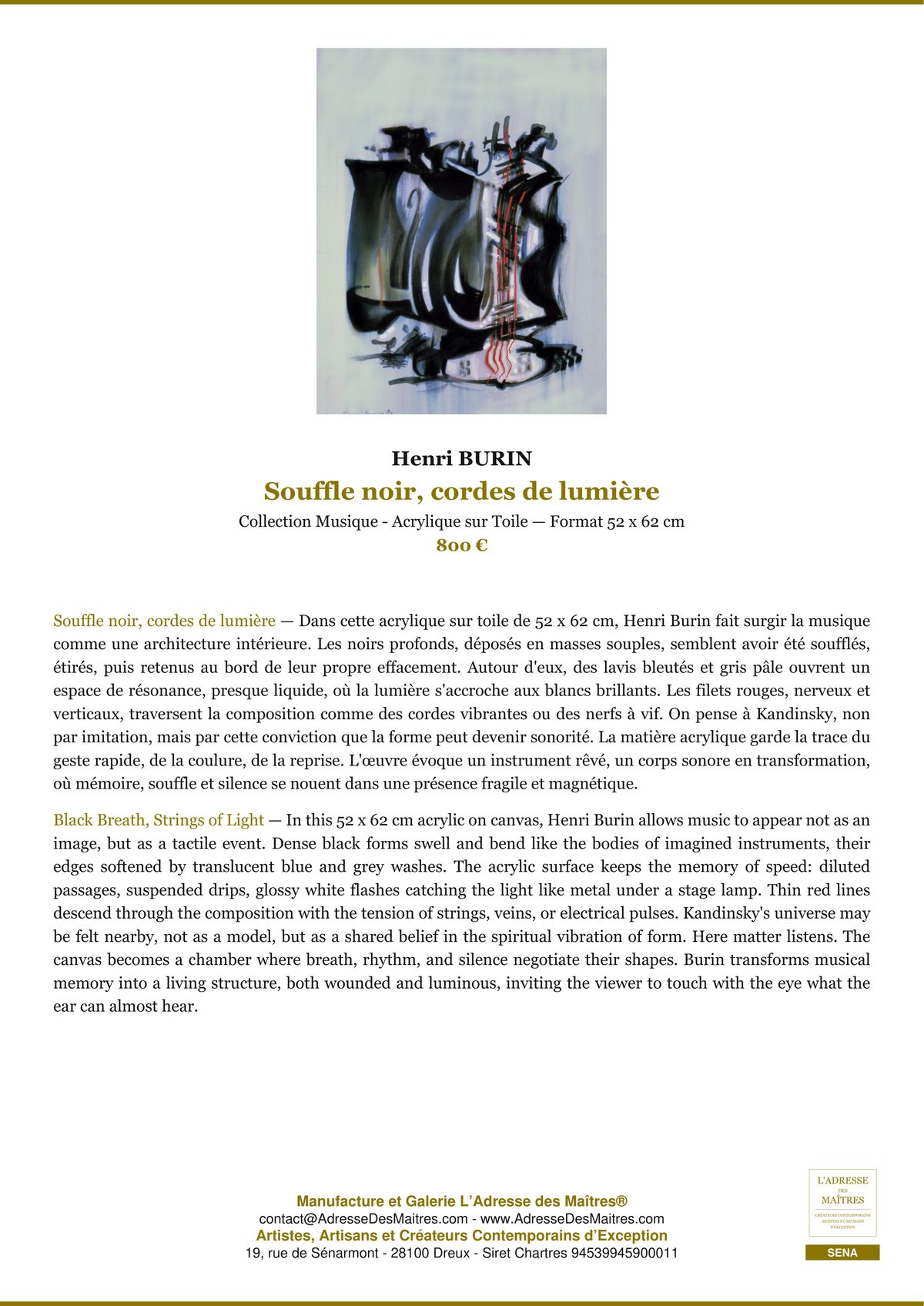
Henri BURIN presents 40 acrylic paintings, including “La contrebasse rêve sous rideau.” Acrylic, with its modern technique and versatility, plays an important role in contemporary art. In the context of contemporary portraiture, it serves as a reminder that figurative representation does not depend solely on traditional media but is also being revitalized through newer materials.
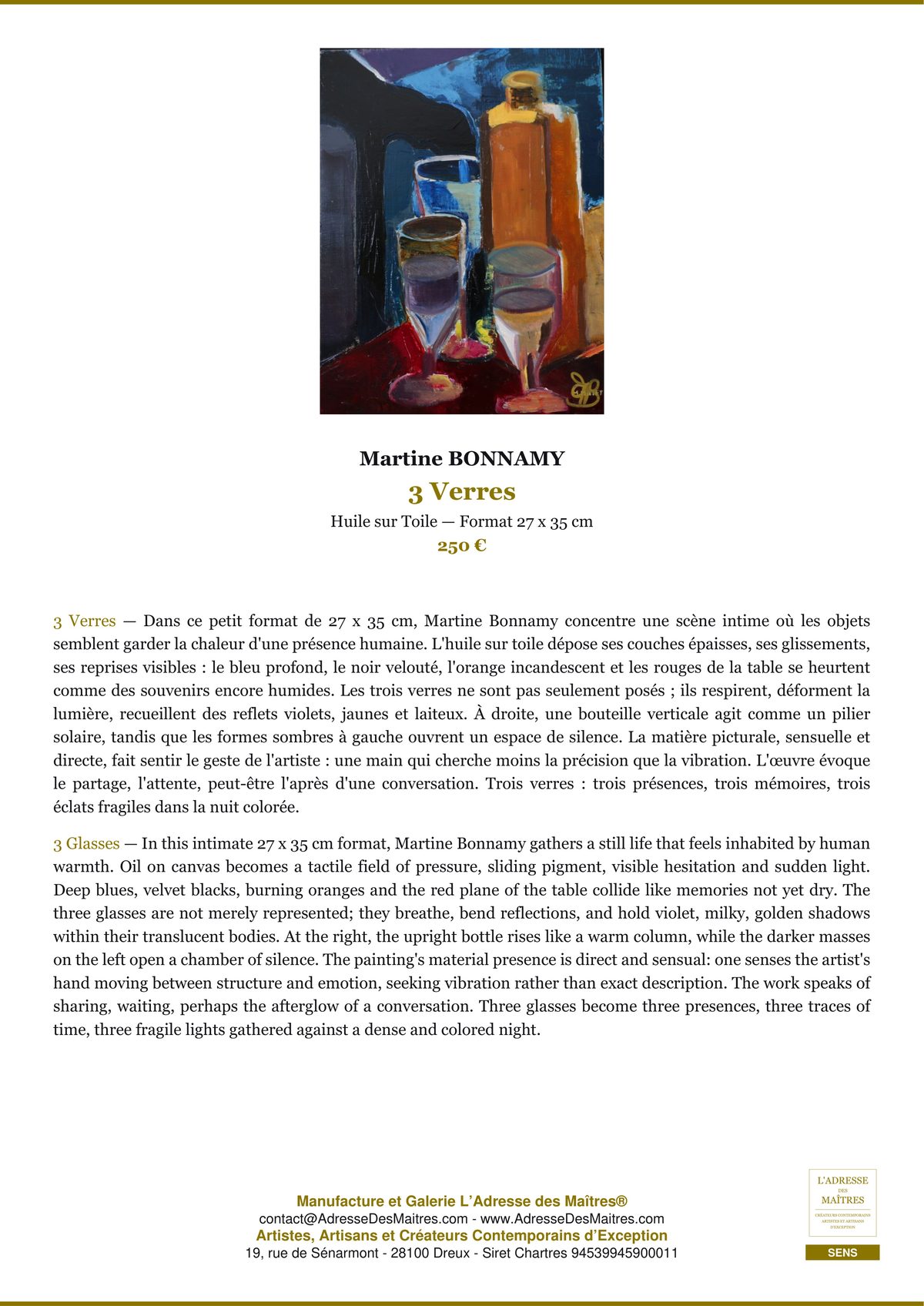
Martine BONNAMY has created 35 oil paintings, including “Céruléenne, mémoire d’un rivage.” Her inclusion in this discussion highlights the enduring presence of oil painting in contemporary artistic practice. This technique, historically associated with grand portraiture, remains today a preferred medium for lending depth to subjects and pictorial atmospheres.
Joëlle METZGER-REVERDI is represented by 21 oil paintings, including “Visage de braise intérieure.” This title explicitly places the question of the face at the heart of how the work is perceived. In a reflection on figurative art depicting the face, this title highlights oil painting’s ability to convey an inner intensity and an embodied presence.
Sylvia BEAUCHAIN presents 14 oil paintings, including “La mémoire des courants.” Through her use of oil paint, her work also contributes to the continued presence of classical techniques in contemporary art. Within the broader field of portraiture and representation, this technical continuity demonstrates that modernity does not necessarily mean abandoning traditional media, but rather reimagining them.
Commissioned Portraits Today: Between Tradition and Modernity
Commissioned portraits haven’t disappeared. They’ve simply changed in form and meaning. Once reserved for the powerful, noble families, or the upper middle class, they are now sought after by collectors, families, companies, institutions, and individuals who wish to preserve an artistic record of a person. Commissioning a contemporary portrait isn’t just about asking for a likeness; it’s about choosing an artist’s perspective.
The commission can be very traditional, with a pose, setting, and composition rooted in art history. It can also be decidedly modern: a fragmented, symbolic, expressionist, photographic, digital, or hybrid portrait. The artist may draw on posing sessions, photographs, discussions with the client, or biographical details. The result is thus a convergence of personal history and artistic expression.
In this context, portrait painting retains a special power. In the age of instant images, owning a painted portrait is like slowing down time. The work imposes a duration: that of the gaze, of the material, of the creation, and of the transmission. It can become a family heirloom, a marker of memory, or a centerpiece in a collection.
Collecting a portrait: a powerful symbol and a personal investment
Collecting a contemporary portrait is very different from purchasing a purely decorative work of art. A portrait establishes a connection. It creates a presence in a living space. Even when the subject is unknown, the face depicted draws the eye, raises questions, and creates a silent dialogue with the viewer. That is why a portrait can become one of the most powerful works in a collection.
On a symbolic level, the portrait expresses an appreciation for humanity, for memory, and for the complexity of identities. On an artistic level, it allows us to trace the evolution of figurative portraiture, from classical techniques such as oil painting to the most experimental contemporary approaches. On a personal level, it can resonate with a personal story, a sense of admiration, a quest for representation, or a connection to a presence.
The contemporary portrait thus remains an essential genre, capable of connecting Egyptian pharaohs, Renaissance masters, the photographic revolution, and digital selfies. It bears witness to a universal human constant: the need to give form to a face, an identity, and a memory. In galleries, museums, and private collections, it continues to pose a simple yet profound question: What does it mean to be seen?
Check out our gallery
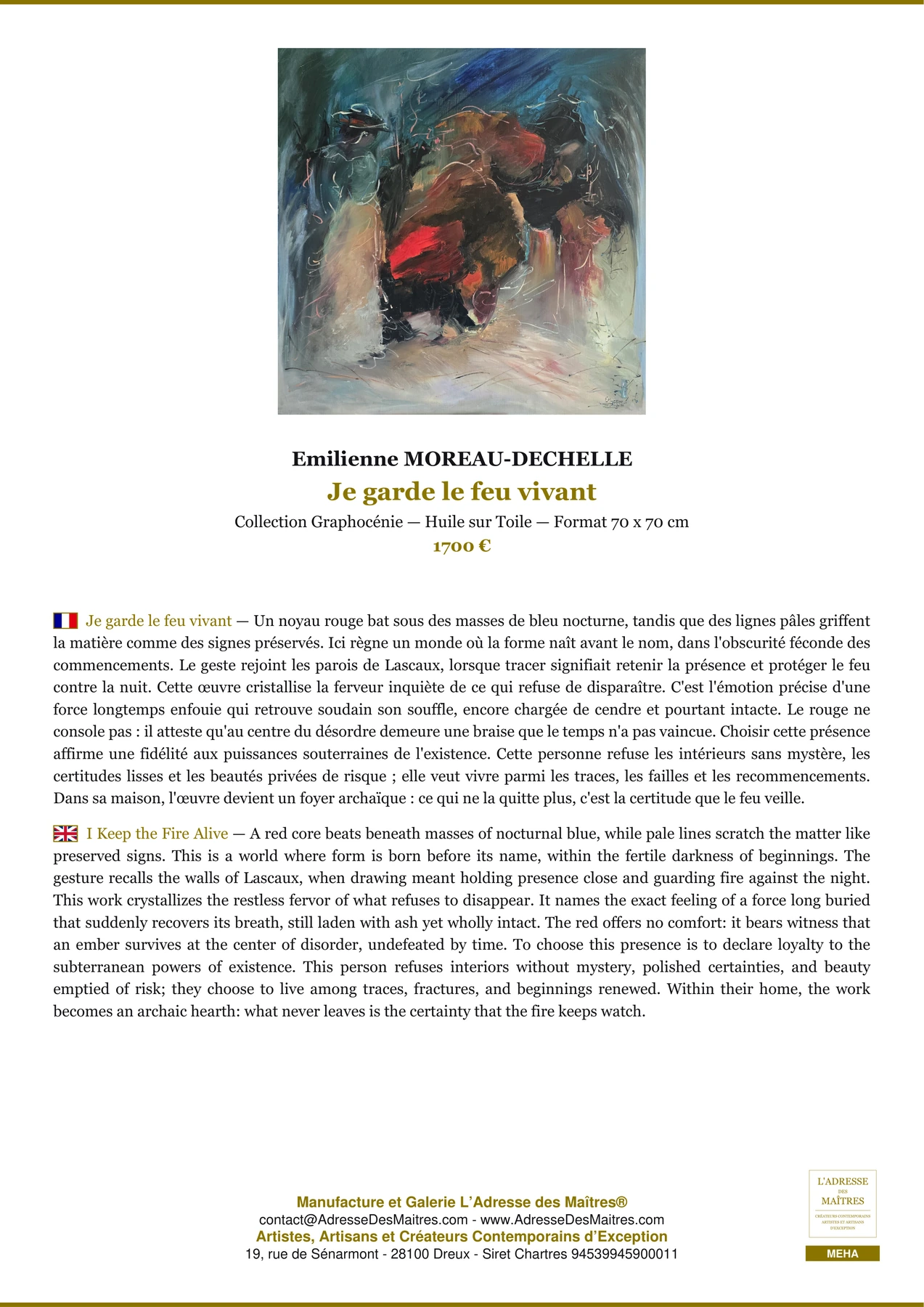
Would you like to experience these artistic movements in person? Visit the online gallery of L’Adresse des Maîtres®—more than 606 original works by contemporary artists.

Leave a comment