Acrylic Painting — Contemporary Art
↓ Share this articleAcrylic Painting: A Major Technique in Contemporary Art
In the vibrant world of contemporary art,acrylic painting plays a vital role. Flexible, vibrant, accessible, and extremely versatile, acrylic paint allows artists to explore not only pure color but also textural effects, transparencies, layering, and spontaneous brushstrokes. At the L’Adresse des Maîtres® Art Gallery in Dreux, this medium is prominently featured with 90 works, notably through the art of Cathy LEDOUX, whose visual world showcases the full expressive richness of acrylics.
Often associated with modernity, acrylic painting appeals to artists because it dries quickly, offers intense colors, and can be applied to a wide variety of surfaces. Whether on canvas, wood, paper, cardboard, or composite panels, acrylic paint transcends the traditional boundaries of painting. It thus allows contemporary artists to create works in which the freedom of the brushstroke interacts with a mastery of composition.
What is Acrylic Painting?
Acrylic painting refers to a painting technique that uses pigments mixed with a water-soluble synthetic resin. Unlike oil painting, which requires solvents and often has a long drying time, acrylic paint dries quickly and allows for a high degree of spontaneity. This characteristic makes it a preferred medium for artists who wish to build up layers, quickly revise a form, or incorporate textural effects.
Although acrylic painting may seem accessible at first glance, it is nonetheless a demanding technique. Because it dries quickly, it requires a certain degree of confidence in one’s brushwork. The artist must anticipate color mixtures, transitions, and balances. It can be used very thinly, much like watercolor, or, conversely, applied in thick layers to create textures reminiscent of sculpted material. It is this versatility that explains its enduring success incontemporary art.
Acrylic paint also produces vivid, luminous, and stable colors. The colors generally retain their intensity over time, making this a technique prized by collectors and artists alike. Acrylic paint also allows for the addition of mediums such as gels, texturing pastes, drying retarders, and matte or glossy varnishes. These tools further expand the range of possibilities and help give each work a unique visual identity.
A recent but pivotal chapter in modern art
Compared to oil painting or fresco, acrylic painting is a relatively recent technique. It developed primarily in the 20th century, stemming from industrial research into polymers and synthetic resins. In the 1950s and 1960s, it quickly attracted the attention of modern artists, particularly in the United States, where abstract painters and Pop Art artists adopted it for its brilliance, clarity, and ease of use.
Large formats, solid blocks of color, dynamic compositions, and gestural experimentation find a valuable ally in acrylic paint. It accompanies the evolution of painting toward freer, more direct, and sometimes more radical forms. Artists see it not only as an alternative to the constraints of oil paint, but also as a way to ground their practice in their era—an era of speed, technical innovation, and a broader range of materials.
Over the decades, acrylic painting has established itself in studios, art schools, and collections. It has become a language in its own right, capable of serving both figurative and abstract art. In an art gallery, it offers the viewer an immediate experience: color captures the attention, the texture reveals the artist’s touch, and the surface bears the traces of the creative process.
Acrylic in Contemporary Art: Freedom, Material, and Emotion
Incontemporary art, acrylic is rarely used simply as a substitute for oil. It has its own logic, its own qualities, and its own effects. Contemporary artists use it to create vibrant works—sometimes highly graphic, sometimes deeply atmospheric. It allows for a wide variety of styles: lyrical abstraction, intuitive painting, contemporary expressionism, reimagined landscapes, stylized portraits, and symbolic or narrative compositions.
The speed with which it is applied fosters a direct connection between emotion and the canvas. The artist can work on impulse, capture an intuition, and layer successive impressions. This immediacy often gives acrylic works a unique energy. The viewer perceives the movement, the decision, and sometimes even hesitation that has taken on a form of its own. Acrylic makes the fleeting moment of creation visible while producing a lasting work of art.
It is also widely used in mixed-media practices. Collage, drawing, ink, pastel, markers, metallic foil, sand, and textiles can all be combined with acrylic. This versatility aligns perfectly with the contemporary spirit, where the boundaries between techniques are often challenged. Artists no longer limit themselves to a single medium; instead, they construct an image by combining different artistic languages, textures, and materials.
Cathy LEDOUX and Acrylic Painting in Dreux
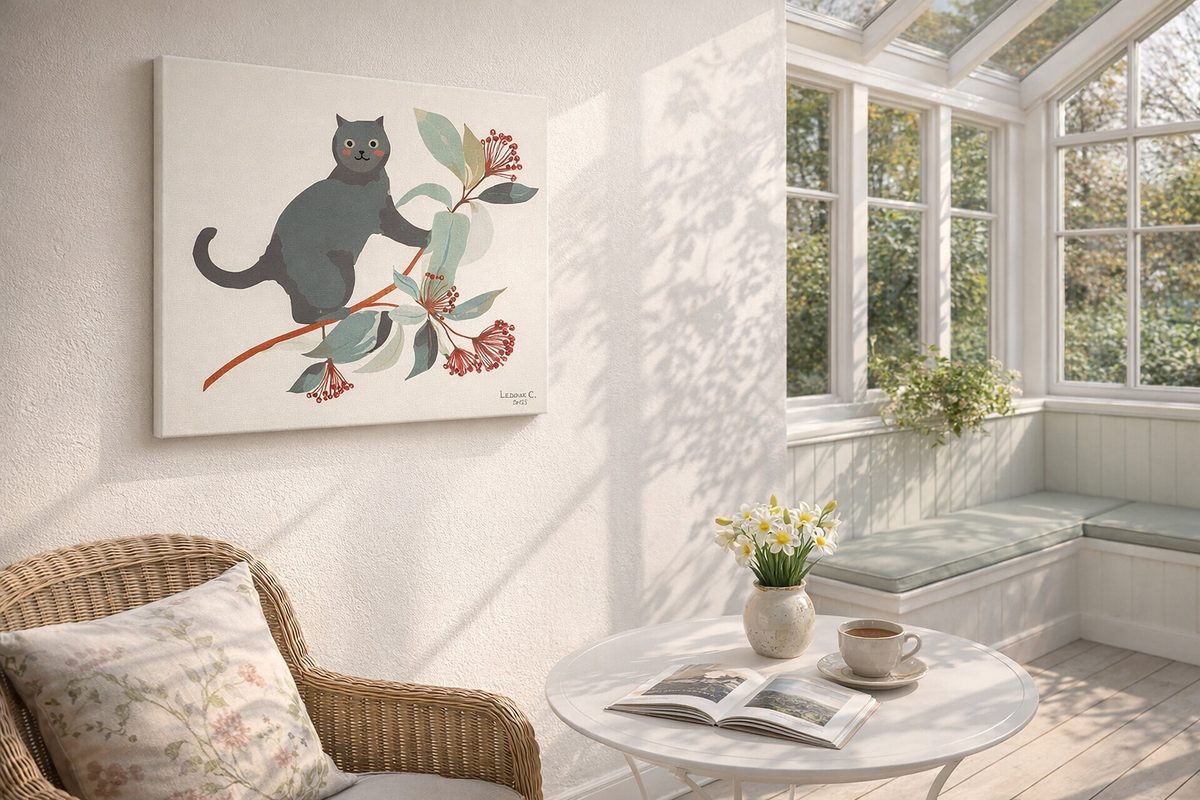
At the L’Adresse des Maîtres® Art Gallery in Dreux, acrylic painting is represented by 90 works—a significant collection that underscores the importance of this technique in the gallery’s artistic selection. Among the featured artists, Cathy LEDOUX stands out. Her work illustrates acrylic’s ability to combine visual intensity, personal sensitivity, and formal composition.
For Cathy LEDOUX, acrylic painting becomes a medium of expression in which color plays a central role. Shades, contrasts, and chromatic rhythms all contribute to the work’s presence. Acrylic allows her to work in layers, intensify certain areas, soften others, and create depth or visual tension. This technique supports a contemporary approach in which the medium is not merely a tool, but a major expressive element.
The viewer is invited to step closer to observe the details, the variations in the surface, the layers, and the traces of the artist’s brushstrokes. Then, to step back to take in the overall balance of the composition. This dual perspective is one of the strengths of Acrylic Painting: it offers both the immediate impact of color and the richness of a more leisurely exploration.
Why collect an acrylic painting?
Choosing an acrylic painting means embracing a decidedly contemporary aesthetic. Acrylic paintings have a strong, often luminous visual presence that fits just as well in a modern interior as in a more traditional space. They bring energy, vibrancy, and sometimes a bold use of color that can transform the atmosphere of a room.
For collectors, acrylic paint also offers significant practical advantages. Its stability, durability, and versatility make it a long-lasting medium. But beyond these material aspects, what truly matters is the emotion evoked by the artwork. A successful acrylic painting is more than just a technical achievement: it conveys a vision, a sensibility, and a unique relationship with the world.
In a city like Dreux, the presence of a gallery dedicated to contemporary art allows art lovers, collectors, and curious visitors to discover current artistic trends without having to travel exclusively to major urban centers. The L’Adresse des Maîtres® Art Gallery in Dreux thus helps promote art that is vibrant, accessible, and sophisticated.
A living art form in the service of contemporary creation
Acrylic painting has established itself as one of the most representative mediums of contemporary art. Its recent history, flexibility, and expressive power make it a technique particularly well-suited to today’s artistic explorations. It allows artists to paint quickly or slowly, with transparency or in thick layers, through spontaneous gestures or precise composition.
Through the works of Cathy LEDOUX and a collection of 90 pieces created using this technique, visitors can appreciate the full scope of this pictorial language. Blending color, texture, and emotion, acrylic painting reaffirms its central place incontemporary art and in the eyes of art lovers in Dreux.
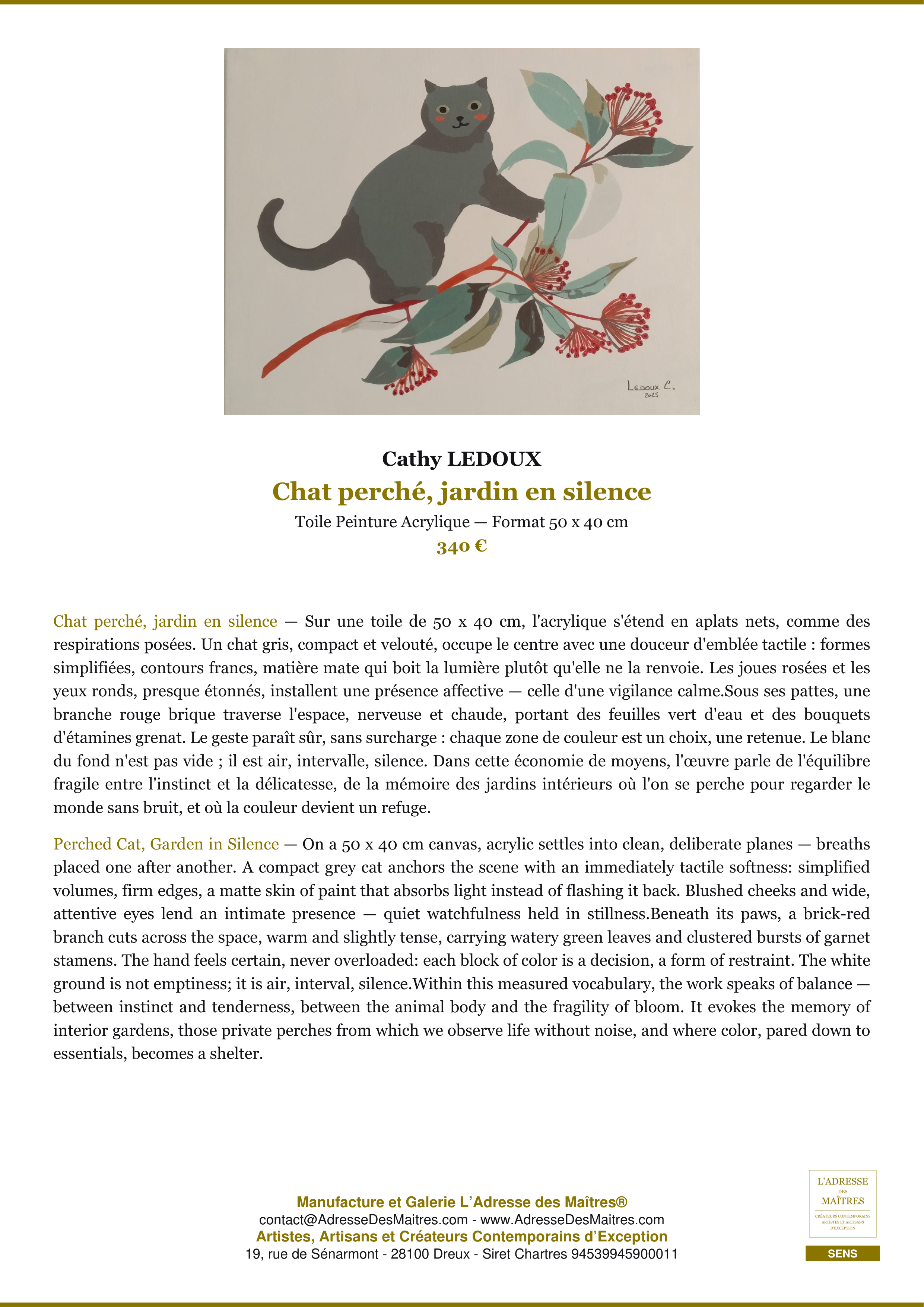
Découvrez 159 œuvres en Acrylic Painting dans notre galerie en ligne.



Leave a comment