
Expressionism — Raw Emotion on Canvas
↓ Share this articleExpressionism: an art of emotion, tension, and color
Expressionism is one of the major artistic movements that transformed modern painting. Emerging in the early 20th century, it places at the center of the artwork not a faithful reproduction of reality, but the intensity of inner experience. In an Expressionist painting, forms may be distorted, colors exaggerated, faces unsettling, and landscapes charged with anxiety or a sense of vitality. The goal is not to show the world as it is, but as it is felt.
This movement has had several incarnations: first in Germany and Austria, then in Americancontemporary art with Abstract Expressionism, before reemerging in a renewed form in the Neo-Expressionism of the 1980s. Even today, the Expressionist legacy remains very much alive in galleries, where one finds works rooted in materiality, gesture, poetic tension, and emotional intensity.
The Birth of Expressionism in Germany: Die Brücke and Der Blaue Reiter
Expressionism emerged in Germany in the early 20th century, against a backdrop of social, industrial, and cultural upheaval. Many young artists at the time rejected academicism, naturalism, and overly conventional painting. They sought an art form that was more direct, more dynamic, and more authentic in its emotional intensity.
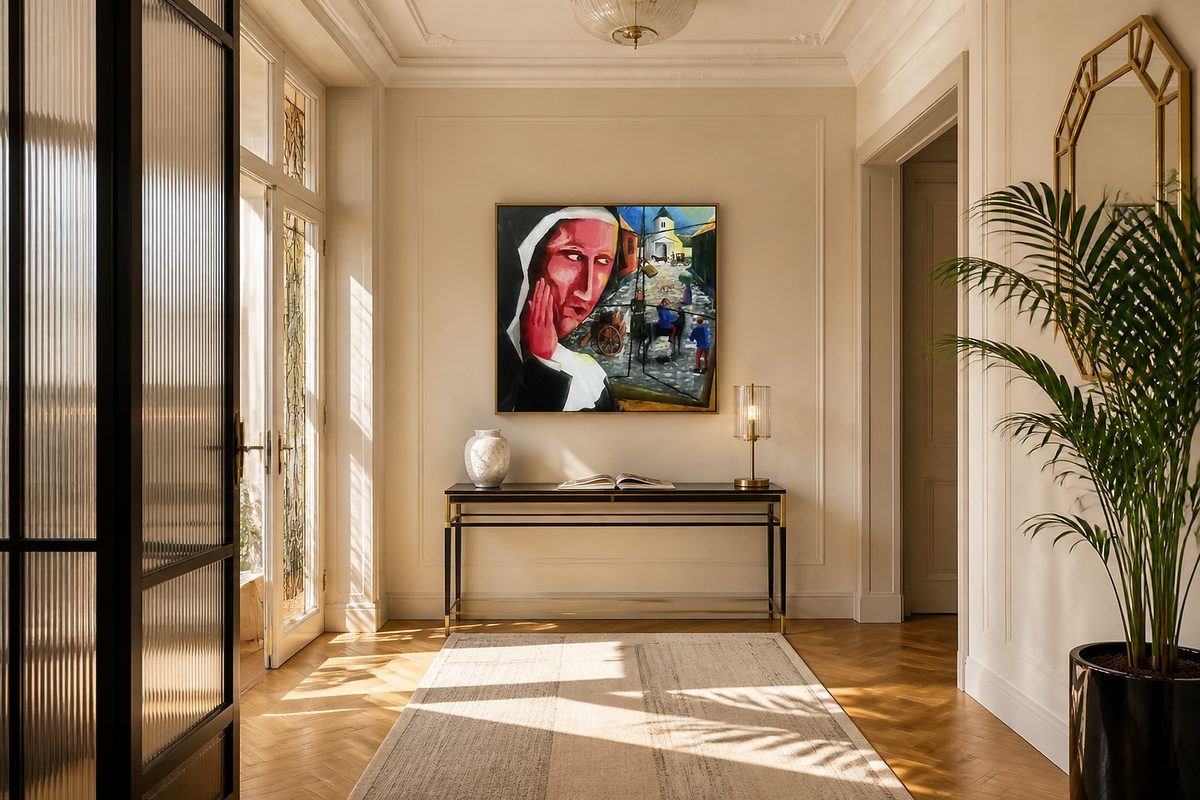
The first major group was Die Brücke (“The Bridge”), founded in Dresden in 1905. Its artists sought to build a bridge between the art of the past and that of the future. Their paintings are characterized by bold outlines, vivid colors, simplified forms, and an often brutal treatment of the human figure. Urban scenes, nudes, landscapes, and portraits became grounds for emotional experimentation.
A second major center emerged in Munich with *Der Blaue Reiter* (“The Blue Rider”), founded in 1911. This group placed great emphasis on the spiritual dimension of art. Whereas *Die Brücke* developed a harsher, more direct energy, *Der Blaue Reiter* paved the way for a more symbolic style of painting, freer in its use of color and at times already verging on abstraction. This stage is fundamental, as it demonstrates that Expressionism is not limited to visible distortion: it can also become an inner language, almost musical in nature.
Expressionist Austria: Schiele and Kokoschka
In Austria, Expressionism took on a particularly intense character through artists such as Egon Schiele and Oskar Kokoschka. In their work, the human figure became the focus of a radical psychological exploration. The bodies are tense, nervous, and sometimes angular; the gazes are filled with anxiety, desire, fragility, or inner violence.
Schiele is famous for his portraits and self-portraits of unsettling intensity. The lines are incisive, the poses often unstable, and the body seems to lay bare its most vulnerable truth. Kokoschka, for his part, developed a highly expressive style of painting, in which the pictorial material plays a full part in the emotional intensity. Both artists demonstrate that Austrian Expressionism does not seek merely to shock the viewer visually: it aims to reveal the deep-seated tensions of the human condition.
The main characteristics of Expressionist painting
Recognizing an Expressionist painting requires an understanding of its visual codes. The first striking feature is distortion. Proportions may be deliberately altered, perspectives unbalanced, and faces elongated or fragmented. This distortion is not a sign of clumsiness: it serves to convey a sensation, anxiety, energy, or inner conflict.
Second characteristic: intense colors. Expressionism readily employs fiery reds, electric blues, acid greens, raw yellows, and deep blacks. These colors do not necessarily aim for realism. They serve an emotional, dramatic, and symbolic purpose.
The third fundamental element: the primacy of emotional expression. In this movement, fidelity to reality takes a back seat to the power of emotion. The subject may be a portrait, a landscape, a street scene, or even a non-figurative composition; what matters is the inner tension it conveys.
Finally, the brushstroke itself is often energetic, visible, swift, and sometimes thick. The painter’s gesture leaves a mark. This presence of the gesture also foreshadows certain major developments incontemporary art.
From Early Expressionism to American Abstract Expressionism
Following the early German and Austrian generations, the Expressionist movement continued to evolve. In the mid-20th century, it found new vitality in the United States withAbstract Expressionism. Here, references to the visible world often gave way to gesture, material, and pictorial space.
Jackson Pollock is one of the most famous figures in this movement. With his technique of splashing and dripping paint, he transformed the canvas into a field of action. Painting is no longer merely an image: it becomes an event, a trace of energy in motion. In Pollock’s work, the legacy of Expressionism lies in the intensity of the gesture and in the desire to evoke an immediate emotional experience.
Willem de Kooning, another major figure, often maintains a more visible connection to the figure, but within powerfully deconstructed compositions. His work perfectly illustrates how expressionism can thrive within a language that is both figurative and abstract. In his work, forms vibrate, collide, and dissolve, without ever losing their emotional intensity.
Abstract Expressionism marked a decisive turning point: emotion is no longer conveyed solely through the depiction of a distorted subject, but through the very dynamics of the painting itself. Gesture, texture, surface, and rhythm become the primary vehicles of expression.
Neo-Expressionism of the 1980s: The Return of the Figure and Urgency
In the 1980s, Neo-Expressionism restored the figure, fragmented narrative, and a deliberately free, rough, and sometimes provocative style of painting to center stage. This movement was partly a reaction against more conceptual or detached forms of art. It called for a return to subjectivity, materiality, and the physical presence of the painting.
Jean-Michel Basquiat embodies this new energy. His visual vocabulary blends text, symbols, silhouettes, anatomical fragments, and cultural references into a style of painting that is both spontaneous and carefully constructed. His work demonstrates how the legacy of Expressionism can be combined with urban culture, social criticism, and a highly personal artistic style.
Georg Baselitz, another key figure, approaches painting with a marked gestural force and a tense relationship to the human form. His works remind us that Neo-Expressionism is not merely a repetition of the past: it reactivates the expressive power of the image within a new historical and aesthetic context.
How can you recognize an expressionist style?
To identify an Expressionist style, you need to look beyond the subject being depicted. Ask yourself a few simple questions. Are the forms faithful to reality, or deliberately distorted? Does the color seem descriptive, or emotional? Is the brushwork smooth, or, on the contrary, energetic, thick, and visible? Does the work seek to soothe, or to evoke a sense of tension?
An expressionist painting is often recognizable by its intensity. Even when it is quiet or poetic, it seems to carry an inner vibration. The lines may be incisive, the contrasts sharp, and the composition unstable. One senses that the artist does not merely wish to depict, but to convey a state of mind, a sense of urgency, a memory, or an emotional outburst.
It is also important to remember that Expressionism is not a uniform style. It can be figurative or nearly abstract, violent or meditative, dark or luminous. What unites its various forms is the priority given to inner experience over external resemblance.
Expressionism in Contemporary Galleries Today
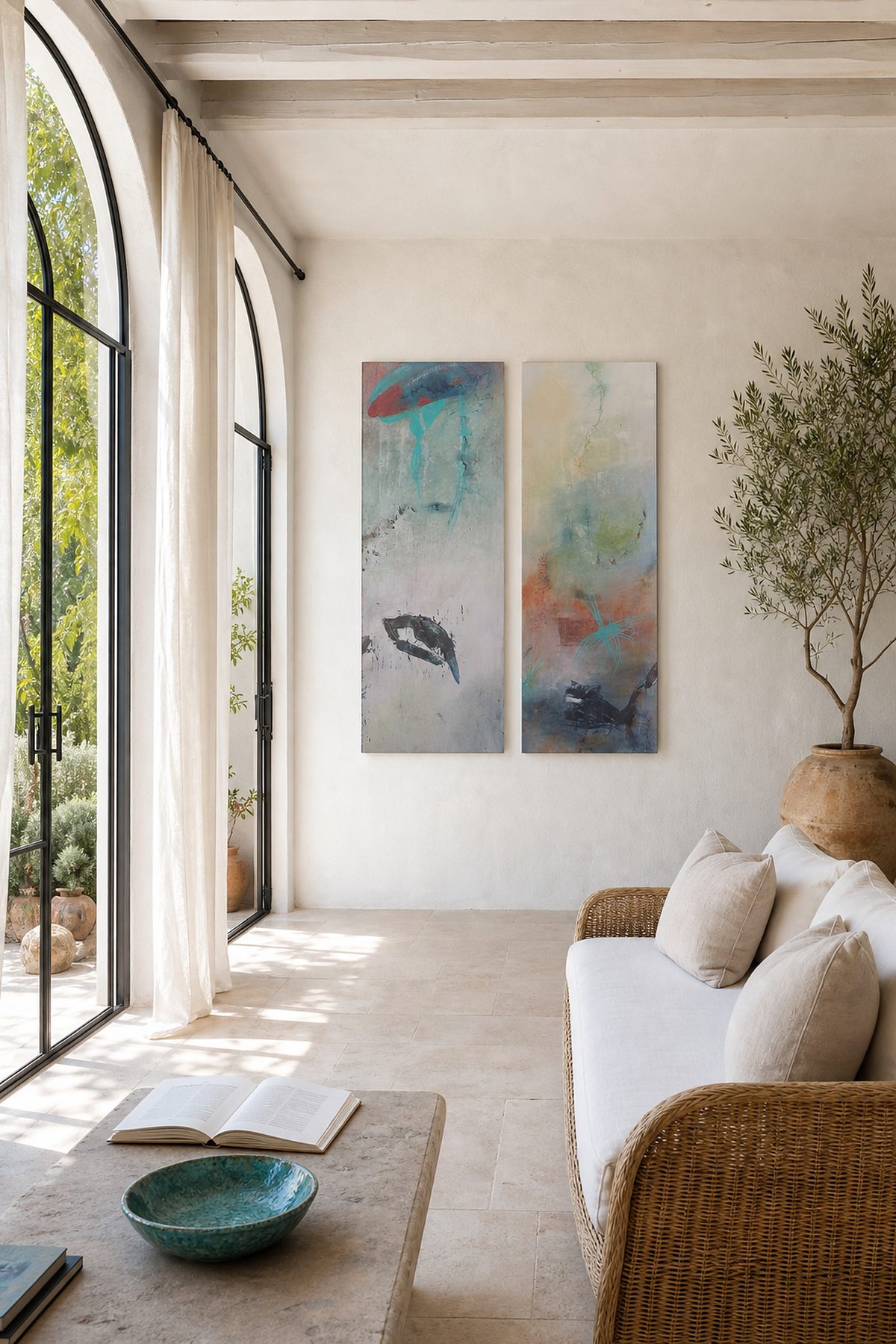
In today’s galleries, the legacy ofExpressionism remains very much alive. Many contemporary artists work with materials, color, layering, gesture, and poetic tension in ways that carry on this spirit.Contemporary art does not always draw on the historical conventions of Die Brücke or Schiele, but it often retains this fundamental ambition: to give form to an inner intensity.
In this regard, the L’Adresse des Maîtres® Art Gallery in Dreux offers an intriguing vantage point for those interested in the contemporary extensions of Expressionist sensibility. Through their techniques and works, several of the artists featured in the gallery explore dimensions closely aligned with this pursuit of emotion, materiality, and inner depth.
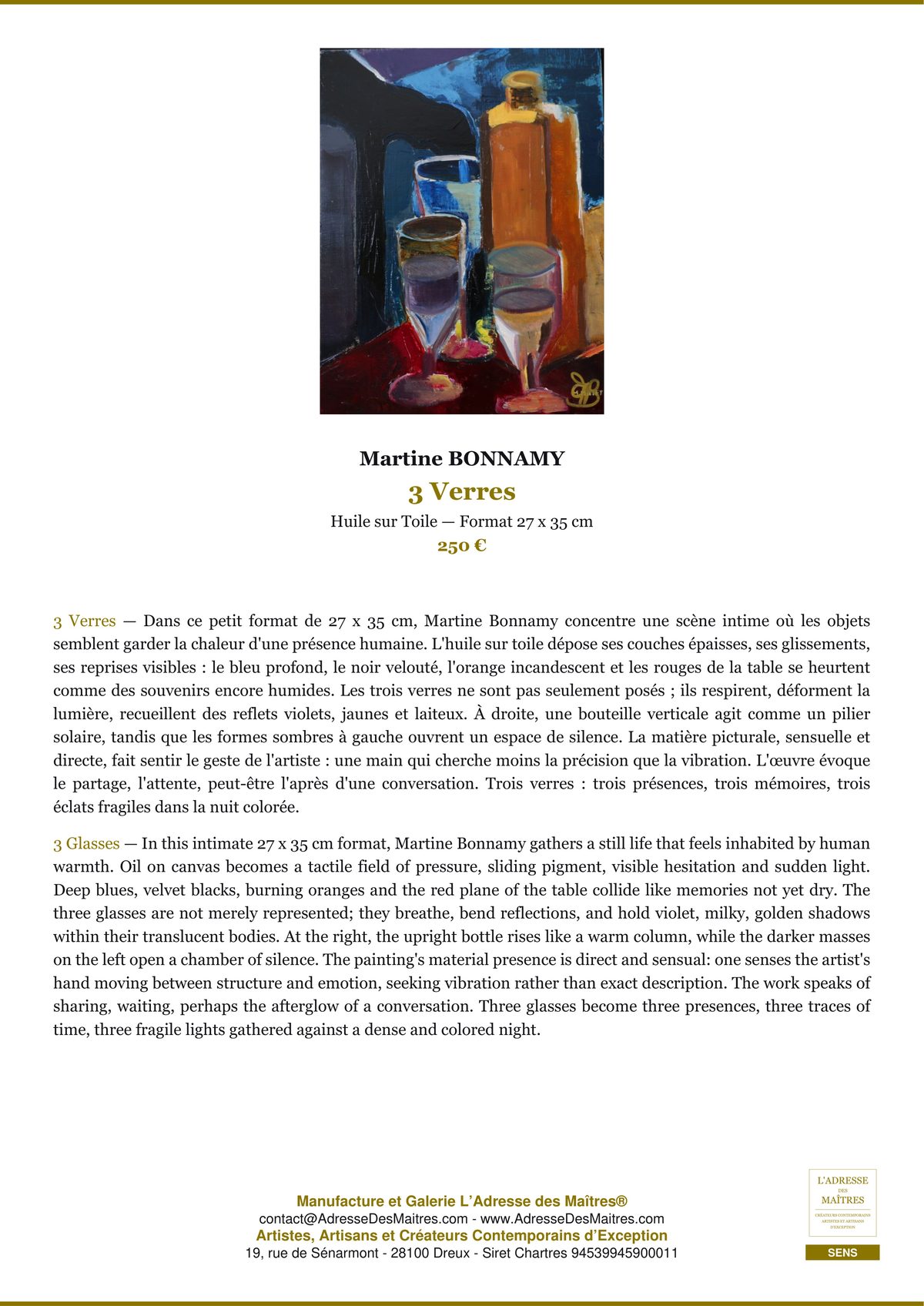
Martine BONNAMY, with 63 mixed-media works on canvas, including *Herbes de lumière, mémoire noire*, offers an approach in which mixed media creates a space of tension between texture, memory, and sensation. From an expressionist perspective, this type of practice can enhance the emotional depth of the image and highlight the importance of the surface as a site of experience.
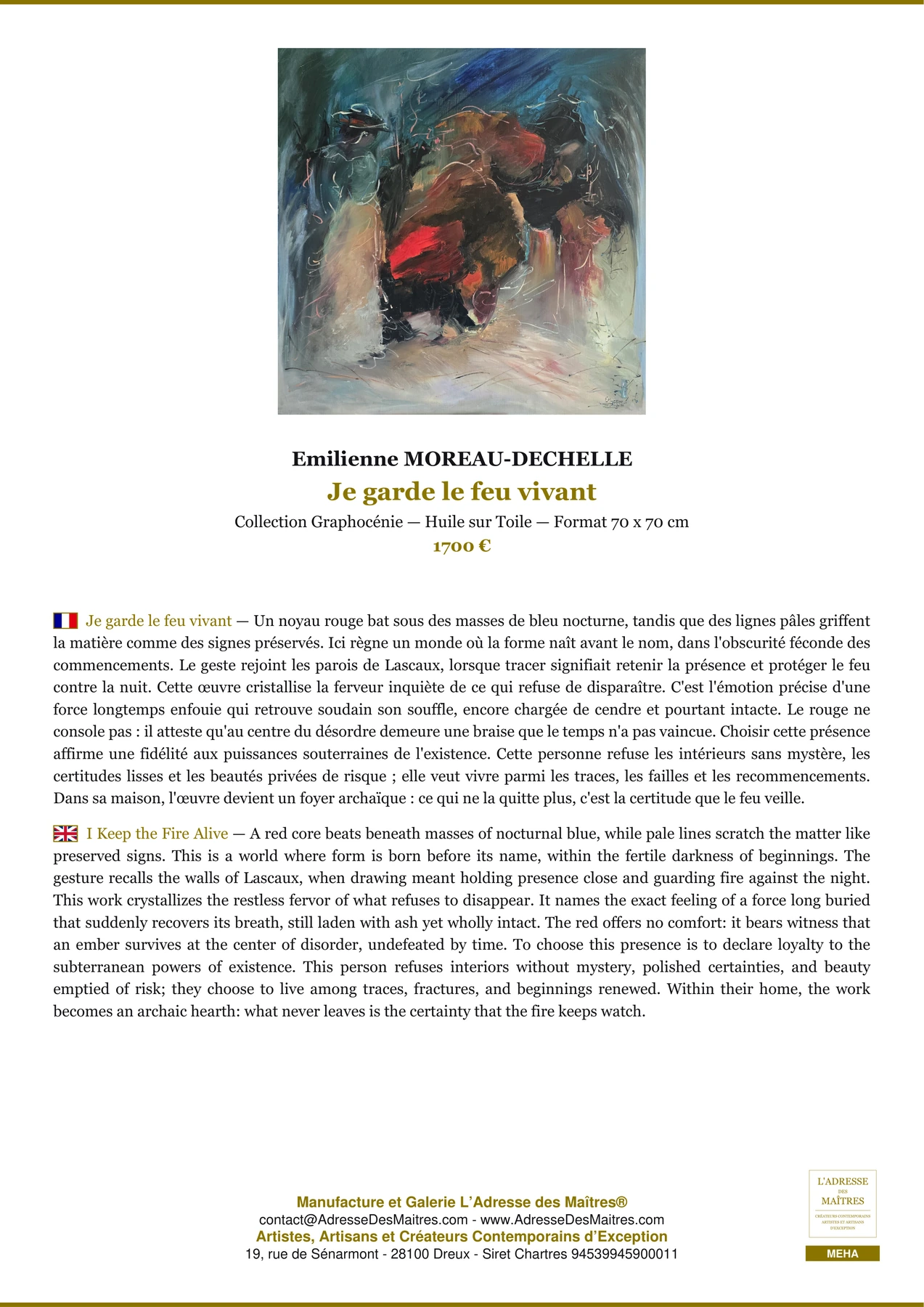
Emilienne MOREAU-DECHELLE, with 41 oil paintings, including *Passage sous les braises*, employs oil painting—a medium historically suited to chromatic depth and the intensity of the material—as her medium. The title alone evokes a powerful emotional charge, resonating with the Expressionist notion of an emotional and incandescent passage.
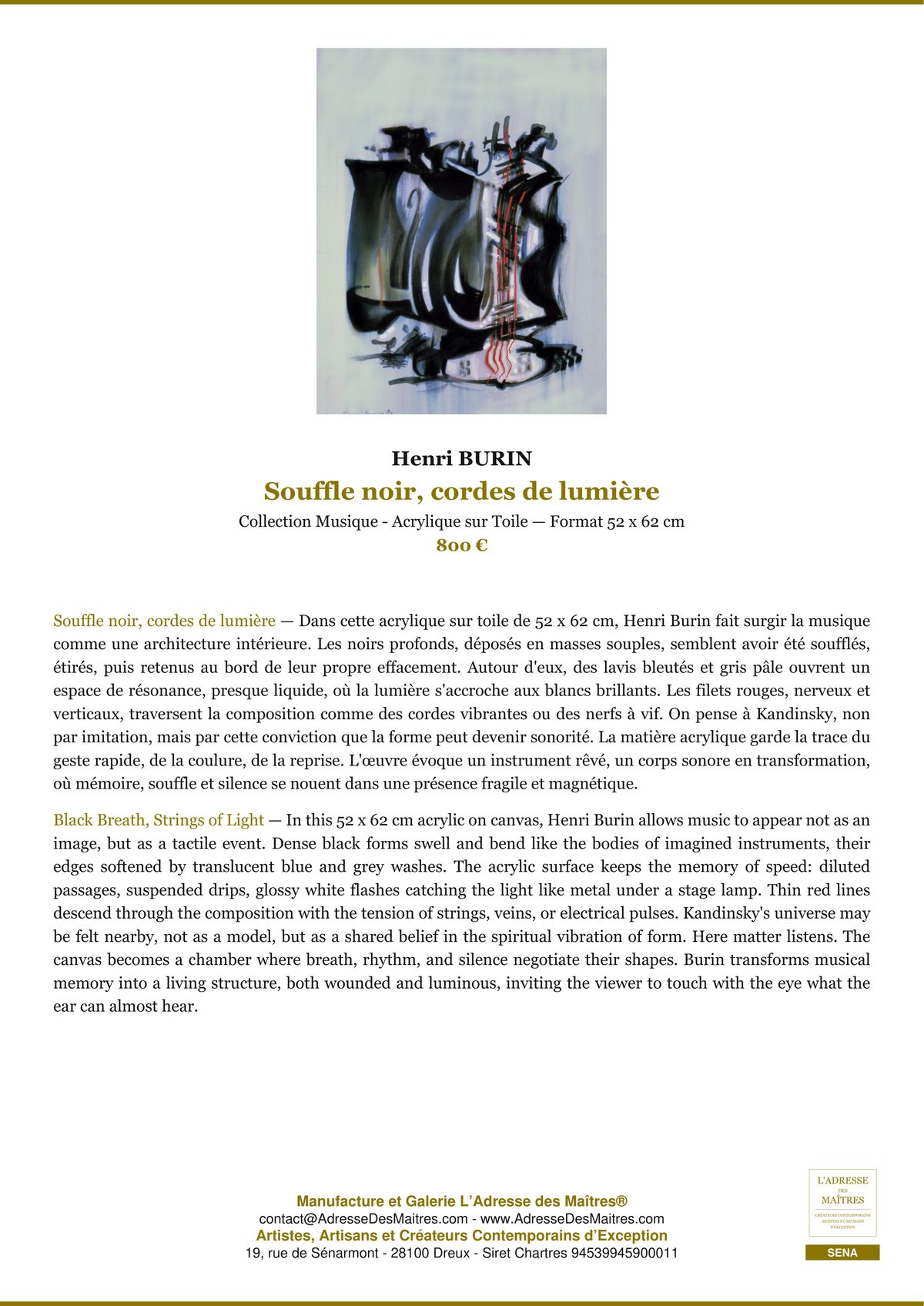
Henri BURIN, with 40 acrylic paintings, including *La contrebasse rêve sous rideau*, demonstrates how acrylic can convey a direct pictorial presence. Viewed through an expressionist lens, this body of work reminds us that painting can create a dialogue between visual tension, poetic suggestion, and compositional freedom.
Sylvia BEAUCHAIN, with 14 oil paintings, including *La mémoire des courants*, contributes to this sensibility through an approach to oil painting that captures the resonance, fluidity, and depth of inner time. The relationship between memory and movement, suggested by the title, touches on an essential dimension of Expressionism: making visible what lies within a person rather than what is immediately apparent.
Sandrine DREANO, with 12 mixed-media works using ink and acrylic—including *Cartography of Inner Worlds*—establishes a particularly clear connection to the expressionist tradition. The use of mixed media, ink, and acrylic, as well as the concept of “inner worlds,” echoes the very essence of the movement: exploring sensitive, psychological, and emotional realms through a free, expressive artistic style.
Why Expressionism Remains Relevant Today
IfExpressionism continues to resonate with audiences today, it is because it fulfills a need that remains as vital as ever: the need to sense a human truth within the artwork. In a world saturated with polished images and standardized representations, Expressionist painting reminds us that art can be a place of intensity, vulnerability, memory, and passion.
From pioneering German groups to Austrian figures, from Pollock and Kooning to Basquiat and Baselitz, the movement has continually reinvented itself. Its influence is still evident incontemporary art, particularly in practices that emphasize subjectivity, gesture, color, and the materiality of the painting. Understanding Expressionism, therefore, means gaining a deeper appreciation of an essential part of artistic modernity—and better recognizing, in today’s galleries, works that seek less to reproduce the world than to evoke its inner experience.
Check out our gallery
Would you like to experience these artistic movements in person? Visit the online gallery of L’Adresse des Maîtres®—more than 606 original works by contemporary artists.


Leave a comment