Oil Painting — Contemporary Art
↓ Share this articleOil Painting: A Major Technique at the Heart of Contemporary Art
Among the most iconic techniques in art history, oil painting holds a special place. Often associated with the great masters of the Renaissance, classical portraits, and traditional landscapes, it remains, however, a deeply contemporary technique. In contemporary art, oil painting continues to be explored, reinterpreted, revitalized, and reinvented by artists who find exceptional creative freedom in it.
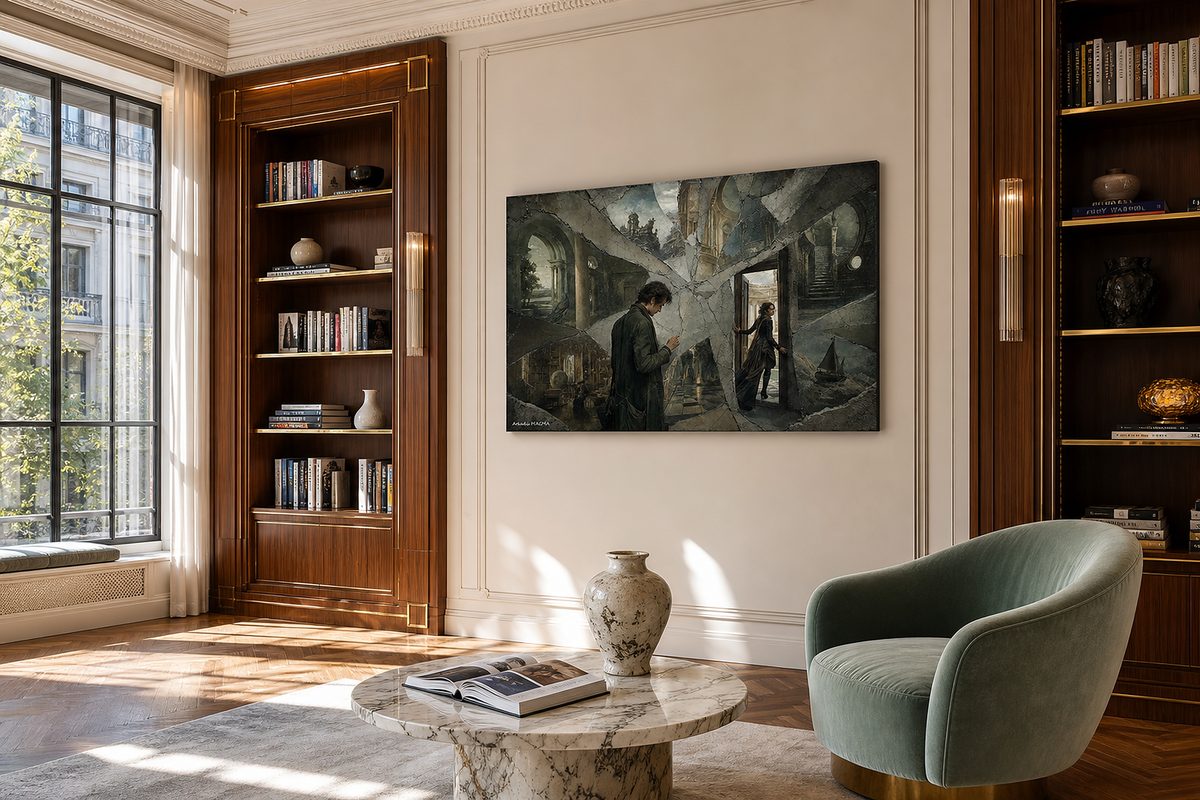
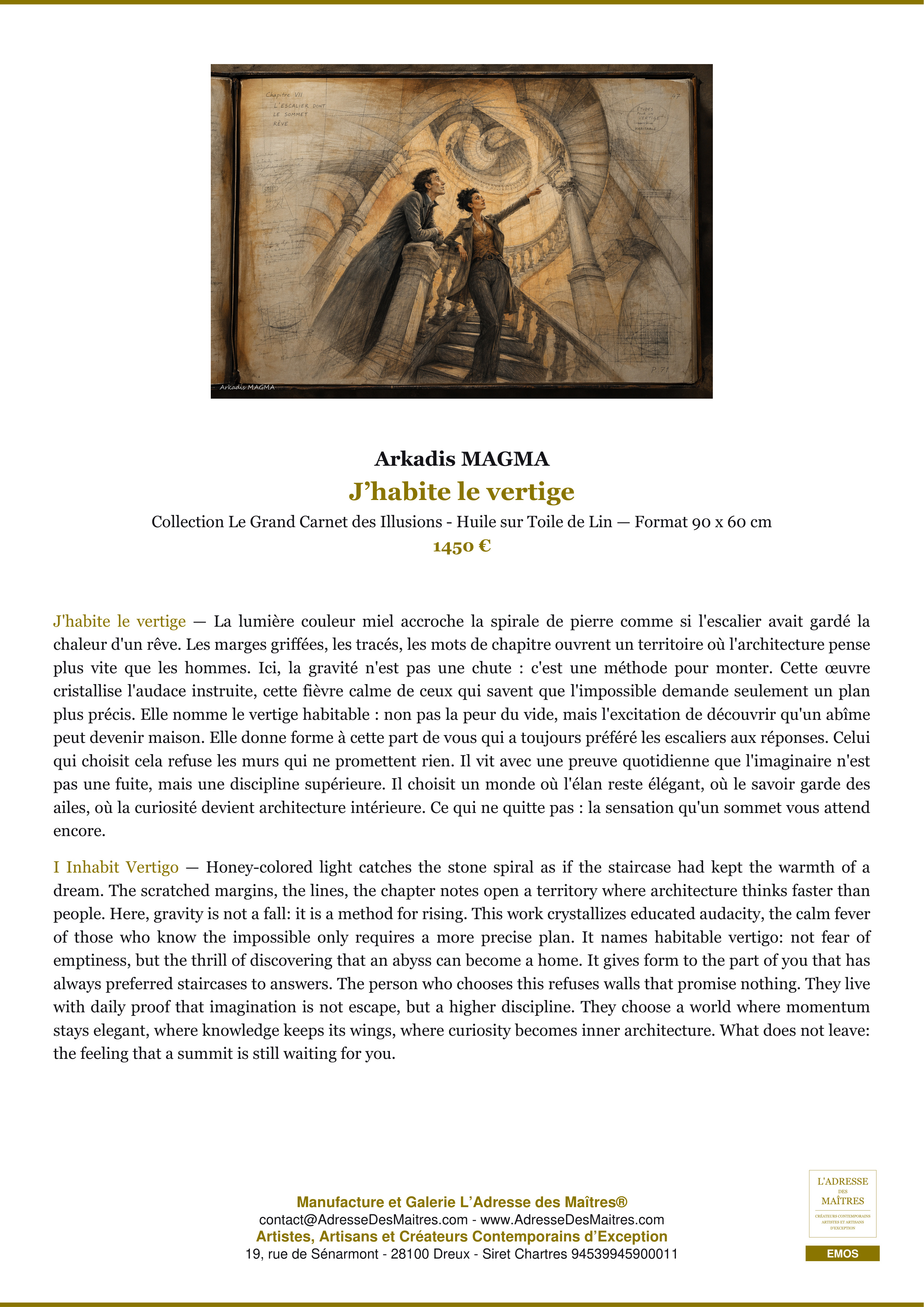
At the L’Adresse des Maîtres® Art Gallery in Dreux, this technique is particularly well represented, with 149 oil paintings on display. This number attests to the vitality of oil painting in contemporary art, as well as to the public’s interest in a rich, sensitive, and durable medium. The artist Arkadis MAGMA, represented by the gallery, is part of this vibrant tradition in which tradition and modernity engage in an intense dialogue.
Understanding the Oil Painting Technique in Simple Terms
Oil painting refers to a painting created using pigments mixed with a drying oil, typically linseed oil, walnut oil, or safflower oil. This oil serves as a binder: it allows the pigments to adhere to the surface while offering the artist great flexibility in their work. Unlike watercolor or acrylic, oil paint dries slowly. This extended drying time is one of its greatest advantages.
Thanks to this slow process, the artist can revisit a color, blend two shades, correct a shape, or gradually enrich the texture. Oil painting allows for the creation of very subtle effects of transparency, depth, and light. A work can be built up in thin layers, known as glazes, or, conversely, with a thick, almost sculptural impasto. This versatility makes the technique particularly well-suited to contemporary art, where artists often seek to transcend traditional categories.
Oil paint can be applied to canvas, wood, primed cardboard, or panels. It can be applied with a brush, a palette knife, a cloth, and sometimes even with the fingers or unconventional tools. It is a demanding technique, but a very expressive one. It allows for both precise detail and spontaneous brushwork.
A distinguished history, from the Renaissance to the avant-garde
The history of oil painting dates back a long time, although its rise in Europe was particularly marked beginning in the 15th century. Flemish painters, such as Jan van Eyck, helped perfect the technique by making the most of its qualities of transparency and luminosity. Oil painting made it possible to achieve delicate skin tones, refined drapery, and highly precise lighting effects.
During the Renaissance, it gradually became a dominant technique. Leonardo da Vinci, Titian, Rembrandt, Rubens, and Velázquez all used oil paint to create works of remarkable visual and psychological intensity. The depth of the characters’ gazes, the richness of the fabrics, and the interplay of light and shadow owe much to the possibilities offered by this medium.
In the 19th century, the Impressionists, in turn, embraced oil painting to paint more freely. Thanks to the advent of paint tubes, artists could leave the studio and paint from life. Monet, Renoir, Pissarro, and Van Gogh used oil to capture the variations in light, the emotion of a moment, and the vibrancy of a color. Oil painting thus ceased to be merely a tool for faithful representation; it became a space for experimentation.
In the 20th century, the avant-garde movements continued this transformation. Expressionism, abstraction, surrealism, and Informel art: oil painting accompanied the major upheavals of modern art. Artists no longer sought merely to represent the world, but to convey an inner vision, an energy, a tension, or a thought. This long history explains why oil painting remains a powerful medium in contemporary art today.
Oil Painting in Contemporary Art
In contemporary art, oil painting is not merely a legacy of the past. It is a living technique, often used to explore the image, memory, the body, matter, or abstraction. Some artists use it to reconnect with figurative art, while others use it to create surfaces that are almost mineral, organic, or gestural. The slow drying process then becomes a moment for reflection, a breath of fresh air in a world dominated by digital immediacy.
In an age of fast-moving images, screens, and artificial intelligence, oil painting asserts a physical presence. An oil painting is not consumed like a digital image: it is viewed in its materiality. The layers, brushstrokes, textures, transparencies, and surface imperfections reveal the creative process. The viewer perceives not only a subject, but also a gesture, a duration, and an intensity.
This physical aspect is essential in an art gallery, as it allows for a direct experience of the artwork. When standing in front of an oil painting, the light changes depending on the viewing angle. The colors take on greater depth. Details are gradually revealed. It is this sensory richness that continues to captivate collectors, art lovers, and curious visitors in Dreux and elsewhere.
Arkadis MAGMA: A Strong Presence of Oil Painting at the Gallery
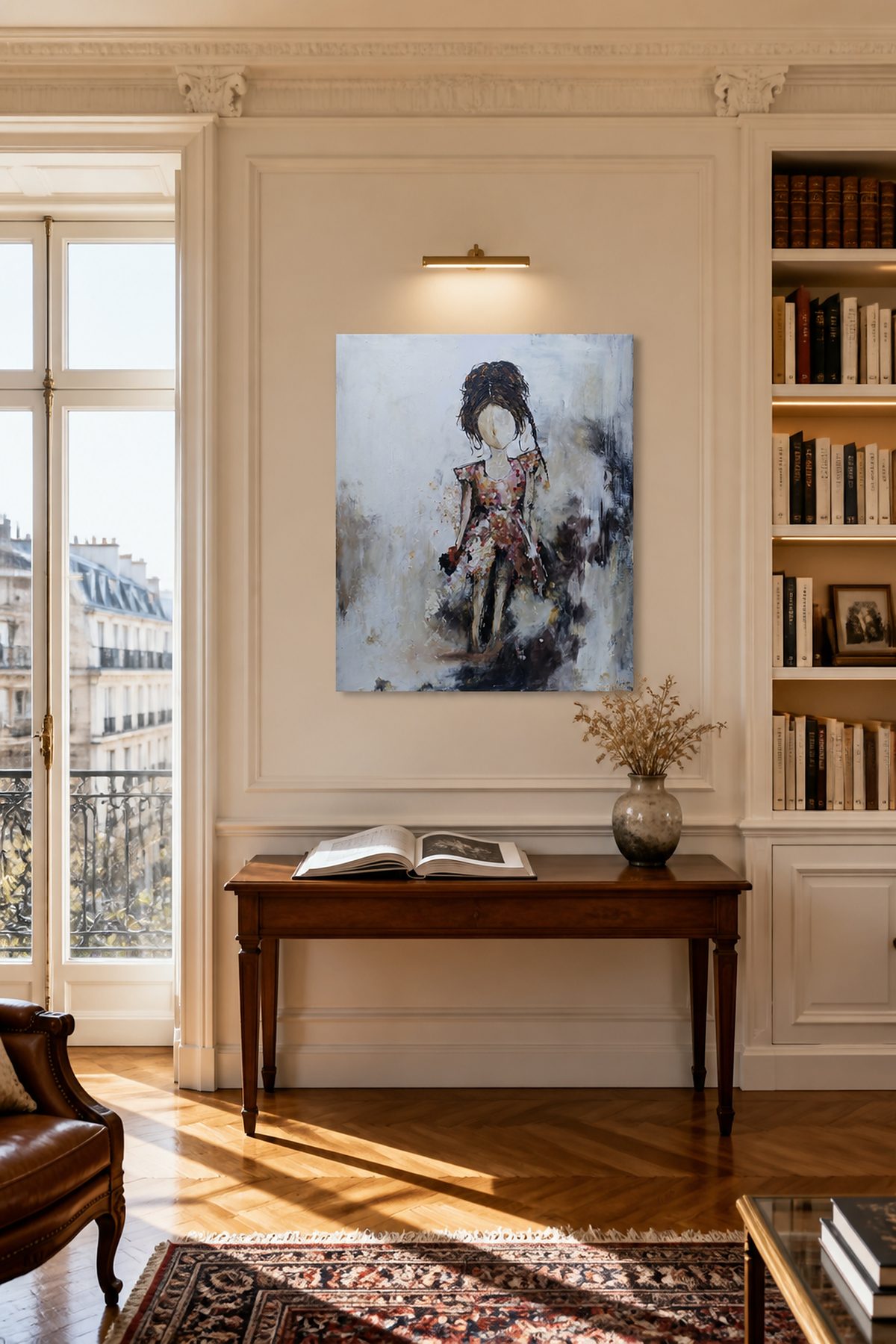
The L’Adresse des Maîtres® Art Gallery in Dreux presents 149 works created using the oil painting technique, notably through the work of Arkadis MAGMA. This artist explores the expressive power of oil painting by drawing on its qualities of texture, depth, and chromatic vibrancy. His approach highlights what makes oil painting so unique: a fusion of technical mastery and intuitive inspiration.
At Arkadis MAGMA, oil painting can be seen as a realm of intensity. The medium is not merely a means of covering the surface—it becomes a language. Colors organize themselves, respond to one another, and clash. Successive layers build a depth that invites the eye to wander through the work. This approach resonates with the concerns of many contemporary artists: to present not a static image, but a sensory space, imbued with movement and the memory of the artist’s gesture.
The fact that 149 oil paintings are on display at the gallery underscores the importance of this technique in the artistic program. For a contemporary art lover, this is an opportunity to explore different facets of oil painting: its density, its light, its ability to evoke emotion, and its capacity to engage with the most contemporary forms of artistic expression.
Why Do Oil Paintings Still Appeal to Collectors?
Oil painting has a strong heritage. It is associated with durability, the nobility of its materials, and the tradition of fine art. An oil painting is often seen as a heirloom, capable of standing the test of time if properly preserved. This quality partly explains its appeal to collectors.
But its success is not due solely to its historical prestige. Oil painting also captivates with its emotional impact. An oil painting captures light in a unique way. It offers a depth of color that is difficult to achieve with other mediums. Blacks can be velvety, reds incandescent, blues almost infinite, and whites subtly nuanced. This visual richness creates an intimate connection between the artwork and the viewer.
In the context of contemporary art, acquiring an oil painting also means choosing a work that embraces slowness, the artist’s touch, and the material itself. It means prioritizing a work that bears the marks of the time spent creating it, of the artist’s exploration, and of a human presence. In Dreux, this intersection of artistic rigor and connection with the public takes on a special significance thanks to the gallery’s curatorial selection process.
Discover Oil Painting in Dreux
To fully appreciate the power of oil painting, you have to see the works in person. Digital reproductions offer a first glimpse, but they fail to capture the thickness of the paint, the nuances of the surface, or the play of light that is unique to oil painting. A visit to a gallery is therefore essential to appreciate the richness of this technique.
The L’Adresse des Maîtres® Art Gallery in Dreux offers visitors the opportunity to discover 149 oil paintings and explore the world of Arkadis MAGMA. In a world where images are everywhere, oil painting serves as a reminder that art can still be a slow, embodied, and deeply sensory experience. Straddling the legacy of the masters and the boldness of contemporary art, oil painting remains an essential medium for anyone seeking to understand the vitality of today’s creative scene at an art gallery in Dreux.
Découvrez 266 œuvres en Oil Painting dans notre galerie en ligne.

Leave a comment